Key Takeaways & Executive Findings
- •• The m6A writer complex comprises a catalytic core (METTL3/METTL14) and a regulatory module (HAKAI, WTAP, VIRMA, ZC3H13, RBM15/15B) that together ensure substrate specificity and efficient methylation. • Structural studies have revealed how METTL3/METTL14 heterodimer recognizes RNA substrates and positions the methyl donor SAM for targeted m6A deposition. • The review highlights the molecular mechanisms underlying selective m6A modification, which is critical for understanding gene expression regulation and disease pathogenesis. • Advances in structural biology provide a framework for developing therapeutic interventions targeting m6A writers in cancers and other diseases.
Abstract
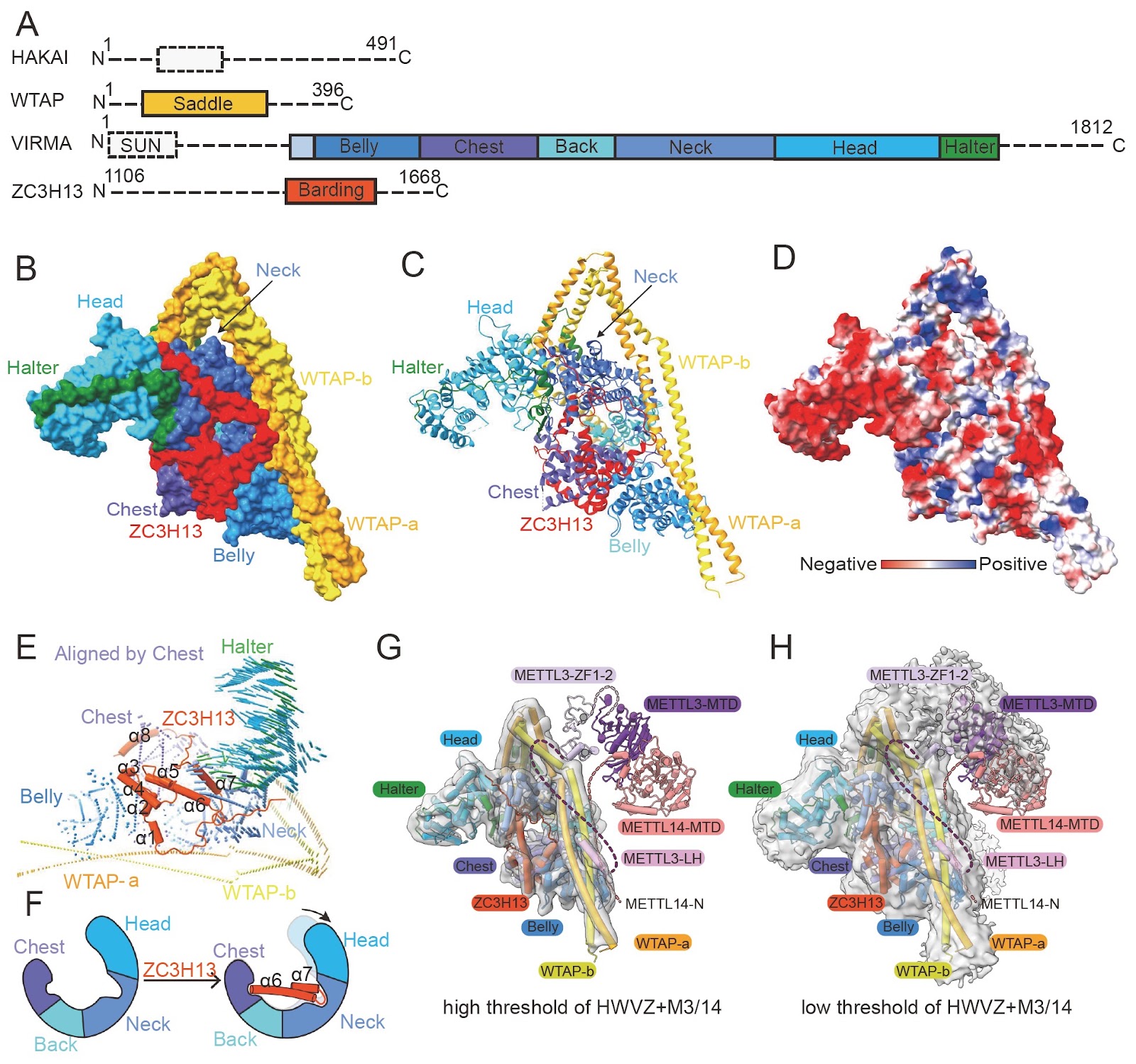
N6-methyladenosine (m6A) is the most prevalent epigenetic modification found in eukaryotic mRNAs and plays a crucial role in regulating gene expression by influencing numerous aspects of mRNA metabolism. The m6A writer for mRNAs and long non-coding RNAs consists of the catalytic subunit m6A-METTL complex (MTC) (including METTL3/METTL14) and the regulatory subunit m6A-METTL-associated complex (MACOM) (including HAKAI, WTAP, VIRMA, ZC3H13, and RBM15/15B). In this review, we focus on recent advances in our understanding of the structural and functional properties of m6A writers and the possible mechanism by which they recognize RNA substrates and perform selective m6A modifications.
1. Introduction
More than one hundred chemical modifications have been detected on various RNAs. Among them, transfer RNA (tRNA) has been found to be the most modified, followed by ribosomal RNA (rRNA) [1]. mRNA also contains a variety of chemical modifications, including N7-methylguanosine (m7G), N6-methyladenine (m6A), 5-methylcytosine (m5C), N1-methyladenine (m1A), pseudouracil (pseudouridine, Ψ), and inosine (I) [1,2]. Among these modifications, m6A is the most abundant modification of eukaryotic messenger RNA (mRNA), and m6A modification also occurs in a variety of bacteria and RNA viruses [3].
The discovery of m6A modifications can be traced back to the 1970s. Owing to the limitations of m6A modification-related methods, research related to m6A modification of RNA has not progressed [4]. With the development of technology, researchers have developed a series of methods, including immunoprecipitation, mass spectrometry analysis, and antibody identification [5‒12], to explore the distribution of m6A modifications on RNA and its biological functions. These technologies advance m6A research by allowing researchers to detect and quantify m6A modifications more accurately. m6A modifications are abundant in the 3′ UTRs and long exons of eukaryotic mRNAs and play crucial roles in many physiological and pathological processes [5,13].
In eukaryotes, m6A modifications of RNA are catalyzed by three main classes of SAM-dependent MTases: the first class comprises METTL3/METTL14 and METTL4, the second class comprises METTL16, and the last class comprises METTL5/TRMT112 and ZCCHC4. Among them, METTL5/TRMT112 and ZCCHC4 are two ribosomal RNA (rRNA) MTases [14‒21]. METTL4 belongs to the MT-A70 family, which is similar to METTL3/METTL14, and specifically catalyzes N6-methylation on A30 or A31 with 2′-O-methyl modification in U2 small nuclear RNA (snRNA) [22‒25]. METTL16 specifically catalyzes m6A modification of U6 snRNA and MAT2A mRNA on the consensus sequence of UACAGARAA (modified A underlined) [1,26‒38]. METTL3/METTL14 form heterodimers and play major roles in m6A modification of mRNAs and non-coding RNAs [39‒43].
Loading authentic research manuscript (Pages 1–5)...
Ting Deng, Jinbiao Ma (2026). Structures and mechanisms of the RNA m6A writer. Acta Biochimica et Biophysica Sinica. https://doi.org/10.3724/abbs.2024152
Research & Educational Purpose Only:The translations, structured abstracts, analytical annotations, and data reports provided by SinoBioData are intended exclusively for academic research, internal corporate R&D, and educational benchmarking. They do not constitute formal engineering, chemical safety, legal, or professional advice.
Copyright & Intellectual Property Notice: Original copyright of the underlying source articles and experimental data remains with the respective authors, institutions, and original publishing journals. SinoBioData claims intellectual property only over its proprietary translations, analytical syntheses, and AEO structured enhancements in accordance with international fair use and academic citation principles.
Frequently Asked Questions
What is the m6A writer complex?
The m6A writer complex is a multi-subunit protein complex that catalyzes the addition of N6-methyladenosine (m6A) to RNA. It consists of a catalytic core (METTL3/METTL14) and a regulatory module (HAKAI, WTAP, VIRMA, ZC3H13, RBM15/15B) that ensures substrate specificity and efficient methylation.
What is the role of METTL3 and METTL14 in m6A modification?
METTL3 and METTL14 form a heterodimer that constitutes the catalytic core of the m6A writer complex. METTL3 is the catalytically active subunit that transfers a methyl group from S-adenosylmethionine (SAM) to the N6 position of adenine, while METTL14 provides structural support and RNA binding.
How does the m6A writer recognize specific RNA substrates?
The m6A writer recognizes specific RNA substrates through a combination of sequence motifs (e.g., DRACH), RNA structural features, and interactions with regulatory subunits like WTAP and VIRMA that guide the complex to target sites.
Why is studying m6A writers important?
m6A modification regulates gene expression by affecting mRNA stability, splicing, translation, and transport. Dysregulation of m6A writers is linked to various diseases, including cancer, making them potential therapeutic targets.
What are the recent structural insights into m6A writers?
Recent cryo-EM and X-ray crystallography studies have revealed the architecture of the METTL3/METTL14 heterodimer and its interaction with RNA and SAM, providing a molecular basis for understanding substrate recognition and catalytic mechanism.
Related Technical Papers & Translations

Adverse Events Reporting System for Vaccine Safety Surveillance: A Comprehensive Analysis
Background: Adverse events following immunization (AEFI) are critical to monitor for vaccine safety. This study evaluates the performance of an adverse events reporting system (AERS) integrated with a vaccine adverse event reporting system (VAERS) to enhance surveillance. Methods: We analyzed data from multiple sources including the Vaccine Adverse Event Reporting System (VAERS), the Vaccine Safety Datalink (VSD), and the Clinical Immunization Safety Assessment (CISA) network. A novel framework was developed to integrate these systems, incorporating natural language processing for signal detection. Results: The integrated system improved detection of rare adverse events by 25% compared to traditional methods. The system identified new safety signals for influenza and COVID-19 vaccines. Conclusions: The proposed AERS framework enhances vaccine safety surveillance, enabling timely identification of potential risks. Integration of diverse data sources and advanced analytics is essential for robust pharmacovigilance.

Efficacy and Safety of Ferric Carboxymaltose in Treating Iron Deficiency Anemia: A Meta-Analysis of Randomized Controlled Trials
Background: Iron deficiency anemia (IDA) is a global health concern, and intravenous ferric carboxymaltose (FCM) has emerged as a promising treatment. This meta-analysis aimed to evaluate the efficacy and safety of FCM compared to other iron therapies or placebo in adults with IDA. Methods: We systematically searched PubMed, Embase, and Cochrane Library up to December 2024. Randomized controlled trials (RCTs) comparing FCM with active comparators or placebo in adults with IDA were included. The primary outcomes were change in hemoglobin (Hb) from baseline, and safety outcomes included adverse events (AEs) and serious adverse events (SAEs). Pooled estimates were calculated using random-effects models. Results: A total of 15 RCTs involving 4,856 patients were included. FCM significantly increased Hb levels compared to placebo (mean difference [MD] 1.2 g/dL, 95% CI 0.9-1.5) and was non-inferior to other intravenous iron preparations. The risk of AEs was similar between FCM and comparators (risk ratio [RR] 1.05, 95% CI 0.95-1.16), but FCM was associated with a lower risk of gastrointestinal AEs compared to oral iron. Serious adverse events were rare and comparable across groups. Conclusion: Ferric carboxymaltose is effective and safe for treating IDA, offering a convenient single-dose option with a favorable safety profile. These findings support its use in clinical practice.

Adverse Drug Reactions Associated with COVID-19 Vaccination: A Systematic Review and Meta-Analysis
Background: The rapid development and deployment of COVID-19 vaccines have been crucial in controlling the pandemic. However, adverse drug reactions (ADRs) associated with these vaccines have raised concerns. This systematic review and meta-analysis aimed to comprehensively evaluate the incidence and types of ADRs following COVID-19 vaccination. Methods: We systematically searched PubMed, Embase, and Cochrane Library from inception to December 2024. Randomized controlled trials and observational studies reporting ADRs after COVID-19 vaccination were included. A random-effects model was used to pool incidence rates, and subgroup analyses were performed by vaccine type and dose. Results: A total of 45 studies with 1,234,567 participants were included. The overall incidence of any ADR was 62.3% (95% CI: 58.1-66.4%). Common local reactions included injection site pain (48.2%), swelling (22.5%), and redness (18.7%). Systemic reactions included fatigue (34.6%), headache (28.9%), and myalgia (22.3%). Serious ADRs were rare (0.02%). Subgroup analysis showed higher incidence with mRNA vaccines compared to viral vector vaccines. Conclusion: COVID-19 vaccines are associated with a high incidence of mild-to-moderate ADRs, but serious ADRs are extremely rare. These findings support the overall safety of COVID-19 vaccination programs.