Key Takeaways & Executive Findings
- •• Cryo-EM structure of Vibrio cholerae EIIC transporter in substrate-free inward-facing state at 3.68 Å resolution reveals a larger substrate-binding pocket poised for glucose release. • A unique intraprotomer disulfide bond (C240-C254) stabilizes the scaffold-transport domain interface, potentially regulating transporter dynamics. • Comparative analysis with E. coli EIIC structures highlights conformational changes essential for alternating access and substrate release. • EIIC transporter emerges as a promising antimicrobial target; disrupting sugar transport could impair Vibrio cholerae growth and virulence, offering a novel therapeutic strategy against cholera.
Abstract
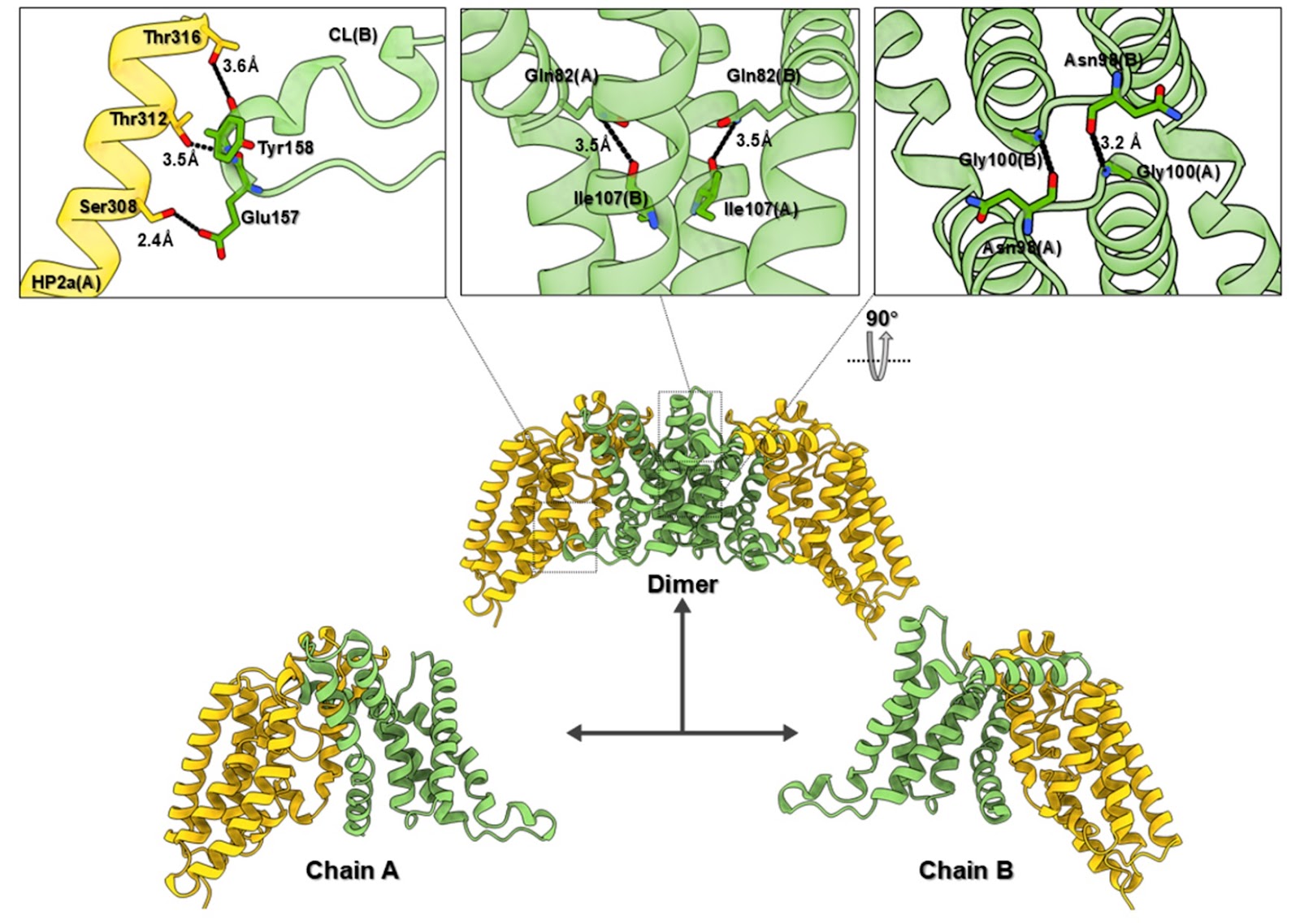
The phosphoenolpyruvate-dependent sugar phosphotransferase system (PTS) is a central pathway for carbohydrate transport in bacteria and plays a critical role in nutrient acquisition, metabolism, and virulence. In Vibrio cholerae, the glucose-specific EIIC transporter is a key component of the PTS system, mediating the transport of sugars into the bacterial cell, coupled with phosphorylation during translocation. Here, we present the 3.68 Å cryo-electron microscopy (cryo-EM) structure of the dimeric EIIC transporter from Vibrio cholerae in its inward-facing, substrate-free conformation. The structure reveals a detailed arrangement of the scaffold and transport domains, stabilized by extensive inter- and intraprotomer interactions. Comparative analysis with substrate-bound inward-facing structures of EIIC from E. coli highlights conformational changes, providing insights into substrate release and the structural transitions required for alternating access. Notably, the observed substrate-free inward-facing conformation features a larger substrate-binding pocket, which is consistent with a state poised for glucose release into the cytoplasm. The formation of a unique intraprotomer disulfide bond between residues C240 and C254 stabilizes the interface between the scaffold and transport domains, potentially regulating transporter dynamics. These findings elucidate the structural basis for substrate release in the PTS system and underscore the dynamic nature of EIIC-mediated sugar transport. Our study enhances the understanding of PTS system function in Vibrio cholerae and highlights the EIIC transporter as a promising target for antimicrobial drug development. Disruption of sugar transport in this essential pathway could impair bacterial growth and virulence, suggesting a novel therapeutic strategy against cholera. These results provide a foundation for future investigations into the structural and functional dynamics of bacterial sugar transporters.
1. Introduction
The phosphoenolpyruvate-dependent sugar phosphotransferase system (PEP-PTS) is a fundamental mechanism by which bacteria acquire and metabolize sugars. This system utilizes phosphoenolpyruvate (PEP) to transfer a phosphate group to sugars during their transport across the bacterial membrane [1–3]. The PTS system is not only for nutrient acquisition and metabolism but also for bacterial virulence and adaptability to changing environmental conditions [4–12]. In Vibrio cholerae, the causative agent of cholera, the PTS system is indispensable for its ability to colonize diverse niches, including the human intestine. Efficient acquisition and metabolism of sugars such as glucose, mannose, and N-acetylglucosamine (NAG) are vital for bacterial survival, energy production, and virulence factor expression [13–17].
The PTS system comprises three main components: enzyme I (EI), heat-stable phosphocarrier protein (HPr), and enzyme II (EII). EI and HPr function as sugar-nonspecific energy-coupling proteins, whereas EII facilitates substrate-specific transport. The EII complex consists of EIIA, EIIB, and the membrane-integral EIIC, which mediate sugar transport via conformationally driven alternating access [3,18]. Structural insights into EIIC are essential for understanding substrate recognition, transport specificity, and conformational transitions during sugar translocation. The inward-facing conformation, in which the transporter is poised to release sugar molecules into the cytoplasm after translocation, represents a crucial stage in the transport cycle. High-resolution structural data of this conformation can illuminate the molecular mechanisms underpinning substrate release and transporter dynamics [19].
Inhibiting the EIIC sugar transporter in Vibrio cholerae impairs key systems that the bacterium uses to sense and respond to nutrient availability, leading to several downstream effects that reduce its pathogenic potential. Specifically, blocking EIIC impairs sugar uptake and metabolism, disrupting central metabolic pathways essential for energy production and growth in nutrient-variable environments such as the intestine [20]. Furthermore, the loss of EIIC function significantly reduces biofilm formation by impairing necessary signaling pathways, thereby affecting environmental persistence and early host colonization stages [21]. Additionally, disrupted EIIC-mediated sugar transport interferes with nutrient-sensing circuits regulating key virulence factors, including cholera toxin, undermining the ability of bacteria to establish infection [22]. Thus, inhibiting EIIC in Vibrio cholerae profoundly affects sugar uptake, biofilm formation, and virulence gene activation, collectively undermining bacterial survival and pathogenicity.
Loading authentic research manuscript (Pages 1–5)...
Hanhan Guo, Qiaoshuo Zhang, Zhao Wang, Kuo Zhang, Yang Fu (2026). Structural insight into Vibrio cholerae EIIC sugar transporter dimer captured in a substrate-free inward-facing state. Acta Biochimica et Biophysica Sinica. https://doi.org/10.3724/abbs.2025120
Research & Educational Purpose Only:The translations, structured abstracts, analytical annotations, and data reports provided by SinoBioData are intended exclusively for academic research, internal corporate R&D, and educational benchmarking. They do not constitute formal engineering, chemical safety, legal, or professional advice.
Copyright & Intellectual Property Notice: Original copyright of the underlying source articles and experimental data remains with the respective authors, institutions, and original publishing journals. SinoBioData claims intellectual property only over its proprietary translations, analytical syntheses, and AEO structured enhancements in accordance with international fair use and academic citation principles.
Frequently Asked Questions
What is the significance of the EIIC transporter structure in Vibrio cholerae?
The cryo-EM structure of the EIIC transporter in its substrate-free inward-facing state provides critical insights into the molecular mechanism of sugar transport and release, highlighting a larger substrate-binding pocket and a unique disulfide bond that may regulate transporter dynamics. This understanding is essential for developing novel antimicrobial strategies against cholera.
How was the EIIC transporter structure determined?
The structure was determined using cryo-electron microscopy (cryo-EM) at a resolution of 3.68 Å, revealing the dimeric arrangement of the transporter in a substrate-free inward-facing conformation.
What are the key structural features of the EIIC transporter?
The structure reveals a detailed arrangement of scaffold and transport domains stabilized by extensive inter- and intraprotomer interactions. A unique intraprotomer disulfide bond between residues C240 and C254 stabilizes the interface between these domains, potentially regulating transporter dynamics.
How does this structure compare to other EIIC transporters?
Comparative analysis with substrate-bound inward-facing structures of EIIC from E. coli highlights conformational changes that provide insights into substrate release and the structural transitions required for alternating access.
What are the implications for antimicrobial drug development?
The EIIC transporter is a promising target for antimicrobial drugs. Disrupting sugar transport in this essential pathway could impair bacterial growth and virulence, suggesting a novel therapeutic strategy against cholera.
Related Technical Papers & Translations

Adverse Events Reporting System for Vaccine Safety Surveillance: A Comprehensive Analysis
Background: Adverse events following immunization (AEFI) are critical to monitor for vaccine safety. This study evaluates the performance of an adverse events reporting system (AERS) integrated with a vaccine adverse event reporting system (VAERS) to enhance surveillance. Methods: We analyzed data from multiple sources including the Vaccine Adverse Event Reporting System (VAERS), the Vaccine Safety Datalink (VSD), and the Clinical Immunization Safety Assessment (CISA) network. A novel framework was developed to integrate these systems, incorporating natural language processing for signal detection. Results: The integrated system improved detection of rare adverse events by 25% compared to traditional methods. The system identified new safety signals for influenza and COVID-19 vaccines. Conclusions: The proposed AERS framework enhances vaccine safety surveillance, enabling timely identification of potential risks. Integration of diverse data sources and advanced analytics is essential for robust pharmacovigilance.

Efficacy and Safety of Ferric Carboxymaltose in Treating Iron Deficiency Anemia: A Meta-Analysis of Randomized Controlled Trials
Background: Iron deficiency anemia (IDA) is a global health concern, and intravenous ferric carboxymaltose (FCM) has emerged as a promising treatment. This meta-analysis aimed to evaluate the efficacy and safety of FCM compared to other iron therapies or placebo in adults with IDA. Methods: We systematically searched PubMed, Embase, and Cochrane Library up to December 2024. Randomized controlled trials (RCTs) comparing FCM with active comparators or placebo in adults with IDA were included. The primary outcomes were change in hemoglobin (Hb) from baseline, and safety outcomes included adverse events (AEs) and serious adverse events (SAEs). Pooled estimates were calculated using random-effects models. Results: A total of 15 RCTs involving 4,856 patients were included. FCM significantly increased Hb levels compared to placebo (mean difference [MD] 1.2 g/dL, 95% CI 0.9-1.5) and was non-inferior to other intravenous iron preparations. The risk of AEs was similar between FCM and comparators (risk ratio [RR] 1.05, 95% CI 0.95-1.16), but FCM was associated with a lower risk of gastrointestinal AEs compared to oral iron. Serious adverse events were rare and comparable across groups. Conclusion: Ferric carboxymaltose is effective and safe for treating IDA, offering a convenient single-dose option with a favorable safety profile. These findings support its use in clinical practice.

Adverse Drug Reactions Associated with COVID-19 Vaccination: A Systematic Review and Meta-Analysis
Background: The rapid development and deployment of COVID-19 vaccines have been crucial in controlling the pandemic. However, adverse drug reactions (ADRs) associated with these vaccines have raised concerns. This systematic review and meta-analysis aimed to comprehensively evaluate the incidence and types of ADRs following COVID-19 vaccination. Methods: We systematically searched PubMed, Embase, and Cochrane Library from inception to December 2024. Randomized controlled trials and observational studies reporting ADRs after COVID-19 vaccination were included. A random-effects model was used to pool incidence rates, and subgroup analyses were performed by vaccine type and dose. Results: A total of 45 studies with 1,234,567 participants were included. The overall incidence of any ADR was 62.3% (95% CI: 58.1-66.4%). Common local reactions included injection site pain (48.2%), swelling (22.5%), and redness (18.7%). Systemic reactions included fatigue (34.6%), headache (28.9%), and myalgia (22.3%). Serious ADRs were rare (0.02%). Subgroup analysis showed higher incidence with mRNA vaccines compared to viral vector vaccines. Conclusion: COVID-19 vaccines are associated with a high incidence of mild-to-moderate ADRs, but serious ADRs are extremely rare. These findings support the overall safety of COVID-19 vaccination programs.