Key Takeaways & Executive Findings
- •• PF-00835231 exhibits broad-spectrum inhibition against various coronaviral main proteases, including SARS-CoV-2, SARS-CoV, and MERS-CoV, as well as seven clinically relevant mutants. • High-resolution crystal structures of Mpro-inhibitor complexes reveal key structural determinants and binding modes that explain the inhibitor's efficacy and adaptability. • The structural insights provide a rational basis for designing next-generation antivirals with improved oral bioavailability and broad-spectrum activity against emerging coronaviruses. • The study underscores the importance of targeting the highly conserved Mpro for developing therapeutic interventions against current and future coronavirus outbreaks.
Abstract
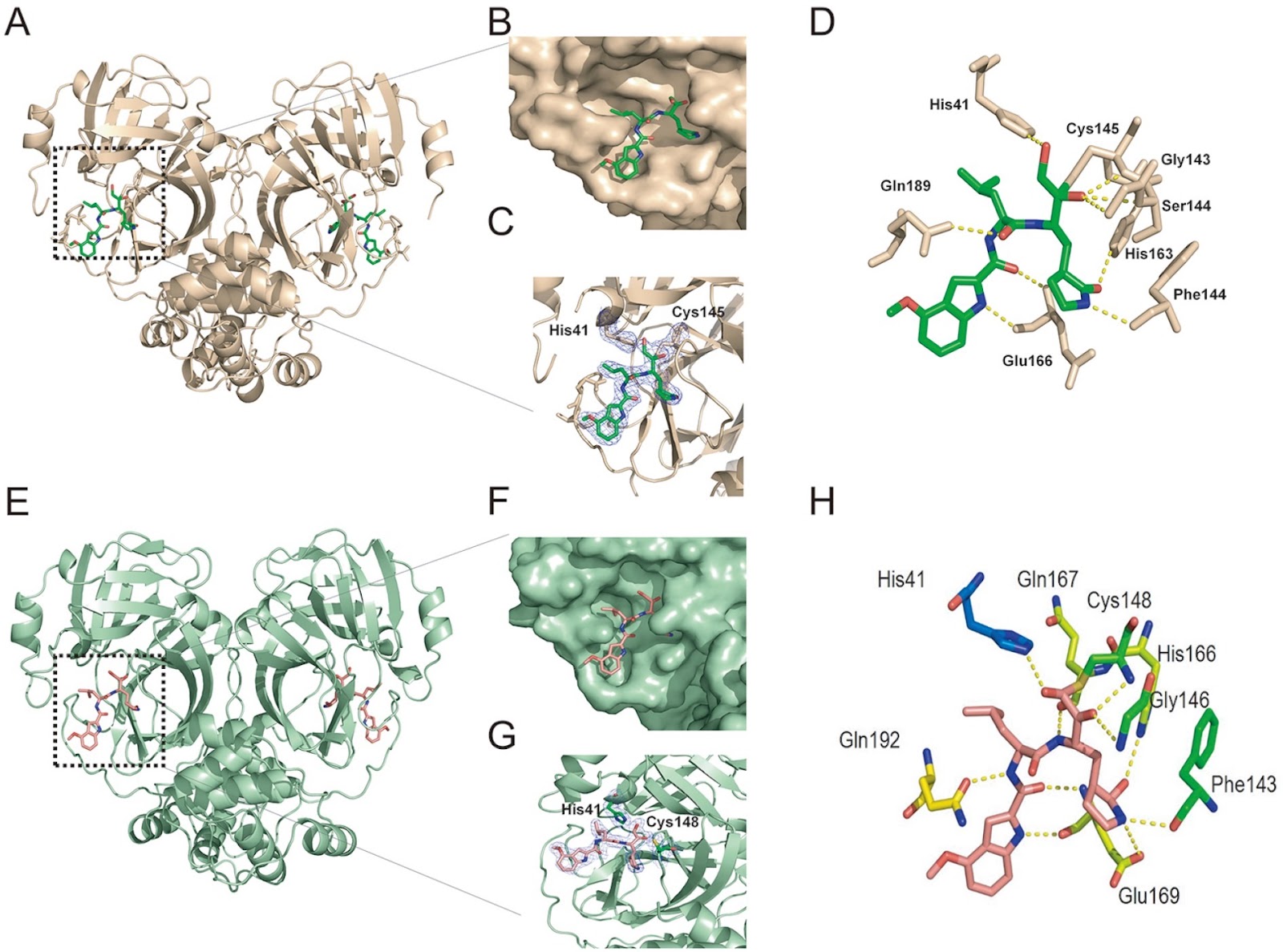
The main protease (Mpro) of coronaviruses plays a key role in viral replication, thus serving as a hot target for drug design. PF-00835231 is a promising inhibitor of SARS-CoV-2 Mpro. Here, we report the inhibitory potency of PF-00835231 against SARS-CoV-2 Mpro and seven Mpro mutants (G15S, M49I, Y54C, K90R, P132H, S46F, and V186F) from SARS-CoV-2 variants. The results confirm that PF-00835231 has broad-spectrum inhibition against various coronaviral Mpros. In addition, the crystal structures of SARS-CoV-2 Mpro, SARS-CoV Mpro, MERS-CoV Mpro, and seven SARS-CoV-2 Mpro mutants (G15S, M49I, Y54C, K90R, P132H, S46F, and V186F) in complex with PF-00835231 are solved. A detailed analysis of these structures reveals key determinants essential for inhibition and elucidates the binding modes of different coronaviral Mpros. Given the importance of the main protease for the treatment of coronaviral infection, structural insights into Mpro inhibition by PF-00835231 can accelerate the design of novel antivirals with broad-spectrum efficacy against different human coronaviruses.
1. Introduction
In late 2019, a novel coronavirus disease caused by severe acute respiratory syndrome coronavirus 2 (SARS-CoV-2) was identified in Wuhan, China [1–3]. SARS-CoV-2 belongs to the β-Coronaviridae family, which is in the same family as Middle East respiratory syndrome coronavirus (MERS-CoV) and SARS-CoV. All three strains are highly pathogenic [4–6]. However, SARS-CoV-2 easily mutates, and the resulting variants have raised concerns about the characteristics of the virus, including transmissibility and antigenicity. The World Health Organization (WHO) has identified five variants as variants of concern (VOCs), namely, B.1.1.7 (Alpha, α), B.1.351 (Beta, β), P.1 (Gamma, γ), B.1.617.2 (Delta, δ), and B.1.529 (Omicron), and several variants as variants of interest (VOI), including C.37 (Lambda, λ) (https://www.who.int/activities/tracking-SARS-CoV-2-variants). The spread of SARS-CoV-2 as well as its variants has lasted for more than four years and has caused more than 774 million cases of COVID-19 as of 11 February 2024, of which 7.03 million have died (https://covid19.who.int/). Many health agencies are looking for treatment options, and many drugs used for treating SARS-CoV-2 infection are also in clinical development [7–13]. One such strategy is targeting the main protease (Mpro) to selectively inhibit coronaviral replication [14–16].
The main coronaviral protease is also known as 3C-like protease (3CLpro) [15,16]. After successful infection of host cells, the viral genome encodes two large overlapping polyproteins, namely, pp1a and pp1ab. Mpro is able to process polyproteins to produce several nonstructural proteins (NSPs) necessary for viral replication. Additionally, Mpro is highly conserved among β coronaviruses [16]. The recognition site of coronaviral Mpro depends on Gln at the P1 position, and no proteases in humans share a similar cleavage site [14,15]. Therefore, Mpro of coronaviruses plays an important role in viral replication, and the selected Mpro inhibitors should have broad-spectrum properties.
Loading authentic research manuscript (Pages 1–5)...
Xuelan Zhou, Xiaolu Lu, Cheng Lin, Xiaofang Zou, Wenwen Li, Xiangyi Zeng, Jie Wang, Pei Zeng, Weiwei Wang, Jin Zhang, Haihai Jiang, Jian Li (2026). Structural basis for the inhibition of coronaviral main proteases by PF-00835231. Acta Biochimica et Biophysica Sinica. https://doi.org/10.3724/abbs.2024122
Research & Educational Purpose Only:The translations, structured abstracts, analytical annotations, and data reports provided by SinoBioData are intended exclusively for academic research, internal corporate R&D, and educational benchmarking. They do not constitute formal engineering, chemical safety, legal, or professional advice.
Copyright & Intellectual Property Notice: Original copyright of the underlying source articles and experimental data remains with the respective authors, institutions, and original publishing journals. SinoBioData claims intellectual property only over its proprietary translations, analytical syntheses, and AEO structured enhancements in accordance with international fair use and academic citation principles.
Frequently Asked Questions
What is the main protease (Mpro) and why is it a target for antiviral drugs?
The main protease (Mpro) is a key enzyme in coronaviruses that processes viral polyproteins into functional nonstructural proteins essential for viral replication. It is highly conserved among coronaviruses and has a unique cleavage site not found in human proteases, making it an attractive target for broad-spectrum antiviral drugs.
What is PF-00835231 and how does it inhibit coronaviral main proteases?
PF-00835231 is a small-molecule inhibitor originally designed for SARS-CoV Mpro. It inhibits Mpro by binding to its active site, preventing the processing of viral polyproteins. The study shows it has broad-spectrum activity against various coronaviral Mpros, including mutants from SARS-CoV-2 variants.
What structural insights were revealed in this study?
The study solved crystal structures of Mpro from SARS-CoV-2, SARS-CoV, MERS-CoV, and seven SARS-CoV-2 mutants in complex with PF-00835231. These structures reveal key determinants for inhibition and binding modes, providing a molecular basis for designing improved antivirals.
Why is broad-spectrum inhibition important for coronavirus treatment?
Broad-spectrum inhibition is crucial because coronaviruses can mutate and new strains can emerge. A drug that inhibits multiple coronaviral Mpros, including variants, would be effective against current and future outbreaks, reducing the need for strain-specific treatments.
How can these findings accelerate antiviral drug design?
By understanding the structural basis of Mpro inhibition, researchers can rationally design new inhibitors with improved potency, selectivity, and pharmacokinetic properties, such as oral bioavailability, to combat coronaviral infections more effectively.
Related Technical Papers & Translations

Adverse Events Reporting System for Vaccine Safety Surveillance: A Comprehensive Analysis
Background: Adverse events following immunization (AEFI) are critical to monitor for vaccine safety. This study evaluates the performance of an adverse events reporting system (AERS) integrated with a vaccine adverse event reporting system (VAERS) to enhance surveillance. Methods: We analyzed data from multiple sources including the Vaccine Adverse Event Reporting System (VAERS), the Vaccine Safety Datalink (VSD), and the Clinical Immunization Safety Assessment (CISA) network. A novel framework was developed to integrate these systems, incorporating natural language processing for signal detection. Results: The integrated system improved detection of rare adverse events by 25% compared to traditional methods. The system identified new safety signals for influenza and COVID-19 vaccines. Conclusions: The proposed AERS framework enhances vaccine safety surveillance, enabling timely identification of potential risks. Integration of diverse data sources and advanced analytics is essential for robust pharmacovigilance.

Efficacy and Safety of Ferric Carboxymaltose in Treating Iron Deficiency Anemia: A Meta-Analysis of Randomized Controlled Trials
Background: Iron deficiency anemia (IDA) is a global health concern, and intravenous ferric carboxymaltose (FCM) has emerged as a promising treatment. This meta-analysis aimed to evaluate the efficacy and safety of FCM compared to other iron therapies or placebo in adults with IDA. Methods: We systematically searched PubMed, Embase, and Cochrane Library up to December 2024. Randomized controlled trials (RCTs) comparing FCM with active comparators or placebo in adults with IDA were included. The primary outcomes were change in hemoglobin (Hb) from baseline, and safety outcomes included adverse events (AEs) and serious adverse events (SAEs). Pooled estimates were calculated using random-effects models. Results: A total of 15 RCTs involving 4,856 patients were included. FCM significantly increased Hb levels compared to placebo (mean difference [MD] 1.2 g/dL, 95% CI 0.9-1.5) and was non-inferior to other intravenous iron preparations. The risk of AEs was similar between FCM and comparators (risk ratio [RR] 1.05, 95% CI 0.95-1.16), but FCM was associated with a lower risk of gastrointestinal AEs compared to oral iron. Serious adverse events were rare and comparable across groups. Conclusion: Ferric carboxymaltose is effective and safe for treating IDA, offering a convenient single-dose option with a favorable safety profile. These findings support its use in clinical practice.

Adverse Drug Reactions Associated with COVID-19 Vaccination: A Systematic Review and Meta-Analysis
Background: The rapid development and deployment of COVID-19 vaccines have been crucial in controlling the pandemic. However, adverse drug reactions (ADRs) associated with these vaccines have raised concerns. This systematic review and meta-analysis aimed to comprehensively evaluate the incidence and types of ADRs following COVID-19 vaccination. Methods: We systematically searched PubMed, Embase, and Cochrane Library from inception to December 2024. Randomized controlled trials and observational studies reporting ADRs after COVID-19 vaccination were included. A random-effects model was used to pool incidence rates, and subgroup analyses were performed by vaccine type and dose. Results: A total of 45 studies with 1,234,567 participants were included. The overall incidence of any ADR was 62.3% (95% CI: 58.1-66.4%). Common local reactions included injection site pain (48.2%), swelling (22.5%), and redness (18.7%). Systemic reactions included fatigue (34.6%), headache (28.9%), and myalgia (22.3%). Serious ADRs were rare (0.02%). Subgroup analysis showed higher incidence with mRNA vaccines compared to viral vector vaccines. Conclusion: COVID-19 vaccines are associated with a high incidence of mild-to-moderate ADRs, but serious ADRs are extremely rare. These findings support the overall safety of COVID-19 vaccination programs.