Key Takeaways & Executive Findings
- •• SIRPα deficiency alters podocyte phosphoproteome, particularly affecting cytoskeleton-related processes and FAK phosphorylation at Y576. • SIRPα regulates podocyte cytoskeleton rearrangement and migration via the Src/FAK/p38 MAPK signaling pathway. • Urinary SIRPα and FAK levels are elevated in nephrotic syndrome patients and correlate with proteinuria, suggesting their potential as biomarkers. • This is the first report linking increased urinary SIRPα to nephrotic syndrome, highlighting its clinical relevance.
Abstract
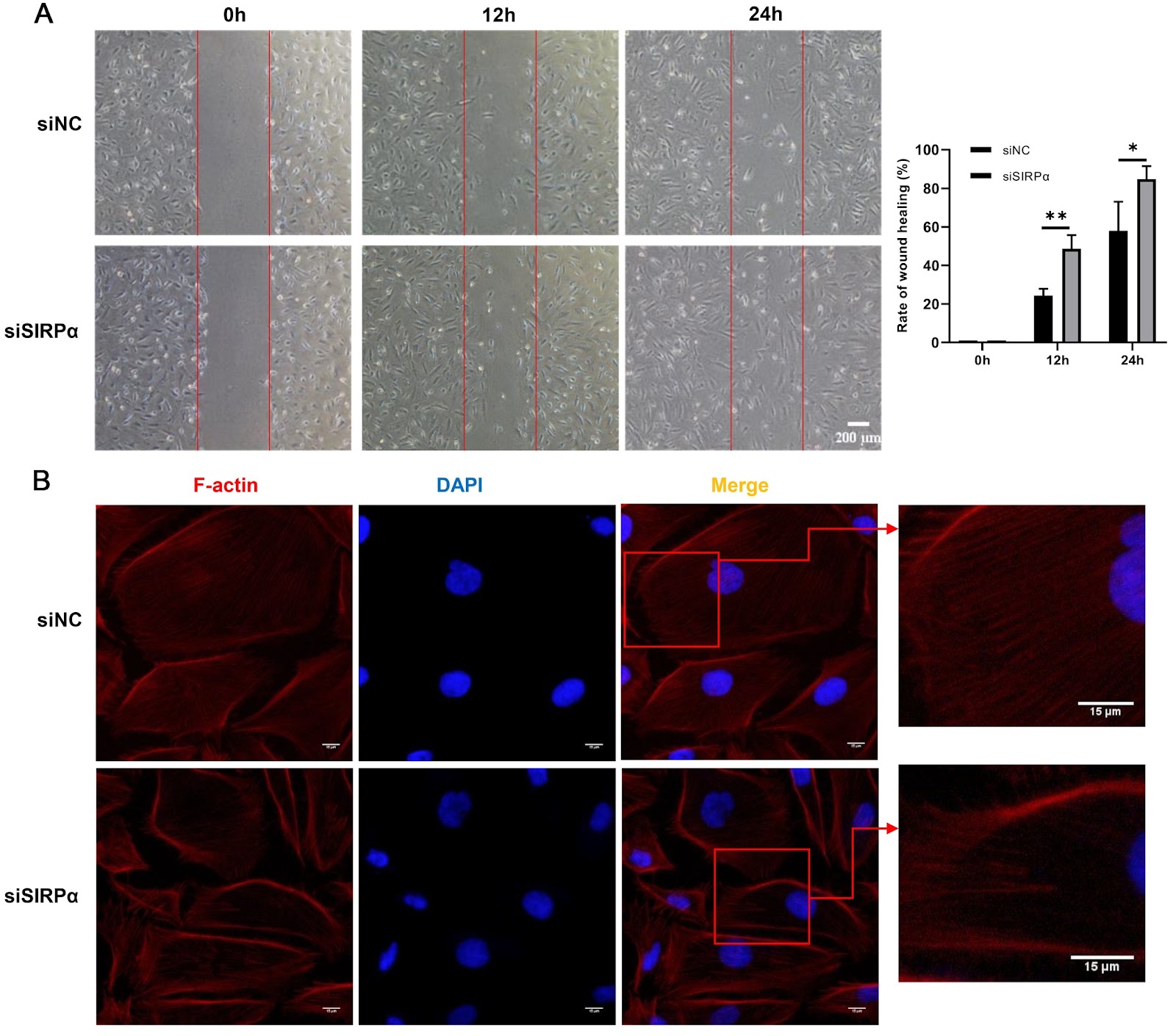
Signal regulatory protein α (SIRPα) is recognized as a significant transmembrane protein within the glomeruli that is specifically localized in podocytes, where it plays a role in modulating downstream signaling pathways through phosphorylation. Upon tyrosine phosphorylation of the immunoreceptor tyrosine-based inhibitory motif (ITIM) within SIRPα, protein tyrosine phosphatases are recruited to facilitate the dephosphorylation of downstream signals. Nevertheless, the specific downstream signaling pathways affected by this mechanism have yet to be elucidated. In this study, phosphoproteomic analysis is conducted on podocytes with SIRPα deficiency to identify proteins whose phosphorylation is regulated by SIRPα and the associated signaling pathways in human podocytes. The results reveal significant alterations in biological processes related to cytoskeleton arrangement and cytoskeleton protein binding. Specifically, an increase in FAK tyrosine phosphorylation at Y576 is identified as a potentially crucial signal of the influence of SIRPα on the podocyte cytoskeleton. Our study suggests that SIRPα may facilitate podocyte cytoskeleton rearrangement and migration through the Src/FAK/p38 MAPK signaling pathway. For the first time, we discover increased level of SIRPα, which is strongly linked to urinary protein, in the urine of patients with nephrotic syndrome (NS). Additionally, an increase in urinary FAK level is observed in NS patients, which is positively correlated with both urinary protein level and urinary SIRPα level. These findings suggest that SIRPα and FAK may serve as promising biomarkers for podocytopathies.
1. Introduction
Podocytes play a crucial role in maintaining the integrity of the glomerular filtration barrier. Under conditions such as focal segmental glomerulosclerosis (FSGS), minimal change disease (MCD), membranous nephropathy (MN), and diabetic nephropathy (DN), podocyte injury can result in alterations in histological, structural, and functional characteristics, ultimately leading to clinical manifestations such as proteinuria [1,2]. Therefore, investigating the mechanisms underlying podocyte injury and identifying potential therapeutic targets are essential for the management of kidney diseases.
Signal regulatory protein α (SIRPα) is a transmembrane protein characterized by three extracellular immunoglobulin-like domains and an intracellular immunoreceptor tyrosine-based inhibitory motif (ITIM) consisting of four tyrosine residues. SIRPα functions as an inhibitory receptor by binding to ligands such as CD47 and pulmonary surfactant-associated protein A/D (SP-A/D) [3,4]. SIRPα is prominently expressed in glomerular podocytes and is significantly phosphorylated in the kidneys of normal mice [5]. The phosphorylation of the intracellular ITIMs of SIRPα has the ability to recruit and activate Src homology-2 domain phosphatases (SHP1/SHP2) [6,7]. Our previous research indicated that SIRPα enhances the autophagic activity of podocytes by inhibiting the Akt/GSK-3β/β-catenin signaling pathway, thereby playing a crucial protective role in podocytes [8]. We also observed a reduction in SIRPα expression in podocytes of FSGS as well as in various experimental nephrotic mouse models, including the puromycin (PAN), adriamycin (ADR), and streptozotocin (STZ) models. These findings underscore the importance of investigating the role of SIRPα in podocytes.
Protein phosphorylation is essential for regulating various cellular processes and intracellular signal transduction, affecting and regulating biological processes such as cell proliferation, differentiation and migration [9,10]. The phosphorylation of podocyte proteins, including nephrin, NEPH1, CD2AP, and focal adhesion kinase (FAK), is crucial for podocyte structure and function [11–13]. Previous studies have demonstrated that SIRPα can influence biological functions by phosphorylating downstream signals such as PKB/AKT, SHP2, and STAT3 in various tissues, organs, and cells [14–18]. In addition, SIRPα can impact the phosphorylation of podocyte proteins, including nephrin, potentially regulating podocyte function after injury [5].
Loading authentic research manuscript (Pages 1–5)...
Yuanyuan Xia, Yue Zhao, Jing Tian, Xue Yang, Yun Fan, Shihui Dong, Fan Yang, Mingchao Zhang, Caihong Zeng (2026). SIRPα modulates the podocyte cytoskeleton through influencing the phosphorylation of FAK at tyrosine residue 597. Acta Biochimica et Biophysica Sinica. https://doi.org/10.3724/abbs.2024198
Research & Educational Purpose Only:The translations, structured abstracts, analytical annotations, and data reports provided by SinoBioData are intended exclusively for academic research, internal corporate R&D, and educational benchmarking. They do not constitute formal engineering, chemical safety, legal, or professional advice.
Copyright & Intellectual Property Notice: Original copyright of the underlying source articles and experimental data remains with the respective authors, institutions, and original publishing journals. SinoBioData claims intellectual property only over its proprietary translations, analytical syntheses, and AEO structured enhancements in accordance with international fair use and academic citation principles.
Frequently Asked Questions
What is the role of SIRPα in podocytes?
SIRPα is a transmembrane protein specifically localized in podocytes, where it modulates downstream signaling pathways through phosphorylation. It plays a protective role by enhancing autophagy and regulating the podocyte cytoskeleton, and its deficiency leads to alterations in cytoskeleton-related processes.
How does SIRPα affect the podocyte cytoskeleton?
SIRPα influences the podocyte cytoskeleton by regulating the phosphorylation of FAK at tyrosine residue 597 (Y576 in the study), likely through the Src/FAK/p38 MAPK signaling pathway, thereby facilitating cytoskeleton rearrangement and migration.
What are the potential biomarkers for podocytopathies?
The study suggests that urinary SIRPα and FAK levels could serve as promising biomarkers for podocytopathies, as they are elevated in nephrotic syndrome patients and positively correlate with proteinuria.
What methods were used in this study?
The study employed phosphoproteomic analysis on podocytes with SIRPα deficiency to identify differentially phosphorylated proteins and associated signaling pathways. Additionally, urinary levels of SIRPα and FAK were measured in nephrotic syndrome patients.
What is the clinical significance of this research?
The findings provide insights into the molecular mechanisms of podocyte injury and identify potential non-invasive biomarkers (urinary SIRPα and FAK) for diagnosing and monitoring podocytopathies, which could aid in early detection and therapeutic targeting.
Related Technical Papers & Translations

Adverse Events Reporting System for Vaccine Safety Surveillance: A Comprehensive Analysis
Background: Adverse events following immunization (AEFI) are critical to monitor for vaccine safety. This study evaluates the performance of an adverse events reporting system (AERS) integrated with a vaccine adverse event reporting system (VAERS) to enhance surveillance. Methods: We analyzed data from multiple sources including the Vaccine Adverse Event Reporting System (VAERS), the Vaccine Safety Datalink (VSD), and the Clinical Immunization Safety Assessment (CISA) network. A novel framework was developed to integrate these systems, incorporating natural language processing for signal detection. Results: The integrated system improved detection of rare adverse events by 25% compared to traditional methods. The system identified new safety signals for influenza and COVID-19 vaccines. Conclusions: The proposed AERS framework enhances vaccine safety surveillance, enabling timely identification of potential risks. Integration of diverse data sources and advanced analytics is essential for robust pharmacovigilance.

Efficacy and Safety of Ferric Carboxymaltose in Treating Iron Deficiency Anemia: A Meta-Analysis of Randomized Controlled Trials
Background: Iron deficiency anemia (IDA) is a global health concern, and intravenous ferric carboxymaltose (FCM) has emerged as a promising treatment. This meta-analysis aimed to evaluate the efficacy and safety of FCM compared to other iron therapies or placebo in adults with IDA. Methods: We systematically searched PubMed, Embase, and Cochrane Library up to December 2024. Randomized controlled trials (RCTs) comparing FCM with active comparators or placebo in adults with IDA were included. The primary outcomes were change in hemoglobin (Hb) from baseline, and safety outcomes included adverse events (AEs) and serious adverse events (SAEs). Pooled estimates were calculated using random-effects models. Results: A total of 15 RCTs involving 4,856 patients were included. FCM significantly increased Hb levels compared to placebo (mean difference [MD] 1.2 g/dL, 95% CI 0.9-1.5) and was non-inferior to other intravenous iron preparations. The risk of AEs was similar between FCM and comparators (risk ratio [RR] 1.05, 95% CI 0.95-1.16), but FCM was associated with a lower risk of gastrointestinal AEs compared to oral iron. Serious adverse events were rare and comparable across groups. Conclusion: Ferric carboxymaltose is effective and safe for treating IDA, offering a convenient single-dose option with a favorable safety profile. These findings support its use in clinical practice.

Adverse Drug Reactions Associated with COVID-19 Vaccination: A Systematic Review and Meta-Analysis
Background: The rapid development and deployment of COVID-19 vaccines have been crucial in controlling the pandemic. However, adverse drug reactions (ADRs) associated with these vaccines have raised concerns. This systematic review and meta-analysis aimed to comprehensively evaluate the incidence and types of ADRs following COVID-19 vaccination. Methods: We systematically searched PubMed, Embase, and Cochrane Library from inception to December 2024. Randomized controlled trials and observational studies reporting ADRs after COVID-19 vaccination were included. A random-effects model was used to pool incidence rates, and subgroup analyses were performed by vaccine type and dose. Results: A total of 45 studies with 1,234,567 participants were included. The overall incidence of any ADR was 62.3% (95% CI: 58.1-66.4%). Common local reactions included injection site pain (48.2%), swelling (22.5%), and redness (18.7%). Systemic reactions included fatigue (34.6%), headache (28.9%), and myalgia (22.3%). Serious ADRs were rare (0.02%). Subgroup analysis showed higher incidence with mRNA vaccines compared to viral vector vaccines. Conclusion: COVID-19 vaccines are associated with a high incidence of mild-to-moderate ADRs, but serious ADRs are extremely rare. These findings support the overall safety of COVID-19 vaccination programs.