Key Takeaways & Executive Findings
- •• Apoa4 knockout exacerbates insulin resistance and renal lipid accumulation in high-fat diet-induced obese mice, highlighting its protective role in early obesity-related CKD. • Single-cell RNA sequencing reveals that Apoa4 deletion remodels the renal immune-metabolic landscape, compromising T, NK, and B cell functions while expanding cytotoxic Gzma+ NK cells and Derl3+ plasma cells. • Mechanistically, Apoa4 deletion disrupts key transcription factor networks (Lef1, Runx3, Irf8, T-bet, Eomes, Tcf4, Lmo2, Xbp1) and downregulates effector genes (Ifng, Il1b), leading to metabolic dysregulation and oxidative stress. • CellChat analysis predicts altered intercellular signaling (IFN-II, IL-1, FASLG, ENHO, ANGPTL, IL-2), providing a comprehensive resource for therapeutic targeting of Apoa4-mediated pathways in obesity-related CKD.
Abstract
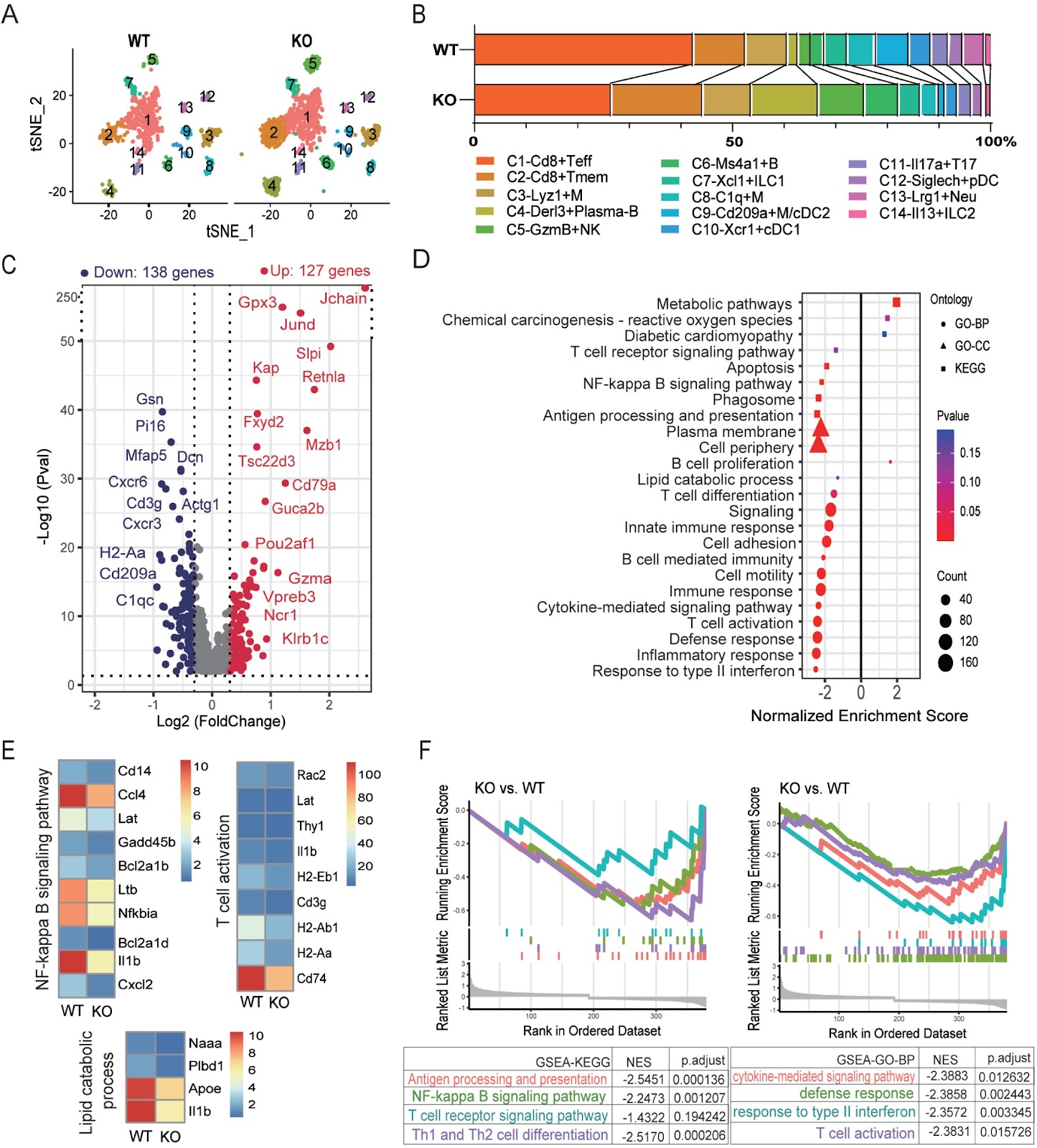
Obesity-induced metabolic inflammation is a key driver of chronic kidney disease (CKD), with immune dysregulation, particularly among lymphocytes, contributing to early disease pathology. To explore the role of apolipoprotein A4 (Apoa4) in regulating immune cell metabolism and function, we establish high-fat diet-induced obese (DIO) models using wild-type and Apoa4-knockout (KO) mice. KO mice exhibit exacerbated insulin resistance and renal lipid accumulation. Single-cell RNA sequencing reveals that Apoa4 deletion remodeled the renal immune-metabolic landscape. This remodeling broadly compromises the immune functions of T, NK, and B cells, even as it expands the proportions of cytotoxic Gzma+ NK cells and Derl3+ plasma cells. Mechanistically, Apoa4 deletion aggravates metabolic dysregulation and oxidative stress and downregulates the expression levels of key effector genes, including Ifng and Il1b. Furthermore, the regulatory network activities of key transcription factors, such as Lef1 and Runx3 in Cd8+ T cells; Irf8, T-bet, and Eomes in NK cells; and Tcf4, Lmo2, and Xbp1 in B cells, are perturbed. CellChat analysis predicts disruptions in pro-inflammatory (IFN-II and IL-1), immunoregulatory (FASLG), and metabolic regulatory (ENHO and ANGPTL) signaling, alongside enhanced IL-2-mediated suppression. These findings are corroborated by flow cytometry, immunofluorescence staining, and qPCR. Our results establish Apoa4 as a crucial regulator of lymphocyte metabolic and immune homeostasis in the early stages of obesity-associated CKD.
1. Introduction
Obesity-induced metabolic inflammation, insulin resistance and lipid deposition in the kidney are major contributors to the onset and progression of obesity-related chronic kidney disease (CKD) [1,2]. The increasing prevalence of obesity-related CKD has become a major global public health challenge [3]. The immune system plays a crucial role in maintaining immunological homeostasis in healthy kidneys, and its dysregulation, whether overactive or underactive, accelerates disease progression [4]. Recent advances in single-cell RNA sequencing (scRNA-seq) have revealed the intricate diversity of immune cell populations in both healthy and diseased kidneys [5–7], providing unprecedented insights into the heterogeneity of immune cells and their diverse roles in inflammation and tissue remodeling.
Immune cell activation and function are tightly regulated by environmental cues and intercellular interactions. For example, tissue-resident memory T cells and B cells rapidly activate and exhibit effector functions upon re-encountering antigens [8,9], whereas natural killer (NK) cells respond to stimulatory signals, becoming activated and directly exerting cytotoxic effects on target cells. These cells release pro-inflammatory mediators such as interferon-γ (IFN-γ) and tumor necrosis factor (TNF), which modulate innate immune cells, underscoring the critical role of lymphocytes in early inflammatory kidney disease [10]. The macrophage phenotype is dynamically regulated by the microenvironment, with M1 and M2 macrophages playing opposing roles in renal inflammation [11]. In CKD, immune cell activation is closely linked to the activation of signaling pathways, such as the MAPK signaling, NLRP3 inflammasome signaling, PI3K/Akt signaling, NF-κB signaling, JAK-STAT signaling, and Toll-like receptor signaling pathways [12].
Metabolic pathways are fundamental to immune cell function and influence immune cell proliferation, differentiation, and activation. Under healthy conditions, glucose, fatty acid, and amino acid metabolism maintain immune metabolism homeostasis. However, in diseases, including obese kidneys, disruption of cellular metabolism leads to aberrant immune responses [13–15]. Aerobic glycolysis appears to drive the activation of most lymphoid and myeloid cells, whereas oxidative phosphorylation predominates in regulatory, resting, and memory immune cells [16]. Importantly, lipids play dual roles as both metabolic fuels and signaling molecules in immune regulation. The dynamic processes of extracellular lipid uptake, membrane lipid remodeling and intracellular lipid synthesis/catabolism collectively orchestrate immune cell function and disease development.
Loading authentic research manuscript (Pages 1–5)...
Yang Wei, Ting Zhang, Yingying Jin, Xiaohuan Liu, Jinting Zhou, Na Huang, Yiying Wang (2026). Single-cell transcriptomics reveals apolipoprotein A4-mediated metabolic-immune reprogramming in lymphocytes during early obesity-related chronic kidney disease. Acta Biochimica et Biophysica Sinica. https://doi.org/10.3724/abbs.2025171
Research & Educational Purpose Only:The translations, structured abstracts, analytical annotations, and data reports provided by SinoBioData are intended exclusively for academic research, internal corporate R&D, and educational benchmarking. They do not constitute formal engineering, chemical safety, legal, or professional advice.
Copyright & Intellectual Property Notice: Original copyright of the underlying source articles and experimental data remains with the respective authors, institutions, and original publishing journals. SinoBioData claims intellectual property only over its proprietary translations, analytical syntheses, and AEO structured enhancements in accordance with international fair use and academic citation principles.
Frequently Asked Questions
What is the role of apolipoprotein A4 (Apoa4) in obesity-related chronic kidney disease?
Apoa4 acts as a crucial regulator of lymphocyte metabolic and immune homeostasis in early obesity-associated CKD. Its deletion exacerbates insulin resistance, renal lipid accumulation, and immune dysregulation, leading to more severe disease pathology.
How does Apoa4 deletion affect immune cell populations in the kidney?
Apoa4 deletion remodels the renal immune-metabolic landscape, broadly compromising the functions of T, NK, and B cells while expanding cytotoxic Gzma+ NK cells and Derl3+ plasma cells, and perturbing key transcription factor networks.
What are the key signaling pathways disrupted by Apoa4 deletion?
CellChat analysis predicts disruptions in pro-inflammatory (IFN-II and IL-1), immunoregulatory (FASLG), and metabolic regulatory (ENHO and ANGPTL) signaling, alongside enhanced IL-2-mediated suppression.
What methods were used to validate the findings?
The findings were corroborated by flow cytometry, immunofluorescence staining, and quantitative PCR (qPCR), providing robust validation of the single-cell RNA sequencing results.
What is the significance of this study for clinical practice?
This study establishes Apoa4 as a potential therapeutic target for early obesity-related CKD, offering insights into metabolic-immune crosstalk and highlighting specific cell populations and signaling pathways that could be modulated to prevent disease progression.
Related Technical Papers & Translations

Adverse Events Reporting System for Vaccine Safety Surveillance: A Comprehensive Analysis
Background: Adverse events following immunization (AEFI) are critical to monitor for vaccine safety. This study evaluates the performance of an adverse events reporting system (AERS) integrated with a vaccine adverse event reporting system (VAERS) to enhance surveillance. Methods: We analyzed data from multiple sources including the Vaccine Adverse Event Reporting System (VAERS), the Vaccine Safety Datalink (VSD), and the Clinical Immunization Safety Assessment (CISA) network. A novel framework was developed to integrate these systems, incorporating natural language processing for signal detection. Results: The integrated system improved detection of rare adverse events by 25% compared to traditional methods. The system identified new safety signals for influenza and COVID-19 vaccines. Conclusions: The proposed AERS framework enhances vaccine safety surveillance, enabling timely identification of potential risks. Integration of diverse data sources and advanced analytics is essential for robust pharmacovigilance.

Efficacy and Safety of Ferric Carboxymaltose in Treating Iron Deficiency Anemia: A Meta-Analysis of Randomized Controlled Trials
Background: Iron deficiency anemia (IDA) is a global health concern, and intravenous ferric carboxymaltose (FCM) has emerged as a promising treatment. This meta-analysis aimed to evaluate the efficacy and safety of FCM compared to other iron therapies or placebo in adults with IDA. Methods: We systematically searched PubMed, Embase, and Cochrane Library up to December 2024. Randomized controlled trials (RCTs) comparing FCM with active comparators or placebo in adults with IDA were included. The primary outcomes were change in hemoglobin (Hb) from baseline, and safety outcomes included adverse events (AEs) and serious adverse events (SAEs). Pooled estimates were calculated using random-effects models. Results: A total of 15 RCTs involving 4,856 patients were included. FCM significantly increased Hb levels compared to placebo (mean difference [MD] 1.2 g/dL, 95% CI 0.9-1.5) and was non-inferior to other intravenous iron preparations. The risk of AEs was similar between FCM and comparators (risk ratio [RR] 1.05, 95% CI 0.95-1.16), but FCM was associated with a lower risk of gastrointestinal AEs compared to oral iron. Serious adverse events were rare and comparable across groups. Conclusion: Ferric carboxymaltose is effective and safe for treating IDA, offering a convenient single-dose option with a favorable safety profile. These findings support its use in clinical practice.

Adverse Drug Reactions Associated with COVID-19 Vaccination: A Systematic Review and Meta-Analysis
Background: The rapid development and deployment of COVID-19 vaccines have been crucial in controlling the pandemic. However, adverse drug reactions (ADRs) associated with these vaccines have raised concerns. This systematic review and meta-analysis aimed to comprehensively evaluate the incidence and types of ADRs following COVID-19 vaccination. Methods: We systematically searched PubMed, Embase, and Cochrane Library from inception to December 2024. Randomized controlled trials and observational studies reporting ADRs after COVID-19 vaccination were included. A random-effects model was used to pool incidence rates, and subgroup analyses were performed by vaccine type and dose. Results: A total of 45 studies with 1,234,567 participants were included. The overall incidence of any ADR was 62.3% (95% CI: 58.1-66.4%). Common local reactions included injection site pain (48.2%), swelling (22.5%), and redness (18.7%). Systemic reactions included fatigue (34.6%), headache (28.9%), and myalgia (22.3%). Serious ADRs were rare (0.02%). Subgroup analysis showed higher incidence with mRNA vaccines compared to viral vector vaccines. Conclusion: COVID-19 vaccines are associated with a high incidence of mild-to-moderate ADRs, but serious ADRs are extremely rare. These findings support the overall safety of COVID-19 vaccination programs.