Key Takeaways & Executive Findings
- •• A novel ligand-receptor-based prognostic signature for HCC was developed using single-cell and bulk transcriptome data, validated across multiple cohorts. • TREM1 promotes HCC cell proliferation, migration, and inhibits apoptosis, and modulates proinflammatory cytokines (IL-1β, TNF-α, MCP-1). • TREM1 knockdown alters tumor immune microenvironment by changing M1 macrophage and Treg proportions, and affects the Nrf2/Keap1 oxidative stress pathway. • The study provides a comprehensive single-cell atlas of the HCC ecosystem, revealing immune heterogeneity between low- and high-risk patients.
Abstract
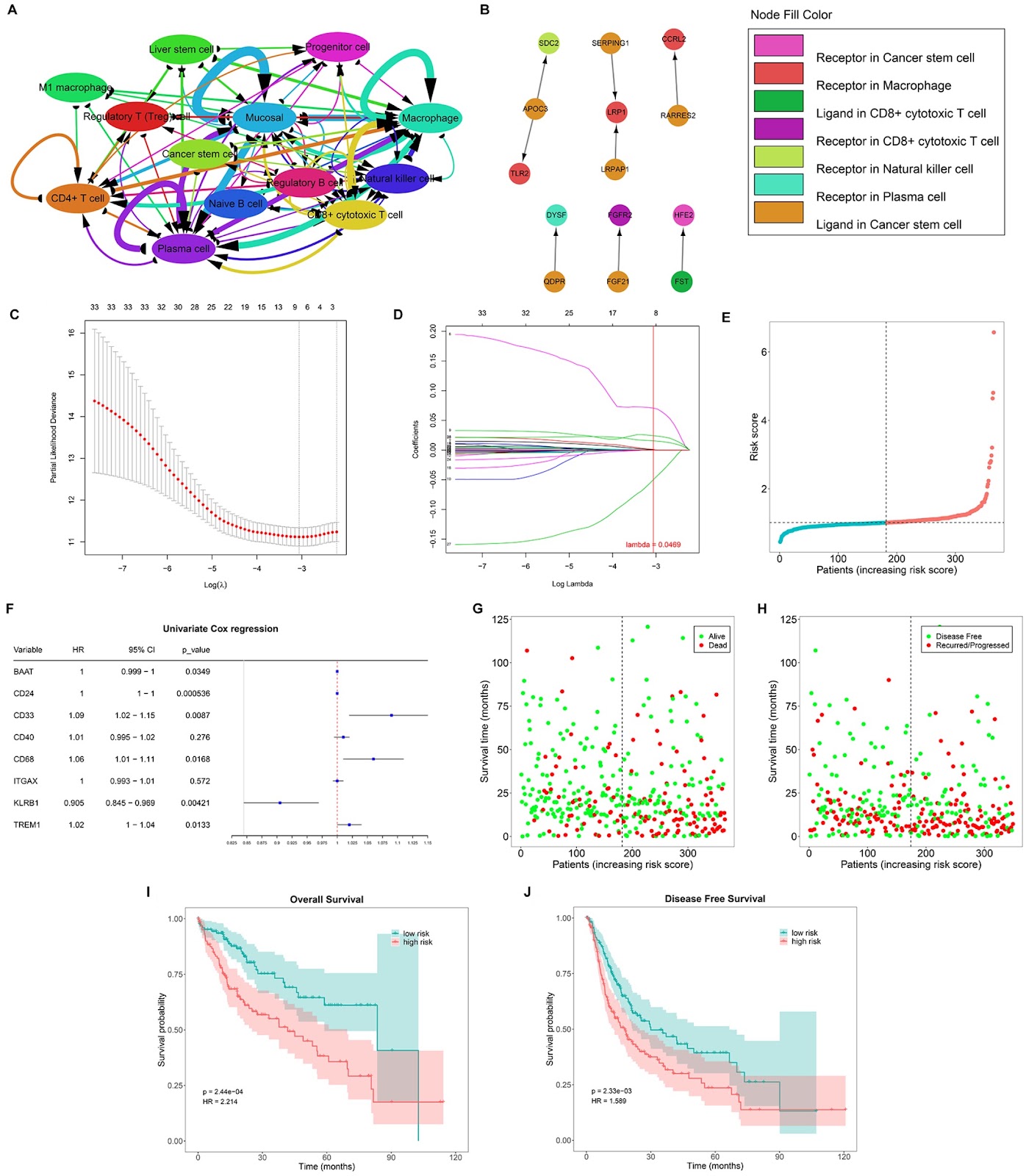
The transcriptional heterogeneity and cellular ecosystem diversity of HCC await further exploration. Single-cell and bulk RNA sequencing data from HCC cells are analyzed to generate a LASSO model for HCC prognostication. CCK-8, scratch assay, flow cytometry, and ROS assays are used to validate how TREM1 may affect HCC cell biological behaviors in vitro. qPCR, western blot analysis, immunohistochemistry, and flow cytometry are applied in a xenograft model to test the effects of TREM1 knockdown on carcinogenesis and the tumor microenvironment. A single-cell atlas of the multicellular ecosystem comprising 13 cell types in HCC is constructed. On the basis of ligand-receptor marker genes specifically extracted from the cell populations, a prognostic model is defined and subsequently validated in additional clinical cohorts. For the first time, a heterogeneous immune microenvironment is observed between low- and high-risk patients, primarily involving macrophages, CD4+ T cells, M1 macrophages, and regulatory T (Treg) cells. Sufficient evidence validates the positive effects of TREM1 on HCC cell proliferation, migration, and apoptosis. Additionally, TREM1 positively modulates the levels of the proinflammatory cytokines IL-1β, TNF-α, and MCP-1. TREM1 downregulation alters the proportions of M1 macrophages and Tregs in the tumor tissue from our HCC xenograft model. Eventually, the Nrf2/Keap1 signaling pathway, which is related to oxidative stress, is shown to be a key pathway downstream of TREM1 downregulation. In summary, we construct a novel prognostic model for HCC on the basis of ligand-receptor marker genes and investigate the role of TREM1 in HCC progression and its impact on the TME.
1. Introduction
Hepatocellular carcinoma (HCC) is a highly aggressive malignancy with a rising incidence globally. The prognosis is still dismal, with an overall five-year survival rate of 12%–15% [1]. In the past few years, remarkable progress has been made in treatment regimens: antiangiogenic multikinase agents (sorafenib [2] and lenvatinib [3]) have gained approval as first-line systemic therapeutic options for unresectable HCCs; other multikinase inhibitors as well as immune checkpoint blockade agents against PD-1/PD-L1 have been approved as second-line treatments [4]. Nevertheless, unresectable HCC patients still face increased unmet medical needs and unsatisfactory survival outcomes.
A tumor is an extremely complex ecosystem, defined by spatiotemporal relationships between heterogeneous cell populations composed of malignant, immune, and stromal cell types [5]. Hence, characterizing the landscape of the HCC multicellular ecosystem and critical components linked to tumor progression and immunotherapy is essential. Using bulk transcriptome approaches, prior research has revealed that each HCC tumor has its own personalized expression profile containing diverse transcriptional programs [6]. Despite the progress in bioinformatics, deconvolution algorithms are unable to analyze rare cell populations and cell-to-cell interplay, among other methods.
Single-cell RNA sequencing (scRNA-seq) has been proven to be an efficient tool for characterizing expression data across numerous cells simultaneously, which enables the generation of integrated profiles of diverse cell types in tumors under different biological states or conditions [7]. Recently, scRNA-seq research has provided unique insights into many aspects of HCC biology. For example, scRNA-seq reveals the immunosuppressive landscape and tumor heterogeneity of HBV-related HCC [8]. Single-cell analysis has revealed that proliferative Prom1+ tumor-propagating cells, as well as their dynamic cellular transitions, are involved in HCC development [9]. Through single-cell transcriptomic profiling, the landscape of intratumoral heterogeneity and stemness-associated subpopulations has been revealed in HCC [10]. In the present study, we integrated single-cell and bulk transcriptome analyses to reveal a novel ligand-receptor-based prognostic model for HCC and revealed the role of TREM1 in controlling the malignant behaviors of HCC cells both in vitro and in vivo.
Loading authentic research manuscript (Pages 1–5)...
Jiemin Zhang, Qian Huang, Yingying Zheng, Jianqing Tang, Naling Kang, Yurui Liu, Dawu Zeng (2026). Single-cell and bulk transcriptome analysis unveils a ligand-receptor-based signature for prognostication and reveals that TREM1 controls the malignant behaviors of hepatocellular carcinoma. Acta Biochimica et Biophysica Sinica. https://doi.org/10.3724/abbs.2025059
Research & Educational Purpose Only:The translations, structured abstracts, analytical annotations, and data reports provided by SinoBioData are intended exclusively for academic research, internal corporate R&D, and educational benchmarking. They do not constitute formal engineering, chemical safety, legal, or professional advice.
Copyright & Intellectual Property Notice: Original copyright of the underlying source articles and experimental data remains with the respective authors, institutions, and original publishing journals. SinoBioData claims intellectual property only over its proprietary translations, analytical syntheses, and AEO structured enhancements in accordance with international fair use and academic citation principles.
Frequently Asked Questions
What is the main objective of this study?
The study aims to construct a novel prognostic model for hepatocellular carcinoma (HCC) based on ligand-receptor marker genes from single-cell and bulk transcriptome data, and to investigate the role of TREM1 in HCC progression and its impact on the tumor microenvironment.
How was the prognostic model developed?
The model was developed using LASSO regression on ligand-receptor marker genes specifically extracted from cell populations identified in a single-cell atlas of HCC. It was validated in additional clinical cohorts.
What is the role of TREM1 in HCC?
TREM1 promotes HCC cell proliferation, migration, and inhibits apoptosis. It also modulates proinflammatory cytokines (IL-1β, TNF-α, MCP-1) and affects the tumor microenvironment by altering M1 macrophage and Treg proportions. Downregulation of TREM1 impacts the Nrf2/Keap1 oxidative stress pathway.
What are the key findings regarding the immune microenvironment?
The study reveals a heterogeneous immune microenvironment between low- and high-risk HCC patients, involving macrophages, CD4+ T cells, M1 macrophages, and regulatory T cells. TREM1 knockdown alters the proportions of M1 macrophages and Tregs in tumor tissue.
What is the clinical significance of this research?
The prognostic model provides a new tool for risk stratification in HCC, and the findings on TREM1 suggest it as a potential therapeutic target for HCC treatment, potentially improving patient outcomes.
Related Technical Papers & Translations

Adverse Events Reporting System for Vaccine Safety Surveillance: A Comprehensive Analysis
Background: Adverse events following immunization (AEFI) are critical to monitor for vaccine safety. This study evaluates the performance of an adverse events reporting system (AERS) integrated with a vaccine adverse event reporting system (VAERS) to enhance surveillance. Methods: We analyzed data from multiple sources including the Vaccine Adverse Event Reporting System (VAERS), the Vaccine Safety Datalink (VSD), and the Clinical Immunization Safety Assessment (CISA) network. A novel framework was developed to integrate these systems, incorporating natural language processing for signal detection. Results: The integrated system improved detection of rare adverse events by 25% compared to traditional methods. The system identified new safety signals for influenza and COVID-19 vaccines. Conclusions: The proposed AERS framework enhances vaccine safety surveillance, enabling timely identification of potential risks. Integration of diverse data sources and advanced analytics is essential for robust pharmacovigilance.

Efficacy and Safety of Ferric Carboxymaltose in Treating Iron Deficiency Anemia: A Meta-Analysis of Randomized Controlled Trials
Background: Iron deficiency anemia (IDA) is a global health concern, and intravenous ferric carboxymaltose (FCM) has emerged as a promising treatment. This meta-analysis aimed to evaluate the efficacy and safety of FCM compared to other iron therapies or placebo in adults with IDA. Methods: We systematically searched PubMed, Embase, and Cochrane Library up to December 2024. Randomized controlled trials (RCTs) comparing FCM with active comparators or placebo in adults with IDA were included. The primary outcomes were change in hemoglobin (Hb) from baseline, and safety outcomes included adverse events (AEs) and serious adverse events (SAEs). Pooled estimates were calculated using random-effects models. Results: A total of 15 RCTs involving 4,856 patients were included. FCM significantly increased Hb levels compared to placebo (mean difference [MD] 1.2 g/dL, 95% CI 0.9-1.5) and was non-inferior to other intravenous iron preparations. The risk of AEs was similar between FCM and comparators (risk ratio [RR] 1.05, 95% CI 0.95-1.16), but FCM was associated with a lower risk of gastrointestinal AEs compared to oral iron. Serious adverse events were rare and comparable across groups. Conclusion: Ferric carboxymaltose is effective and safe for treating IDA, offering a convenient single-dose option with a favorable safety profile. These findings support its use in clinical practice.

Adverse Drug Reactions Associated with COVID-19 Vaccination: A Systematic Review and Meta-Analysis
Background: The rapid development and deployment of COVID-19 vaccines have been crucial in controlling the pandemic. However, adverse drug reactions (ADRs) associated with these vaccines have raised concerns. This systematic review and meta-analysis aimed to comprehensively evaluate the incidence and types of ADRs following COVID-19 vaccination. Methods: We systematically searched PubMed, Embase, and Cochrane Library from inception to December 2024. Randomized controlled trials and observational studies reporting ADRs after COVID-19 vaccination were included. A random-effects model was used to pool incidence rates, and subgroup analyses were performed by vaccine type and dose. Results: A total of 45 studies with 1,234,567 participants were included. The overall incidence of any ADR was 62.3% (95% CI: 58.1-66.4%). Common local reactions included injection site pain (48.2%), swelling (22.5%), and redness (18.7%). Systemic reactions included fatigue (34.6%), headache (28.9%), and myalgia (22.3%). Serious ADRs were rare (0.02%). Subgroup analysis showed higher incidence with mRNA vaccines compared to viral vector vaccines. Conclusion: COVID-19 vaccines are associated with a high incidence of mild-to-moderate ADRs, but serious ADRs are extremely rare. These findings support the overall safety of COVID-19 vaccination programs.