Key Takeaways & Executive Findings
- •• SEC61G expression is significantly correlated with glycolytic activity in LUAD, as evidenced by increased FDG uptake on PET/CT scans. • SEC61G promotes an immunosuppressive tumor microenvironment by negatively correlating with immune cell infiltration and modulating immune checkpoint genes. • Knockdown of SEC61G inhibits LUAD cell migration and downregulates key regulators of EMT and glycolysis, including HIF-1α and LDHA. • SEC61G emerges as a potential prognostic biomarker and therapeutic target for LUAD, with implications for predicting immunotherapeutic responses.
Abstract
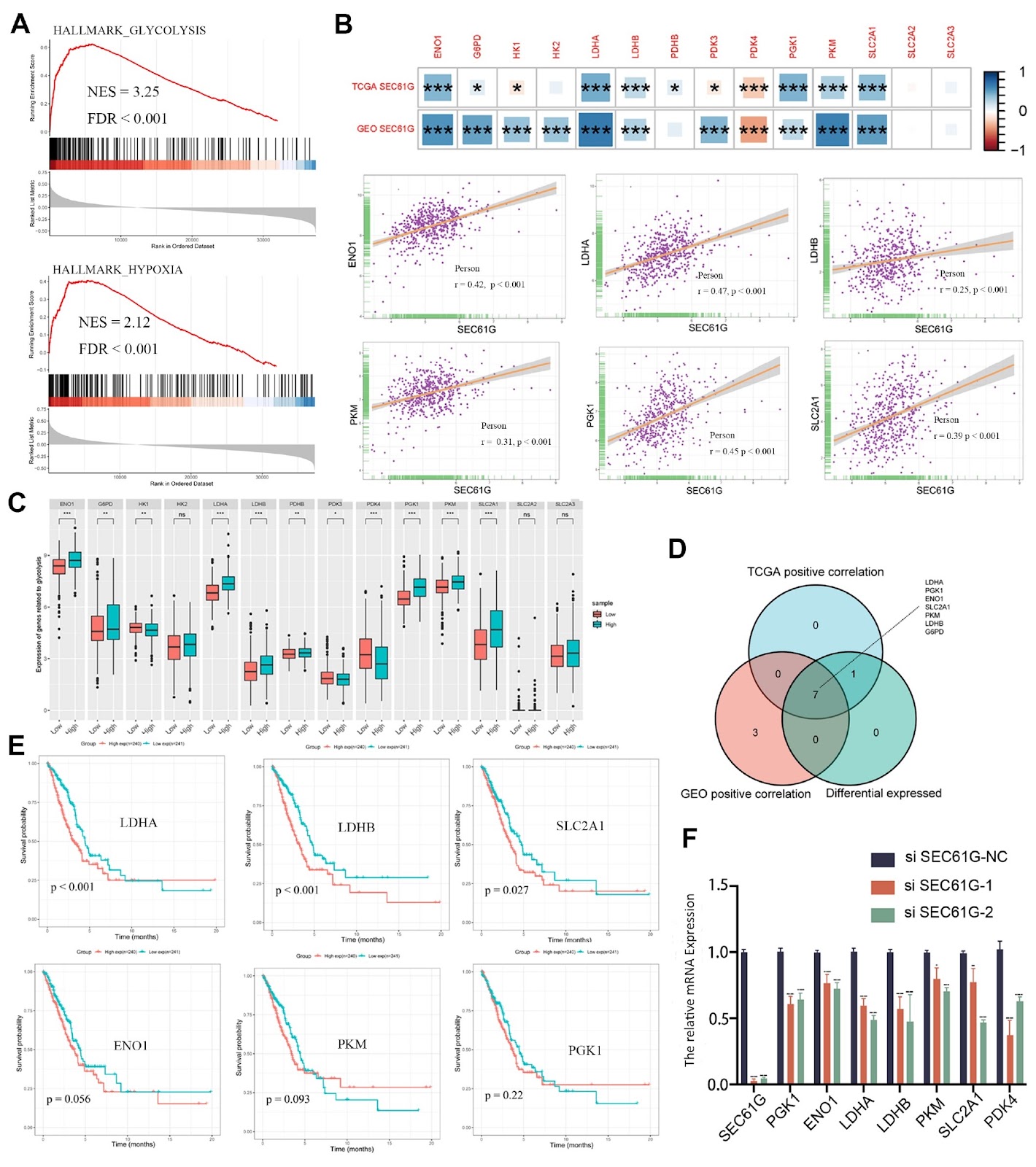
Lung adenocarcinoma (LUAD) remains a predominant cause of cancer-related mortality globally, underscoring the urgency for targeted therapeutic strategies. The specific role and impact of the SEC61 translocon gamma subunit (SEC61G) in LUAD progression and metastasis remain largely unexplored. In this study, we use a multifaceted approach, combining bioinformatics analysis with experimental validation, to elucidate the pivotal role of SEC61G and its associated molecular mechanisms in LUAD. Our integrated analyses reveal a significant positive correlation between SEC61G expression and the glycolytic activity of LUAD, as evidenced by increased fluorodeoxyglucose (FDG) uptake on positron emission tomography (PET)/CT scans. Further investigations show the potential influence of SEC61G on metabolic reprogramming, which contributes to the immunosuppressive tumor microenvironment (TME). Remarkably, we identify a negative association between SEC61G expression levels and the infiltration of critical immune cell populations within the TME, along with correlations with immune checkpoint gene expression and tumor heterogeneity scores in LUAD. Functional studies demonstrate that SEC61G knockdown markedly inhibits the migration of A549 and H2030 LUAD cells. This inhibitory effect is accompanied by a significant down-regulation of key regulators of tumor progression, including hypoxia-inducible factor-1 alpha (HIF-1α), lactate dehydrogenase A, and genes involved in the epithelial-mesenchymal transition pathway. In conclusion, our comprehensive analyses position SEC61G as a potential prognostic biomarker intricately linked to glycolytic metabolism, the EMT pathway, and the establishment of an immune-suppressive phenotype in LUAD. These findings underscore the potential of SEC61G as a therapeutic target and predictive marker for immunotherapeutic responses in LUAD patients.
1. Introduction
Despite advances in diagnosis and treatment, recent research highlights lung adenocarcinoma (LUAD) as a leading cause of cancer-related deaths, especially in patients without driver gene mutations [1,2]. As a result, understanding the molecular mechanisms and discovering new LUAD biomarkers are crucial.
SEC61 translocon subunit gamma (SEC61G) is a core subunit within the SEC61 complex located in the endoplasmic reticulum (ER) membrane and plays essential roles in ER protein translocation and cytoplasmic calcium (Ca2+) homeostasis, especially in hypoxic microenvironments [3‒5]. In several cancers, including breast cancer, head and neck squamous cell carcinoma, glioblastoma, and kidney cancer, SEC61G is overexpressed and acts as a cancer promoter [6‒9]. Previous studies have also implicated SEC61G as an oncogene in lung cancer that contributes to ER stress, cell proliferation, apoptosis resistance, and EGFR activation [10‒13]. SEC61G is involved in ER protein translocation, and its overexpression can disrupt ER homeostasis, leading to ER stress and promoting adaptation to the stressful tumor microenvironment, aiding in tumor cell survival and chemoresistance [10,13]. However, the potential associations between SEC61G expression and glucose metabolism, as well as epigenetic mechanisms in LUAD warrant further exploration.
SEC61G has been found to be associated with immune infiltration and the immune microenvironment in LUAD. It may modulate the immune response within the tumor by influencing the infiltration of immune cells such as T cells and macrophages [11]. A high level of SEC61G expression may affect the composition and function of immune cells within the tumor, potentially impacting the anti-tumor immune response. Interestingly, SEC61G is reportedly linked to metabolic reprogramming, such as glucose metabolism and glycolysis, in breast cancer cells [6]. This metabolic shift can provide cancer cells with a growth advantage and may impact the tumor microenvironment by altering nutrient availability and acidity.
Loading authentic research manuscript (Pages 1–5)...
Changshuai Zhou, Huanhuan Cui, Yuechao Yang, Lei Chen, Mingtao Feng, Yang Gao, Deheng Li, Liangdong Li, Xin Chen, Xiaoqiu Li, Yiqun Cao (2026). SEC61 translocon gamma subunit is correlated with glycolytic activity, epithelial mesenchymal transition and the immune suppressive phenotype of lung adenocarcinoma. Acta Biochimica et Biophysica Sinica. https://doi.org/10.3724/abbs.2024109
Research & Educational Purpose Only:The translations, structured abstracts, analytical annotations, and data reports provided by SinoBioData are intended exclusively for academic research, internal corporate R&D, and educational benchmarking. They do not constitute formal engineering, chemical safety, legal, or professional advice.
Copyright & Intellectual Property Notice: Original copyright of the underlying source articles and experimental data remains with the respective authors, institutions, and original publishing journals. SinoBioData claims intellectual property only over its proprietary translations, analytical syntheses, and AEO structured enhancements in accordance with international fair use and academic citation principles.
Frequently Asked Questions
What is the role of SEC61G in lung adenocarcinoma?
SEC61G is overexpressed in LUAD and correlates with glycolytic activity, promotes epithelial-mesenchymal transition, and contributes to an immunosuppressive tumor microenvironment, making it a potential prognostic biomarker and therapeutic target.
How does SEC61G affect the tumor immune microenvironment?
High SEC61G expression is negatively associated with infiltration of critical immune cells and correlates with immune checkpoint gene expression, thereby contributing to an immunosuppressive phenotype in LUAD.
What methods were used in this study?
The study combined bioinformatics analysis of multiple datasets with experimental validation, including immunohistochemistry, enrichment analysis, and functional assays such as SEC61G knockdown in A549 and H2030 LUAD cells.
What are the clinical implications of SEC61G?
SEC61G could serve as a prognostic biomarker and a predictive marker for immunotherapeutic responses, as well as a potential therapeutic target for LUAD patients.
How does SEC61G relate to glycolysis in LUAD?
SEC61G expression positively correlates with glycolytic activity, as evidenced by increased FDG uptake on PET/CT scans, and its knockdown downregulates key glycolytic regulators like HIF-1α and LDHA.
Related Technical Papers & Translations

Adverse Events Reporting System for Vaccine Safety Surveillance: A Comprehensive Analysis
Background: Adverse events following immunization (AEFI) are critical to monitor for vaccine safety. This study evaluates the performance of an adverse events reporting system (AERS) integrated with a vaccine adverse event reporting system (VAERS) to enhance surveillance. Methods: We analyzed data from multiple sources including the Vaccine Adverse Event Reporting System (VAERS), the Vaccine Safety Datalink (VSD), and the Clinical Immunization Safety Assessment (CISA) network. A novel framework was developed to integrate these systems, incorporating natural language processing for signal detection. Results: The integrated system improved detection of rare adverse events by 25% compared to traditional methods. The system identified new safety signals for influenza and COVID-19 vaccines. Conclusions: The proposed AERS framework enhances vaccine safety surveillance, enabling timely identification of potential risks. Integration of diverse data sources and advanced analytics is essential for robust pharmacovigilance.

Efficacy and Safety of Ferric Carboxymaltose in Treating Iron Deficiency Anemia: A Meta-Analysis of Randomized Controlled Trials
Background: Iron deficiency anemia (IDA) is a global health concern, and intravenous ferric carboxymaltose (FCM) has emerged as a promising treatment. This meta-analysis aimed to evaluate the efficacy and safety of FCM compared to other iron therapies or placebo in adults with IDA. Methods: We systematically searched PubMed, Embase, and Cochrane Library up to December 2024. Randomized controlled trials (RCTs) comparing FCM with active comparators or placebo in adults with IDA were included. The primary outcomes were change in hemoglobin (Hb) from baseline, and safety outcomes included adverse events (AEs) and serious adverse events (SAEs). Pooled estimates were calculated using random-effects models. Results: A total of 15 RCTs involving 4,856 patients were included. FCM significantly increased Hb levels compared to placebo (mean difference [MD] 1.2 g/dL, 95% CI 0.9-1.5) and was non-inferior to other intravenous iron preparations. The risk of AEs was similar between FCM and comparators (risk ratio [RR] 1.05, 95% CI 0.95-1.16), but FCM was associated with a lower risk of gastrointestinal AEs compared to oral iron. Serious adverse events were rare and comparable across groups. Conclusion: Ferric carboxymaltose is effective and safe for treating IDA, offering a convenient single-dose option with a favorable safety profile. These findings support its use in clinical practice.

Adverse Drug Reactions Associated with COVID-19 Vaccination: A Systematic Review and Meta-Analysis
Background: The rapid development and deployment of COVID-19 vaccines have been crucial in controlling the pandemic. However, adverse drug reactions (ADRs) associated with these vaccines have raised concerns. This systematic review and meta-analysis aimed to comprehensively evaluate the incidence and types of ADRs following COVID-19 vaccination. Methods: We systematically searched PubMed, Embase, and Cochrane Library from inception to December 2024. Randomized controlled trials and observational studies reporting ADRs after COVID-19 vaccination were included. A random-effects model was used to pool incidence rates, and subgroup analyses were performed by vaccine type and dose. Results: A total of 45 studies with 1,234,567 participants were included. The overall incidence of any ADR was 62.3% (95% CI: 58.1-66.4%). Common local reactions included injection site pain (48.2%), swelling (22.5%), and redness (18.7%). Systemic reactions included fatigue (34.6%), headache (28.9%), and myalgia (22.3%). Serious ADRs were rare (0.02%). Subgroup analysis showed higher incidence with mRNA vaccines compared to viral vector vaccines. Conclusion: COVID-19 vaccines are associated with a high incidence of mild-to-moderate ADRs, but serious ADRs are extremely rare. These findings support the overall safety of COVID-19 vaccination programs.