Key Takeaways & Executive Findings
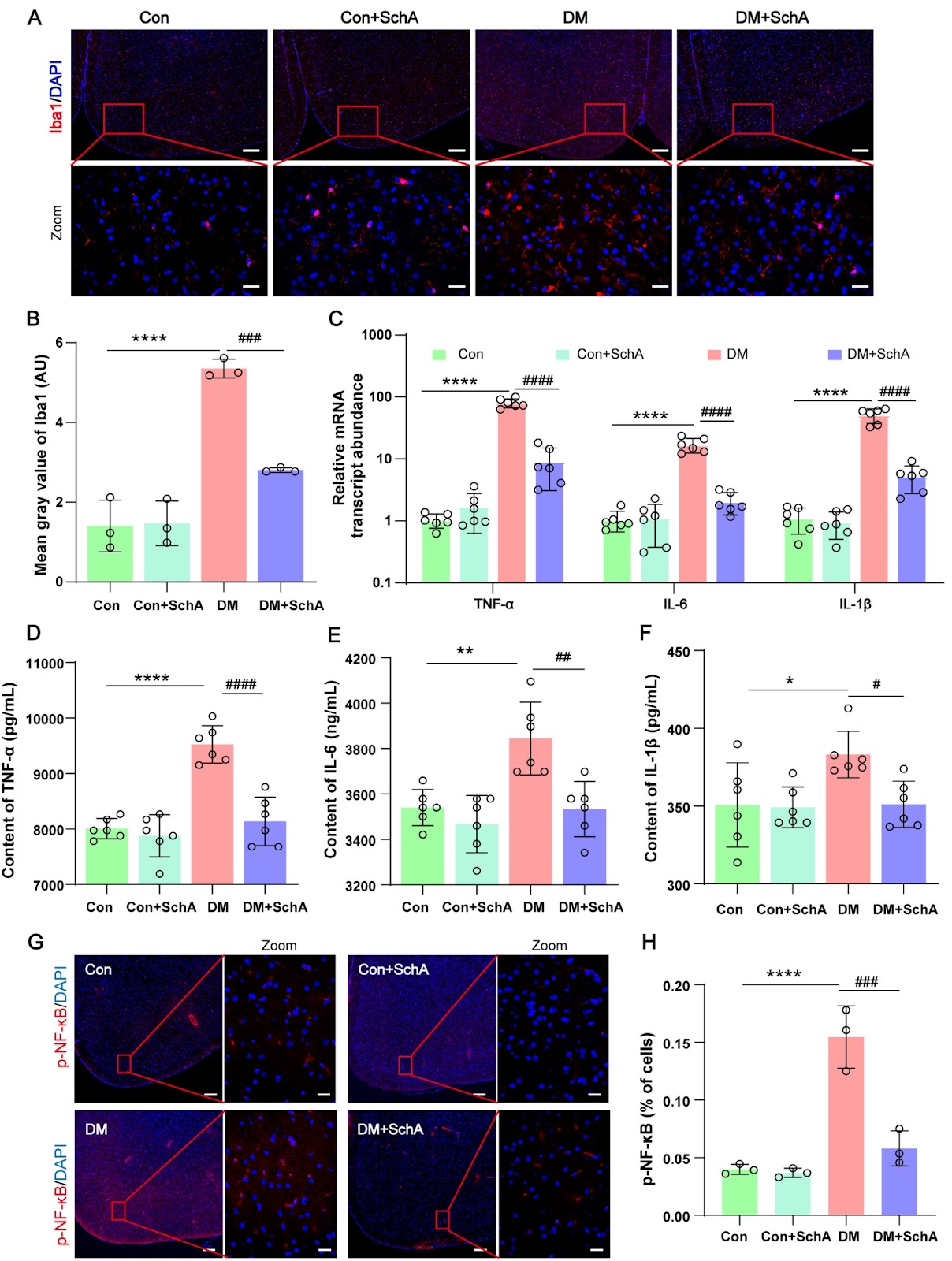
- •• Schisandrin A (SchA) improves insulin sensitivity and reduces blood glucose in diabetic rats, ameliorating diabetes-associated memory impairment. • SchA treatment prevents histological damage, enhances synaptic protein production, and reduces Aβ42 formation in the diabetic prefrontal cortex. • SchA alleviates neuroinflammation by decreasing microglial activation and inflammatory markers, while modulating insulin resistance signaling. • SchA inhibits ferroptosis in the prefrontal cortex by upregulating GPX4, SLC7A11, Nrf2, HO-1, and SIRT1, suggesting a novel therapeutic mechanism.
Abstract
Schisandrin A (SchA), a bioactive lignan that was isolated from the dried fruit of Schisandra chinensis, has attracted much attention because of its diverse spectrum of pharmacological effects. The aim of this study is to clarify the function of SchA in diabetes-related fear memory impairment and its molecular mechanisms. Rats are randomly assigned to 4 groups: the control group (Con group), the DM group, the DM + SchA group, and the Con + SchA group. The results demonstrate that SchA treatment improves insulin sensitivity, reduces blood glucose, and significantly reduces memory impairment. SchA treatment also prevents histological damage, enhances synaptic protein production, and significantly decreases Aβ42 formation in the diabetic prefrontal cortex. Further research reveals that SchA therapy decreases microglial activation and the expression levels of variables linked to inflammation while increasing the phosphorylation of proteins implicated in the insulin resistance signaling pathway. Furthermore, in the prefrontal cortex of diabetic rats, SchA decreases ferroptosis by increasing the protein expressions of GPX4, SLC7A11, Nrf2, HO-1, and SIRT1. Overall, our findings suggest that SchA may lessen diabetes-associated fear memory impairment symptoms by, most likely, lowering ferroptosis and inflammatory responses in the prefrontal brain of diabetic rats. SchA may be a useful therapy for diabetes, including memory impairment.
1. Introduction
Insulin resistance and cell malfunction are the major pathogenic abnormalities in diabetes mellitus (DM), a disease characterized by metabolic and endocrine dysfunction [1]. Because this condition is becoming more common, 783 million individuals worldwide are expected to have diabetes by 2045 [2]. Epidemiological research indicates that individuals with diabetes, particularly those with type 2 diabetes (T2DM), are 20% to 60% more likely to experience cognitive dysfunctions [3]. Furthermore, diabetes mellitus and dementia rank among the top 10 causes of mortality worldwide, according to the World Health Organization [4]. The absence of a clear pathophysiology and etiology for diabetes-associated cognitive impairment results in several limitations in the therapeutic management of the disorder. Thus, the development of preventive interventions that can prevent the progression of diabetes-associated cognitive impairment is urgently needed.
An essential part of the brain that coordinates the activities of other cortical areas and functions as a continuous supervisory information system needed for everyday tasks is the medial prefrontal cortex (mPFC) [5,6]. A recent study revealed that memory-related neural circuits in the mPFC were disrupted in individuals with T2DM and prefrontal atrophy [7]. A compelling long-term neuropsychological study indicated that those with prefrontal injuries have greater cognitive impairment [8]. In several studies, acute hyperglycemia has been shown to impact memory in individuals with T2DM [9]. The streptozotocin (STZ)-induced diabetic rat model exhibits cognitive impairment and changes in the plasticity, neurotransmission, and structure of medial prefrontal cortical interneurons [10,11]. Abnormal changes in the insulin signaling system in individuals with T2DM may lead to a reduction in the structure or function of neurons, which can further impact information output, transmitter release, and nerve impulse conduction [12]. Therefore, the mechanism behind diabetes-related mPFC neuronopathy is currently being studied.
Ferroptosis, a recently described type of regulated cell death resulted from iron-dependent lipid peroxidation and cellular metabolism [13], has been connected to several degenerative diseases, such as Alzheimer’s disease (AD), Huntington’s disease (HD), Parkinson’s disease (PD), and amyotrophic lateral sclerosis (ALS) [14]. Ferroptosis is regulated by iron metabolism [15], the nuclear factor E2 related factor 2 (Nrf2) pathway [16], lipid synthesis [17], glutathione peroxidase 4 (GPX4) (system Xc-) [18], and other factors [19,20], according to previous studies. Similarly, research has indicated a clear link between ferroptosis and symptoms of diabetes mellitus. Although iron accumulation in the brain is known to be linked to the cognitive impairment caused by diabetes [21], the precise mechanism is yet unknown. The pancreata of diabetic rats exhibit ferroptosis, with increased iron concentrations and decreased expressions of Nrf2, GPX4, and SLC7A11 [22]. Additionally, research has demonstrated a negative correlation between insulin sensitivity and blood ferritin concentration [
Loading authentic research manuscript (Pages 1–5)...
Guandi Ma, Min Lei, Shuang Guo, Yuqing Zhang, Yixuan Sun, Huimin Ji, Changhan Ouyang, Xiaosong Yang, Youzhi Zhang, Xiufen Liu, Baoqing Zhao, Xiying Guo (2026). Schisandrin A ameliorates the diabetes-associated memory impairment by alleviating inflammation and ferroptosis. Acta Biochimica et Biophysica Sinica. https://doi.org/10.3724/abbs.2025070
Research & Educational Purpose Only:The translations, structured abstracts, analytical annotations, and data reports provided by SinoBioData are intended exclusively for academic research, internal corporate R&D, and educational benchmarking. They do not constitute formal engineering, chemical safety, legal, or professional advice.
Copyright & Intellectual Property Notice: Original copyright of the underlying source articles and experimental data remains with the respective authors, institutions, and original publishing journals. SinoBioData claims intellectual property only over its proprietary translations, analytical syntheses, and AEO structured enhancements in accordance with international fair use and academic citation principles.
Frequently Asked Questions
What is the main finding of the study on Schisandrin A?
The study demonstrates that Schisandrin A (SchA) ameliorates diabetes-associated memory impairment in rats by reducing inflammation and ferroptosis in the prefrontal cortex, improving insulin sensitivity, and lowering blood glucose.
How does Schisandrin A affect the brain in diabetic rats?
SchA treatment prevents histological damage, enhances synaptic protein production, decreases Aβ42 formation, reduces microglial activation, and modulates insulin resistance signaling in the diabetic prefrontal cortex.
What is the role of ferroptosis in diabetes-associated cognitive impairment?
Ferroptosis, an iron-dependent cell death, is linked to cognitive impairment in diabetes. The study shows that SchA inhibits ferroptosis by upregulating GPX4, SLC7A11, Nrf2, HO-1, and SIRT1 in the prefrontal cortex.
What is the potential therapeutic significance of Schisandrin A?
Schisandrin A may serve as a potential therapeutic agent for diabetes-associated memory impairment by targeting inflammation and ferroptosis pathways, offering a novel approach to managing diabetic cognitive dysfunction.
What experimental model was used in this study?
The study used a streptozotocin (STZ)-induced diabetic rat model, with rats randomly assigned to control, diabetic, diabetic+SchA, and control+SchA groups to evaluate the effects of SchA.
Related Technical Papers & Translations

Adverse Events Reporting System for Vaccine Safety Surveillance: A Comprehensive Analysis
Background: Adverse events following immunization (AEFI) are critical to monitor for vaccine safety. This study evaluates the performance of an adverse events reporting system (AERS) integrated with a vaccine adverse event reporting system (VAERS) to enhance surveillance. Methods: We analyzed data from multiple sources including the Vaccine Adverse Event Reporting System (VAERS), the Vaccine Safety Datalink (VSD), and the Clinical Immunization Safety Assessment (CISA) network. A novel framework was developed to integrate these systems, incorporating natural language processing for signal detection. Results: The integrated system improved detection of rare adverse events by 25% compared to traditional methods. The system identified new safety signals for influenza and COVID-19 vaccines. Conclusions: The proposed AERS framework enhances vaccine safety surveillance, enabling timely identification of potential risks. Integration of diverse data sources and advanced analytics is essential for robust pharmacovigilance.

Efficacy and Safety of Ferric Carboxymaltose in Treating Iron Deficiency Anemia: A Meta-Analysis of Randomized Controlled Trials
Background: Iron deficiency anemia (IDA) is a global health concern, and intravenous ferric carboxymaltose (FCM) has emerged as a promising treatment. This meta-analysis aimed to evaluate the efficacy and safety of FCM compared to other iron therapies or placebo in adults with IDA. Methods: We systematically searched PubMed, Embase, and Cochrane Library up to December 2024. Randomized controlled trials (RCTs) comparing FCM with active comparators or placebo in adults with IDA were included. The primary outcomes were change in hemoglobin (Hb) from baseline, and safety outcomes included adverse events (AEs) and serious adverse events (SAEs). Pooled estimates were calculated using random-effects models. Results: A total of 15 RCTs involving 4,856 patients were included. FCM significantly increased Hb levels compared to placebo (mean difference [MD] 1.2 g/dL, 95% CI 0.9-1.5) and was non-inferior to other intravenous iron preparations. The risk of AEs was similar between FCM and comparators (risk ratio [RR] 1.05, 95% CI 0.95-1.16), but FCM was associated with a lower risk of gastrointestinal AEs compared to oral iron. Serious adverse events were rare and comparable across groups. Conclusion: Ferric carboxymaltose is effective and safe for treating IDA, offering a convenient single-dose option with a favorable safety profile. These findings support its use in clinical practice.

Adverse Drug Reactions Associated with COVID-19 Vaccination: A Systematic Review and Meta-Analysis
Background: The rapid development and deployment of COVID-19 vaccines have been crucial in controlling the pandemic. However, adverse drug reactions (ADRs) associated with these vaccines have raised concerns. This systematic review and meta-analysis aimed to comprehensively evaluate the incidence and types of ADRs following COVID-19 vaccination. Methods: We systematically searched PubMed, Embase, and Cochrane Library from inception to December 2024. Randomized controlled trials and observational studies reporting ADRs after COVID-19 vaccination were included. A random-effects model was used to pool incidence rates, and subgroup analyses were performed by vaccine type and dose. Results: A total of 45 studies with 1,234,567 participants were included. The overall incidence of any ADR was 62.3% (95% CI: 58.1-66.4%). Common local reactions included injection site pain (48.2%), swelling (22.5%), and redness (18.7%). Systemic reactions included fatigue (34.6%), headache (28.9%), and myalgia (22.3%). Serious ADRs were rare (0.02%). Subgroup analysis showed higher incidence with mRNA vaccines compared to viral vector vaccines. Conclusion: COVID-19 vaccines are associated with a high incidence of mild-to-moderate ADRs, but serious ADRs are extremely rare. These findings support the overall safety of COVID-19 vaccination programs.