Key Takeaways & Executive Findings
- •• A novel sandwich-type electrochemical DNA sensor based on PPY-rGO nanocomposites and AuNPs was developed for SARS-CoV-2 nucleic acid detection. • The sensor leverages a sandwich hybridization strategy with capture and signal DNA probes, enhancing specificity and sensitivity. • Electrochemical deposition and DPV enable quantitative detection of target DNA sequences with high accuracy. • The PPY-rGO composite overcomes graphene limitations, offering improved conductivity and surface area for biosensing applications.
Abstract
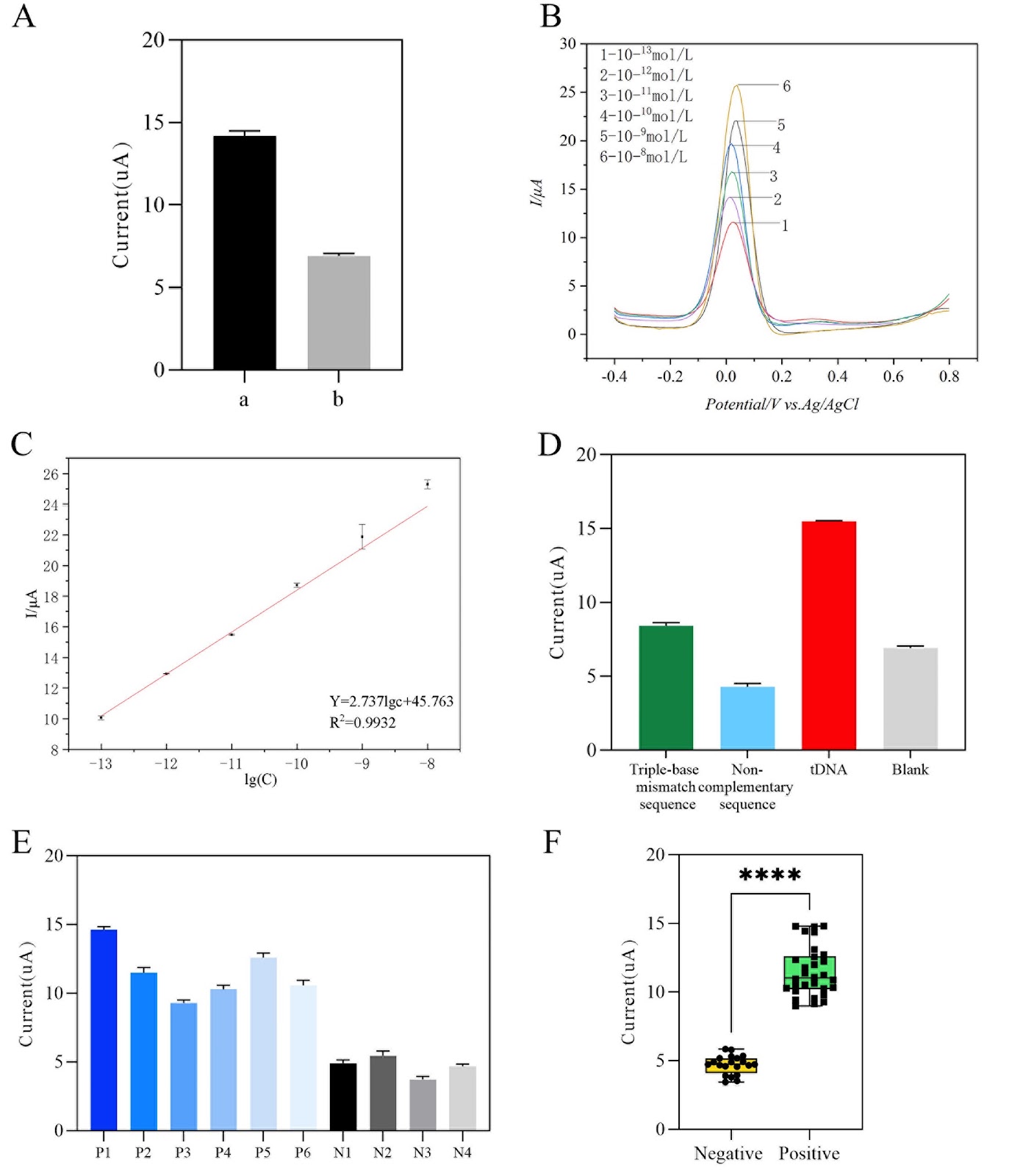
Graphene and its derivatives exhibit excellent electrical and mechanical properties, including a high specific surface area, excellent electron mobility, and good biocompatibility, which make them ideal materials for fabricating biosensor devices. Nevertheless, sensors based on pure graphene sensors still have certain limitations. For example, the number of dangling chemical bonds on the graphene surface is insufficient, which restricts the chemisorption of target molecules on the graphene surface. Additionally, graphene tends to stack and self-polymerize due to the presence of strong π-π interactions, van der Waals forces, and high surface energy, which leads to limitations in its semiconductor applications. The incorporation of other nanomaterials (e.g., metals, metal oxides, and conductive polymers) into graphene sheets has been demonstrated to prevent graphene agglomeration and improve the nanostructure. Conductive polymers have been the subject of considerable interest within the context of electronic device manufacturing and the development of electrochemical sensors. This is due to a number of factors, including their low cost, simple preparation, high electrical conductivity, and high compatibility with modern electronic devices. Polypyrrole (PPY), a widely used conductive polymer, has attracted attention, particularly in electrode modification. PPY exhibits excellent electrical conductivity, redox reversibility, biocompatibility, and environmental stability while also offering low production costs, making it an attractive option for use as a conductive polymer. Concurrently, the distinctive structural characteristics of graphene and its oxides render them prospective conductive fillers for conductive polymers. Consequently, the incorporation of graphene into polymers can compensate for their inherent limitations and enhance the long-term stability of sensing materials. The combination of graphene and conducting polymers represents a powerful means of preparing modified electrodes with good electrochemical properties, which have been successfully applied to the electrochemical detection of various biomolecules. For example, Oliveira et al. developed an electrochemical gene sensor based on PPY and graphene quantum dots for the detection of the PML/RARα fusion gene in childhood acute promyelocytic leukemia. As a graphene derivative, reduced graphene oxide (rGO) is similar to graphene in numerous aspects, including favourable electrical conductivity, flexibility, low cytotoxicity, hydrophilicity, a substantial surface-area-to-volume ratio, and elevated chemical resistance. These attributes render rGO an exemplary matrix for nanocomposites. Owing to the presence of hydrophilic and reactive functional groups, rGO is ideal for use in biosensors. The hydrophilic nature of rGO is instrumental in the assembly of biosensors, enabling the fabrication of sensing platforms through techniques such as drop-casting, spin-coating, ink-jet printing, and processing of electrode materials. In the present study, a “sandwich” DNA hybridisation strategy was employed to construct an electrochemical DNA sensor based on PPY-rGO composite nanomaterials. PPY-rGO nanocomplexes were initially prepared by electrochemical deposition and subsequently modified on the surface of a screen-printed carbon electrode (SPCE) to increase the conductivity of the electrode, with SARS-CoV-2 serving as the target. The PPY-rGO nanocomplexes possess a substantial specific surface area and excellent conductivity, in addition to providing many attachment sites for the subsequent electrodeposition of AuNPs by cyclic voltammetry (CV). This enables the immobilization of a greater number of single-stranded DNA (ssDNA) probes, thereby enhancing the sensitivity and specificity of the sensor for the detection of target molecules. To further improve the specificity of detection, two DNA probes were designed on the basis of a sandwich hybridization strategy. One is a specific capture DNA (CDNA) with a sulfhydryl tag, and the other is a signal DNA (SDNA) with a biotin moiety, which can bind to horseradish peroxidase-streptavidin biofunctionalized gold nanoparticles (SA-HRP-AuNPs). Hybridization of the CDNA, target DNA (tDNA), and SDNA on the electrode surface formed a sandwich structure, whereby the SA-HRP-AuNPs bound to the biotin moiety. The detection of tDNA sequences was achieved via differential pulse voltammetry (DPV), which measures the current change of the sensor in hydrogen peroxide (H2O2) and hydroquinone (HQ) as the solvent electrochemical test solution. Electrochemical characterization and sensor performance testing were performed via a convenient electrochemical workstation and PSTrace software from PalmSens (Houten, Netherlands). SPCE electrodes were
1. Introduction
Graphene and its derivatives exhibit excellent electrical and mechanical properties, including a high specific surface area, excellent electron mobility, and good biocompatibility, which make them ideal materials for fabricating biosensor devices [1]. Nevertheless, sensors based on pure graphene sensors still have certain limitations. For example, the number of dangling chemical bonds on the graphene surface is insufficient, which restricts the chemisorption of target molecules on the graphene surface. Additionally, graphene tends to stack and self-polymerize due to the presence of strong π-π interactions, van der Waals forces, and high surface energy, which leads to limitations in its semiconductor applications [2].
The incorporation of other nanomaterials (e.g., metals, metal oxides, and conductive polymers) into graphene sheets has been demonstrated to prevent graphene agglomeration and improve the nanostructure [3]. Conductive polymers have been the subject of considerable interest within the context of electronic device manufacturing and the development of electrochemical sensors. This is due to a number of factors, including their low cost, simple preparation, high electrical conductivity, and high compatibility with modern electronic devices [4]. Polypyrrole (PPY), a widely used conductive polymer, has attracted attention, particularly in electrode modification. PPY exhibits excellent electrical conductivity, redox reversibility, biocompatibility, and environmental stability while also offering low production costs, making it an attractive option for use as a conductive polymer [5]. Concurrently, the distinctive structural characteristics of graphene and its oxides render them prospective conductive fillers for conductive polymers [6]. Consequently, the incorporation of graphene into polymers can compensate for their inherent limitations and enhance the long-term stability of sensing materials. The combination of graphene and conducting polymers represents a powerful means of preparing modified electrodes with good electrochemical properties, which have been successfully applied to the electrochemical detection of various biomolecules [7]. For example, Oliveira et al. [8] developed an electrochemical gene sensor based on PPY and graphene quantum dots for the detection of the PML/RARα fusion gene in childhood acute promyelocytic leukemia.
Loading authentic research manuscript (Pages 1–5)...
Huan Yang, Yating Li, Donglin Cao, Li He, Yingjian Guo, Zhongming Liu, Haiyan Zhang (2026). Sandwich-type graphene electrochemical sensor for nucleic acid detection of SARS-CoV-2. Acta Biochimica et Biophysica Sinica. https://doi.org/10.3724/abbs.2025015
Research & Educational Purpose Only:The translations, structured abstracts, analytical annotations, and data reports provided by SinoBioData are intended exclusively for academic research, internal corporate R&D, and educational benchmarking. They do not constitute formal engineering, chemical safety, legal, or professional advice.
Copyright & Intellectual Property Notice: Original copyright of the underlying source articles and experimental data remains with the respective authors, institutions, and original publishing journals. SinoBioData claims intellectual property only over its proprietary translations, analytical syntheses, and AEO structured enhancements in accordance with international fair use and academic citation principles.
Frequently Asked Questions
What is the working principle of the sandwich-type graphene electrochemical sensor?
The sensor uses a sandwich hybridization strategy where a capture DNA (CDNA) immobilized on the electrode surface hybridizes with the target DNA (tDNA) and a signal DNA (SDNA) labeled with biotin. This forms a sandwich complex, which is then detected via differential pulse voltammetry (DPV) using horseradish peroxidase-streptavidin functionalized gold nanoparticles (SA-HRP-AuNPs) that catalyze a reaction with hydrogen peroxide and hydroquinone, producing a measurable current.
What are the advantages of using PPY-rGO nanocomposites in the sensor?
PPY-rGO nanocomposites combine the high conductivity and surface area of reduced graphene oxide (rGO) with the excellent electrochemical properties of polypyrrole (PPY). This composite prevents graphene agglomeration, enhances electron transfer, and provides abundant active sites for the deposition of gold nanoparticles, thereby increasing the sensor's sensitivity and stability.
How is the sensor fabricated?
The sensor is fabricated by electrochemically depositing PPY-rGO nanocomposites onto a screen-printed carbon electrode (SPCE). Subsequently, gold nanoparticles (AuNPs) are electrodeposited via cyclic voltammetry to provide a platform for immobilizing thiolated capture DNA probes. After immobilization, the sensor is ready for target DNA detection.
What is the detection method used in this sensor?
The detection method is differential pulse voltammetry (DPV). After the sandwich hybridization is completed, the sensor is incubated with SA-HRP-AuNPs, which bind to the biotin on the signal DNA. The electrochemical signal is then measured in a solution containing hydrogen peroxide (H2O2) and hydroquinone (HQ), where the HRP catalyzes the reduction of H2O2, producing a current change proportional to the target DNA concentration.
What is the significance of this sensor for SARS-CoV-2 detection?
This sensor provides a rapid, sensitive, and specific method for detecting SARS-CoV-2 nucleic acid sequences. It leverages the unique properties of graphene and conducting polymers to achieve high sensitivity and specificity, which is crucial for early diagnosis and monitoring of COVID-19. The sensor's design also offers potential for point-of-care testing due to its simplicity and use of screen-printed electrodes.
Related Technical Papers & Translations

Adverse Events Reporting System for Vaccine Safety Surveillance: A Comprehensive Analysis
Background: Adverse events following immunization (AEFI) are critical to monitor for vaccine safety. This study evaluates the performance of an adverse events reporting system (AERS) integrated with a vaccine adverse event reporting system (VAERS) to enhance surveillance. Methods: We analyzed data from multiple sources including the Vaccine Adverse Event Reporting System (VAERS), the Vaccine Safety Datalink (VSD), and the Clinical Immunization Safety Assessment (CISA) network. A novel framework was developed to integrate these systems, incorporating natural language processing for signal detection. Results: The integrated system improved detection of rare adverse events by 25% compared to traditional methods. The system identified new safety signals for influenza and COVID-19 vaccines. Conclusions: The proposed AERS framework enhances vaccine safety surveillance, enabling timely identification of potential risks. Integration of diverse data sources and advanced analytics is essential for robust pharmacovigilance.

Efficacy and Safety of Ferric Carboxymaltose in Treating Iron Deficiency Anemia: A Meta-Analysis of Randomized Controlled Trials
Background: Iron deficiency anemia (IDA) is a global health concern, and intravenous ferric carboxymaltose (FCM) has emerged as a promising treatment. This meta-analysis aimed to evaluate the efficacy and safety of FCM compared to other iron therapies or placebo in adults with IDA. Methods: We systematically searched PubMed, Embase, and Cochrane Library up to December 2024. Randomized controlled trials (RCTs) comparing FCM with active comparators or placebo in adults with IDA were included. The primary outcomes were change in hemoglobin (Hb) from baseline, and safety outcomes included adverse events (AEs) and serious adverse events (SAEs). Pooled estimates were calculated using random-effects models. Results: A total of 15 RCTs involving 4,856 patients were included. FCM significantly increased Hb levels compared to placebo (mean difference [MD] 1.2 g/dL, 95% CI 0.9-1.5) and was non-inferior to other intravenous iron preparations. The risk of AEs was similar between FCM and comparators (risk ratio [RR] 1.05, 95% CI 0.95-1.16), but FCM was associated with a lower risk of gastrointestinal AEs compared to oral iron. Serious adverse events were rare and comparable across groups. Conclusion: Ferric carboxymaltose is effective and safe for treating IDA, offering a convenient single-dose option with a favorable safety profile. These findings support its use in clinical practice.

Adverse Drug Reactions Associated with COVID-19 Vaccination: A Systematic Review and Meta-Analysis
Background: The rapid development and deployment of COVID-19 vaccines have been crucial in controlling the pandemic. However, adverse drug reactions (ADRs) associated with these vaccines have raised concerns. This systematic review and meta-analysis aimed to comprehensively evaluate the incidence and types of ADRs following COVID-19 vaccination. Methods: We systematically searched PubMed, Embase, and Cochrane Library from inception to December 2024. Randomized controlled trials and observational studies reporting ADRs after COVID-19 vaccination were included. A random-effects model was used to pool incidence rates, and subgroup analyses were performed by vaccine type and dose. Results: A total of 45 studies with 1,234,567 participants were included. The overall incidence of any ADR was 62.3% (95% CI: 58.1-66.4%). Common local reactions included injection site pain (48.2%), swelling (22.5%), and redness (18.7%). Systemic reactions included fatigue (34.6%), headache (28.9%), and myalgia (22.3%). Serious ADRs were rare (0.02%). Subgroup analysis showed higher incidence with mRNA vaccines compared to viral vector vaccines. Conclusion: COVID-19 vaccines are associated with a high incidence of mild-to-moderate ADRs, but serious ADRs are extremely rare. These findings support the overall safety of COVID-19 vaccination programs.