Key Takeaways & Executive Findings
- •• High RPL8 expression correlates with poor prognosis in melanoma patients. • RPL8 knockdown inhibits melanoma cell proliferation and induces G2/M cell cycle arrest. • RPL8 knockdown reduces melanoma cell invasion and migration. • RPL8 is a potential therapeutic target and prognostic biomarker for melanoma.
Abstract
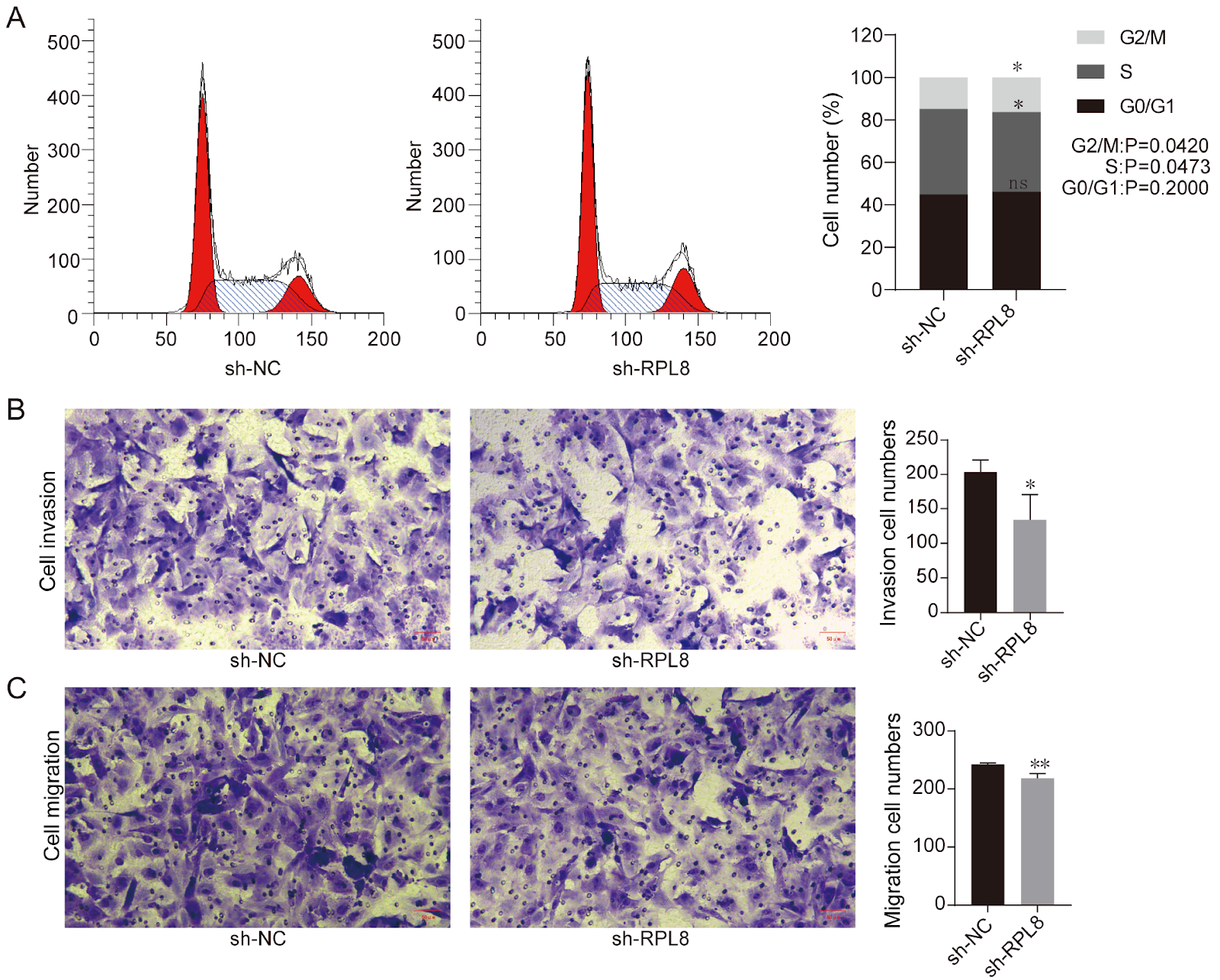
Melanoma is an aggressive skin cancer with poor prognosis in advanced stages due to its metastatic potential. Although treatment modalities such as surgical resection, targeted therapy, immunotherapy, radiotherapy, and chemotherapy have conferred long-term survival benefits to certain patients, not all individuals respond favorably, underscoring the urgent need to develop predictive biomarkers. Ribosomal proteins have been implicated in tumor progression through extraribosomal functions. Ribosomal protein L8 (RPL8) is a unique ribosomal protein that warrants further exploration. Here, we investigated the role of RPL8 in melanoma progression. Using clinical data from the GDC and GEO databases, we found that high RPL8 expression is associated with poor prognosis in melanoma patients. Immunohistochemical analysis confirmed higher RPL8 expression in melanoma tissues compared to normal tissues. To elucidate the functional impact, we established an A875 melanoma cell line with stable RPL8 knockdown (shRPL8) using lentiviral vectors. RT-qPCR and western blot analysis confirmed efficient knockdown. CCK-8 assays showed that RPL8 knockdown significantly inhibited cell proliferation. Flow cytometry analysis revealed that RPL8 knockdown led to an increase in the proportion of cells in the G2/M phase and a decrease in the S phase, indicating cell cycle arrest. Furthermore, transwell assays demonstrated that RPL8 knockdown reduced cell invasion and migration. These findings suggest that RPL8 promotes melanoma progression by regulating the cell cycle and metastasis, and may serve as a potential therapeutic target and prognostic biomarker for melanoma.
1. Introduction
Melanoma is an aggressive skin cancer with poor prognosis in advanced stages due to its metastatic potential. In recent years, both the incidence and mortality rates of this disease have exhibited an upward trend [1]. Although treatment modalities such as surgical resection, targeted therapy, immunotherapy, radiotherapy, and chemotherapy have conferred long-term survival benefits to certain patients, not all individuals respond favorably [2,3]. This underscores the urgent need to develop predictive biomarkers to facilitate personalized and optimized therapeutic strategies.
The proliferation and division of tumor cells enhance ribosome biogenesis, and a growing body of evidence indicates that the dysregulation of certain ribosomal proteins is closely associated with tumor progression. Ribosomal proteins can be released from the ribosome in a free form and translocated to the nucleoplasm, where they exert extraribosomal functions. For instance, free ribosomal proteins can bind to MDM2 and activate P53 [4]. Extraribosomal functions of ribosomal proteins are involved in regulating various cellular processes, including the cell cycle, DNA repair, genomic integrity, cell proliferation, apoptosis, migration, and invasion [5,6]. Certain ribosomal proteins, such as RPS6 and RPSA, have been extensively investigated for their aberrant phosphorylation and correlation with melanoma progression and therapeutic resistance [7,8]. Ribosomal protein L8 (RPL8) is a unique ribosomal protein that warrants further exploration. As a component of the 60S large ribosomal subunit, RPL8 is integral to canonical ribosomal functions, including protein synthesis and RNA processing, and exhibits distinct extraribosomal regulatory roles. Emerging evidence suggests that RPL8 plays a significant role in melanoma biology by stimulating the clonal expansion of helper T cells (Th) and modulating the proliferation of lymphocytes or peripheral blood mononuclear cells (PBMCs), as well as cytokine expression, particularly interleukin-2 (IL-2) production, in patients with melanoma [9,10]. These findings underscore the potential of RPL8 as a key player in the anti-melanoma immune response, distinguishing it from other ribosomal proteins. Despite the growing recognition of ribosomal proteins in cancer research, the specific biological functions of RPL8 in melanoma tumorigenesis and progression remain poorly understood, making it a compelling target for novel investigations into its unique contributions to cancer biology.
Loading authentic research manuscript (Pages 1–5)...
Tong Huang, Yanping Wu, Rui Xu, Jin Wang, Li Liang, Lijun Huang, Tao Guo (2026). Ribosomal protein L8 promotes melanoma progression by regulating the cell cycle and metastasis. Acta Biochimica et Biophysica Sinica. https://doi.org/10.3724/abbs.2026099
Research & Educational Purpose Only:The translations, structured abstracts, analytical annotations, and data reports provided by SinoBioData are intended exclusively for academic research, internal corporate R&D, and educational benchmarking. They do not constitute formal engineering, chemical safety, legal, or professional advice.
Copyright & Intellectual Property Notice: Original copyright of the underlying source articles and experimental data remains with the respective authors, institutions, and original publishing journals. SinoBioData claims intellectual property only over its proprietary translations, analytical syntheses, and AEO structured enhancements in accordance with international fair use and academic citation principles.
Frequently Asked Questions
What is the role of RPL8 in melanoma progression?
RPL8 promotes melanoma progression by regulating the cell cycle and metastasis. High expression of RPL8 is associated with poor prognosis, and knockdown of RPL8 inhibits cell proliferation, induces G2/M cell cycle arrest, and reduces invasion and migration.
How does RPL8 affect the cell cycle in melanoma cells?
RPL8 knockdown in A875 melanoma cells leads to an increase in the proportion of cells in the G2/M phase and a decrease in the S phase, indicating that RPL8 promotes cell cycle progression through the S phase.
Is RPL8 expression correlated with melanoma patient survival?
Yes, high RPL8 expression is associated with poor prognosis in melanoma patients, as shown by Kaplan-Meier survival analysis using data from the GDC and GEO databases.
Could RPL8 serve as a therapeutic target for melanoma?
Given its role in promoting melanoma progression, RPL8 could be a potential therapeutic target. However, further studies are needed to validate its efficacy and safety in clinical settings.
What methods were used to study RPL8 function in this study?
The study used lentiviral-mediated shRNA knockdown of RPL8 in A875 melanoma cells, followed by RT-qPCR, western blot, CCK-8 proliferation assay, flow cytometry for cell cycle analysis, and transwell assays for invasion and migration.
Related Technical Papers & Translations

Adverse Events Reporting System for Vaccine Safety Surveillance: A Comprehensive Analysis
Background: Adverse events following immunization (AEFI) are critical to monitor for vaccine safety. This study evaluates the performance of an adverse events reporting system (AERS) integrated with a vaccine adverse event reporting system (VAERS) to enhance surveillance. Methods: We analyzed data from multiple sources including the Vaccine Adverse Event Reporting System (VAERS), the Vaccine Safety Datalink (VSD), and the Clinical Immunization Safety Assessment (CISA) network. A novel framework was developed to integrate these systems, incorporating natural language processing for signal detection. Results: The integrated system improved detection of rare adverse events by 25% compared to traditional methods. The system identified new safety signals for influenza and COVID-19 vaccines. Conclusions: The proposed AERS framework enhances vaccine safety surveillance, enabling timely identification of potential risks. Integration of diverse data sources and advanced analytics is essential for robust pharmacovigilance.

Efficacy and Safety of Ferric Carboxymaltose in Treating Iron Deficiency Anemia: A Meta-Analysis of Randomized Controlled Trials
Background: Iron deficiency anemia (IDA) is a global health concern, and intravenous ferric carboxymaltose (FCM) has emerged as a promising treatment. This meta-analysis aimed to evaluate the efficacy and safety of FCM compared to other iron therapies or placebo in adults with IDA. Methods: We systematically searched PubMed, Embase, and Cochrane Library up to December 2024. Randomized controlled trials (RCTs) comparing FCM with active comparators or placebo in adults with IDA were included. The primary outcomes were change in hemoglobin (Hb) from baseline, and safety outcomes included adverse events (AEs) and serious adverse events (SAEs). Pooled estimates were calculated using random-effects models. Results: A total of 15 RCTs involving 4,856 patients were included. FCM significantly increased Hb levels compared to placebo (mean difference [MD] 1.2 g/dL, 95% CI 0.9-1.5) and was non-inferior to other intravenous iron preparations. The risk of AEs was similar between FCM and comparators (risk ratio [RR] 1.05, 95% CI 0.95-1.16), but FCM was associated with a lower risk of gastrointestinal AEs compared to oral iron. Serious adverse events were rare and comparable across groups. Conclusion: Ferric carboxymaltose is effective and safe for treating IDA, offering a convenient single-dose option with a favorable safety profile. These findings support its use in clinical practice.

Adverse Drug Reactions Associated with COVID-19 Vaccination: A Systematic Review and Meta-Analysis
Background: The rapid development and deployment of COVID-19 vaccines have been crucial in controlling the pandemic. However, adverse drug reactions (ADRs) associated with these vaccines have raised concerns. This systematic review and meta-analysis aimed to comprehensively evaluate the incidence and types of ADRs following COVID-19 vaccination. Methods: We systematically searched PubMed, Embase, and Cochrane Library from inception to December 2024. Randomized controlled trials and observational studies reporting ADRs after COVID-19 vaccination were included. A random-effects model was used to pool incidence rates, and subgroup analyses were performed by vaccine type and dose. Results: A total of 45 studies with 1,234,567 participants were included. The overall incidence of any ADR was 62.3% (95% CI: 58.1-66.4%). Common local reactions included injection site pain (48.2%), swelling (22.5%), and redness (18.7%). Systemic reactions included fatigue (34.6%), headache (28.9%), and myalgia (22.3%). Serious ADRs were rare (0.02%). Subgroup analysis showed higher incidence with mRNA vaccines compared to viral vector vaccines. Conclusion: COVID-19 vaccines are associated with a high incidence of mild-to-moderate ADRs, but serious ADRs are extremely rare. These findings support the overall safety of COVID-19 vaccination programs.