Key Takeaways & Executive Findings
- •• PmTNF is a novel TNF gene in pearl oysters with conserved TNF domain and constitutive expression, highest in gills. • PmTNF expression is modulated by pathogen stimuli and nucleus insertion surgery, indicating its role in immune response. • RNA interference of PmTNF suppresses NF-κB pathway genes, while recombinant PmTNF upregulates them and enhances antioxidant enzyme activities. • PmTNF is a key regulator of pearl oyster immunity, linking NF-κB signaling and antioxidant defense.
Abstract
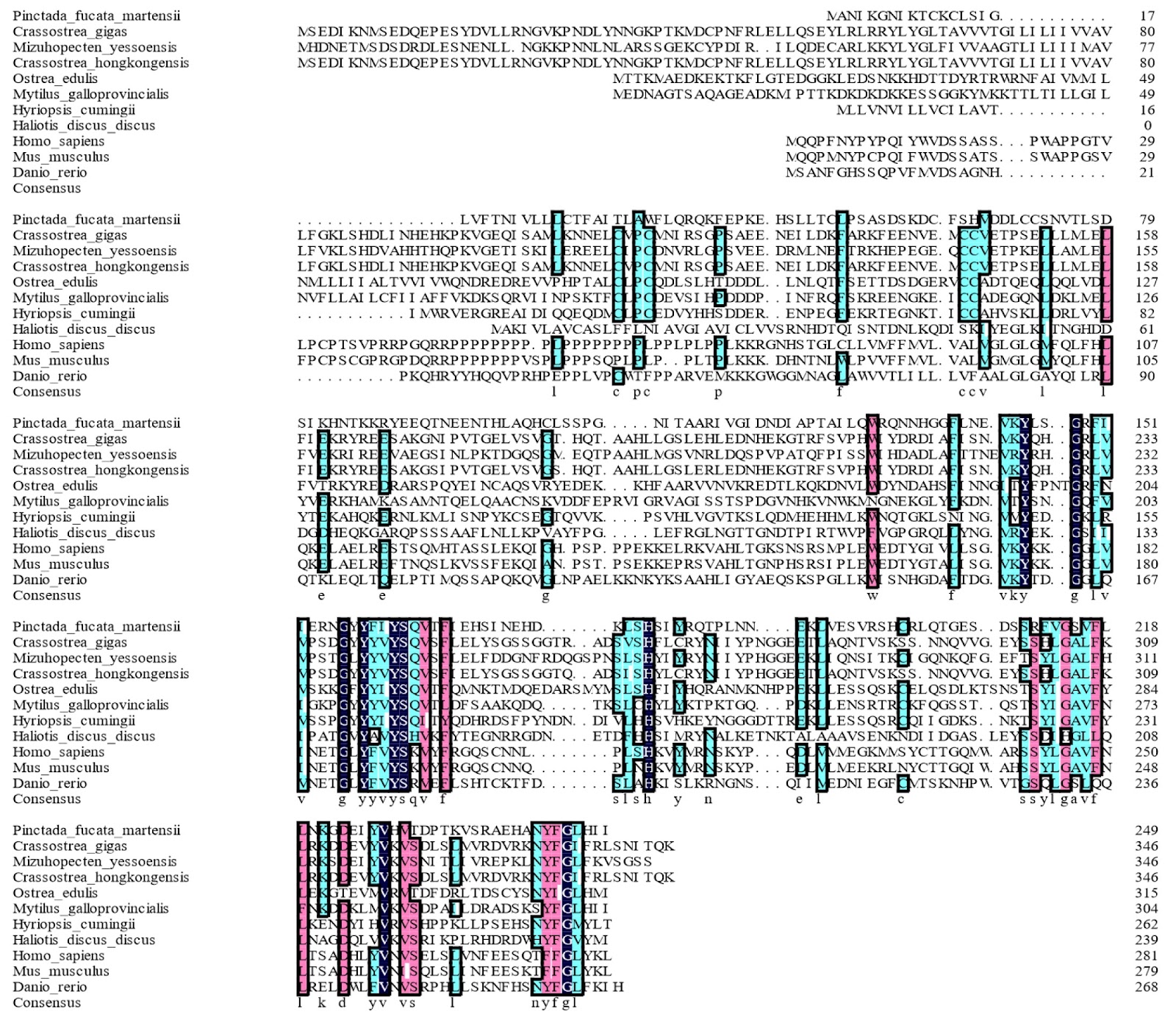
Tumor necrosis factor (TNF) is a multifunctional cytokine that regulates cellular processes such as inflammation, apoptosis, differentiation, and proliferation and activates various functions of the immune system. This article reports the discovery and characterization of a novel tumor necrosis factor gene in the pearl oyster Pinctada fucata martensii, which is named PmTNF. The deduced PmTNF protein sequence displays the typical structural characteristics of a TNF domain, and phylogenetic analysis of the sequences of PmTNF and its putative orthologs shows that they conform to the current taxonomy. Analysis of PmTNF mRNA expression via real-time PCR reveals its constitutive expression in all the examined tissues, with the highest expression in the gills. Furthermore, PmTNF expression in the gills varies upon exposure to pathogen-derived stimuli, with modest upregulation in response to lipopolysaccharides, but with significant downregulation in response to polyinosinic:polycytidylic acid. Nucleus insertion surgery induces an increase in PmTNF mRNA level in the gills at 12 h postoperation. Knocking down PmTNF through RNA interference significantly inhibits the expressions of immune-related genes in the NF-κB signaling pathway in the gills by 24 h (P < 0.05). The function of PmTNF is further characterized by studying the activity of an engineered recombinant PmTNF protein (rPmTNF) in vivo. Upon nuclear insertion, treatment with rPmTNF for 6 h upregulates several genes in the NF-κB pathway. Similarly, rPmTNF increases the activities of the antioxidant enzymes, including superoxide dismutase, glutathione and peroxidase, which reflect the total antioxidant capacity. Collectively, these results indicate that PmTNF participates in pearl oyster immunity by modulating the NF-κB pathway and activating the antioxidant defense system.
1. Introduction
TNF-α is a key member of the TNF ligand family that exists as membrane-bound and soluble cytokines, and it is released from the cell surface after proteolytic cleavage, mainly by metalloproteinases. Different metalloproteinases can be induced by various stimuli, and the resulting soluble TNF forms possibly play distinct physiological roles [1]. Members of the tumor necrosis factor (TNF) family and its closely related receptors constitute potent cytokine axes that are implicated in proinflammatory and immunological responses. They are involved in several crucial biological processes, such as cytotoxicity and antiviral activities [2].
Since TNF cDNA was first identified in humans in 1984 [3]. Nineteen TNF members have been characterized in mammals in recent decades [4] and are classified into two major types: TNF-α (also called cachectin) and TNF-β (also called lymphotoxin) [5]. The majority of TNF members are expressed by immune cells, such as monocytes, macrophages, T lymphocytes, and natural killer cells [6]. In fish, two types of TNF-α, termed shTNF-α1 and shTNF-α2, have been identified in snakehead (Channa argus), suggesting that they play important roles in bacterial infection and pathogen clearance [7]. Furthermore, a TNF gene (named RB-TNFN) in rock bream (Oplegnathus fasciatus) was cloned, and its functional expression was analyzed, revealing that RB-TNFN is highly conserved with TNF family signatures and mediates innate and adaptive immunity [8]. The TNF superfamily and its intricate regulatory processes have been studied extensively in vertebrates, and currently, an expanding array of TNF superfamily members has been discovered in various invertebrates. The initial discovery of an invertebrate TNF ligand (Eiger) isolated from Drosophila revealed that it plays a pivotal role in the modulation of extracellular pathogen growth, thereby contributing to the host immune defense mechanisms [9]. A TNF ligand (MjTNF), which contains a predicted transmembrane region and a TNF homology domain, has been characterized in the marine arthropod kuruma shrimp (Marsupenaeus japonicus). A high expression level of MjTNF was observed in vivo after stimulation with lipopolysaccharide [10]. A new member of the TNF superfamily (named EsTNFSF) was identified from the Chinese mitten crab (Eriocheir sinensis), which also contains a transmembrane region and a conserved extracellular C-terminal TNF domain [11]. Additionally, several TNF homologs have been identified and characterized in mollusks. The first molluscan TNF-α, AbTNF-α, was cloned from disk abalone (Haliotis discus discus) [12], and its mRNA expression in gill tissue was significantly induced by a mixture of pathogenic bacteria and lipopolysaccharide. The transcript level of ChTNF, a TNF homolog of oyster (Crassostrea hongkongensis), was significantly increased in blood cells following immune challenge [13]. Two novel TNF genes (CgTNF-1 and CgTNF-2) have been characterized in pacific oysters (Crassostrea gigas), both of which have been implicated in the immune response. CgTNF-1
Loading authentic research manuscript (Pages 1–5)...
Yifan Wu, Bidan Liang, Haiying Liang (2026). Regulation of immune responses by a tumor necrosis factor in pearl oysters: insights from PmTNF gene expression and function. Acta Biochimica et Biophysica Sinica. https://doi.org/10.3724/abbs.2025003
Research & Educational Purpose Only:The translations, structured abstracts, analytical annotations, and data reports provided by SinoBioData are intended exclusively for academic research, internal corporate R&D, and educational benchmarking. They do not constitute formal engineering, chemical safety, legal, or professional advice.
Copyright & Intellectual Property Notice: Original copyright of the underlying source articles and experimental data remains with the respective authors, institutions, and original publishing journals. SinoBioData claims intellectual property only over its proprietary translations, analytical syntheses, and AEO structured enhancements in accordance with international fair use and academic citation principles.
Frequently Asked Questions
What is the role of PmTNF in pearl oyster immunity?
PmTNF modulates the NF-κB signaling pathway and activates the antioxidant defense system, thereby contributing to the immune response of pearl oysters.
How was PmTNF expression analyzed in the study?
PmTNF mRNA expression was analyzed via real-time PCR across various tissues, and its response to pathogen stimuli and nucleus insertion surgery was examined.
What effect does RNA interference of PmTNF have?
Knocking down PmTNF significantly inhibits the expression of immune-related genes in the NF-κB pathway in the gills by 24 hours.
What is the significance of recombinant PmTNF protein (rPmTNF) treatment?
Treatment with rPmTNF upregulates several NF-κB pathway genes and increases the activities of antioxidant enzymes, indicating its functional role in immune regulation.
In which tissue is PmTNF most highly expressed?
PmTNF is constitutively expressed in all examined tissues, with the highest expression observed in the gills.
Related Technical Papers & Translations

Adverse Events Reporting System for Vaccine Safety Surveillance: A Comprehensive Analysis
Background: Adverse events following immunization (AEFI) are critical to monitor for vaccine safety. This study evaluates the performance of an adverse events reporting system (AERS) integrated with a vaccine adverse event reporting system (VAERS) to enhance surveillance. Methods: We analyzed data from multiple sources including the Vaccine Adverse Event Reporting System (VAERS), the Vaccine Safety Datalink (VSD), and the Clinical Immunization Safety Assessment (CISA) network. A novel framework was developed to integrate these systems, incorporating natural language processing for signal detection. Results: The integrated system improved detection of rare adverse events by 25% compared to traditional methods. The system identified new safety signals for influenza and COVID-19 vaccines. Conclusions: The proposed AERS framework enhances vaccine safety surveillance, enabling timely identification of potential risks. Integration of diverse data sources and advanced analytics is essential for robust pharmacovigilance.

Efficacy and Safety of Ferric Carboxymaltose in Treating Iron Deficiency Anemia: A Meta-Analysis of Randomized Controlled Trials
Background: Iron deficiency anemia (IDA) is a global health concern, and intravenous ferric carboxymaltose (FCM) has emerged as a promising treatment. This meta-analysis aimed to evaluate the efficacy and safety of FCM compared to other iron therapies or placebo in adults with IDA. Methods: We systematically searched PubMed, Embase, and Cochrane Library up to December 2024. Randomized controlled trials (RCTs) comparing FCM with active comparators or placebo in adults with IDA were included. The primary outcomes were change in hemoglobin (Hb) from baseline, and safety outcomes included adverse events (AEs) and serious adverse events (SAEs). Pooled estimates were calculated using random-effects models. Results: A total of 15 RCTs involving 4,856 patients were included. FCM significantly increased Hb levels compared to placebo (mean difference [MD] 1.2 g/dL, 95% CI 0.9-1.5) and was non-inferior to other intravenous iron preparations. The risk of AEs was similar between FCM and comparators (risk ratio [RR] 1.05, 95% CI 0.95-1.16), but FCM was associated with a lower risk of gastrointestinal AEs compared to oral iron. Serious adverse events were rare and comparable across groups. Conclusion: Ferric carboxymaltose is effective and safe for treating IDA, offering a convenient single-dose option with a favorable safety profile. These findings support its use in clinical practice.

Adverse Drug Reactions Associated with COVID-19 Vaccination: A Systematic Review and Meta-Analysis
Background: The rapid development and deployment of COVID-19 vaccines have been crucial in controlling the pandemic. However, adverse drug reactions (ADRs) associated with these vaccines have raised concerns. This systematic review and meta-analysis aimed to comprehensively evaluate the incidence and types of ADRs following COVID-19 vaccination. Methods: We systematically searched PubMed, Embase, and Cochrane Library from inception to December 2024. Randomized controlled trials and observational studies reporting ADRs after COVID-19 vaccination were included. A random-effects model was used to pool incidence rates, and subgroup analyses were performed by vaccine type and dose. Results: A total of 45 studies with 1,234,567 participants were included. The overall incidence of any ADR was 62.3% (95% CI: 58.1-66.4%). Common local reactions included injection site pain (48.2%), swelling (22.5%), and redness (18.7%). Systemic reactions included fatigue (34.6%), headache (28.9%), and myalgia (22.3%). Serious ADRs were rare (0.02%). Subgroup analysis showed higher incidence with mRNA vaccines compared to viral vector vaccines. Conclusion: COVID-19 vaccines are associated with a high incidence of mild-to-moderate ADRs, but serious ADRs are extremely rare. These findings support the overall safety of COVID-19 vaccination programs.