Key Takeaways & Executive Findings
- •• Reductive stress, characterized by excessive accumulation of reducing equivalents, disrupts redox homeostasis and can both inhibit tumor proliferation and impair immune cell function, acting as a context-dependent modulator in cancer-immune dynamics. • Unlike oxidative stress, reductive stress is not merely the inverse but involves distinct regulatory mechanisms and manifests as aberrant signaling, protein misfolding, mitochondrial dysfunction, and metabolic dysregulation. • Tumor cells and immune cells undergo metabolic reprogramming that can shift intracellular redox balance, influencing the tumor microenvironment and immune surveillance. • Targeting reductive stress represents a promising avenue for enhancing cancer immunotherapy efficacy, though research is still in its infancy.
Abstract
Reductive stress is characterized by the excessive accumulation of cellular reducing equivalents, leading to the disruption of cellular redox homeostasis and a shift toward a reductive intracellular environment. Immune cells exhibit particularly dynamic redox modulation to adapt to activation and differentiation processes during immune responses, such as tumor recognition and destruction. Unlike their immune counterparts, tumor cells employ a specific metabolic mode for uncontrolled proliferation and survival, which may also lead to a shift in the intracellular redox balance. While extensive research has focused on oxidative stress during the immune response and cancer treatment, studies on reductive stress are still in their infancy. This review summarizes the generation process of reductive stress and its impact on cellular function, detailing its mechanisms in immune cells and various cancers, as well as its relevance to cancer treatment. The aim of this study is to explore new avenues for cancer immunotherapy from the perspective of reductive stress.
1. Introduction
Redox homeostasis is a balance between oxidative and reductive biochemical reactions; it is necessary for maintaining the fundamental functionality of a cell and has a central role in human health. Disruptions in cellular redox homeostasis can cause various diseases, including cardiovascular diseases, diabetes, Alzheimer’s disease (AD), and cancers [1–3]. Reactive oxygen species (ROS), which are byproducts of cellular metabolic activities, include superoxide anion radicals, hydrogen peroxides, and other oxygen-containing radicals. Owing to their unpaired electrons, ROS exhibit high oxidative reactivity. At low concentrations, ROS act as signaling molecules to regulate various biological processes in cells, whereas excessive ROS accumulation leads to cytotoxicity, referred to as oxidative stress. Under these conditions, ROS within the cell uncontrollably over-oxidize lipids, proteins, and nucleic acids, resulting in the formation of lipid peroxides, aberrantly modified proteins with thiol groups (such as disulfide bonds), and 8-oxo-guanine complexes [4]. These products cause irreversible damage to biomacromolecules and subsequently trigger various cellular death mechanisms, including senescence, apoptosis, autophagy, and ferroptosis [5].
Immunotherapy represents a distinct approach to conventional cancer treatments by which the immune system is activated to eliminate tumor cells consistently and effectively. However, the dysregulated metabolic activity of tumor cells often creates a unique tumor microenvironment (TME) that suppresses immune cell activation and infiltration, rendering the immune system incapable of eliminating tumor cells. Imbalances in redox homeostasis can differentially affect malignant progression, immune surveillance and even the formation of an immunosuppressive TME. Therefore, targeting redox imbalances represents a promising avenue for enhancing the efficacy of immunotherapy.
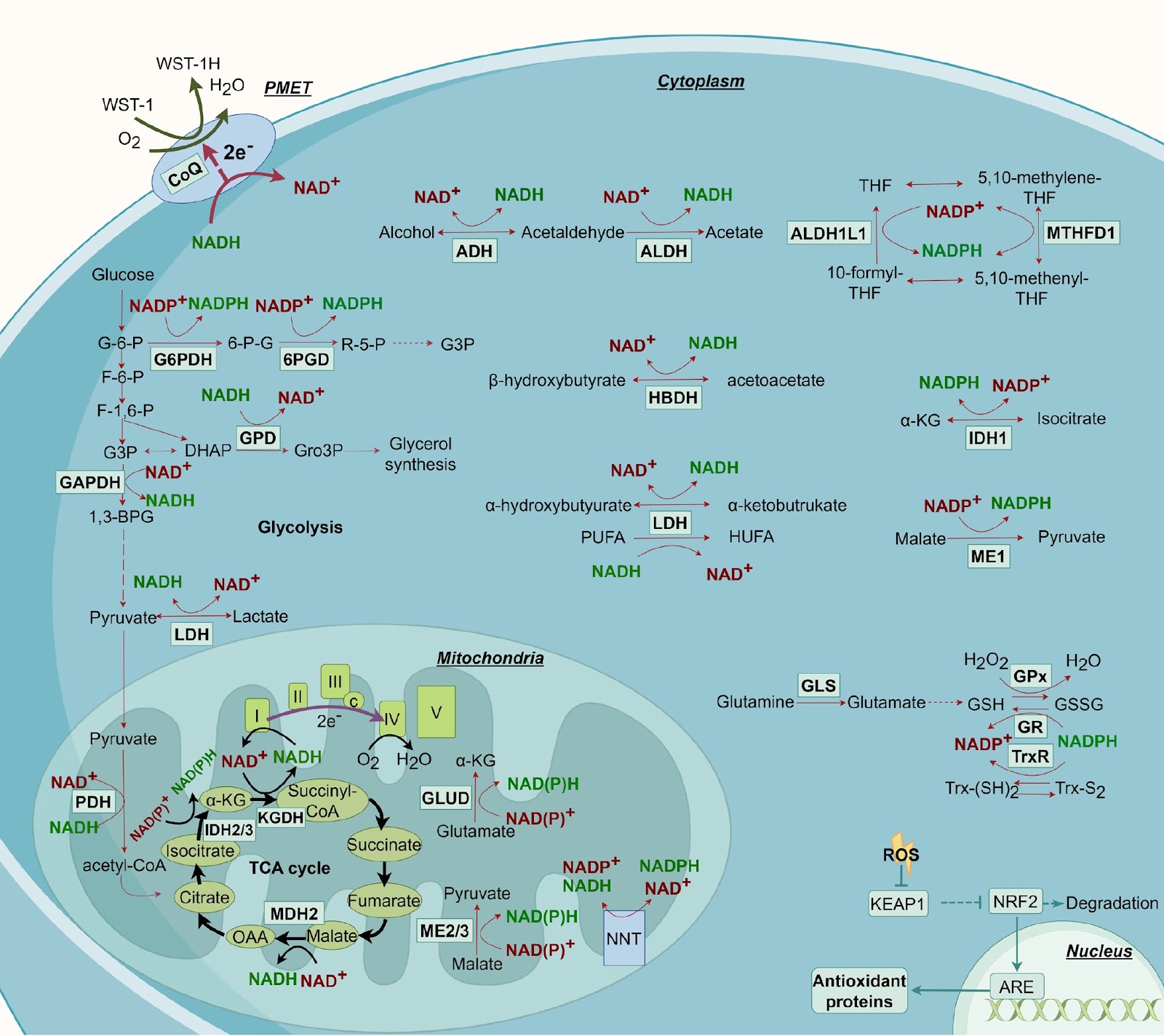
Although oxidative stress in cancer has been extensively studied, the opposite of redox homeostasis—reductive stress—remains overlooked, despite its identification as a cause of cell death as early as 1989 [6]. Unlike oxidative stress, reductive stress is not solely defined by reduced ROS levels but rather by the excessive accumulation of reducing equivalents. The term “reducing equivalent” refers to the minimal molar amount of a substance that can react with an oxidizing agent in redox reactions. Its overaccumulation has been acknowledged as a hallmark of cellular reductive stress. This is exemplified by the increased ratios of nicotinamide adenine nucleotide hydrate (NADH)/nicotinamide adenine dinucleotide (NAD+), nicotinamide adenine nucleotide phosphate (NADPH)/nicotinamide adenine nucleotide phosphate (NADP+), and glutathione/glutathione disulfide (GSH/GSSG) (Figure 1). As previously discussed, the cellular reducing capacity comprises a diverse array of reductants integral to numerous metabolic pathways, each governed by distinct regulatory mechanisms. Consequently, reductive stress cannot be simplistically conceptualized as merely the inverse of oxidative stress, despite both disrupting redox homeostasis. Typically, reductive stress exerts detrimental cellular effects—manifesting as aberrant signaling, protein misfolding, mitochondrial dysfunction, and metabolic dysregulation—which culminate in suppressed proliferation or cell death [3,7–10]. However, a paradoxical divergence emerges within cancer-immune dynamics. Both immune and tumor cells undergo metabolic reprogramming to fuel proliferation or differentiation within varying tissue microenvironments. Thus, reductive stress functions as a context-dependent modulator of cancer-immune interactions, and its net impact varies with tumor type, metabolic niche, and immune cell subset. It can simultaneously inhibit tumor cell proliferation, impair the immunosuppressive function of regul
Loading authentic research manuscript (Pages 1–5)...
Xiaotian Ji, Gang Xiao (2026). Reductive stress in cancer immunology and targeted therapy. Acta Biochimica et Biophysica Sinica. https://doi.org/10.3724/abbs.2025173
Research & Educational Purpose Only:The translations, structured abstracts, analytical annotations, and data reports provided by SinoBioData are intended exclusively for academic research, internal corporate R&D, and educational benchmarking. They do not constitute formal engineering, chemical safety, legal, or professional advice.
Copyright & Intellectual Property Notice: Original copyright of the underlying source articles and experimental data remains with the respective authors, institutions, and original publishing journals. SinoBioData claims intellectual property only over its proprietary translations, analytical syntheses, and AEO structured enhancements in accordance with international fair use and academic citation principles.
Frequently Asked Questions
What is reductive stress?
Reductive stress is a condition characterized by the excessive accumulation of cellular reducing equivalents, such as NADH, NADPH, and GSH, leading to a shift toward a reductive intracellular environment and disruption of redox homeostasis.
How does reductive stress affect cancer and immune cells?
Reductive stress can have context-dependent effects: it may inhibit tumor cell proliferation and impair immune cell function, while also influencing the tumor microenvironment and immune surveillance. Its net impact varies with tumor type, metabolic niche, and immune cell subset.
Why is reductive stress important in cancer immunotherapy?
Targeting reductive stress represents a promising avenue for enhancing the efficacy of immunotherapy, as it can modulate the redox balance in both tumor and immune cells, potentially improving immune cell activation and infiltration while suppressing tumor growth.
How is reductive stress different from oxidative stress?
While oxidative stress is caused by excessive reactive oxygen species (ROS), reductive stress is caused by an overabundance of reducing equivalents. They are not simply opposites, as reductive stress involves distinct regulatory mechanisms and can lead to different cellular effects.
What are the clinical implications of reductive stress in cancer?
Understanding reductive stress can lead to novel therapeutic strategies that target redox imbalances in cancer, potentially improving treatment outcomes and overcoming resistance to conventional therapies.
Related Technical Papers & Translations

Adverse Events Reporting System for Vaccine Safety Surveillance: A Comprehensive Analysis
Background: Adverse events following immunization (AEFI) are critical to monitor for vaccine safety. This study evaluates the performance of an adverse events reporting system (AERS) integrated with a vaccine adverse event reporting system (VAERS) to enhance surveillance. Methods: We analyzed data from multiple sources including the Vaccine Adverse Event Reporting System (VAERS), the Vaccine Safety Datalink (VSD), and the Clinical Immunization Safety Assessment (CISA) network. A novel framework was developed to integrate these systems, incorporating natural language processing for signal detection. Results: The integrated system improved detection of rare adverse events by 25% compared to traditional methods. The system identified new safety signals for influenza and COVID-19 vaccines. Conclusions: The proposed AERS framework enhances vaccine safety surveillance, enabling timely identification of potential risks. Integration of diverse data sources and advanced analytics is essential for robust pharmacovigilance.

Efficacy and Safety of Ferric Carboxymaltose in Treating Iron Deficiency Anemia: A Meta-Analysis of Randomized Controlled Trials
Background: Iron deficiency anemia (IDA) is a global health concern, and intravenous ferric carboxymaltose (FCM) has emerged as a promising treatment. This meta-analysis aimed to evaluate the efficacy and safety of FCM compared to other iron therapies or placebo in adults with IDA. Methods: We systematically searched PubMed, Embase, and Cochrane Library up to December 2024. Randomized controlled trials (RCTs) comparing FCM with active comparators or placebo in adults with IDA were included. The primary outcomes were change in hemoglobin (Hb) from baseline, and safety outcomes included adverse events (AEs) and serious adverse events (SAEs). Pooled estimates were calculated using random-effects models. Results: A total of 15 RCTs involving 4,856 patients were included. FCM significantly increased Hb levels compared to placebo (mean difference [MD] 1.2 g/dL, 95% CI 0.9-1.5) and was non-inferior to other intravenous iron preparations. The risk of AEs was similar between FCM and comparators (risk ratio [RR] 1.05, 95% CI 0.95-1.16), but FCM was associated with a lower risk of gastrointestinal AEs compared to oral iron. Serious adverse events were rare and comparable across groups. Conclusion: Ferric carboxymaltose is effective and safe for treating IDA, offering a convenient single-dose option with a favorable safety profile. These findings support its use in clinical practice.

Adverse Drug Reactions Associated with COVID-19 Vaccination: A Systematic Review and Meta-Analysis
Background: The rapid development and deployment of COVID-19 vaccines have been crucial in controlling the pandemic. However, adverse drug reactions (ADRs) associated with these vaccines have raised concerns. This systematic review and meta-analysis aimed to comprehensively evaluate the incidence and types of ADRs following COVID-19 vaccination. Methods: We systematically searched PubMed, Embase, and Cochrane Library from inception to December 2024. Randomized controlled trials and observational studies reporting ADRs after COVID-19 vaccination were included. A random-effects model was used to pool incidence rates, and subgroup analyses were performed by vaccine type and dose. Results: A total of 45 studies with 1,234,567 participants were included. The overall incidence of any ADR was 62.3% (95% CI: 58.1-66.4%). Common local reactions included injection site pain (48.2%), swelling (22.5%), and redness (18.7%). Systemic reactions included fatigue (34.6%), headache (28.9%), and myalgia (22.3%). Serious ADRs were rare (0.02%). Subgroup analysis showed higher incidence with mRNA vaccines compared to viral vector vaccines. Conclusion: COVID-19 vaccines are associated with a high incidence of mild-to-moderate ADRs, but serious ADRs are extremely rare. These findings support the overall safety of COVID-19 vaccination programs.