Key Takeaways & Executive Findings
- •• PLS from lotus seed skin reduces body weight and improves glucose and lipid metabolism in high-fat diet mice. • PLS activates the p38/Nrf2 signaling pathway and inhibits NF-κB, reducing inflammation and oxidative stress. • PLS suppresses six proinflammatory cytokines, offering a potential dietary strategy for metabolic syndrome. • The study highlights the high-value utilization of lotus seed skin by-products for functional food development.
Abstract
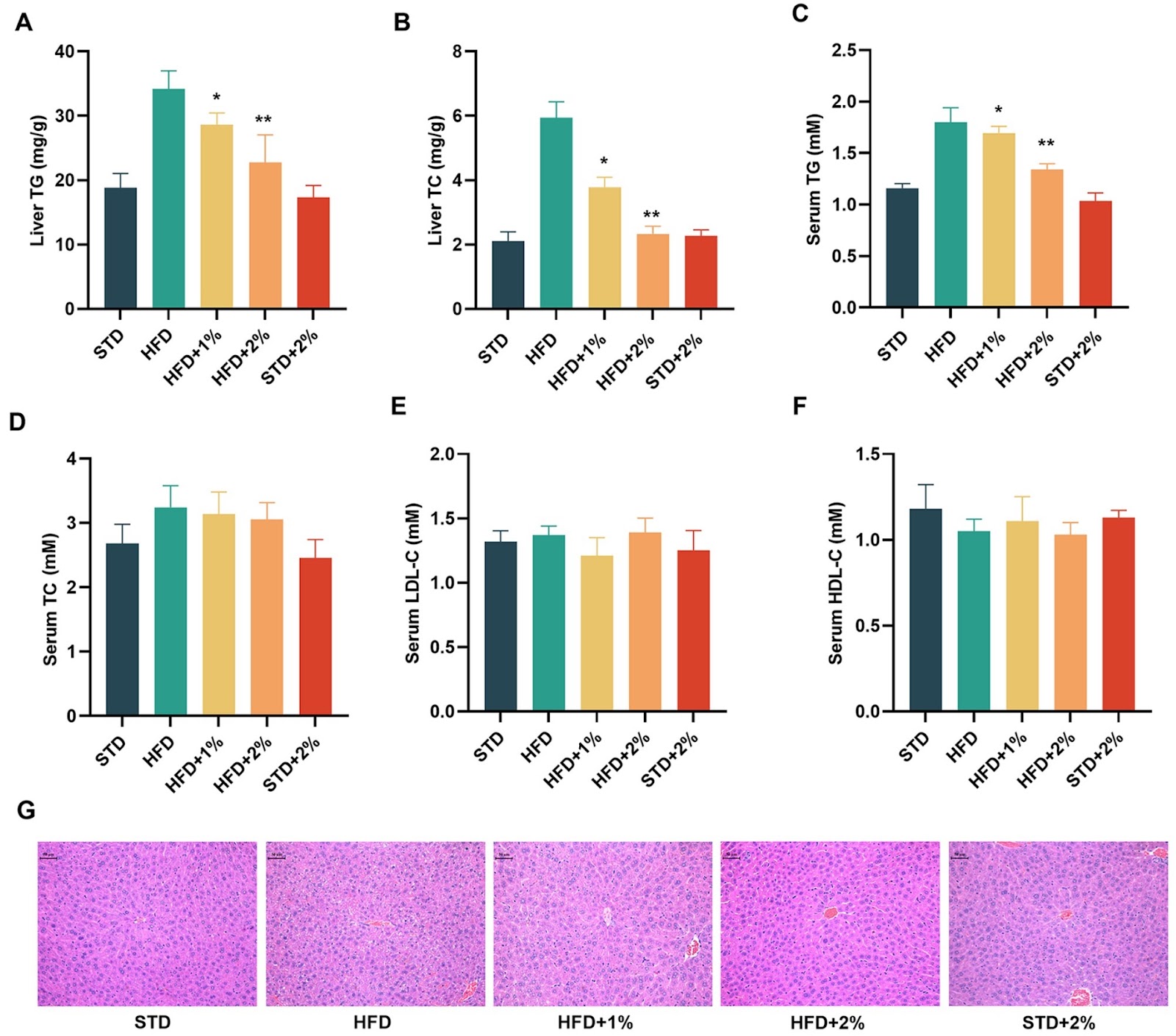
Lotus seed skin extract is rich in flavonoids, making it a promising candidate for developing health products. In a previous study, we found that proanthocyanidins from lotus seed skin, particularly proanthocyanidin B1 (PB1), can indirectly activate the Nrf2 signaling pathway, exerting an antioxidant effect. In this study, we isolate proanthocyanidins from lotus seed skin (PLS) using ethanol extraction and RP-HPLC identification, and investigate its effects on glycolipid metabolism both in vivo and in vitro. Our results demonstrate that PLS reduces body weight in high-fat diet (HFD) mice by decreasing feed efficiency. PLS also normalizes serum glucose, insulin secretion, glycosylated hemoglobin (HbA1c), and intraperitoneal glucose tolerance (IPGTT). Furthermore, PLS significantly improves blood lipid parameters and inhibits the expressions of six proinflammatory factors, including IL-1α, IL-1β, IL-3, IL-6, IFN-γ and TNF-α in HFD mice. Additionally, analysis of fresh liver tissues reveals that PLS and PB1 induce the expressions of antioxidant proteins such as HO-1 and NQO1 by activating the p38-Nrf2 signaling pathway and inhibiting the NF-κB signaling pathway. In conclusion, proanthocyanidins from lotus seed skin regulate glycolipid metabolism disorders by targeting the p38/Nrf2/NF-κB signaling pathway. Our study offers a new approach for the high-value comprehensive utilization of lotus seed skin by-products and precise dietary intervention for metabolic syndrome.
1. Introduction
The lotus plant, distributed in regions including Asia, Iran, and Egypt, has been widely used in traditional Chinese medicine. As a treasure, every part of the lotus plant is valuable: the underground stem known as lotus root, the seeds within the lotus pod, the leaves for medicinal purposes, and the flowers for their aesthetic value. Lotus seeds, serving as a vegetable, a food source, and a medicinal ingredient, are particularly rich in functional compounds such as flavonoids and alkaloids. These seeds exhibit various bioactive functions, including anti-obesity, antioxidant, and anti-tumor properties [1].
Proanthocyanidins, as polyphenols, exist widely in a variety of natural plants. Fruits such as grapes [2], apples [3] and blueberries [4] are the best sources of proanthocyanidins. It has been reported that proanthocyanidins not only possess strong free radical scavenging ability [5], but also can regulate the balance of lipid metabolism [6], and reduce blood glucose [7]. Proanthocyanidins C1 has anti-aging activity and can significantly prolong the healthy life and average life of mice [8]. Grape seed proanthocyanidins extract alleviates colitis caused by dextran sulphate sodium salt via regulating inflammatory cytokines and oxidative stress, maintaining intestinal barrier function, and improving microbial flora [9]. Rhodiola oligomeric proanthocyanidins extract significantly increases the activities of superoxide dismutase (SOD) and glutathione peroxidase (GSH-PX) in the serum, heart, liver, and brain of mice, and decreases the content of malondialdehyde (MDA) [10].
Loading authentic research manuscript (Pages 1–5)...
Yuhang Yi, Tao Li, Chenghao lv, Wenjiang He, Wenzhi Li, Xixin Zhou, Si Qin (2026). Proanthocyanidins isolated from lotus seed skin mitigate glycolipid metabolism disorder through the p38/Nrf2/NF-κB signaling pathway. Acta Biochimica et Biophysica Sinica. https://doi.org/10.3724/abbs.2024042
Research & Educational Purpose Only:The translations, structured abstracts, analytical annotations, and data reports provided by SinoBioData are intended exclusively for academic research, internal corporate R&D, and educational benchmarking. They do not constitute formal engineering, chemical safety, legal, or professional advice.
Copyright & Intellectual Property Notice: Original copyright of the underlying source articles and experimental data remains with the respective authors, institutions, and original publishing journals. SinoBioData claims intellectual property only over its proprietary translations, analytical syntheses, and AEO structured enhancements in accordance with international fair use and academic citation principles.
Frequently Asked Questions
What are proanthocyanidins and where are they found?
Proanthocyanidins are polyphenolic compounds widely present in natural plants such as grapes, apples, and blueberries. They are known for their antioxidant and anti-inflammatory properties.
How do proanthocyanidins from lotus seed skin affect glycolipid metabolism?
Proanthocyanidins from lotus seed skin (PLS) reduce body weight, normalize serum glucose and insulin levels, improve blood lipid parameters, and inhibit proinflammatory cytokines in high-fat diet mice, thereby mitigating glycolipid metabolism disorders.
What signaling pathways are involved in the effects of PLS?
PLS activates the p38/Nrf2 signaling pathway and inhibits the NF-κB signaling pathway, leading to increased expression of antioxidant proteins like HO-1 and NQO1 and reduced inflammation.
What is the significance of this study for metabolic syndrome?
The study suggests that PLS could be used as a dietary intervention for metabolic syndrome, offering a natural approach to manage obesity, hyperglycemia, and dyslipidemia.
How were proanthocyanidins isolated from lotus seed skin?
Proanthocyanidins were isolated using ethanol extraction and identified by RP-HPLC, yielding a mixture rich in proanthocyanidins, including proanthocyanidin B1.
Related Technical Papers & Translations

Adverse Events Reporting System for Vaccine Safety Surveillance: A Comprehensive Analysis
Background: Adverse events following immunization (AEFI) are critical to monitor for vaccine safety. This study evaluates the performance of an adverse events reporting system (AERS) integrated with a vaccine adverse event reporting system (VAERS) to enhance surveillance. Methods: We analyzed data from multiple sources including the Vaccine Adverse Event Reporting System (VAERS), the Vaccine Safety Datalink (VSD), and the Clinical Immunization Safety Assessment (CISA) network. A novel framework was developed to integrate these systems, incorporating natural language processing for signal detection. Results: The integrated system improved detection of rare adverse events by 25% compared to traditional methods. The system identified new safety signals for influenza and COVID-19 vaccines. Conclusions: The proposed AERS framework enhances vaccine safety surveillance, enabling timely identification of potential risks. Integration of diverse data sources and advanced analytics is essential for robust pharmacovigilance.

Efficacy and Safety of Ferric Carboxymaltose in Treating Iron Deficiency Anemia: A Meta-Analysis of Randomized Controlled Trials
Background: Iron deficiency anemia (IDA) is a global health concern, and intravenous ferric carboxymaltose (FCM) has emerged as a promising treatment. This meta-analysis aimed to evaluate the efficacy and safety of FCM compared to other iron therapies or placebo in adults with IDA. Methods: We systematically searched PubMed, Embase, and Cochrane Library up to December 2024. Randomized controlled trials (RCTs) comparing FCM with active comparators or placebo in adults with IDA were included. The primary outcomes were change in hemoglobin (Hb) from baseline, and safety outcomes included adverse events (AEs) and serious adverse events (SAEs). Pooled estimates were calculated using random-effects models. Results: A total of 15 RCTs involving 4,856 patients were included. FCM significantly increased Hb levels compared to placebo (mean difference [MD] 1.2 g/dL, 95% CI 0.9-1.5) and was non-inferior to other intravenous iron preparations. The risk of AEs was similar between FCM and comparators (risk ratio [RR] 1.05, 95% CI 0.95-1.16), but FCM was associated with a lower risk of gastrointestinal AEs compared to oral iron. Serious adverse events were rare and comparable across groups. Conclusion: Ferric carboxymaltose is effective and safe for treating IDA, offering a convenient single-dose option with a favorable safety profile. These findings support its use in clinical practice.

Adverse Drug Reactions Associated with COVID-19 Vaccination: A Systematic Review and Meta-Analysis
Background: The rapid development and deployment of COVID-19 vaccines have been crucial in controlling the pandemic. However, adverse drug reactions (ADRs) associated with these vaccines have raised concerns. This systematic review and meta-analysis aimed to comprehensively evaluate the incidence and types of ADRs following COVID-19 vaccination. Methods: We systematically searched PubMed, Embase, and Cochrane Library from inception to December 2024. Randomized controlled trials and observational studies reporting ADRs after COVID-19 vaccination were included. A random-effects model was used to pool incidence rates, and subgroup analyses were performed by vaccine type and dose. Results: A total of 45 studies with 1,234,567 participants were included. The overall incidence of any ADR was 62.3% (95% CI: 58.1-66.4%). Common local reactions included injection site pain (48.2%), swelling (22.5%), and redness (18.7%). Systemic reactions included fatigue (34.6%), headache (28.9%), and myalgia (22.3%). Serious ADRs were rare (0.02%). Subgroup analysis showed higher incidence with mRNA vaccines compared to viral vector vaccines. Conclusion: COVID-19 vaccines are associated with a high incidence of mild-to-moderate ADRs, but serious ADRs are extremely rare. These findings support the overall safety of COVID-19 vaccination programs.