Key Takeaways & Executive Findings
- •• Pindel-TD is a novel TD detection module that uses a pattern growth approach specifically optimized for tandem duplications, achieving single-nucleotide resolution across a wide size range. • In benchmarking on simulated and real HG002 data, Pindel-TD outperforms leading SV detection methods (e.g., Manta, DELLY) in precision, recall, F1-score, and robustness. • Application to K562 cancer cell line data identified a TD in the seventh exon of SAGE1, linking the duplication to its high expression and demonstrating clinical relevance. • Pindel-TD is freely available for non-commercial use, providing a specialized tool to address the common misclassification of TDs as insertions.
Abstract
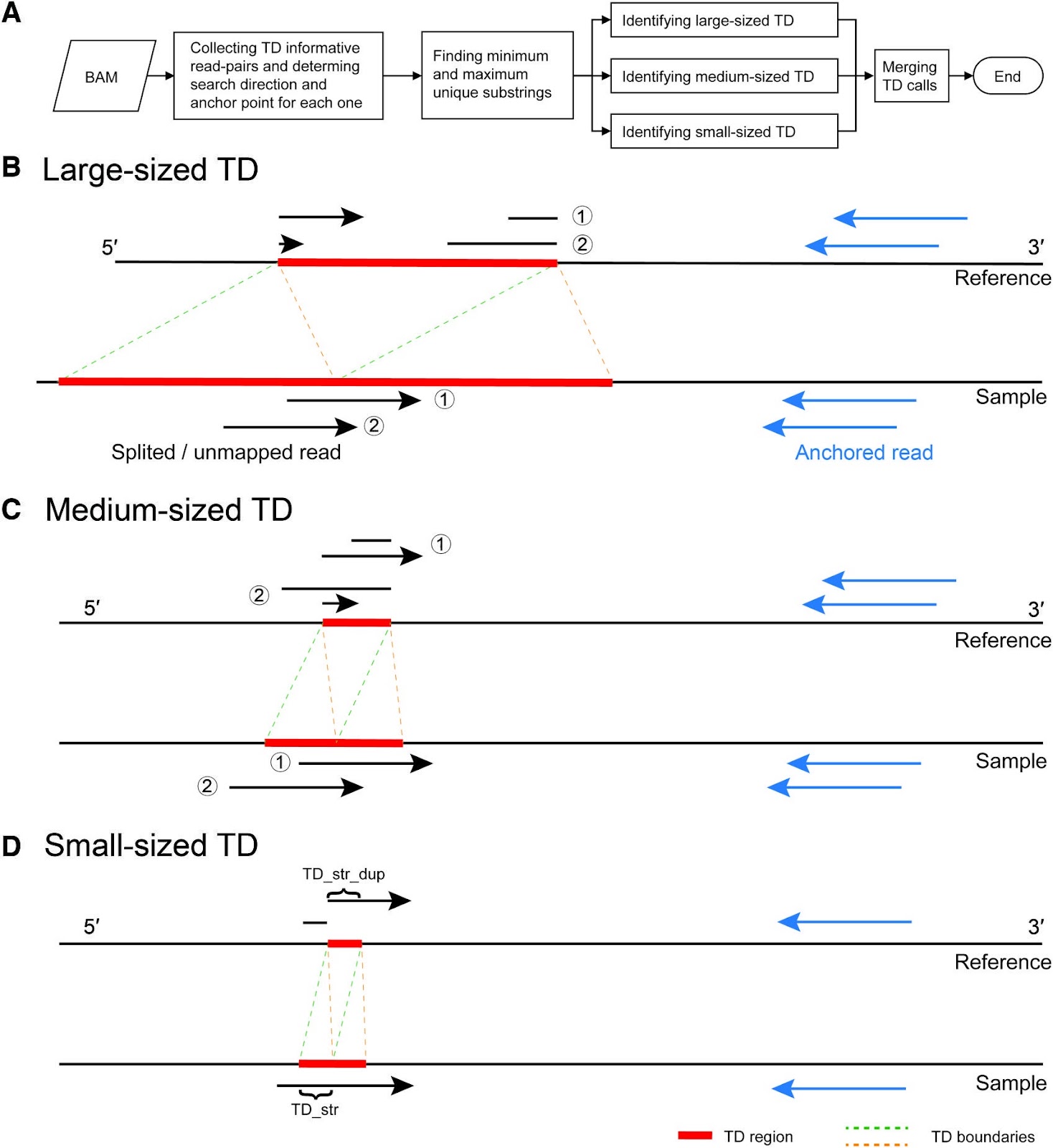
Tandem duplication (TD) is a major type of structural variations (SVs) that plays an important role in novel gene formation and human diseases. However, TDs are often missed or incorrectly classified as insertions by most modern SV detection methods due to the lack of specialized operation on TD-related mutational signals. Herein, we developed a TD detection module for the Pindel tool, referred to as Pindel-TD, based on a TD-specific pattern growth approach. Pindel-TD is capable of detecting TDs with a wide size range at single nucleotide resolution. Using simulated and real read data from HG002, we demonstrated that Pindel-TD outperforms other leading methods in terms of precision, recall, F1-score, and robustness. Furthermore, by applying Pindel-TD to data generated from the K562 cancer cell line, we identified a TD located at the seventh exon of SAGE1, providing an explanation for its high expression. Pindel-TD is available for non-commercial use at https://github.com/xjtu-omics/pindel.
1. Introduction
Tandem duplication (TD) is one of the major types of structural variation (SV) [1,2], contributing to the formation of de novo gene structure [3], the evolution of biosynthetic pathways in plants [4], and various human diseases, including autism [5] and cancers. Cancers such as breast, ovarian, and endometrial carcinomas can be further divided into different tandem duplicator phenotype (TDP) subgroups based on the frequency and distribution of TDs [6,7]. TDs contribute to tumorigenesis by augmenting oncogene expression and disrupting tumor suppressor genes [6,7].
Fueled by the development of next-generation and third-generation sequencing technologies, numerous SV detection methods have been developed based on model-matched or model-free strategies. In general, model-matched strategies involve extracting the mutational signal, such as discordant read-pairs, read-depth, and split-reads, and then matching the signal to a specific SV model. For example, Pindel utilizes a pattern growth approach to leverage split-read signals for precise breakpoint SV detection [8,9], while DELLY performs an integration analysis of the pair-end mapping and split-read information to detect SVs at single nucleotide resolution [10]. LUMPY was developed to precisely identify SVs by integrating three different mutational signals of read-pair, split-read, and read-depth using general probabilistic framework [11]. While model-matched SV detection strategies are efficient in detecting simple SVs, e.g., insertion, deletion, and inversion, they often lack performance for complex SVs (CSVs) that contain multiple breakpoints and play important roles in cancer [9,12]. Mako [13] and SVision [14] are two model-free methods designed to detect CSVs from the short-read and long-read sequencing data, respectively. Although these methods perform well for the most frequent types of SVs, such as insertions and deletions, they exhibit lower accuracy and recall rates for certain types of SVs, such as TDs, which are frequently reported as insertions [15,16] due to the lack of specific optimization on TDs. Therefore, developing a TD detection tool specifically optimized to accurately characterize TDs is an eminent need in the genomic community.
Loading authentic research manuscript (Pages 1–5)...
Xiaofei Yang, Gaoyang Zheng, Peng Jia, Songbo Wang, Kai Ye (2026). Pindel-TD: A Tandem Duplication Detector Based on A Pattern Growth Approach. Genomics, Proteomics & Bioinformatics. https://doi.org/10.1093/gpbjnl/qzae008
Research & Educational Purpose Only:The translations, structured abstracts, analytical annotations, and data reports provided by SinoBioData are intended exclusively for academic research, internal corporate R&D, and educational benchmarking. They do not constitute formal engineering, chemical safety, legal, or professional advice.
Copyright & Intellectual Property Notice: Original copyright of the underlying source articles and experimental data remains with the respective authors, institutions, and original publishing journals. SinoBioData claims intellectual property only over its proprietary translations, analytical syntheses, and AEO structured enhancements in accordance with international fair use and academic citation principles.
Frequently Asked Questions
What is Pindel-TD?
Pindel-TD is a specialized module of the Pindel tool designed to detect tandem duplications (TDs) from short-read sequencing data using a pattern growth approach, achieving single-nucleotide resolution.
How does Pindel-TD improve TD detection compared to other methods?
Pindel-TD specifically optimizes the pattern growth approach for TD-related mutational signals, leading to higher precision, recall, and F1-score compared to leading methods like Manta and DELLY, especially for TDs that are often misclassified as insertions.
What is the significance of the SAGE1 TD identified in the K562 cell line?
The identified TD in the seventh exon of SAGE1 provides a plausible explanation for its high expression in the K562 cancer cell line, highlighting the potential role of TDs in oncogene activation.
Is Pindel-TD available for use?
Yes, Pindel-TD is available for non-commercial use at https://github.com/xjtu-omics/pindel.
What types of data were used to evaluate Pindel-TD?
Pindel-TD was evaluated using both simulated sequencing data and real sequencing data from the HG002 sample, as well as data from the K562 cancer cell line.
Related Technical Papers & Translations

Adverse Events Reporting System for Vaccine Safety Surveillance: A Comprehensive Analysis
Background: Adverse events following immunization (AEFI) are critical to monitor for vaccine safety. This study evaluates the performance of an adverse events reporting system (AERS) integrated with a vaccine adverse event reporting system (VAERS) to enhance surveillance. Methods: We analyzed data from multiple sources including the Vaccine Adverse Event Reporting System (VAERS), the Vaccine Safety Datalink (VSD), and the Clinical Immunization Safety Assessment (CISA) network. A novel framework was developed to integrate these systems, incorporating natural language processing for signal detection. Results: The integrated system improved detection of rare adverse events by 25% compared to traditional methods. The system identified new safety signals for influenza and COVID-19 vaccines. Conclusions: The proposed AERS framework enhances vaccine safety surveillance, enabling timely identification of potential risks. Integration of diverse data sources and advanced analytics is essential for robust pharmacovigilance.

Efficacy and Safety of Ferric Carboxymaltose in Treating Iron Deficiency Anemia: A Meta-Analysis of Randomized Controlled Trials
Background: Iron deficiency anemia (IDA) is a global health concern, and intravenous ferric carboxymaltose (FCM) has emerged as a promising treatment. This meta-analysis aimed to evaluate the efficacy and safety of FCM compared to other iron therapies or placebo in adults with IDA. Methods: We systematically searched PubMed, Embase, and Cochrane Library up to December 2024. Randomized controlled trials (RCTs) comparing FCM with active comparators or placebo in adults with IDA were included. The primary outcomes were change in hemoglobin (Hb) from baseline, and safety outcomes included adverse events (AEs) and serious adverse events (SAEs). Pooled estimates were calculated using random-effects models. Results: A total of 15 RCTs involving 4,856 patients were included. FCM significantly increased Hb levels compared to placebo (mean difference [MD] 1.2 g/dL, 95% CI 0.9-1.5) and was non-inferior to other intravenous iron preparations. The risk of AEs was similar between FCM and comparators (risk ratio [RR] 1.05, 95% CI 0.95-1.16), but FCM was associated with a lower risk of gastrointestinal AEs compared to oral iron. Serious adverse events were rare and comparable across groups. Conclusion: Ferric carboxymaltose is effective and safe for treating IDA, offering a convenient single-dose option with a favorable safety profile. These findings support its use in clinical practice.

Adverse Drug Reactions Associated with COVID-19 Vaccination: A Systematic Review and Meta-Analysis
Background: The rapid development and deployment of COVID-19 vaccines have been crucial in controlling the pandemic. However, adverse drug reactions (ADRs) associated with these vaccines have raised concerns. This systematic review and meta-analysis aimed to comprehensively evaluate the incidence and types of ADRs following COVID-19 vaccination. Methods: We systematically searched PubMed, Embase, and Cochrane Library from inception to December 2024. Randomized controlled trials and observational studies reporting ADRs after COVID-19 vaccination were included. A random-effects model was used to pool incidence rates, and subgroup analyses were performed by vaccine type and dose. Results: A total of 45 studies with 1,234,567 participants were included. The overall incidence of any ADR was 62.3% (95% CI: 58.1-66.4%). Common local reactions included injection site pain (48.2%), swelling (22.5%), and redness (18.7%). Systemic reactions included fatigue (34.6%), headache (28.9%), and myalgia (22.3%). Serious ADRs were rare (0.02%). Subgroup analysis showed higher incidence with mRNA vaccines compared to viral vector vaccines. Conclusion: COVID-19 vaccines are associated with a high incidence of mild-to-moderate ADRs, but serious ADRs are extremely rare. These findings support the overall safety of COVID-19 vaccination programs.