Key Takeaways & Executive Findings
- •• Acrolein exposure induces cardiac remodeling and dysfunction, characterized by fibrosis, impaired echocardiographic parameters, and compromised cardiomyocyte contractility and Ca2+ handling. • Mechanistically, acrolein triggers cuproptosis, evidenced by upregulation of SLC31A1, DLAT, and FDX1, and downregulation of Fe-S cluster proteins, alongside mitochondrial damage and oxidative stress. • The copper-sensing transcription factor MTF2, but not MTF1, is upregulated by acrolein, and molecular docking predicts direct binding of acrolein to MTF2's DNA-binding domain. • Pharmacological inhibition of cuproptosis (TTM), mitochondrial oxidative stress (mitoTEMPO), or MTF2 (actinomycin D) alleviates acrolein-induced cardiomyocyte dysfunction, suggesting MTF2-mediated cuproptosis as a therapeutic target. • This study provides novel insights into the cardiotoxicity of acrolein, a pervasive environmental pollutant, and highlights potential interventions for acrolein-related cardiac diseases.
Abstract
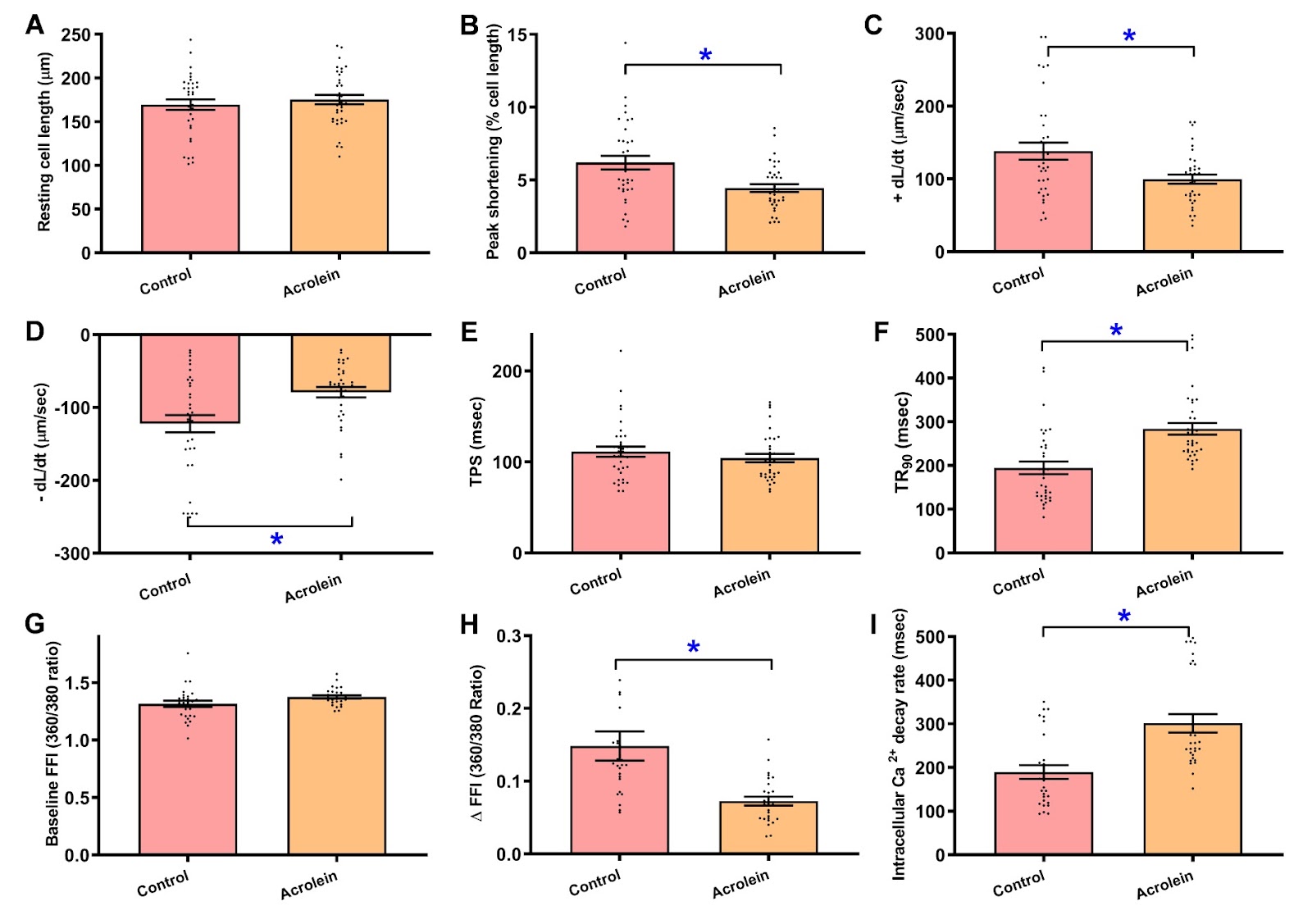
Acrolein, a highly reactive α,β-unsaturated aldehyde found in cigarette smoke, automobile exhaust, industrial emissions, combustion byproducts, cooking and cyclophosphamide chemotherapy, has raised serious health concerns, although the precise mechanism remains unclear. This study is designed to examine the impact of this pervasive environmental pollutant on myocardial geometry and function alongside the underlying cellular mechanisms. Adult C57BL/6 mice are challenged with acrolein (2.5 mg/kg/day, i.p., for 20 days) prior to the evaluation of myocardial geometry and function. Acrolein exposure evokes evident cardiac remodeling (interstitial fibrosis), compromised echocardiographic (enlarged LVESD, compromised ejection fraction and fractional shortening), cardiomyocyte contractile and intracellular Ca2+ capacities [decreased peak shortening, maximal velocity of shortening and relengthening (±dL/dt), and electrically stimulated rise in Fura-2 fluorescence intensity (ΔFFI), prolonged time-to-90% relengthening (TR90) and intracellular Ca2+ decay], accompanied by overt mitochondrial damage (ultrastructure, aconitase and mitochondrial protein contents), free radical buildup, apoptosis (Bax, Caspase-3, and Bcl2) and cuproptosis (upregulated SLC31A1, DLAT and FDX1), downregulated the Fe-S cluster proteins ACO2 and NDUFS8 alongside unchanged ATP7A and the ferroptosis markers GPX4 and SLC7A11. The levels of copper-sensing protein metal response element binding transcription factor 2 (MTF2), but not MTF1, are increased by acrolein insult. CB-DOCK2 analysis predicts an interaction between acrolein and the MTF2 dimer within its DNA-binding regions. In vivo administration of the cuproptosis inhibitor tetrathiomolybdate (TTM), the mitochondrial antioxidant mitoTEMPO or the nonselective MTF2 inhibitor actinomycin D alleviates acrolein-evoked cardiomyocyte dysfunction (decreased PS, ±dL/dt, and prolonged TR90). These findings indicate that acrolein evoked cardiac functional anomalies possibly through MTF2-related control of cuproptosis.
1. Introduction
Acrolein is a highly reactive α,β-unsaturated aldehyde and a pervasive environmental contaminant generated through the combustion of organic materials, including fossil fuels, tobacco, and high-temperature cooking of dietary fats, proteins, and carbohydrates [1–3]. It is also endogenously produced during lipid peroxidation and myeloperoxidase-mediated inflammatory responses and can arise as a toxic metabolite of chemotherapeutic agents such as cyclophosphamide [4–6]. Among its environmental sources, cigarette smoke represents a significant contributor to human acrolein exposure [3]. Cigarette smoking remains a major global health concern because of its strong association with a wide range of pathological conditions, including chronic obstructive pulmonary disease, cardiovascular and metabolic disorders, infertility, and cancer [7–9].
A growing body of research has highlighted the role of specific toxicants within cigarette smoke, such as acrolein, in driving genotoxic and mutagenic outcomes, thereby contributing to disease progression and premature mortality [9–14]. Owing to its potent electrophilic nature, acrolein readily forms covalent adducts with nucleophilic residues in proteins, lipids, and DNA, leading to oxidative stress, inflammation, and cellular dysfunction [5,15,16]. These molecular events underlie its involvement in diverse disease processes, including cardiovascular and neurodegenerative disorders, respiratory illness, and cancer [3,17]. Mechanistically, acrolein induces oxidative stress and mitochondrial dysfunction, yet the precise pathways linking acrolein exposure to cardiac pathology remain incompletely understood.
Loading authentic research manuscript (Pages 1–5)...
Xiaohu Wang, Shuyi Zhu, Yipin Zhao, Xinlong Di, Lingfei Cao, Russel J. Reiter, Emily Y. He, Yuan Zhou, Bonglee Kim, Yong Cheng, Jun Ren (2026). Pervasive environmental contaminant acrolein compromises myocardial geometry and function through the induction of cuproptosis. Acta Biochimica et Biophysica Sinica. https://doi.org/10.3724/abbs.2025179
Research & Educational Purpose Only:The translations, structured abstracts, analytical annotations, and data reports provided by SinoBioData are intended exclusively for academic research, internal corporate R&D, and educational benchmarking. They do not constitute formal engineering, chemical safety, legal, or professional advice.
Copyright & Intellectual Property Notice: Original copyright of the underlying source articles and experimental data remains with the respective authors, institutions, and original publishing journals. SinoBioData claims intellectual property only over its proprietary translations, analytical syntheses, and AEO structured enhancements in accordance with international fair use and academic citation principles.
Frequently Asked Questions
What is the main finding of this study on acrolein and heart function?
The study demonstrates that acrolein exposure induces cardiac remodeling and dysfunction in mice, and identifies cuproptosis—a copper-dependent cell death pathway—as a key mechanism, potentially regulated by the transcription factor MTF2.
How does acrolein affect cardiomyocytes at the cellular level?
Acrolein impairs cardiomyocyte contractility and calcium handling, causes mitochondrial damage, increases oxidative stress, and triggers apoptosis and cuproptosis, as evidenced by altered expression of proteins like SLC31A1, DLAT, and FDX1.
What is the role of MTF2 in acrolein-induced cardiotoxicity?
MTF2, a copper-sensing transcription factor, is upregulated by acrolein exposure. Molecular docking predicts acrolein binds to MTF2's DNA-binding domain, suggesting MTF2 may mediate acrolein-induced cuproptosis and cardiac dysfunction.
Can the effects of acrolein on the heart be reversed or prevented?
The study shows that pharmacological inhibitors of cuproptosis (tetrathiomolybdate), mitochondrial antioxidants (mitoTEMPO), and MTF2 inhibitors (actinomycin D) alleviate acrolein-induced cardiomyocyte dysfunction in mice, suggesting potential therapeutic strategies.
Why is this research important for public health?
Acrolein is a widespread environmental pollutant found in cigarette smoke, vehicle exhaust, and industrial emissions. Understanding its cardiotoxic mechanisms can help develop preventive and therapeutic approaches for individuals exposed to acrolein, particularly smokers and urban populations.
Related Technical Papers & Translations

Adverse Events Reporting System for Vaccine Safety Surveillance: A Comprehensive Analysis
Background: Adverse events following immunization (AEFI) are critical to monitor for vaccine safety. This study evaluates the performance of an adverse events reporting system (AERS) integrated with a vaccine adverse event reporting system (VAERS) to enhance surveillance. Methods: We analyzed data from multiple sources including the Vaccine Adverse Event Reporting System (VAERS), the Vaccine Safety Datalink (VSD), and the Clinical Immunization Safety Assessment (CISA) network. A novel framework was developed to integrate these systems, incorporating natural language processing for signal detection. Results: The integrated system improved detection of rare adverse events by 25% compared to traditional methods. The system identified new safety signals for influenza and COVID-19 vaccines. Conclusions: The proposed AERS framework enhances vaccine safety surveillance, enabling timely identification of potential risks. Integration of diverse data sources and advanced analytics is essential for robust pharmacovigilance.

Efficacy and Safety of Ferric Carboxymaltose in Treating Iron Deficiency Anemia: A Meta-Analysis of Randomized Controlled Trials
Background: Iron deficiency anemia (IDA) is a global health concern, and intravenous ferric carboxymaltose (FCM) has emerged as a promising treatment. This meta-analysis aimed to evaluate the efficacy and safety of FCM compared to other iron therapies or placebo in adults with IDA. Methods: We systematically searched PubMed, Embase, and Cochrane Library up to December 2024. Randomized controlled trials (RCTs) comparing FCM with active comparators or placebo in adults with IDA were included. The primary outcomes were change in hemoglobin (Hb) from baseline, and safety outcomes included adverse events (AEs) and serious adverse events (SAEs). Pooled estimates were calculated using random-effects models. Results: A total of 15 RCTs involving 4,856 patients were included. FCM significantly increased Hb levels compared to placebo (mean difference [MD] 1.2 g/dL, 95% CI 0.9-1.5) and was non-inferior to other intravenous iron preparations. The risk of AEs was similar between FCM and comparators (risk ratio [RR] 1.05, 95% CI 0.95-1.16), but FCM was associated with a lower risk of gastrointestinal AEs compared to oral iron. Serious adverse events were rare and comparable across groups. Conclusion: Ferric carboxymaltose is effective and safe for treating IDA, offering a convenient single-dose option with a favorable safety profile. These findings support its use in clinical practice.

Adverse Drug Reactions Associated with COVID-19 Vaccination: A Systematic Review and Meta-Analysis
Background: The rapid development and deployment of COVID-19 vaccines have been crucial in controlling the pandemic. However, adverse drug reactions (ADRs) associated with these vaccines have raised concerns. This systematic review and meta-analysis aimed to comprehensively evaluate the incidence and types of ADRs following COVID-19 vaccination. Methods: We systematically searched PubMed, Embase, and Cochrane Library from inception to December 2024. Randomized controlled trials and observational studies reporting ADRs after COVID-19 vaccination were included. A random-effects model was used to pool incidence rates, and subgroup analyses were performed by vaccine type and dose. Results: A total of 45 studies with 1,234,567 participants were included. The overall incidence of any ADR was 62.3% (95% CI: 58.1-66.4%). Common local reactions included injection site pain (48.2%), swelling (22.5%), and redness (18.7%). Systemic reactions included fatigue (34.6%), headache (28.9%), and myalgia (22.3%). Serious ADRs were rare (0.02%). Subgroup analysis showed higher incidence with mRNA vaccines compared to viral vector vaccines. Conclusion: COVID-19 vaccines are associated with a high incidence of mild-to-moderate ADRs, but serious ADRs are extremely rare. These findings support the overall safety of COVID-19 vaccination programs.