Key Takeaways & Executive Findings
- •• OXH suppresses LPS-induced inflammation in macrophages by inhibiting the TLR4-MD2/NF-κB/MAPK signaling axis. • OXH directly binds to the TLR4/MD2 complex with a Kd of 33.7 μM, competing with LPS for binding. • In a rat CIA model, OXH ameliorates arthritis symptoms, reducing joint swelling, bone erosion, and pro-inflammatory cytokine expression. • OXH represents a promising natural compound for RA therapy with a novel mechanism targeting the TLR4-MD2 complex.
Abstract
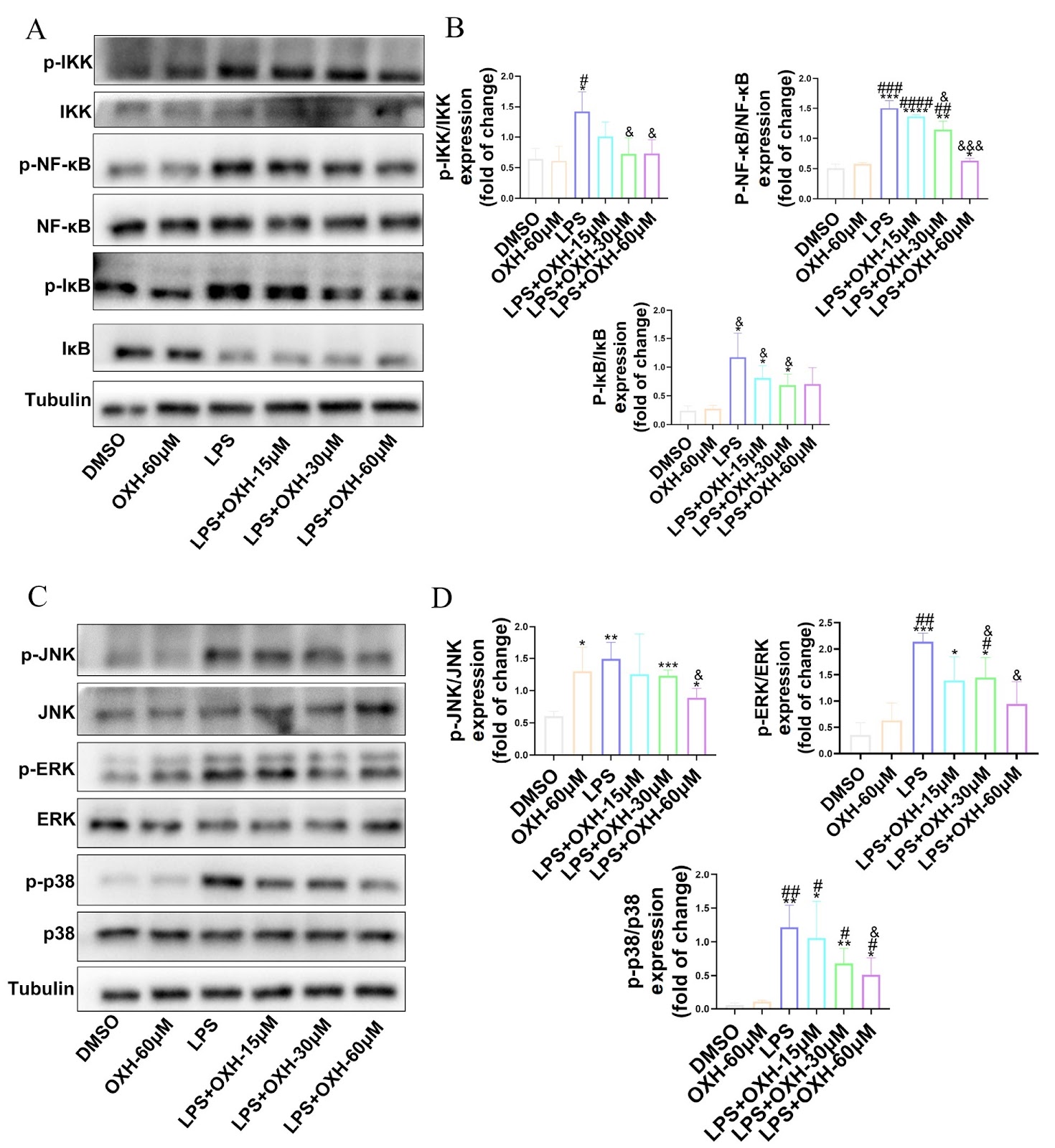
Rheumatoid arthritis (RA) is an idiopathic and chronic autoimmune disease for which there are currently no effective treatments. Oxypeucedanin hydrate (OXH) is a natural coumarin known for its potent anti-inflammatory properties. However, further investigations are needed to determine its therapeutic efficacy in treating RA. In this study, we evaluate the anti-inflammatory activity of OXH by treating LPS-induced RAW264.7 macrophages. Our results show that OXH treatment reverses the changes in iNOS, COX-2, IL-1β, IL-6, and TNF-α levels. Additionally, OXH reduces ROS production. Further analysis reveals that OXH suppresses the activation of the NF-κB/MAPK pathway. CETSA results show that OXH competes with LPS for binding to the TLR4/MD2 complex. MST experiments demonstrate the specific affinity of OXH for the TLR4/MD2 complex, with a Kd value of 33.7 μM. Molecular docking analysis suggests that OXH binds to the pocket of the TLR4/MD2 complex and interacts with specific amino acids, such as GLY-343, LYS-388, and PHE-345. Molecular dynamics simulations further confirm this conclusion. Finally, we investigate the potential of OXH in treating RA using a collagen-induced arthritis (CIA) model in rats. OXH effectively ameliorates the symptoms of CIA, including improving body weight, reducing swelling and redness, increasing talus volume, and decreasing bone erosion. OXH also decreases the mRNA levels of pro-inflammatory factors in synovial tissue. Transcriptome enrichment analysis and western blot analysis confirm that OXH suppresses the NF-κB/MAPK pathway, which is consistent with our in vitro findings.
1. Introduction
Rheumatoid arthritis (RA) is a chronic autoimmune inflammatory disease. Although the exact cause remains unknown, it is believed to be affected by both environmental and genetic factors. The primary clinical manifestations of RA include joint injury and synovitis [1,2]. RA has a global prevalence of approximately 0.1% and is more common in females than in males [3]. The pathogenic mechanism of RA is complicated and is related to bone and cartilage erosion as well as synovial cell fibrosis and proliferation [4,5]. Current clinical treatment options for RA include non-steroidal anti-inflammatory drugs, glucocorticoids, and disease-resistant anti-rheumatic agents. However, these therapeutic agents often cause adverse reactions, including gastrointestinal reactions, organ damage, and allergic reactions [6,7]. Additionally, certain biological agents, such as TNF-α antagonists, may increase the risk of tumor infection [8]. Therefore, there is an urgent need to discover effective compounds with fewer side effects and better outcomes. Traditional Chinese medicine (TCM), with its potential for multiple components, multiple targets, effectiveness, and few side effects, has attracted increasing attention from researchers who are seeking active ingredients [9,10].
According to previous research [11], RA is associated with major pathological features, including synovial hyperplasia and inflammatory infiltration. This occurs when a significant number of immune cells, such as macrophages and T cells, accumulate within synovial tissue and the joint cavity during the development of RA. Due to inflammation, numerous inflammatory factors, such as TNF-α, IL-6 and IL-1β, are released. Simultaneously, these inflammatory factors stimulate synovial cells to produce chemokines, thereby attracting circulating immune cells to the affected site and worsening joint inflammation [12]. Moreover, the inflammatory response further intensifies as synovial cells proliferate in this environment. Therefore, targeting immune cells or synovial cells has emerged as a candidate strategy for treating RA [13].
The Toll-like receptor 4 and myeloid differentiation factor 2 (TLR4-MD2) complex and its associated pathways are important for inflammation progression [14]. The TLR4-MD2 complex is primarily expressed on the cytoplasmic membrane of immune cells such as monocytes, macrophages, and dendritic cells. It is activated by various substances, such as lipopolysaccharide (LPS) extracted from gram-negative bacteria, intracellular peptides, glycoproteins, and endotoxins [15]. Such activation triggers downstream pathways, such as the NF-κB pathway, leading to inflammation [16]. Oxypeucedanin hydrate (OXH) is a furan coumarin commonly found in various anti-inflammatory herbs, including Notopterygium incisum, Angelica dahurica [17], and Whiteflower Hogfennel. OXH was previously suggested to suppress NO synthase production [18]. Howeve
Loading authentic research manuscript (Pages 1–5)...
Mengdan Liu, Xueyan Huo, Congcong Li, Yunjie Hu, Haoran Lei, Dong Wang, Lin Zhu, Yucheng Gu, Dale Guo, Lijun Huang, Yun Deng (2026). Oxypeucedanin hydrate alleviates rheumatoid arthritis by inhibiting the TLR4-MD2/NF-κB/MAPK signaling axis. Acta Biochimica et Biophysica Sinica. https://doi.org/10.3724/abbs.2024076
Research & Educational Purpose Only:The translations, structured abstracts, analytical annotations, and data reports provided by SinoBioData are intended exclusively for academic research, internal corporate R&D, and educational benchmarking. They do not constitute formal engineering, chemical safety, legal, or professional advice.
Copyright & Intellectual Property Notice: Original copyright of the underlying source articles and experimental data remains with the respective authors, institutions, and original publishing journals. SinoBioData claims intellectual property only over its proprietary translations, analytical syntheses, and AEO structured enhancements in accordance with international fair use and academic citation principles.
Frequently Asked Questions
What is oxypeucedanin hydrate (OXH) and where is it found?
Oxypeucedanin hydrate (OXH) is a natural furan coumarin found in anti-inflammatory herbs such as Notopterygium incisum, Angelica dahurica, and Whiteflower Hogfennel. It has been studied for its anti-inflammatory properties.
How does OXH alleviate rheumatoid arthritis?
OXH alleviates rheumatoid arthritis by inhibiting the TLR4-MD2/NF-κB/MAPK signaling axis. It binds to the TLR4/MD2 complex, competing with LPS, and suppresses downstream inflammatory pathways, reducing pro-inflammatory cytokine production and joint damage.
What experimental models were used in this study?
The study used LPS-induced RAW264.7 macrophages for in vitro experiments and a collagen-induced arthritis (CIA) rat model for in vivo evaluation of OXH's therapeutic efficacy.
What are the key findings regarding OXH's binding to TLR4/MD2?
OXH binds to the TLR4/MD2 complex with a dissociation constant (Kd) of 33.7 μM, as determined by microscale thermophoresis (MST). Molecular docking and dynamics simulations identified key interactions with amino acids such as GLY-343, LYS-388, and PHE-345.
What is the significance of this study for RA treatment?
This study provides evidence that OXH, a natural compound, could be a promising therapeutic agent for RA with a novel mechanism targeting the TLR4-MD2 complex, potentially offering fewer side effects compared to current treatments.
Related Technical Papers & Translations

Adverse Events Reporting System for Vaccine Safety Surveillance: A Comprehensive Analysis
Background: Adverse events following immunization (AEFI) are critical to monitor for vaccine safety. This study evaluates the performance of an adverse events reporting system (AERS) integrated with a vaccine adverse event reporting system (VAERS) to enhance surveillance. Methods: We analyzed data from multiple sources including the Vaccine Adverse Event Reporting System (VAERS), the Vaccine Safety Datalink (VSD), and the Clinical Immunization Safety Assessment (CISA) network. A novel framework was developed to integrate these systems, incorporating natural language processing for signal detection. Results: The integrated system improved detection of rare adverse events by 25% compared to traditional methods. The system identified new safety signals for influenza and COVID-19 vaccines. Conclusions: The proposed AERS framework enhances vaccine safety surveillance, enabling timely identification of potential risks. Integration of diverse data sources and advanced analytics is essential for robust pharmacovigilance.

Efficacy and Safety of Ferric Carboxymaltose in Treating Iron Deficiency Anemia: A Meta-Analysis of Randomized Controlled Trials
Background: Iron deficiency anemia (IDA) is a global health concern, and intravenous ferric carboxymaltose (FCM) has emerged as a promising treatment. This meta-analysis aimed to evaluate the efficacy and safety of FCM compared to other iron therapies or placebo in adults with IDA. Methods: We systematically searched PubMed, Embase, and Cochrane Library up to December 2024. Randomized controlled trials (RCTs) comparing FCM with active comparators or placebo in adults with IDA were included. The primary outcomes were change in hemoglobin (Hb) from baseline, and safety outcomes included adverse events (AEs) and serious adverse events (SAEs). Pooled estimates were calculated using random-effects models. Results: A total of 15 RCTs involving 4,856 patients were included. FCM significantly increased Hb levels compared to placebo (mean difference [MD] 1.2 g/dL, 95% CI 0.9-1.5) and was non-inferior to other intravenous iron preparations. The risk of AEs was similar between FCM and comparators (risk ratio [RR] 1.05, 95% CI 0.95-1.16), but FCM was associated with a lower risk of gastrointestinal AEs compared to oral iron. Serious adverse events were rare and comparable across groups. Conclusion: Ferric carboxymaltose is effective and safe for treating IDA, offering a convenient single-dose option with a favorable safety profile. These findings support its use in clinical practice.

Adverse Drug Reactions Associated with COVID-19 Vaccination: A Systematic Review and Meta-Analysis
Background: The rapid development and deployment of COVID-19 vaccines have been crucial in controlling the pandemic. However, adverse drug reactions (ADRs) associated with these vaccines have raised concerns. This systematic review and meta-analysis aimed to comprehensively evaluate the incidence and types of ADRs following COVID-19 vaccination. Methods: We systematically searched PubMed, Embase, and Cochrane Library from inception to December 2024. Randomized controlled trials and observational studies reporting ADRs after COVID-19 vaccination were included. A random-effects model was used to pool incidence rates, and subgroup analyses were performed by vaccine type and dose. Results: A total of 45 studies with 1,234,567 participants were included. The overall incidence of any ADR was 62.3% (95% CI: 58.1-66.4%). Common local reactions included injection site pain (48.2%), swelling (22.5%), and redness (18.7%). Systemic reactions included fatigue (34.6%), headache (28.9%), and myalgia (22.3%). Serious ADRs were rare (0.02%). Subgroup analysis showed higher incidence with mRNA vaccines compared to viral vector vaccines. Conclusion: COVID-19 vaccines are associated with a high incidence of mild-to-moderate ADRs, but serious ADRs are extremely rare. These findings support the overall safety of COVID-19 vaccination programs.