Key Takeaways & Executive Findings
- •• Nobiletin (NOB) suppresses nasopharyngeal carcinoma (NPC) by activating KEAP1, leading to NRF2 degradation and disruption of the NRF2/ARE pathway. • NOB inhibits migration and invasion of NPC cells (CNE-2 and 5-8F) in a dose- and time-dependent manner. • Mechanistically, NOB increases intracellular ROS levels and enhances antitumor immunity by downregulating ARE-driven antioxidant genes. • KEAP1 is identified as a promising therapeutic target for NPC, and NOB may serve as a natural sensitizer in chemotherapy.
Abstract
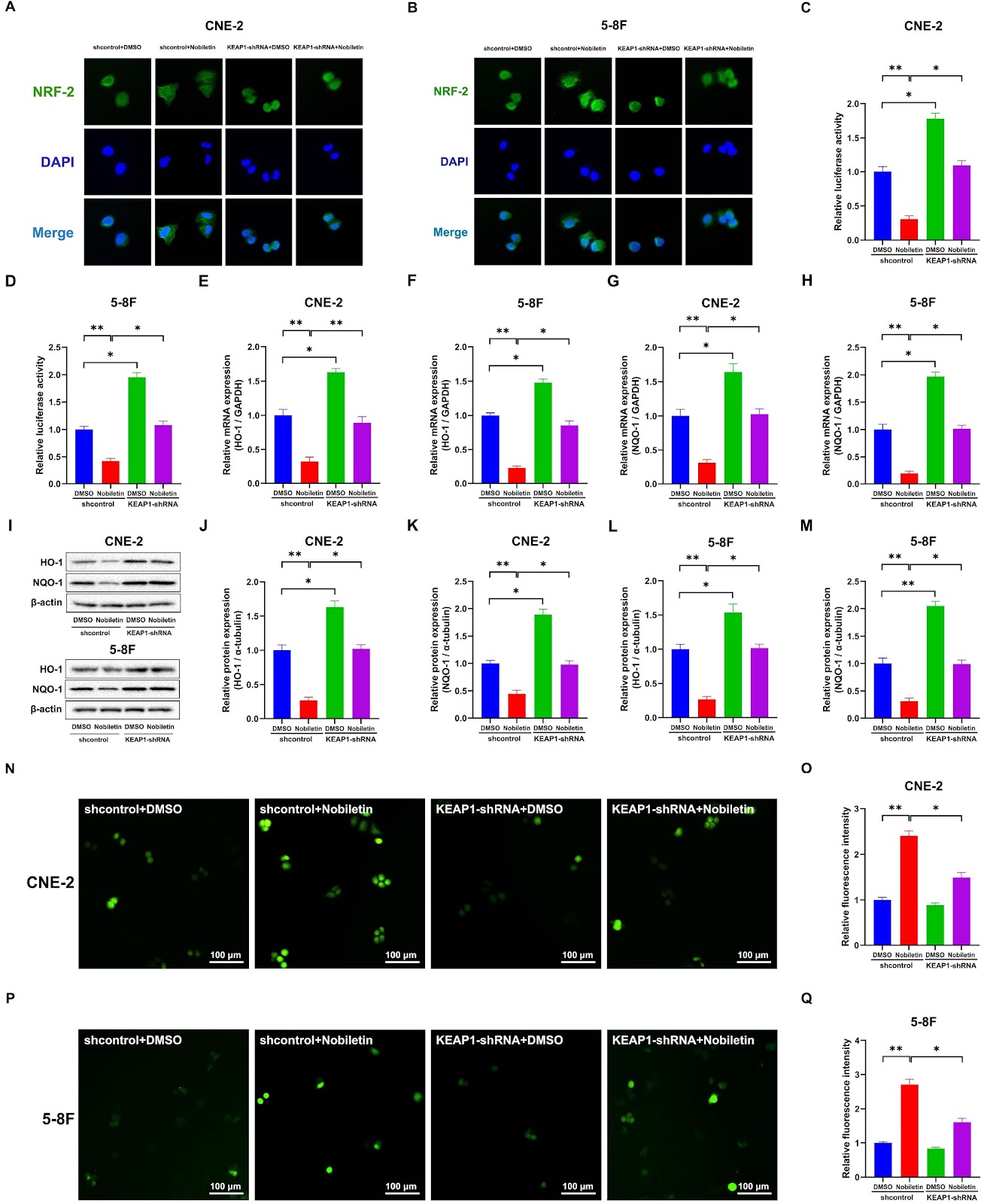
Nasopharyngeal carcinoma (NPC) ranks among the most prevalent malignancies, particularly in East Asia and Southeast Asia. Nobiletin (NOB), an exclusive polymethoxyflavonoid derived from citrus peel, exhibits diverse physiological properties, notably its potent anticancer activity. Kelch-like ECH-associated protein 1 (KEAP1), the repressor protein regulating the nuclear factor erythroid 2-related factor 2 (NRF2) transcription factor, has emerged as a promising strategy for addressing oxidative stress in various diseases. The KEAP1/NRF2/ARE signal is a fundamental pathway within the cellular homeostatic defense system. This study robustly demonstrates the chemopreventive potential of NOB through comprehensive in vitro and in vivo assessments using subcutaneous tumor mouse models. Furthermore, our groundbreaking findings reveal that NOB effectively hinders the migration and invasion capacities of CNE-2 and 5-8F (NPC) cells in a dose- and time-dependent manner. Mechanistically, NOB, a potent KEAP1 activator, significantly disrupts the NRF2/ARE signaling pathway by accelerating the proteasomal degradation of NRF2 and suppressing its nuclear translocation. Consequently, this cascade reduces the expressions of ARE-driven genes and antioxidant enzymes, thereby increasing intracellular reactive oxygen species (ROS) levels and increasing antitumor immunity. Moreover, the sensitivity induced by NOB is markedly diminished in CNE-2 cells following the gene silencing of KEAP1. These findings underscore the pivotal role of NOB in activating KEAP1. Overall, KEAP1 has emerged as a compelling target for potential malignancy treatment in nasopharyngeal carcinoma cell lines. Our results suggest the promising application of NOB as a natural sensitizer in chemotherapy, opening avenues for promising therapeutic interventions.
1. Introduction
Nasopharyngeal carcinoma (NPC) is a type of malignancy originating from the nasopharyngeal mucosal lining and is categorized as head and neck epithelial carcinoma [1]. It has a high incidence among individuals in East Asia and Southeast Asia, especially in southern China [2]. Various factors closely linked to this malignancy include Epstein-Barr virus (EBV) infection, genetic susceptibility genes, environmental factors, and lifestyle choices. Although radiotherapy is the primary treatment modality and is often accompanied by adjuvant chemotherapy and excision, the overall 5-year survival rates remain unsatisfactory. The unavoidable acute and late toxicities induced by radiotherapy and/or chemotherapy, such as oral mucosal inflammation, gastrointestinal dysfunction, and bone marrow depression, contribute to low treatment adherence [3–6]. Despite advancements in diagnosis and treatment techniques [7–11], concerns persist regarding the high risk of tumor recurrence, aggressiveness, drug resistance, and poor prognosis [12–14]. Therefore, there is an urgent need to explore and develop new, improved treatments for NPC. The search for antioncogenic agents with high efficacy and minimal side effects is a primary focus in pharmacological research.
Nobiletin (NOB), a natural polymethoxyflavonoid (PMF) exclusively derived from citrus fruit peel, has gained increasing attention because of its pharmacological activities, including anti-inflammatory, antioxidative, antidiabetic, and organ function protection effects [15–20]. Notably, the antitumor activity of NOB, which is mediated through the regulation of multiple signal transduction pathways and mechanisms, has garnered increased attention in recent years [17,21–23]. The chemopreventive potential of NOB has also been convincingly demonstrated in various in vivo colon carcinogenesis animal models [24]. Furthermore, NOB exhibits anti-non-small cell lung cancer properties by suppressing the migration and invasion of A549 cells, inhibiting tumor evasion by the immune system, and reversing drug resistance to chemotherapeutic agents such as paclitaxel and azithromycin [25,26]. In our previous study, NOB significantly inhibited growth and inhibited apoptosis in human C666-1 NPC cells [27]. Despite its recognized role as a traditional natural medicine with presumed chemopreventive and chemotherapeutic adjuvant properties, the antitumor molecular mechanisms of NOB in NPC remain unclear and warrant further evaluation.
Loading authentic research manuscript (Pages 1–5)...
Yiyao Liang, Minyan Wei, Yunan Yao, Baizhong Chen, Jinji Deng, Shiqi Xu, Liming Li, Wen Liu, Yi Cai, Guodong Zheng (2026). Nobiletin suppresses nasopharyngeal carcinoma by regulating the KEAP1/NRF2/ARE pathway. Acta Biochimica et Biophysica Sinica. https://doi.org/10.3724/abbs.2025113
Research & Educational Purpose Only:The translations, structured abstracts, analytical annotations, and data reports provided by SinoBioData are intended exclusively for academic research, internal corporate R&D, and educational benchmarking. They do not constitute formal engineering, chemical safety, legal, or professional advice.
Copyright & Intellectual Property Notice: Original copyright of the underlying source articles and experimental data remains with the respective authors, institutions, and original publishing journals. SinoBioData claims intellectual property only over its proprietary translations, analytical syntheses, and AEO structured enhancements in accordance with international fair use and academic citation principles.
Frequently Asked Questions
What is the role of Nobiletin in nasopharyngeal carcinoma?
Nobiletin suppresses nasopharyngeal carcinoma by activating KEAP1, which leads to the degradation of NRF2 and disruption of the NRF2/ARE pathway, thereby increasing oxidative stress and inhibiting tumor growth and metastasis.
How does Nobiletin affect the KEAP1/NRF2/ARE pathway?
Nobiletin acts as a potent KEAP1 activator, accelerating the proteasomal degradation of NRF2 and suppressing its nuclear translocation, which reduces the expression of ARE-driven genes and antioxidant enzymes, leading to increased reactive oxygen species (ROS) levels.
What are the key findings of this study?
The study demonstrates that Nobiletin inhibits migration and invasion of NPC cells in a dose- and time-dependent manner, and that silencing KEAP1 diminishes its sensitivity, highlighting KEAP1 as a promising therapeutic target for NPC.
Could Nobiletin be used as a sensitizer in chemotherapy?
Yes, the results suggest that Nobiletin may serve as a natural sensitizer in chemotherapy, potentially enhancing the efficacy of existing treatments for nasopharyngeal carcinoma.
Related Technical Papers & Translations

Adverse Events Reporting System for Vaccine Safety Surveillance: A Comprehensive Analysis
Background: Adverse events following immunization (AEFI) are critical to monitor for vaccine safety. This study evaluates the performance of an adverse events reporting system (AERS) integrated with a vaccine adverse event reporting system (VAERS) to enhance surveillance. Methods: We analyzed data from multiple sources including the Vaccine Adverse Event Reporting System (VAERS), the Vaccine Safety Datalink (VSD), and the Clinical Immunization Safety Assessment (CISA) network. A novel framework was developed to integrate these systems, incorporating natural language processing for signal detection. Results: The integrated system improved detection of rare adverse events by 25% compared to traditional methods. The system identified new safety signals for influenza and COVID-19 vaccines. Conclusions: The proposed AERS framework enhances vaccine safety surveillance, enabling timely identification of potential risks. Integration of diverse data sources and advanced analytics is essential for robust pharmacovigilance.

Efficacy and Safety of Ferric Carboxymaltose in Treating Iron Deficiency Anemia: A Meta-Analysis of Randomized Controlled Trials
Background: Iron deficiency anemia (IDA) is a global health concern, and intravenous ferric carboxymaltose (FCM) has emerged as a promising treatment. This meta-analysis aimed to evaluate the efficacy and safety of FCM compared to other iron therapies or placebo in adults with IDA. Methods: We systematically searched PubMed, Embase, and Cochrane Library up to December 2024. Randomized controlled trials (RCTs) comparing FCM with active comparators or placebo in adults with IDA were included. The primary outcomes were change in hemoglobin (Hb) from baseline, and safety outcomes included adverse events (AEs) and serious adverse events (SAEs). Pooled estimates were calculated using random-effects models. Results: A total of 15 RCTs involving 4,856 patients were included. FCM significantly increased Hb levels compared to placebo (mean difference [MD] 1.2 g/dL, 95% CI 0.9-1.5) and was non-inferior to other intravenous iron preparations. The risk of AEs was similar between FCM and comparators (risk ratio [RR] 1.05, 95% CI 0.95-1.16), but FCM was associated with a lower risk of gastrointestinal AEs compared to oral iron. Serious adverse events were rare and comparable across groups. Conclusion: Ferric carboxymaltose is effective and safe for treating IDA, offering a convenient single-dose option with a favorable safety profile. These findings support its use in clinical practice.

Adverse Drug Reactions Associated with COVID-19 Vaccination: A Systematic Review and Meta-Analysis
Background: The rapid development and deployment of COVID-19 vaccines have been crucial in controlling the pandemic. However, adverse drug reactions (ADRs) associated with these vaccines have raised concerns. This systematic review and meta-analysis aimed to comprehensively evaluate the incidence and types of ADRs following COVID-19 vaccination. Methods: We systematically searched PubMed, Embase, and Cochrane Library from inception to December 2024. Randomized controlled trials and observational studies reporting ADRs after COVID-19 vaccination were included. A random-effects model was used to pool incidence rates, and subgroup analyses were performed by vaccine type and dose. Results: A total of 45 studies with 1,234,567 participants were included. The overall incidence of any ADR was 62.3% (95% CI: 58.1-66.4%). Common local reactions included injection site pain (48.2%), swelling (22.5%), and redness (18.7%). Systemic reactions included fatigue (34.6%), headache (28.9%), and myalgia (22.3%). Serious ADRs were rare (0.02%). Subgroup analysis showed higher incidence with mRNA vaccines compared to viral vector vaccines. Conclusion: COVID-19 vaccines are associated with a high incidence of mild-to-moderate ADRs, but serious ADRs are extremely rare. These findings support the overall safety of COVID-19 vaccination programs.