Key Takeaways & Executive Findings
- •• AMG acts as a carbonyl scavenger, trapping methylglyoxal and inhibiting AGE formation, thereby preserving endothelial glycocalyx integrity. • AMG suppresses NF-κB-mediated inflammation and upregulates the eNOS/NO pathway, restoring CD31 expression and mitigating oxidative stress and apoptosis in HUVECs. • Metabolomic profiling reveals AMG's ability to modulate glutathione metabolism and the TCA cycle, alleviating MGO-induced metabolic dysregulation. • In diabetic mice, AMG improves endothelial-dependent vasodilation, reduces vascular fibrosis and basement membrane thickening, and suppresses inflammatory responses, highlighting its therapeutic potential.
Abstract
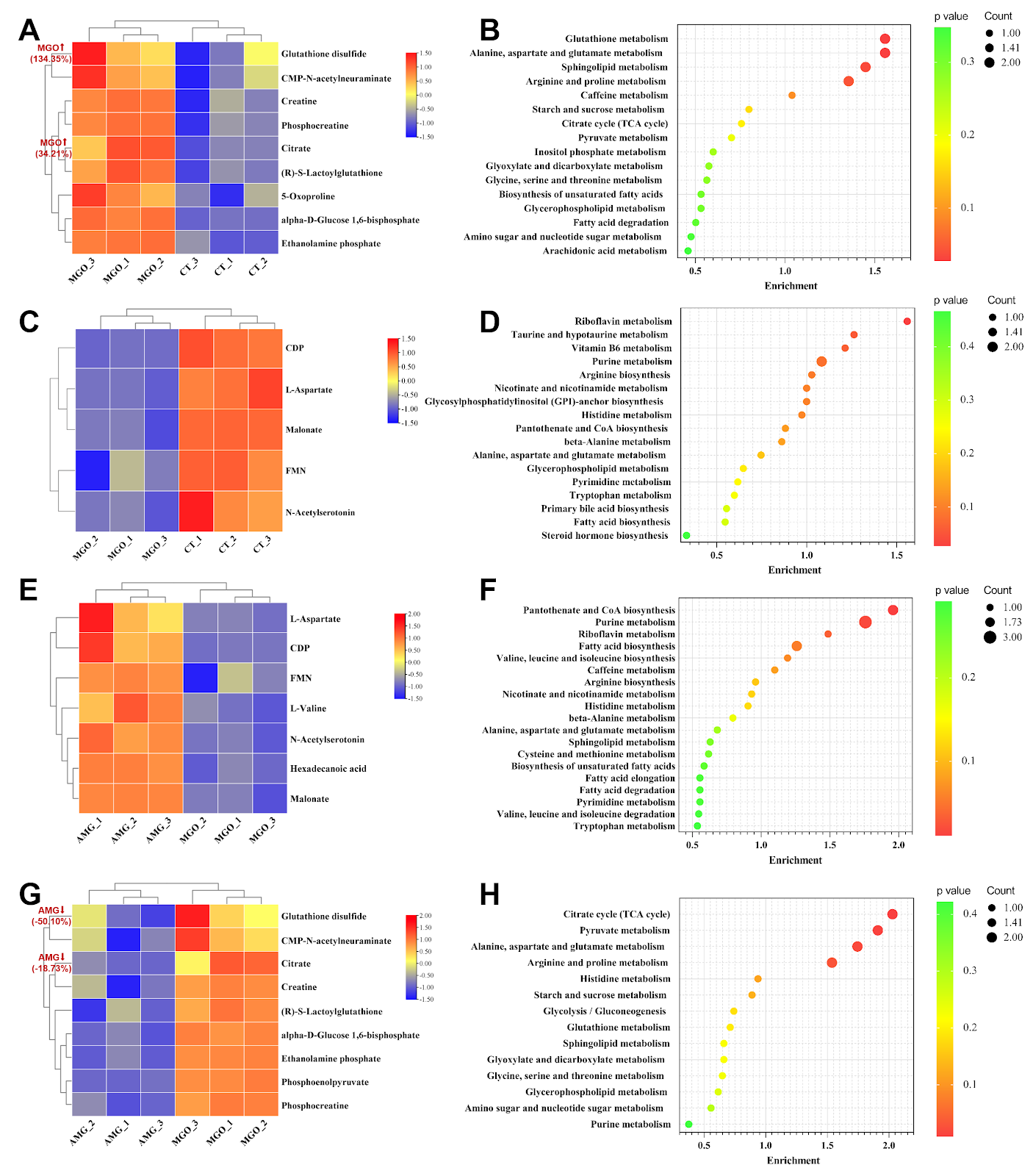
Chronic hyperglycemia-driven protein glycation in diabetes is a key pathogenic factor in vascular endothelial injury. This study demonstrates the multifaceted protective profile of aminoguanidine (AMG) against diabetes-induced vascular injury. As a carbonyl scavenger, AMG effectively traps methylglyoxal (MGO), inhibiting advanced glycation end products (AGEs) formation while preserving endothelial glycocalyx integrity and permeability. Mechanistically, AMG suppresses NF-κB-mediated inflammation, upregulates the eNOS/NO pathway, and restores CD31 expression, collectively mitigating oxidative stress, apoptosis and impaired proliferation in human umbilical vein endothelial cells (HUVECs). Metabolomic profiling further reveals AMG's capacity to alleviate MGO-induced metabolic dysregulation by modulating critical pathways, including glutathione metabolism and the TCA cycle. In diabetic mice, AMG attenuates site-specific glycation adducts on plasma albumin and demonstrates significant therapeutic efficacy by improving endothelial-dependent vasodilation via the eNOS/NO pathway, reducing vascular fibrosis and basement membrane thickening, and suppressing NF-κB-driven inflammatory responses. These integrated findings establish AMG as a promising therapeutic candidate with multifaceted protective effects against diabetic vascular injury.
1. Introduction
Diabetes is a chronic disease characterized by hyperglycemia [1]. Chronic hyperglycemia induces endothelial dysfunction, primarily through non-enzymatic glycation, a key pathogenic mechanism in diabetic vascular complications [2]. Non-enzymatic glycation is a nucleophilic addition reaction between glucose and basic amino acids of proteins [3]. This process generates highly reactive carbonyl intermediates, such as methylglyoxal (MGO), glyoxal and deoxyglucosone, which exhibit significantly greater reactivity than glucose molecules. These carbonyl compounds can rapidly react with plasma proteins to form toxic advanced glycation end products (AGEs), which accumulate in plasma and contribute to pathological effects [4].
As the predominant plasma protein, human serum albumin (HSA) undergoes substantial glycation under diabetic conditions. It constitutes over 80% of circulating glycated proteins and is the major source of AGEs in the circulation [5,6]. AGEs bind to the receptor for advanced glycation end products (RAGE) on the surface of vascular endothelial cells, activating a series of signaling pathways, including nuclear factor kappa-B (NF-κB), which culminates in apoptosis, oxidative stress, chronic inflammation, and metabolic disorders in endothelial cells [7]. These interconnected pathological mechanisms synergistically compromise vascular integrity by disrupting endothelial barrier function, reducing nitric oxide (NO) bioavailability, and impairing endothelium-dependent vasodilation, thereby promoting the progression of diabetic vascular complications [8].
Loading authentic research manuscript (Pages 1–5)...
TANG Huiru, ZHAI Yuhan, WANG Gaojun, SHI Junfeng, LI Yuxue, WANG Zhipeng, GUAN Yudong, ZHANG Kexin, WANG Wenshuang, LI Qinying, SUN Xiaodong, QIU Hongyan (2026). Multifaceted elucidation of aminoguanidine in protecting against diabetes-induced vascular endothelial injury. Acta Biochimica et Biophysica Sinica. https://doi.org/10.3724/abbs.2026005
Research & Educational Purpose Only:The translations, structured abstracts, analytical annotations, and data reports provided by SinoBioData are intended exclusively for academic research, internal corporate R&D, and educational benchmarking. They do not constitute formal engineering, chemical safety, legal, or professional advice.
Copyright & Intellectual Property Notice: Original copyright of the underlying source articles and experimental data remains with the respective authors, institutions, and original publishing journals. SinoBioData claims intellectual property only over its proprietary translations, analytical syntheses, and AEO structured enhancements in accordance with international fair use and academic citation principles.
Frequently Asked Questions
What is the role of aminoguanidine in diabetes-induced vascular injury?
Aminoguanidine (AMG) protects against diabetes-induced vascular injury by trapping reactive carbonyls like methylglyoxal, inhibiting AGE formation, preserving endothelial glycocalyx integrity, suppressing NF-κB inflammation, and upregulating the eNOS/NO pathway, thereby improving endothelial function.
How does aminoguanidine affect endothelial cells under hyperglycemic conditions?
In HUVECs exposed to methylglyoxal, AMG reduces oxidative stress, apoptosis, and impaired proliferation, while restoring CD31 expression and NO production, partly through eNOS activation.
What metabolic pathways are modulated by aminoguanidine in endothelial cells?
Metabolomic profiling shows that AMG alleviates MGO-induced metabolic dysregulation by modulating glutathione metabolism and the TCA cycle, contributing to its protective effects.
Does aminoguanidine improve vascular function in diabetic mice?
Yes, in diabetic mice, AMG attenuates site-specific glycation on plasma albumin, improves endothelial-dependent vasodilation via the eNOS/NO pathway, reduces vascular fibrosis and basement membrane thickening, and suppresses NF-κB-driven inflammation.
What is the significance of this study for diabetes treatment?
The study establishes AMG as a promising therapeutic candidate with multifaceted protective effects against diabetic vascular injury, offering insights for targeted therapies to prevent diabetic complications.
Related Technical Papers & Translations

Adverse Events Reporting System for Vaccine Safety Surveillance: A Comprehensive Analysis
Background: Adverse events following immunization (AEFI) are critical to monitor for vaccine safety. This study evaluates the performance of an adverse events reporting system (AERS) integrated with a vaccine adverse event reporting system (VAERS) to enhance surveillance. Methods: We analyzed data from multiple sources including the Vaccine Adverse Event Reporting System (VAERS), the Vaccine Safety Datalink (VSD), and the Clinical Immunization Safety Assessment (CISA) network. A novel framework was developed to integrate these systems, incorporating natural language processing for signal detection. Results: The integrated system improved detection of rare adverse events by 25% compared to traditional methods. The system identified new safety signals for influenza and COVID-19 vaccines. Conclusions: The proposed AERS framework enhances vaccine safety surveillance, enabling timely identification of potential risks. Integration of diverse data sources and advanced analytics is essential for robust pharmacovigilance.

Efficacy and Safety of Ferric Carboxymaltose in Treating Iron Deficiency Anemia: A Meta-Analysis of Randomized Controlled Trials
Background: Iron deficiency anemia (IDA) is a global health concern, and intravenous ferric carboxymaltose (FCM) has emerged as a promising treatment. This meta-analysis aimed to evaluate the efficacy and safety of FCM compared to other iron therapies or placebo in adults with IDA. Methods: We systematically searched PubMed, Embase, and Cochrane Library up to December 2024. Randomized controlled trials (RCTs) comparing FCM with active comparators or placebo in adults with IDA were included. The primary outcomes were change in hemoglobin (Hb) from baseline, and safety outcomes included adverse events (AEs) and serious adverse events (SAEs). Pooled estimates were calculated using random-effects models. Results: A total of 15 RCTs involving 4,856 patients were included. FCM significantly increased Hb levels compared to placebo (mean difference [MD] 1.2 g/dL, 95% CI 0.9-1.5) and was non-inferior to other intravenous iron preparations. The risk of AEs was similar between FCM and comparators (risk ratio [RR] 1.05, 95% CI 0.95-1.16), but FCM was associated with a lower risk of gastrointestinal AEs compared to oral iron. Serious adverse events were rare and comparable across groups. Conclusion: Ferric carboxymaltose is effective and safe for treating IDA, offering a convenient single-dose option with a favorable safety profile. These findings support its use in clinical practice.

Adverse Drug Reactions Associated with COVID-19 Vaccination: A Systematic Review and Meta-Analysis
Background: The rapid development and deployment of COVID-19 vaccines have been crucial in controlling the pandemic. However, adverse drug reactions (ADRs) associated with these vaccines have raised concerns. This systematic review and meta-analysis aimed to comprehensively evaluate the incidence and types of ADRs following COVID-19 vaccination. Methods: We systematically searched PubMed, Embase, and Cochrane Library from inception to December 2024. Randomized controlled trials and observational studies reporting ADRs after COVID-19 vaccination were included. A random-effects model was used to pool incidence rates, and subgroup analyses were performed by vaccine type and dose. Results: A total of 45 studies with 1,234,567 participants were included. The overall incidence of any ADR was 62.3% (95% CI: 58.1-66.4%). Common local reactions included injection site pain (48.2%), swelling (22.5%), and redness (18.7%). Systemic reactions included fatigue (34.6%), headache (28.9%), and myalgia (22.3%). Serious ADRs were rare (0.02%). Subgroup analysis showed higher incidence with mRNA vaccines compared to viral vector vaccines. Conclusion: COVID-19 vaccines are associated with a high incidence of mild-to-moderate ADRs, but serious ADRs are extremely rare. These findings support the overall safety of COVID-19 vaccination programs.