Key Takeaways & Executive Findings
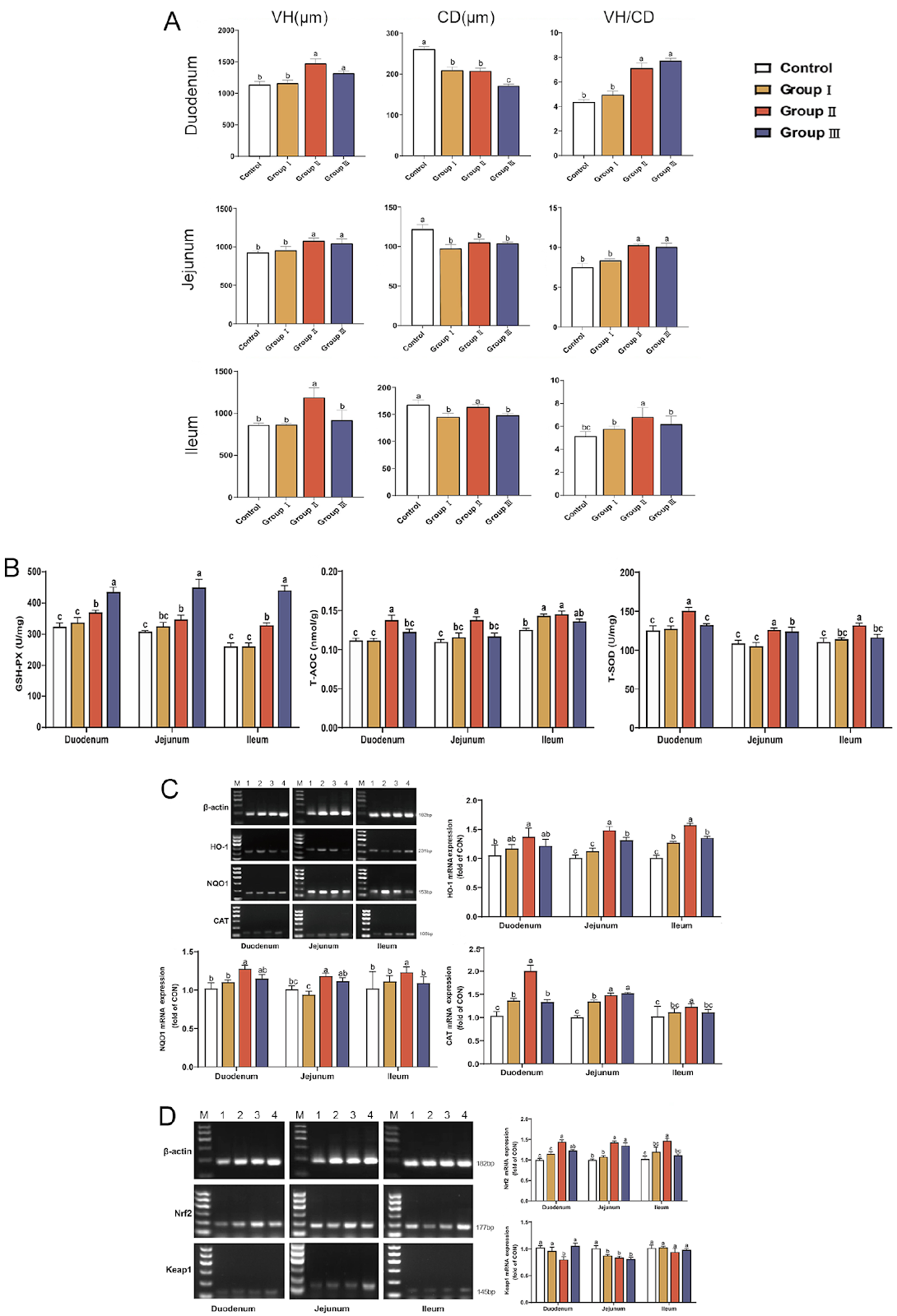
- •• Mixed fungal polysaccharides (GLP and LNT at 1:1 ratio) at 400 mg/kg significantly improve intestinal morphology in broilers, increasing villus height and VH/CD ratio while reducing crypt depth. • The supplementation activates the Keap1-Nrf2 antioxidant pathway, upregulating HO-1, NQO1, CAT, and Nrf2, and downregulating Keap1, leading to enhanced antioxidant enzyme activities. • Mixed FP supplementation increases cecal microbiota diversity (Shannon and Simpson indices) and alters composition, promoting beneficial genera such as Butyricimonas and Alistipes, and increasing Verrucomicrobiota phylum. • These findings support the use of mixed fungal polysaccharides as a natural feed additive to enhance gut health and reduce reliance on antibiotics in poultry production.
Abstract
Poultry production faces escalating challenges from intensive farming practices, where stressors disrupt intestinal integrity, microbiota balance, and antioxidant defenses, leading to economic losses. Although antibiotics have historically mitigated such issues, growing restrictions due to antimicrobial resistance necessitate natural alternatives. Fungal polysaccharides (FP), notably lentinan (LNT) from Lentinula edodes and polysaccharide from Ganoderma lucidum (GLP), are promising candidates owing to their immunomodulatory, antioxidant, and prebiotic properties. However, existing research focuses predominantly on individual FP, neglecting potential synergies in blended formulations. We hypothesized that mixed FP synergistically enhance intestinal health by simultaneously improving nutrient absorption, activating antioxidant pathways, and stabilizing microbial ecosystems. To investigate, 240 one-day-old Arbor Acres male broilers were randomly assigned to control (0 mg/kg FP) and treatment groups receiving 200, 400, or 600 mg/kg mixed FP (1:1 ratio of GLP and LNT). On day 42, intestinal segments were collected for morphological analysis, antioxidant enzyme activities, gene expression, and cecal microbiota composition. Results showed that 400 mg/kg FP significantly increased villus height and VH/CD ratio across all intestinal segments while reducing crypt depth, indicating enhanced nutrient absorption. Antioxidant enzyme activities (T-AOC, T-SOD, GSH-Px) were elevated, and mRNA expression of HO-1, NQO1, CAT, and Nrf2 was upregulated, with Keap1 downregulated, suggesting activation of the Keap1-Nrf2 pathway. Microbiota analysis revealed increased alpha diversity (Shannon and Simpson indices) and altered composition, with elevated abundances of beneficial genera such as Butyricimonas and Alistipes, and increased Verrucomicrobiota phylum. These findings demonstrate that mixed FP supplementation at 400 mg/kg improves intestinal health, antioxidant capacity, and microbiota diversity in broilers, offering a natural alternative to antibiotics.
1. Introduction
Poultry production faces escalating challenges from intensive farming practices, where stressors, including high stocking density, pathogen exposure, and dietary fluctuations, disrupt intestinal integrity, microbiota balance, and antioxidant defenses [1]. These disruptions impair nutrient absorption, growth performance, and immune function, leading to significant economic losses [2]. Although antibiotics have historically mitigated such issues, growing restrictions due to antimicrobial resistance necessitate natural alternatives [1]. Fungal polysaccharides (FP)—notably lentinan (LNT) from Lentinula edodes and polysaccharide from Ganoderma lucidum (GLP)—are promising candidates owing to their immunomodulatory, antioxidant, and prebiotic properties [3]. However, existing research focuses predominantly on individual FP, neglecting potential synergies in blended formulations.
Structurally, LNT (β-(1→3)-D-glucan backbone) enhances rumen volatile fatty acid production and fiber degradation [4], whereas GLP (heterogeneous α/β-glycans) potently activates the Nrf2/HO-1 antioxidant pathway and modulates Th1/Th2 immunity [5]. These divergent mechanisms imply complementary effects when combined. In our previous experiments on broiler feeding, we reported that a combination of GLP (68.32% polysaccharide content, composed of mannose, glucose, arabinose, rhamnose, and galactose at a molar ratio of 1.00:16.37:18.82:1.42:17.42) and LNT (76.52% polysaccharide content, composed of mannose, galacturonic acid, arabinose, galactose, glucose, and rhamnose at a molar ratio of 1.00:15.22:8.23:2.05:1.78:4.26) at a 1:1 ratio maximally promoted broiler growth (unpublished data), but their impacts on intestinal morphology, antioxidant signaling, and the microbiota remain uncharacterized. We therefore hypothesize that mixed FP synergistically may enhance intestinal health by simultaneously improving nutrient absorption, activating antioxidant pathways, and stabilizing microbial ecosystems.
Loading authentic research manuscript (Pages 1–5)...
ZHU Bingyu, ZHANG Enze, YANG Min, ZHANG Ye, LIU Can, JIAO Runxin, PENG Mengling, ZHOU Jie, CHENG Jianbo, WANG Juhua (2026). Mixed Fungal Polysaccharides Enhance Intestinal Health, Antioxidant Capacity, and Microbiota Diversity in Broiler Chickens. Acta Biochimica et Biophysica Sinica. https://doi.org/10.3724/abbs.2025222
Research & Educational Purpose Only:The translations, structured abstracts, analytical annotations, and data reports provided by SinoBioData are intended exclusively for academic research, internal corporate R&D, and educational benchmarking. They do not constitute formal engineering, chemical safety, legal, or professional advice.
Copyright & Intellectual Property Notice: Original copyright of the underlying source articles and experimental data remains with the respective authors, institutions, and original publishing journals. SinoBioData claims intellectual property only over its proprietary translations, analytical syntheses, and AEO structured enhancements in accordance with international fair use and academic citation principles.
Frequently Asked Questions
What are the main findings of the study on mixed fungal polysaccharides in broilers?
The study found that supplementing broiler diets with a 1:1 mixture of Ganoderma lucidum polysaccharide (GLP) and lentinan (LNT) at 400 mg/kg significantly improved intestinal morphology (increased villus height and VH/CD ratio, reduced crypt depth), enhanced antioxidant capacity (elevated T-AOC, T-SOD, GSH-Px activities and upregulated Nrf2 pathway genes), and increased cecal microbiota diversity (Shannon and Simpson indices) with beneficial shifts in microbial composition.
How do mixed fungal polysaccharides improve antioxidant capacity in broilers?
Mixed fungal polysaccharides activate the Keap1-Nrf2 signaling pathway, leading to upregulation of antioxidant enzymes such as HO-1, NQO1, and CAT, and downregulation of Keap1. This results in increased total antioxidant capacity (T-AOC), superoxide dismutase (T-SOD), and glutathione peroxidase (GSH-Px) activities, thereby mitigating oxidative stress.
What is the optimal dosage of mixed fungal polysaccharides for broilers?
In this study, the 400 mg/kg mixed FP group (Group II) showed the most significant improvements in intestinal health, antioxidant capacity, and microbiota diversity compared to control and other doses (200 and 600 mg/kg). Thus, 400 mg/kg appears to be the optimal dosage under the tested conditions.
What are the implications of this research for poultry production?
The findings suggest that mixed fungal polysaccharides can serve as a natural feed additive to enhance gut health, antioxidant defense, and beneficial gut microbiota in broilers, potentially reducing the need for antibiotic growth promoters and supporting sustainable poultry production.
How was the microbiota diversity assessed in the study?
Cecal contents were collected and subjected to 16S rRNA gene sequencing. Amplicon Sequence Variants (ASVs) were analyzed to assess alpha diversity (Shannon and Simpson indices) and taxonomic composition. The results showed increased diversity and altered abundance of specific genera and phyla in the treatment groups.
Related Technical Papers & Translations

Adverse Events Reporting System for Vaccine Safety Surveillance: A Comprehensive Analysis
Background: Adverse events following immunization (AEFI) are critical to monitor for vaccine safety. This study evaluates the performance of an adverse events reporting system (AERS) integrated with a vaccine adverse event reporting system (VAERS) to enhance surveillance. Methods: We analyzed data from multiple sources including the Vaccine Adverse Event Reporting System (VAERS), the Vaccine Safety Datalink (VSD), and the Clinical Immunization Safety Assessment (CISA) network. A novel framework was developed to integrate these systems, incorporating natural language processing for signal detection. Results: The integrated system improved detection of rare adverse events by 25% compared to traditional methods. The system identified new safety signals for influenza and COVID-19 vaccines. Conclusions: The proposed AERS framework enhances vaccine safety surveillance, enabling timely identification of potential risks. Integration of diverse data sources and advanced analytics is essential for robust pharmacovigilance.

Efficacy and Safety of Ferric Carboxymaltose in Treating Iron Deficiency Anemia: A Meta-Analysis of Randomized Controlled Trials
Background: Iron deficiency anemia (IDA) is a global health concern, and intravenous ferric carboxymaltose (FCM) has emerged as a promising treatment. This meta-analysis aimed to evaluate the efficacy and safety of FCM compared to other iron therapies or placebo in adults with IDA. Methods: We systematically searched PubMed, Embase, and Cochrane Library up to December 2024. Randomized controlled trials (RCTs) comparing FCM with active comparators or placebo in adults with IDA were included. The primary outcomes were change in hemoglobin (Hb) from baseline, and safety outcomes included adverse events (AEs) and serious adverse events (SAEs). Pooled estimates were calculated using random-effects models. Results: A total of 15 RCTs involving 4,856 patients were included. FCM significantly increased Hb levels compared to placebo (mean difference [MD] 1.2 g/dL, 95% CI 0.9-1.5) and was non-inferior to other intravenous iron preparations. The risk of AEs was similar between FCM and comparators (risk ratio [RR] 1.05, 95% CI 0.95-1.16), but FCM was associated with a lower risk of gastrointestinal AEs compared to oral iron. Serious adverse events were rare and comparable across groups. Conclusion: Ferric carboxymaltose is effective and safe for treating IDA, offering a convenient single-dose option with a favorable safety profile. These findings support its use in clinical practice.

Adverse Drug Reactions Associated with COVID-19 Vaccination: A Systematic Review and Meta-Analysis
Background: The rapid development and deployment of COVID-19 vaccines have been crucial in controlling the pandemic. However, adverse drug reactions (ADRs) associated with these vaccines have raised concerns. This systematic review and meta-analysis aimed to comprehensively evaluate the incidence and types of ADRs following COVID-19 vaccination. Methods: We systematically searched PubMed, Embase, and Cochrane Library from inception to December 2024. Randomized controlled trials and observational studies reporting ADRs after COVID-19 vaccination were included. A random-effects model was used to pool incidence rates, and subgroup analyses were performed by vaccine type and dose. Results: A total of 45 studies with 1,234,567 participants were included. The overall incidence of any ADR was 62.3% (95% CI: 58.1-66.4%). Common local reactions included injection site pain (48.2%), swelling (22.5%), and redness (18.7%). Systemic reactions included fatigue (34.6%), headache (28.9%), and myalgia (22.3%). Serious ADRs were rare (0.02%). Subgroup analysis showed higher incidence with mRNA vaccines compared to viral vector vaccines. Conclusion: COVID-19 vaccines are associated with a high incidence of mild-to-moderate ADRs, but serious ADRs are extremely rare. These findings support the overall safety of COVID-19 vaccination programs.