Key Takeaways & Executive Findings
- •• Metabolic reprogramming is a central mechanism driving the initiation and progression of cardiometabolic syndrome, beyond traditional hormonal and hemodynamic factors. • Multiomics platforms (genomics, proteomics, metabolomics, metagenomics) are pivotal for identifying novel biomarkers and therapeutic targets in CMS. • Obesity-induced adipose tissue dysfunction, inflammation, and ectopic lipid accumulation are key triggers of metabolic reprogramming and CMS pathophysiology. • Restoring metabolic flexibility through pharmacological interventions represents a promising therapeutic strategy to halt CMS progression.
Abstract
Cardiometabolic syndrome (CMS), a combination of central obesity, insulin resistance, dyslipidemia, and hypertension, accounts for a significant portion of the global incidence of type 2 diabetes and cardiovascular disease. Traditionally, hormonal and hemodynamic dysregulation have been considered the primary causes of CMS. However, increasing evidence shows that metabolic reprogramming, which involves long-lasting, tissue-specific changes in cellular metabolism, is a common cause of the initiation and progression of CMS. This review examines the systemic metabolic alterations, the molecular pathways facilitating these modifications, and the transformative impact of multiomics platforms on the discovery of novel biomarkers and therapeutic targets. We also discuss drugs that can help restore metabolic flexibility and stop disease progression.
1. Introduction
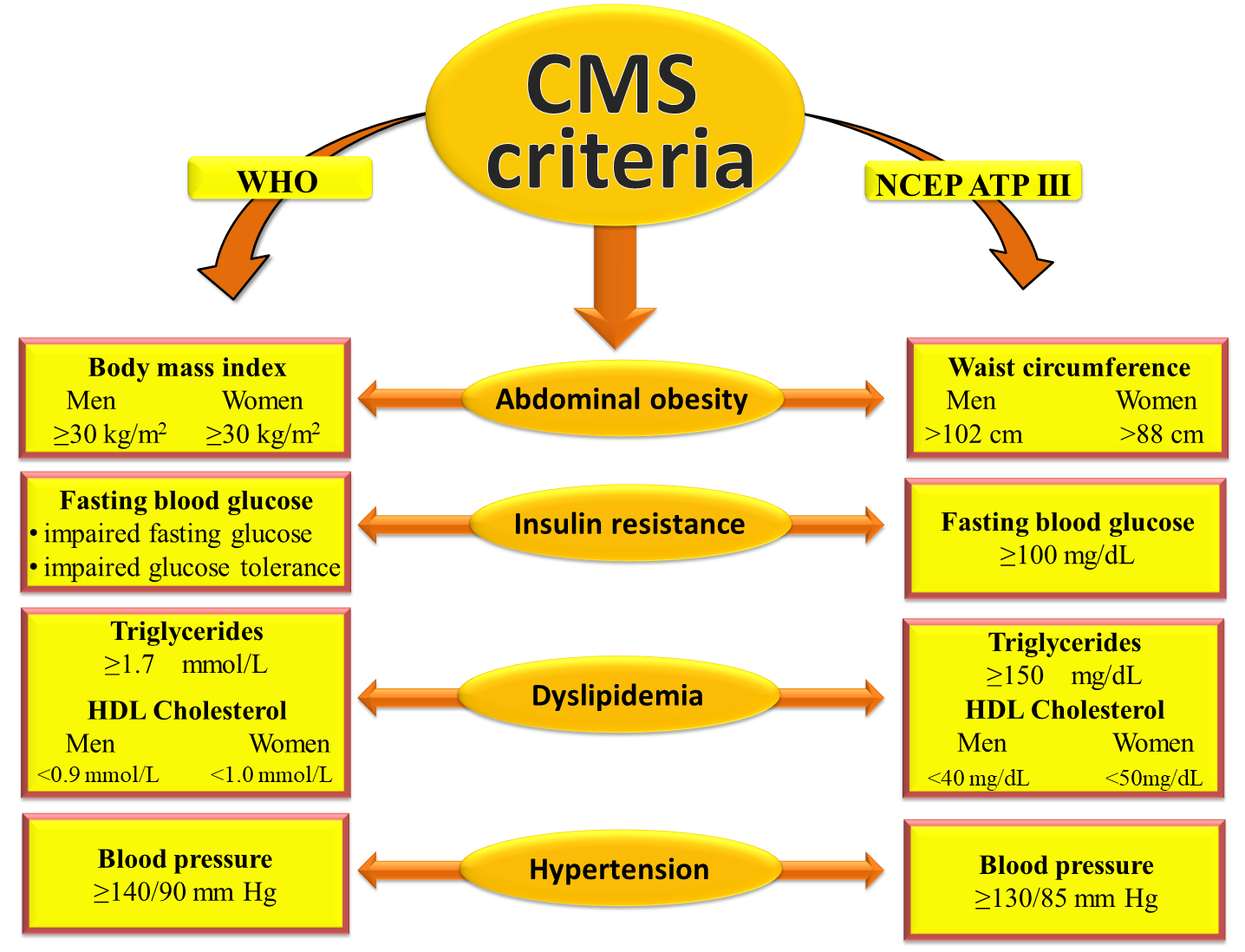
Cardiometabolic syndrome (CMS) encompasses the coexistence of metabolic disorders such as central obesity, insulin resistance (IR), dyslipidemia, and hypertension [1,2]. The heterogeneity and asymptomatic nature of CMS permanently worsen health and, over a long period, lead to the development of cardiometabolic diseases (CMDs) [3]. CMS accounts for a significant proportion of the global incidence of type 2 diabetes (T2D) and cardiovascular disease (CVD) [4,5]. In addition, CMS is associated with the development of other CMDs, such as nonalcoholic fatty liver disease, chronic kidney disease, and stroke [6–8]. Therefore, numerous investigations are aimed at discovering the molecular mechanisms of CMS and identifying a reliable biomarker for early detection and effective therapy.
The combination of low physical activity, unhealthy diet, excess body mass, and daily stress is a risk factor for an increased incidence of CMS. Central or abdominal obesity may be regarded as the root cause of CMS, since obesity is often accompanied by the development of IR, dyslipidemia, and hypertension [9,10]. Obesity often causes low-grade inflammation, leading to the recruitment of various factors that induce obesity-related cardiometabolic complications [11]. Additionally, obesity affects the normal functioning of the cardiovascular system (CVS), leading to hypertension and an increased workload on the heart [3]. IR is characterized by hyperglycemia, altered metabolism of free fatty acids (FFAs), and increased oxidative stress (OS) [3]. Another CMS factor, hypertension, directly affects the CVS by changing the structure and function of the heart and blood vessels [12]. Dyslipidemia, characterized by elevated blood lipid levels, is a critical factor in endothelial dysfunction and the progression of plaque formation [13,14].
Loading authentic research manuscript (Pages 1–5)...
Milan Obradovic, Jelena Radovanovic, Julijana Stanimirovic, Bozidarka Zaric, Esma R. Isenovic (2026). Metabolic Reprogramming in Cardiometabolic Syndrome: Mechanisms, Biomarkers, and Therapeutic Approaches. Acta Biochimica et Biophysica Sinica. https://doi.org/10.3724/abbs.2025255
Research & Educational Purpose Only:The translations, structured abstracts, analytical annotations, and data reports provided by SinoBioData are intended exclusively for academic research, internal corporate R&D, and educational benchmarking. They do not constitute formal engineering, chemical safety, legal, or professional advice.
Copyright & Intellectual Property Notice: Original copyright of the underlying source articles and experimental data remains with the respective authors, institutions, and original publishing journals. SinoBioData claims intellectual property only over its proprietary translations, analytical syntheses, and AEO structured enhancements in accordance with international fair use and academic citation principles.
Frequently Asked Questions
What is cardiometabolic syndrome (CMS)?
Cardiometabolic syndrome is a cluster of metabolic disorders including central obesity, insulin resistance, dyslipidemia, and hypertension, which collectively increase the risk of type 2 diabetes and cardiovascular disease.
How does metabolic reprogramming contribute to CMS?
Metabolic reprogramming involves long-lasting, tissue-specific changes in cellular metabolism that drive the initiation and progression of CMS, often triggered by obesity and associated inflammation.
What role do multiomics platforms play in CMS research?
Multiomics platforms (genomics, proteomics, metabolomics, metagenomics) enable comprehensive profiling of molecular alterations, facilitating the discovery of novel biomarkers and therapeutic targets for CMS.
What are potential therapeutic strategies for CMS?
Therapeutic strategies aim to restore metabolic flexibility, reduce inflammation, and improve insulin sensitivity, using drugs that target metabolic pathways and lifestyle interventions.
Why is obesity considered a root cause of CMS?
Obesity, especially visceral adiposity, leads to adipose tissue dysfunction, excessive free fatty acid release, inflammation, and ectopic lipid accumulation, which promote insulin resistance, dyslipidemia, and hypertension.
Related Technical Papers & Translations

Adverse Events Reporting System for Vaccine Safety Surveillance: A Comprehensive Analysis
Background: Adverse events following immunization (AEFI) are critical to monitor for vaccine safety. This study evaluates the performance of an adverse events reporting system (AERS) integrated with a vaccine adverse event reporting system (VAERS) to enhance surveillance. Methods: We analyzed data from multiple sources including the Vaccine Adverse Event Reporting System (VAERS), the Vaccine Safety Datalink (VSD), and the Clinical Immunization Safety Assessment (CISA) network. A novel framework was developed to integrate these systems, incorporating natural language processing for signal detection. Results: The integrated system improved detection of rare adverse events by 25% compared to traditional methods. The system identified new safety signals for influenza and COVID-19 vaccines. Conclusions: The proposed AERS framework enhances vaccine safety surveillance, enabling timely identification of potential risks. Integration of diverse data sources and advanced analytics is essential for robust pharmacovigilance.

Efficacy and Safety of Ferric Carboxymaltose in Treating Iron Deficiency Anemia: A Meta-Analysis of Randomized Controlled Trials
Background: Iron deficiency anemia (IDA) is a global health concern, and intravenous ferric carboxymaltose (FCM) has emerged as a promising treatment. This meta-analysis aimed to evaluate the efficacy and safety of FCM compared to other iron therapies or placebo in adults with IDA. Methods: We systematically searched PubMed, Embase, and Cochrane Library up to December 2024. Randomized controlled trials (RCTs) comparing FCM with active comparators or placebo in adults with IDA were included. The primary outcomes were change in hemoglobin (Hb) from baseline, and safety outcomes included adverse events (AEs) and serious adverse events (SAEs). Pooled estimates were calculated using random-effects models. Results: A total of 15 RCTs involving 4,856 patients were included. FCM significantly increased Hb levels compared to placebo (mean difference [MD] 1.2 g/dL, 95% CI 0.9-1.5) and was non-inferior to other intravenous iron preparations. The risk of AEs was similar between FCM and comparators (risk ratio [RR] 1.05, 95% CI 0.95-1.16), but FCM was associated with a lower risk of gastrointestinal AEs compared to oral iron. Serious adverse events were rare and comparable across groups. Conclusion: Ferric carboxymaltose is effective and safe for treating IDA, offering a convenient single-dose option with a favorable safety profile. These findings support its use in clinical practice.

Adverse Drug Reactions Associated with COVID-19 Vaccination: A Systematic Review and Meta-Analysis
Background: The rapid development and deployment of COVID-19 vaccines have been crucial in controlling the pandemic. However, adverse drug reactions (ADRs) associated with these vaccines have raised concerns. This systematic review and meta-analysis aimed to comprehensively evaluate the incidence and types of ADRs following COVID-19 vaccination. Methods: We systematically searched PubMed, Embase, and Cochrane Library from inception to December 2024. Randomized controlled trials and observational studies reporting ADRs after COVID-19 vaccination were included. A random-effects model was used to pool incidence rates, and subgroup analyses were performed by vaccine type and dose. Results: A total of 45 studies with 1,234,567 participants were included. The overall incidence of any ADR was 62.3% (95% CI: 58.1-66.4%). Common local reactions included injection site pain (48.2%), swelling (22.5%), and redness (18.7%). Systemic reactions included fatigue (34.6%), headache (28.9%), and myalgia (22.3%). Serious ADRs were rare (0.02%). Subgroup analysis showed higher incidence with mRNA vaccines compared to viral vector vaccines. Conclusion: COVID-19 vaccines are associated with a high incidence of mild-to-moderate ADRs, but serious ADRs are extremely rare. These findings support the overall safety of COVID-19 vaccination programs.