Key Takeaways & Executive Findings
- •• Lysosomal damage in renal tubular epithelial cells is a key driver of diabetic kidney disease (DKD) pathogenesis, leading to autophagy impairment and oxidative stress imbalance. • Melatonin (MLT) upregulates transcription factor EB (TFEB) to restore lysosomal biogenesis and function, thereby mitigating DKD-related kidney injury. • The protective mechanism involves the miR-205-5p-LRP-1 pathway, linking MLT to improved autophagy and redox homeostasis in renal tubules. • These findings suggest MLT as a potential therapeutic agent for DKD by targeting lysosomal integrity, offering a novel approach beyond current treatments.
Abstract
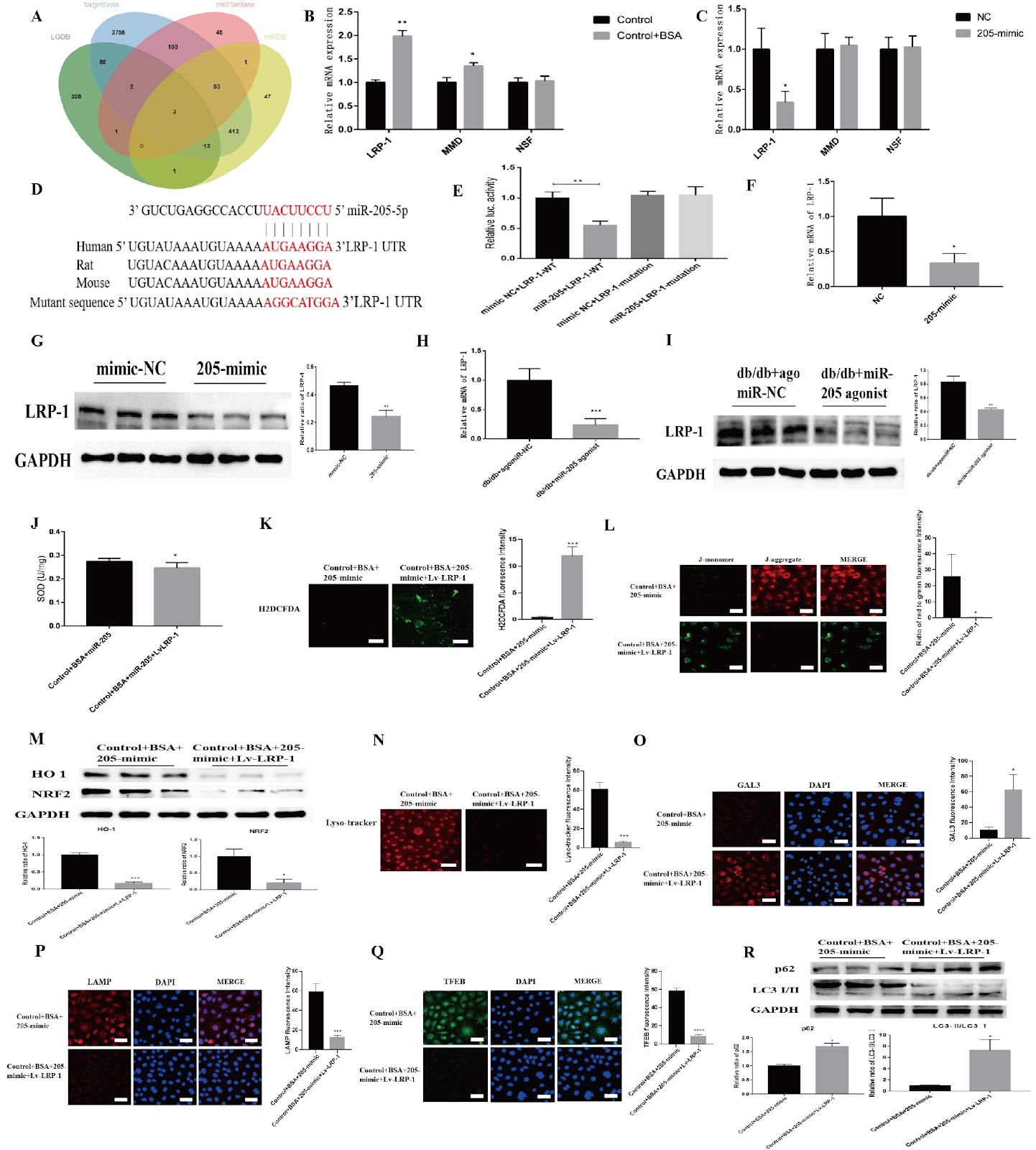
Proteinuria-induced damage to renal tubular epithelial cells is one of the main causes of diabetic kidney disease (DKD), and the clearance of overloaded albumin by lysosomes is crucial for maintaining the homeostasis of renal tubular epithelial cells. Therefore, lysosomal damage is closely related to the pathogenesis of DKD, but effective prevention and treatment measures are still lacking. Melatonin (MLT) is secreted by the pineal gland and can not only regulate circadian rhythms but also maintain lysosomal homeostasis. In this study, we demonstrate the presence of significant lysosomal damage in the renal tubules of DKD patients, which causes autophagy impairment and a concomitant oxidative stress imbalance; however, MLT can upregulate transcription factor EB (TFEB) to improve lysosomal damage and restore the biosynthesis of this organelle. Mechanistically, MLT may protect lysosomes via the upregulation of TFEB and the miR-205-5p-LRP-1 pathway in renal tubules, thus improving autophagy dysfunction and oxidative imbalance in DKD.
1. Introduction
Diabetic kidney disease (DKD) is a microvascular disease caused by diabetes that is associated with significant mortality and disability [1]. Regrettably, few effective DKD treatments currently exist [2]. Thus, the discovery of novel pathophysiological mechanisms and the formulation of novel treatment approaches for DKD are needed.
Urinary albumin is not only the most characteristic clinical manifestation of DKD but also an independent risk factor for its progression [3,4]. Previous studies have shown that prolonged exposure to an excessive amount of albumin can result in the overloading of albumin in renal tubular epithelial cells, which induces inflammatory responses, oxidative stress, and apoptosis [5,6]. In addition, increasing evidence suggests that autophagy can protect renal tubular epithelial cells from damage in various kidney diseases, including DKD [7,8].
As the main degradation system in cells, autophagy plays an important role in adapting to environmental changes, maintaining internal homeostasis, responding to stress and maintaining cellular function [9]. The degradative capacity of autophagy originates in lysosomes; therefore, lysosomes occupy a position at the core of the autophagic process. Although lysosomes are essential for autophagy, lysosomes are mostly neglected in autophagy studies; thus, the means needed to alleviate lysosomal damage are very limited [10]. Several studies have shown that, in DKD, albumin and glucose overload can cause damage to lysosomes in renal tubular epithelial cells and can subsequently promote DKD occurrence and development [11–13]. Liu et al. [14] reported that lysosomal dysfunction throughout the course of DKD represents the primary mechanism underlying the protective potential of autophagy. Moreover, lysosomal repair can activate autophagy and improve kidney homeostasis [15,16]. Therefore, the inhibition of lysosomal damage and depletion can prevent peroxidation, maintain homeostasis in renal tubular epithelial cells, and thereby improve DKD. Nevertheless, the mechanism of lysosomal damage and repair in renal tubules in DKD is still unclear.
Loading authentic research manuscript (Pages 1–5)...
Jiaqi Chen, Shuting Zhang, Xiaoquan Xue, Xiaoqin Ma, Aomiao Chen, Yichuan Wu, Geningyue Wang, Qian Zhang, Yaoming Xue, Yijie Jia, Zongji Zheng (2026). Melatonin attenuates kidney injury by alleviating lysosomal damage in diabetic kidney disease. Acta Biochimica et Biophysica Sinica. https://doi.org/10.3724/abbs.2025034
Research & Educational Purpose Only:The translations, structured abstracts, analytical annotations, and data reports provided by SinoBioData are intended exclusively for academic research, internal corporate R&D, and educational benchmarking. They do not constitute formal engineering, chemical safety, legal, or professional advice.
Copyright & Intellectual Property Notice: Original copyright of the underlying source articles and experimental data remains with the respective authors, institutions, and original publishing journals. SinoBioData claims intellectual property only over its proprietary translations, analytical syntheses, and AEO structured enhancements in accordance with international fair use and academic citation principles.
Frequently Asked Questions
What is the role of lysosomal damage in diabetic kidney disease (DKD)?
Lysosomal damage in renal tubular epithelial cells impairs autophagy and disrupts redox balance, contributing to DKD progression. The study shows that lysosomal dysfunction is a key pathogenic mechanism.
How does melatonin (MLT) protect against kidney injury in DKD?
Melatonin upregulates transcription factor EB (TFEB), which promotes lysosomal biogenesis and function, thereby alleviating lysosomal damage, restoring autophagy, and reducing oxidative stress in renal tubules.
What is the molecular mechanism of melatonin's protective effect?
Melatonin activates the miR-205-5p-LRP-1 pathway, which leads to TFEB upregulation and subsequent lysosomal protection, improving autophagy and oxidative balance in DKD.
What are the clinical implications of this study?
The findings suggest that melatonin could be a potential therapeutic agent for DKD by targeting lysosomal integrity, offering a novel approach beyond current treatments that primarily focus on glycemic control and blood pressure management.
What is the significance of focusing on renal tubules in DKD research?
Renal tubular epithelial cells are crucial in DKD pathogenesis due to proteinuria-induced damage. This study highlights the importance of lysosomal health in these cells, which has been largely overlooked in favor of glomerular research.
Related Technical Papers & Translations

Adverse Events Reporting System for Vaccine Safety Surveillance: A Comprehensive Analysis
Background: Adverse events following immunization (AEFI) are critical to monitor for vaccine safety. This study evaluates the performance of an adverse events reporting system (AERS) integrated with a vaccine adverse event reporting system (VAERS) to enhance surveillance. Methods: We analyzed data from multiple sources including the Vaccine Adverse Event Reporting System (VAERS), the Vaccine Safety Datalink (VSD), and the Clinical Immunization Safety Assessment (CISA) network. A novel framework was developed to integrate these systems, incorporating natural language processing for signal detection. Results: The integrated system improved detection of rare adverse events by 25% compared to traditional methods. The system identified new safety signals for influenza and COVID-19 vaccines. Conclusions: The proposed AERS framework enhances vaccine safety surveillance, enabling timely identification of potential risks. Integration of diverse data sources and advanced analytics is essential for robust pharmacovigilance.

Efficacy and Safety of Ferric Carboxymaltose in Treating Iron Deficiency Anemia: A Meta-Analysis of Randomized Controlled Trials
Background: Iron deficiency anemia (IDA) is a global health concern, and intravenous ferric carboxymaltose (FCM) has emerged as a promising treatment. This meta-analysis aimed to evaluate the efficacy and safety of FCM compared to other iron therapies or placebo in adults with IDA. Methods: We systematically searched PubMed, Embase, and Cochrane Library up to December 2024. Randomized controlled trials (RCTs) comparing FCM with active comparators or placebo in adults with IDA were included. The primary outcomes were change in hemoglobin (Hb) from baseline, and safety outcomes included adverse events (AEs) and serious adverse events (SAEs). Pooled estimates were calculated using random-effects models. Results: A total of 15 RCTs involving 4,856 patients were included. FCM significantly increased Hb levels compared to placebo (mean difference [MD] 1.2 g/dL, 95% CI 0.9-1.5) and was non-inferior to other intravenous iron preparations. The risk of AEs was similar between FCM and comparators (risk ratio [RR] 1.05, 95% CI 0.95-1.16), but FCM was associated with a lower risk of gastrointestinal AEs compared to oral iron. Serious adverse events were rare and comparable across groups. Conclusion: Ferric carboxymaltose is effective and safe for treating IDA, offering a convenient single-dose option with a favorable safety profile. These findings support its use in clinical practice.

Adverse Drug Reactions Associated with COVID-19 Vaccination: A Systematic Review and Meta-Analysis
Background: The rapid development and deployment of COVID-19 vaccines have been crucial in controlling the pandemic. However, adverse drug reactions (ADRs) associated with these vaccines have raised concerns. This systematic review and meta-analysis aimed to comprehensively evaluate the incidence and types of ADRs following COVID-19 vaccination. Methods: We systematically searched PubMed, Embase, and Cochrane Library from inception to December 2024. Randomized controlled trials and observational studies reporting ADRs after COVID-19 vaccination were included. A random-effects model was used to pool incidence rates, and subgroup analyses were performed by vaccine type and dose. Results: A total of 45 studies with 1,234,567 participants were included. The overall incidence of any ADR was 62.3% (95% CI: 58.1-66.4%). Common local reactions included injection site pain (48.2%), swelling (22.5%), and redness (18.7%). Systemic reactions included fatigue (34.6%), headache (28.9%), and myalgia (22.3%). Serious ADRs were rare (0.02%). Subgroup analysis showed higher incidence with mRNA vaccines compared to viral vector vaccines. Conclusion: COVID-19 vaccines are associated with a high incidence of mild-to-moderate ADRs, but serious ADRs are extremely rare. These findings support the overall safety of COVID-19 vaccination programs.