Key Takeaways & Executive Findings
- •• Melanoma-derived versican upregulates pyruvate carboxylase (PCB) in tumor-associated macrophages (TAMs) under normoxia via the TLR2-MyD88-RelB signaling axis. • Blocking the versican-TLR2-MyD88-RelB pathway reverses PCB upregulation and impairs TAM-mediated tumor cell clearance, highlighting its therapeutic potential. • This study reveals a novel mechanism for reactivating TAMs under normoxic conditions, offering a strategy to enhance anti-tumor immunity without the side effects of systemic TLR activation. • The findings provide potential molecular targets (versican, TLR2, MyD88, RelB, PCB) for developing immunotherapies aimed at reorienting TAMs toward an anti-tumor phenotype.
Abstract
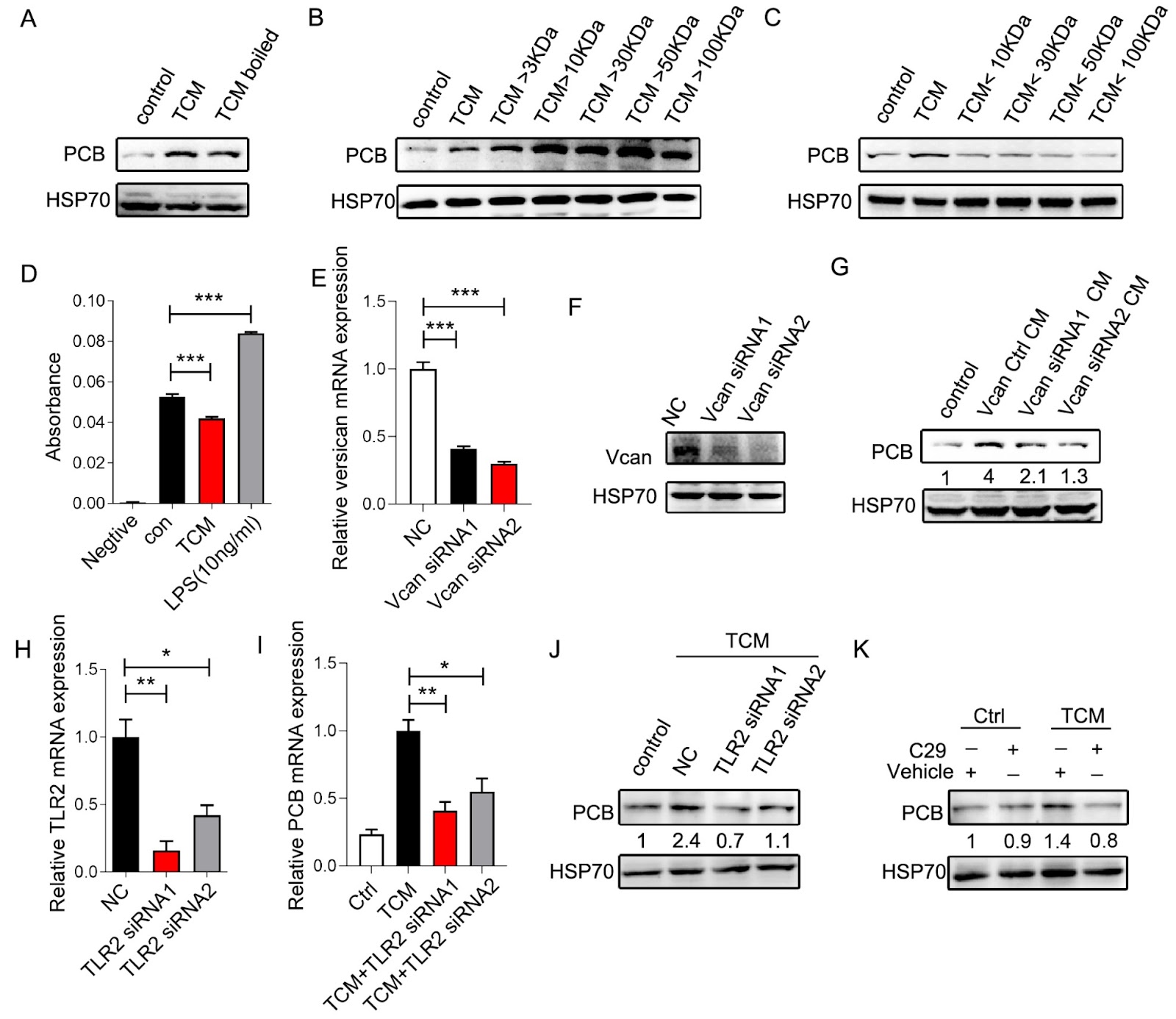
Relieving hypoxia in the tumor microenvironment (TME) promotes innate and adaptive immunity. Our previous research demonstrated that reoxygenation of the TME promotes the phagocytosis and tumor-killing functions of tumor-associated macrophages (TAMs) by upregulating pyruvate carboxylase (PCB). However, the mechanism remains obscure. In the present study, we find that versican derived from melanoma cells binds to TLR2 and activates the downstream transcription factor RelB, which transcribes PCB under normoxia. Blocking the versican-TLR2-MyD88-RelB axis not only reverses the upregulation of PCB in TAMs but also hinders the clearance of tumor cells by TAMs. Our work suggests a pathway that modulates the functions of TAMs under normoxia, which could be harnessed for strengthening anti-tumor immunity.
1. Introduction
Tumor-associated macrophages (TAMs) account for the largest fraction of the immune infiltrate in most solid malignancies [1]. By promoting tumor growth, angiogenesis, metastasis, and immunosuppression, TAMs have emerged as critical pro-tumor immunocytes in the tumor microenvironment [2]. Therefore, the presence of TAMs in tumors is generally associated with poor prognosis, and the depletion of TAMs has recently been exploited for cancer therapy [3,4]. Even so, the phenotypes and functions of TAMs are plastic [5]. They can also act as effector cells by engulfing tumor cells and recruiting cytotoxic T cells to activate anti-tumor immunity [6]. Consistent with this, accumulating evidence shows that macrophages are required for the efficacy of chemotherapy [7] and programmed death ligand-1 (PD-L1) blockade therapy [7,8]. Thus, reorienting TAMs to antitumor macrophages is superior to depleting TAMs indiscriminately.
Several strategies have been proposed to reorient TAMs, including Toll-like receptor (TLR) activation, CD40 agonism, and PI3Kγ inhibition [6]. However, owing to their side effects on macrophages in normal tissues and organs, these agents have limited clinical impact [9,10]. Our previous study revealed that relieving hypoxia in the tumor microenvironment reverses the inhibition of pyruvate carboxylase (PCB) in TAMs and reactivates the tumor-killing functions of TAMs [11]. As the seminal step in gluconeogenesis, PCB plays a dominant role in controlling the rate of gluconeogenesis [12]. By catalyzing the carboxylation of pyruvate, PCB replenishes the pool of oxaloacetate, which can be used not only for gluconeogenesis but also to supplement the intermediates of the tricarboxylic acid cycle [13]. The emerging role of PCB in regulating the function of immune cells has gained considerable attention in recent years [14,15]. Cytotoxic T cells also rely on PCB to exert anti-tumor function [14]. Therefore, modulating the expression or activity of PCB in immune cells, such as TAMs and CD8+ T cells, is a promising strategy to improve the efficiency of immunotherapy. However, the mechanism by which PCB expression is upregulated in TAMs under normoxia is unknown, which is the basis for the development of immunotherapies involving PCB intervention in TAMs.
In this study, we discovered that the upregulation of PCB in TAMs is induced by melanoma-derived versican under normoxia. Mechanistically, versican promotes PCB expression through the TLR2-MyD88-RelB axis. Blocking the versican-TLR2-MyD88-RelB pathway reversed the increased engulfment of tumor cells by TAMs. Thus, our work provides potential targets for reactivating TAMs and cytotoxic T cells that suffer from the harsh tumor microenvironment and partially rely on PCB to combat tumors.
Loading authentic research manuscript (Pages 1–5)...
Yuxin Shu, Linmin Zhou, Jinqin Qian, Wei-Guo Zhu (2026). Melanoma-derived versican reactivates tumor-associated macrophages by upregulating pyruvate carboxylase through TLR2-MyD88-RelB axis under normoxia. Acta Biochimica et Biophysica Sinica. https://doi.org/10.3724/abbs.2025011
Research & Educational Purpose Only:The translations, structured abstracts, analytical annotations, and data reports provided by SinoBioData are intended exclusively for academic research, internal corporate R&D, and educational benchmarking. They do not constitute formal engineering, chemical safety, legal, or professional advice.
Copyright & Intellectual Property Notice: Original copyright of the underlying source articles and experimental data remains with the respective authors, institutions, and original publishing journals. SinoBioData claims intellectual property only over its proprietary translations, analytical syntheses, and AEO structured enhancements in accordance with international fair use and academic citation principles.
Frequently Asked Questions
What is the role of versican in tumor-associated macrophages?
Melanoma-derived versican binds to TLR2 on tumor-associated macrophages (TAMs) and activates the downstream transcription factor RelB, which upregulates pyruvate carboxylase (PCB) expression under normoxia. This pathway reactivates the phagocytic and tumor-killing functions of TAMs.
How does the versican-TLR2-MyD88-RelB axis affect PCB expression?
The binding of versican to TLR2 triggers the MyD88-dependent signaling cascade, leading to activation of the transcription factor RelB. RelB then translocates to the nucleus and promotes the transcription of the PCB gene, thereby increasing PCB levels in TAMs.
What is the significance of PCB in TAMs?
Pyruvate carboxylase (PCB) is a key enzyme in gluconeogenesis and anaplerosis. In TAMs, PCB upregulation enhances their phagocytic and tumor-killing capabilities, contributing to anti-tumor immunity. This study identifies PCB as a potential therapeutic target for reorienting TAMs toward an anti-tumor phenotype.
Can blocking the versican-TLR2-MyD88-RelB axis be a therapeutic strategy?
Yes, blocking this axis reversed the upregulation of PCB in TAMs and hindered tumor cell clearance by TAMs in experimental models. This suggests that targeting components of this pathway could modulate TAM functions and potentially enhance anti-tumor immunity, though further research is needed for clinical translation.
What are the implications of this study for cancer immunotherapy?
The study reveals a novel mechanism by which TAMs can be reactivated under normoxic conditions, offering a potential strategy to improve the efficacy of existing immunotherapies. By targeting the versican-TLR2-MyD88-RelB-PCB axis, it may be possible to reorient TAMs from pro-tumor to anti-tumor states, thereby strengthening the immune response against tumors.
Related Technical Papers & Translations

Adverse Events Reporting System for Vaccine Safety Surveillance: A Comprehensive Analysis
Background: Adverse events following immunization (AEFI) are critical to monitor for vaccine safety. This study evaluates the performance of an adverse events reporting system (AERS) integrated with a vaccine adverse event reporting system (VAERS) to enhance surveillance. Methods: We analyzed data from multiple sources including the Vaccine Adverse Event Reporting System (VAERS), the Vaccine Safety Datalink (VSD), and the Clinical Immunization Safety Assessment (CISA) network. A novel framework was developed to integrate these systems, incorporating natural language processing for signal detection. Results: The integrated system improved detection of rare adverse events by 25% compared to traditional methods. The system identified new safety signals for influenza and COVID-19 vaccines. Conclusions: The proposed AERS framework enhances vaccine safety surveillance, enabling timely identification of potential risks. Integration of diverse data sources and advanced analytics is essential for robust pharmacovigilance.

Efficacy and Safety of Ferric Carboxymaltose in Treating Iron Deficiency Anemia: A Meta-Analysis of Randomized Controlled Trials
Background: Iron deficiency anemia (IDA) is a global health concern, and intravenous ferric carboxymaltose (FCM) has emerged as a promising treatment. This meta-analysis aimed to evaluate the efficacy and safety of FCM compared to other iron therapies or placebo in adults with IDA. Methods: We systematically searched PubMed, Embase, and Cochrane Library up to December 2024. Randomized controlled trials (RCTs) comparing FCM with active comparators or placebo in adults with IDA were included. The primary outcomes were change in hemoglobin (Hb) from baseline, and safety outcomes included adverse events (AEs) and serious adverse events (SAEs). Pooled estimates were calculated using random-effects models. Results: A total of 15 RCTs involving 4,856 patients were included. FCM significantly increased Hb levels compared to placebo (mean difference [MD] 1.2 g/dL, 95% CI 0.9-1.5) and was non-inferior to other intravenous iron preparations. The risk of AEs was similar between FCM and comparators (risk ratio [RR] 1.05, 95% CI 0.95-1.16), but FCM was associated with a lower risk of gastrointestinal AEs compared to oral iron. Serious adverse events were rare and comparable across groups. Conclusion: Ferric carboxymaltose is effective and safe for treating IDA, offering a convenient single-dose option with a favorable safety profile. These findings support its use in clinical practice.

Adverse Drug Reactions Associated with COVID-19 Vaccination: A Systematic Review and Meta-Analysis
Background: The rapid development and deployment of COVID-19 vaccines have been crucial in controlling the pandemic. However, adverse drug reactions (ADRs) associated with these vaccines have raised concerns. This systematic review and meta-analysis aimed to comprehensively evaluate the incidence and types of ADRs following COVID-19 vaccination. Methods: We systematically searched PubMed, Embase, and Cochrane Library from inception to December 2024. Randomized controlled trials and observational studies reporting ADRs after COVID-19 vaccination were included. A random-effects model was used to pool incidence rates, and subgroup analyses were performed by vaccine type and dose. Results: A total of 45 studies with 1,234,567 participants were included. The overall incidence of any ADR was 62.3% (95% CI: 58.1-66.4%). Common local reactions included injection site pain (48.2%), swelling (22.5%), and redness (18.7%). Systemic reactions included fatigue (34.6%), headache (28.9%), and myalgia (22.3%). Serious ADRs were rare (0.02%). Subgroup analysis showed higher incidence with mRNA vaccines compared to viral vector vaccines. Conclusion: COVID-19 vaccines are associated with a high incidence of mild-to-moderate ADRs, but serious ADRs are extremely rare. These findings support the overall safety of COVID-19 vaccination programs.