Key Takeaways & Executive Findings
- •• MAN1A1 is identified as a consistently upregulated enzyme in colorectal cancer liver metastases, correlating with reduced overall survival and serving as a prognostic biomarker. • Overexpression of MAN1A1 enhances migratory and invasive capacities of colorectal cancer cells without affecting proliferation, indicating a specific role in metastasis. • Mechanistically, MAN1A1 promotes metastasis by prolonging the half-life of TGFBR2 protein, implicating glycan remodeling in metastatic progression. • The study highlights MAN1A1 as a promising therapeutic target for colorectal cancer liver metastases, offering potential for targeted interventions.
Abstract
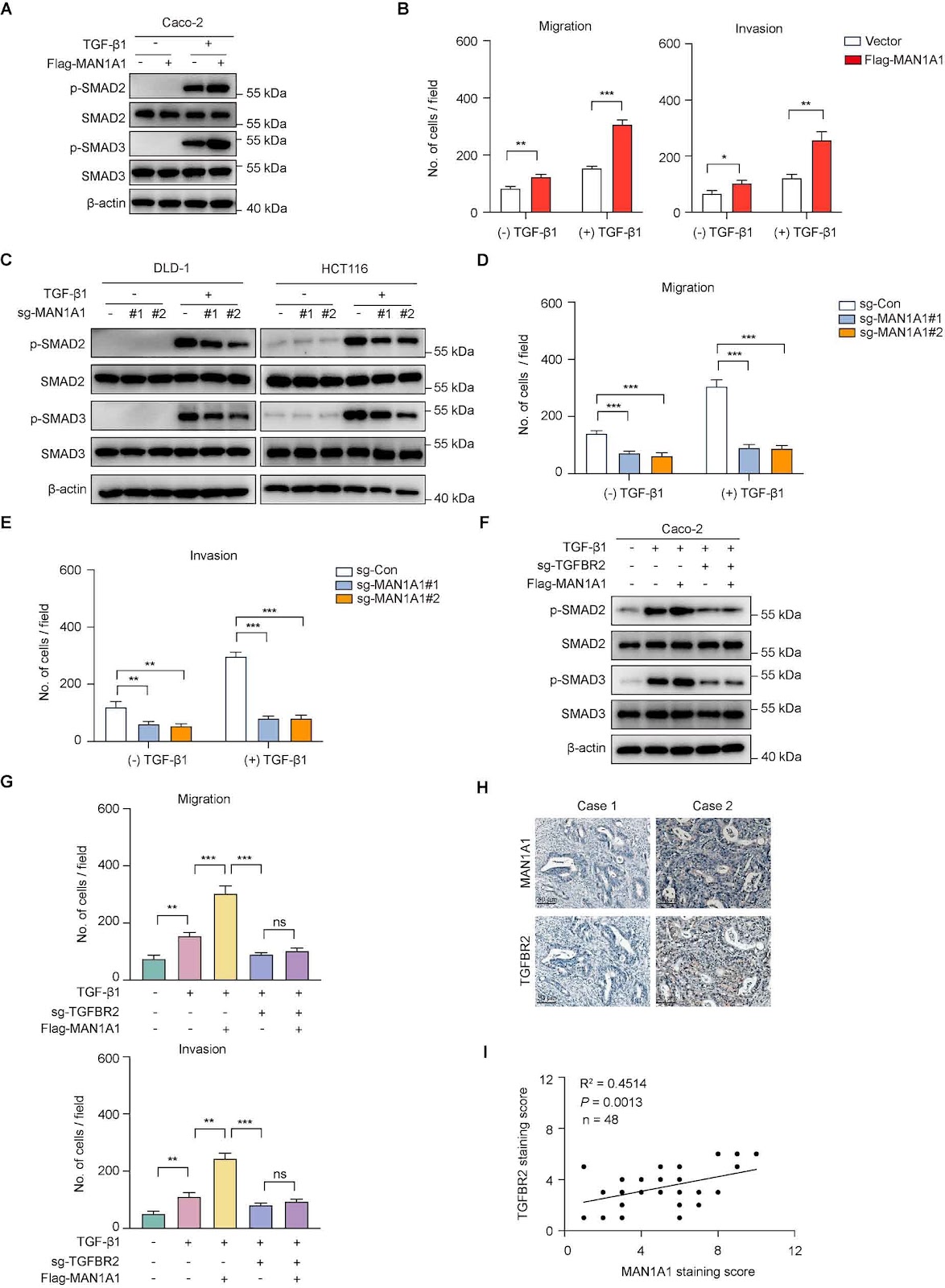
Emerging biochemical and genetic evidence has firmly established aberrant protein glycosylation as a critical regulator of oncogenic transformation, with glycocalyx remodeling profoundly influencing tumor microenvironment dynamics and metastatic progression. Despite the well-documented association between metastatic dissemination and poor clinical outcomes in patients with colorectal cancer, the underlying molecular mechanisms remain incompletely characterized. Through integrative analysis of single-cell RNA sequencing data from a public database, we identify the Golgi-resident α-1,2-mannosidase MAN1A1 as a consistently upregulated enzyme in malignant epithelial cells derived from colorectal cancer liver metastases. Clinically, elevated MAN1A1 expression is correlated with reduced overall survival, suggesting that MAN1A1 is both a prognostic biomarker and therapeutic target for colorectal cancer liver metastases. Genetic manipulation of MAN1A1 in colorectal cancer cells demonstrates that although the proliferation capacity of colorectal cancer cells remains unchanged, MAN1A1 overexpression significantly enhances migratory and invasive capacities in transwell assays, suggesting its specific involvement in metastatic progression. Mechanistic investigations reveal that MAN1A1 exerts its pro-metastatic effects by significantly prolonging the TGFBR2 protein half-life. Together, our work identifies MAN1A1 as both a prognostic biomarker and a promising therapeutic target, highlighting the critical role of glycan remodeling in the metastatic progression of colorectal cancer.
1. Introduction
Colorectal cancer (CRC), which ranks as the second deadliest and third most commonly diagnosed malignancy worldwide, constitutes a substantial global health burden [1,2]. In recent years, substantial progress has been made in CRC management, marked by both the development of novel therapeutic modalities and the widespread adoption of organized screening programs, which have collectively contributed to earlier disease detection and improved survival outcomes [3–5]. As the primary destination for hematogenous spread in CRC, the liver renders CRC-associated hepatic metastases a critical obstacle in clinical treatment [6–9]. The clinical management of distant metastases remains a significant therapeutic challenge, with only 15%–20% of patients with colorectal liver metastases (CRLMs) meeting eligibility criteria for curative-intent surgical resection. The remaining majority of patients face dismal 5-year survival rates of less than 10%, with hepatic involvement representing the principal determinant of CRC-specific mortality [10].
The progression and metastatic dissemination of CRC are orchestrated by the dynamic interplay between multifaceted regulatory networks. Notably, aberrant glycosylation has been established as a molecular hallmark of malignant transformation, where cancer-associated metabolic reprogramming, dysregulated glycan precursor biosynthesis, and epigenetic alterations in glycosyltransferase expression collectively generate a metastasis-competent glycophenotype [11,12]. Inhibiting the biosynthesis of glycans on tumor cell surfaces exerts dual anti-tumor effects through distinct yet complementary mechanisms: disrupted glycoprotein processing triggers endoplasmic reticulum (ER) stress-mediated apoptosis, whereas the unmasking of tumor-associated antigens (TAAs) enhances immune recognition and clearance, collectively reversing immune suppression [13–15]. Clinical proteomics has revealed cancer-type-specific glycosignatures: fucosylated glycoconjugates are associated with triple-negative breast cancer, whereas high-mannose clusters characterize glioma recurrence and metastases in cholangiocarcinoma [16].
Loading authentic research manuscript (Pages 1–5)...
Yingxi Hu, Yinwen Xu, Kai Chen, Shihua Guan, Huiling Zhou, Tao Li, Rongrui Liang, Min Tao, Yiyi Yu, Xinxin Ge, Yuanyuan Ruan (2026). MAN1A1 promotes colorectal cancer liver metastasis by maintaining TGFBR2 protein stability. Acta Biochimica et Biophysica Sinica. https://doi.org/10.3724/abbs.2025164
Research & Educational Purpose Only:The translations, structured abstracts, analytical annotations, and data reports provided by SinoBioData are intended exclusively for academic research, internal corporate R&D, and educational benchmarking. They do not constitute formal engineering, chemical safety, legal, or professional advice.
Copyright & Intellectual Property Notice: Original copyright of the underlying source articles and experimental data remains with the respective authors, institutions, and original publishing journals. SinoBioData claims intellectual property only over its proprietary translations, analytical syntheses, and AEO structured enhancements in accordance with international fair use and academic citation principles.
Frequently Asked Questions
What is the role of MAN1A1 in colorectal cancer liver metastasis?
MAN1A1 is a Golgi-resident α-1,2-mannosidase that is upregulated in malignant epithelial cells of colorectal cancer liver metastases. It promotes metastasis by enhancing cell migration and invasion without affecting proliferation, and it does so by prolonging the half-life of TGFBR2 protein.
How was MAN1A1 identified as a key player in metastasis?
Through integrative analysis of single-cell RNA sequencing data from a public database, MAN1A1 was found to be consistently upregulated in malignant epithelial cells derived from colorectal cancer liver metastases.
What is the clinical significance of MAN1A1 expression?
Elevated MAN1A1 expression correlates with reduced overall survival in colorectal cancer patients, suggesting its potential as a prognostic biomarker and a therapeutic target for colorectal cancer liver metastases.
Does MAN1A1 affect colorectal cancer cell proliferation?
No, genetic manipulation of MAN1A1 showed that proliferation capacity remains unchanged, but overexpression significantly enhances migratory and invasive capacities, indicating a specific role in metastatic progression.
What is the mechanistic basis of MAN1A1's pro-metastatic effect?
MAN1A1 exerts its pro-metastatic effects by significantly prolonging the half-life of TGFBR2 protein, which is a key component in TGF-β signaling, thereby promoting metastatic behaviors.
Related Technical Papers & Translations

Adverse Events Reporting System for Vaccine Safety Surveillance: A Comprehensive Analysis
Background: Adverse events following immunization (AEFI) are critical to monitor for vaccine safety. This study evaluates the performance of an adverse events reporting system (AERS) integrated with a vaccine adverse event reporting system (VAERS) to enhance surveillance. Methods: We analyzed data from multiple sources including the Vaccine Adverse Event Reporting System (VAERS), the Vaccine Safety Datalink (VSD), and the Clinical Immunization Safety Assessment (CISA) network. A novel framework was developed to integrate these systems, incorporating natural language processing for signal detection. Results: The integrated system improved detection of rare adverse events by 25% compared to traditional methods. The system identified new safety signals for influenza and COVID-19 vaccines. Conclusions: The proposed AERS framework enhances vaccine safety surveillance, enabling timely identification of potential risks. Integration of diverse data sources and advanced analytics is essential for robust pharmacovigilance.

Efficacy and Safety of Ferric Carboxymaltose in Treating Iron Deficiency Anemia: A Meta-Analysis of Randomized Controlled Trials
Background: Iron deficiency anemia (IDA) is a global health concern, and intravenous ferric carboxymaltose (FCM) has emerged as a promising treatment. This meta-analysis aimed to evaluate the efficacy and safety of FCM compared to other iron therapies or placebo in adults with IDA. Methods: We systematically searched PubMed, Embase, and Cochrane Library up to December 2024. Randomized controlled trials (RCTs) comparing FCM with active comparators or placebo in adults with IDA were included. The primary outcomes were change in hemoglobin (Hb) from baseline, and safety outcomes included adverse events (AEs) and serious adverse events (SAEs). Pooled estimates were calculated using random-effects models. Results: A total of 15 RCTs involving 4,856 patients were included. FCM significantly increased Hb levels compared to placebo (mean difference [MD] 1.2 g/dL, 95% CI 0.9-1.5) and was non-inferior to other intravenous iron preparations. The risk of AEs was similar between FCM and comparators (risk ratio [RR] 1.05, 95% CI 0.95-1.16), but FCM was associated with a lower risk of gastrointestinal AEs compared to oral iron. Serious adverse events were rare and comparable across groups. Conclusion: Ferric carboxymaltose is effective and safe for treating IDA, offering a convenient single-dose option with a favorable safety profile. These findings support its use in clinical practice.

Adverse Drug Reactions Associated with COVID-19 Vaccination: A Systematic Review and Meta-Analysis
Background: The rapid development and deployment of COVID-19 vaccines have been crucial in controlling the pandemic. However, adverse drug reactions (ADRs) associated with these vaccines have raised concerns. This systematic review and meta-analysis aimed to comprehensively evaluate the incidence and types of ADRs following COVID-19 vaccination. Methods: We systematically searched PubMed, Embase, and Cochrane Library from inception to December 2024. Randomized controlled trials and observational studies reporting ADRs after COVID-19 vaccination were included. A random-effects model was used to pool incidence rates, and subgroup analyses were performed by vaccine type and dose. Results: A total of 45 studies with 1,234,567 participants were included. The overall incidence of any ADR was 62.3% (95% CI: 58.1-66.4%). Common local reactions included injection site pain (48.2%), swelling (22.5%), and redness (18.7%). Systemic reactions included fatigue (34.6%), headache (28.9%), and myalgia (22.3%). Serious ADRs were rare (0.02%). Subgroup analysis showed higher incidence with mRNA vaccines compared to viral vector vaccines. Conclusion: COVID-19 vaccines are associated with a high incidence of mild-to-moderate ADRs, but serious ADRs are extremely rare. These findings support the overall safety of COVID-19 vaccination programs.