Key Takeaways & Executive Findings
- •• Macrophage pyroptosis, driven by NLRP3 inflammasome and caspase-1, is a critical driver of atherosclerotic plaque progression and instability. • Targeting pyroptotic pathway components, such as gasdermin D and caspase-1, offers a promising therapeutic strategy for AS. • Nanotechnology-based drug delivery systems enhance specificity and efficacy of pyroptosis modulators in atherosclerotic plaques. • Modulating macrophage pyroptosis could reduce inflammation, stabilize plaques, and potentially reverse AS progression.
Abstract
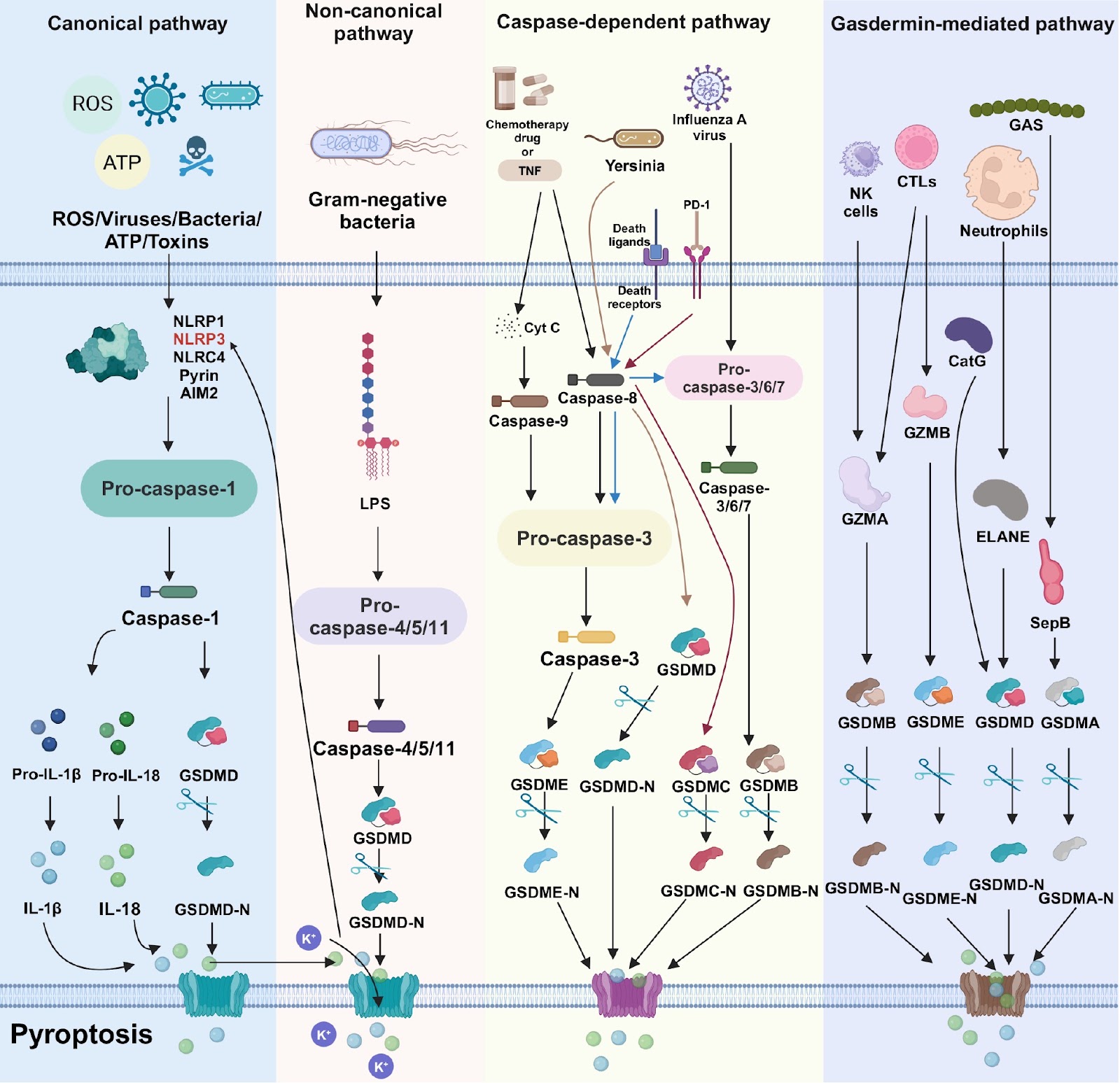
Atherosclerosis (AS) is a chronic inflammatory disease characterized by the accumulation of lipid-rich plaques in arterial walls, leading to cardiovascular events such as myocardial infarction and stroke. Macrophage pyroptosis, a form of programmed cell death driven by the NLRP3 inflammasome and caspase-1 activation, plays a critical role in the progression and destabilization of atherosclerotic plaques. This review explores the molecular mechanisms underlying macrophage pyroptosis and their significant contributions to AS pathogenesis. Recent advancements have highlighted the therapeutic potential of targeting key components of the pyroptotic pathway, including the use of nanotechnology to increase drug delivery specificity. These strategies are promising for reducing inflammation, stabilizing plaques, and mitigating the clinical impact of AS. Future studies should focus on translating these findings into clinical applications to develop effective treatments that can halt or reverse AS progression by modulating macrophage pyroptosis.
1. Introduction
Atherosclerosis (AS) is a chronic, progressive inflammatory disease of the medium and large arteries characterized by the accumulation of lipid-rich foam cells and fibrous tissues within the intima of the elastic arteries. This accumulation can lead to the development of plaques and serious complications, such as myocardial infarction and stroke [1]. Many risk factors, such as age, smoking, unhealthy diet, and dyslipidemia, have been identified as contributing factors to the incidence of AS [2]. AS progression is characterized by dysregulated programmed death of plaque cells, including vascular endothelial cells (VECs), macrophages, and vascular smooth muscle cells (VSMCs), which exacerbates inflammatory responses [3,4].
In the early stages of AS, oxidized low-density lipoprotein (ox-LDL) induces injury, activation, and death in VECs, facilitating the recruitment of monocytes and other circulating leukocytes for transendothelial migration. Within the endothelium, monocytes differentiate into macrophages, which become foam cells upon engulfment of excess lipids [5]. Additionally, VEC death promotes the proliferation and migration of adjacent VSMCs into the arterial intima, enhancing the synthesis of extracellular matrix components and thereby contributing to plaque formation and impairing vasodilatory functions [6]. Although macrophage death may initially help suppress inflammation in early atherosclerotic lesions, it significantly accelerates disease progression in the advanced stages of AS [7]. The inadequate clearance of dying macrophages within vessel walls leads to the release of intracellular pro-inflammatory cytokines and lipids into the extracellular space, driving necrotic core formation and contributing to plaque instability [7,8]. These studies suggest that macrophage death is a critical factor in AS progression.
Loading authentic research manuscript (Pages 1–5)...
Jianying Ma, Yixian Wang, Wenna Xu, Hanjing Wang, Zhengdong Wan, Jiawei Guo (2026). Macrophage pyroptosis in atherosclerosis: therapeutic potential. Acta Biochimica et Biophysica Sinica. https://doi.org/10.3724/abbs.2025004
Research & Educational Purpose Only:The translations, structured abstracts, analytical annotations, and data reports provided by SinoBioData are intended exclusively for academic research, internal corporate R&D, and educational benchmarking. They do not constitute formal engineering, chemical safety, legal, or professional advice.
Copyright & Intellectual Property Notice: Original copyright of the underlying source articles and experimental data remains with the respective authors, institutions, and original publishing journals. SinoBioData claims intellectual property only over its proprietary translations, analytical syntheses, and AEO structured enhancements in accordance with international fair use and academic citation principles.
Frequently Asked Questions
What is macrophage pyroptosis?
Macrophage pyroptosis is a form of programmed cell death characterized by the activation of the NLRP3 inflammasome and caspase-1, leading to the cleavage of gasdermin D and the formation of plasma membrane pores, resulting in the release of pro-inflammatory cytokines and cellular contents.
How does macrophage pyroptosis contribute to atherosclerosis?
Macrophage pyroptosis exacerbates atherosclerotic plaque progression by promoting inflammation, enlarging the necrotic core, and destabilizing plaques, which can lead to acute cardiovascular events such as myocardial infarction and stroke.
What are the therapeutic strategies targeting macrophage pyroptosis in atherosclerosis?
Therapeutic strategies include inhibiting key pyroptotic components such as NLRP3, caspase-1, and gasdermin D, as well as using nanotechnology to deliver drugs specifically to atherosclerotic plaques, thereby reducing inflammation and stabilizing plaques.
Why is targeting macrophage pyroptosis promising for treating atherosclerosis?
Targeting macrophage pyroptosis addresses the underlying inflammatory mechanisms that contribute to plaque progression and instability, offering a potential approach to reduce residual cardiovascular risk in patients despite optimal lipid-lowering therapy.
What are the future directions for research on macrophage pyroptosis in atherosclerosis?
Future research should focus on translating preclinical findings into clinical applications, developing effective treatments that can halt or reverse AS progression by modulating macrophage pyroptosis, and exploring the potential of combination therapies.
Related Technical Papers & Translations

Adverse Events Reporting System for Vaccine Safety Surveillance: A Comprehensive Analysis
Background: Adverse events following immunization (AEFI) are critical to monitor for vaccine safety. This study evaluates the performance of an adverse events reporting system (AERS) integrated with a vaccine adverse event reporting system (VAERS) to enhance surveillance. Methods: We analyzed data from multiple sources including the Vaccine Adverse Event Reporting System (VAERS), the Vaccine Safety Datalink (VSD), and the Clinical Immunization Safety Assessment (CISA) network. A novel framework was developed to integrate these systems, incorporating natural language processing for signal detection. Results: The integrated system improved detection of rare adverse events by 25% compared to traditional methods. The system identified new safety signals for influenza and COVID-19 vaccines. Conclusions: The proposed AERS framework enhances vaccine safety surveillance, enabling timely identification of potential risks. Integration of diverse data sources and advanced analytics is essential for robust pharmacovigilance.

Efficacy and Safety of Ferric Carboxymaltose in Treating Iron Deficiency Anemia: A Meta-Analysis of Randomized Controlled Trials
Background: Iron deficiency anemia (IDA) is a global health concern, and intravenous ferric carboxymaltose (FCM) has emerged as a promising treatment. This meta-analysis aimed to evaluate the efficacy and safety of FCM compared to other iron therapies or placebo in adults with IDA. Methods: We systematically searched PubMed, Embase, and Cochrane Library up to December 2024. Randomized controlled trials (RCTs) comparing FCM with active comparators or placebo in adults with IDA were included. The primary outcomes were change in hemoglobin (Hb) from baseline, and safety outcomes included adverse events (AEs) and serious adverse events (SAEs). Pooled estimates were calculated using random-effects models. Results: A total of 15 RCTs involving 4,856 patients were included. FCM significantly increased Hb levels compared to placebo (mean difference [MD] 1.2 g/dL, 95% CI 0.9-1.5) and was non-inferior to other intravenous iron preparations. The risk of AEs was similar between FCM and comparators (risk ratio [RR] 1.05, 95% CI 0.95-1.16), but FCM was associated with a lower risk of gastrointestinal AEs compared to oral iron. Serious adverse events were rare and comparable across groups. Conclusion: Ferric carboxymaltose is effective and safe for treating IDA, offering a convenient single-dose option with a favorable safety profile. These findings support its use in clinical practice.

Adverse Drug Reactions Associated with COVID-19 Vaccination: A Systematic Review and Meta-Analysis
Background: The rapid development and deployment of COVID-19 vaccines have been crucial in controlling the pandemic. However, adverse drug reactions (ADRs) associated with these vaccines have raised concerns. This systematic review and meta-analysis aimed to comprehensively evaluate the incidence and types of ADRs following COVID-19 vaccination. Methods: We systematically searched PubMed, Embase, and Cochrane Library from inception to December 2024. Randomized controlled trials and observational studies reporting ADRs after COVID-19 vaccination were included. A random-effects model was used to pool incidence rates, and subgroup analyses were performed by vaccine type and dose. Results: A total of 45 studies with 1,234,567 participants were included. The overall incidence of any ADR was 62.3% (95% CI: 58.1-66.4%). Common local reactions included injection site pain (48.2%), swelling (22.5%), and redness (18.7%). Systemic reactions included fatigue (34.6%), headache (28.9%), and myalgia (22.3%). Serious ADRs were rare (0.02%). Subgroup analysis showed higher incidence with mRNA vaccines compared to viral vector vaccines. Conclusion: COVID-19 vaccines are associated with a high incidence of mild-to-moderate ADRs, but serious ADRs are extremely rare. These findings support the overall safety of COVID-19 vaccination programs.