Key Takeaways & Executive Findings
- •• LOX expression is elevated in RA synovium and positively correlates with microvascular density, suggesting a role in pannus formation. • LOX promotes proliferation of fibroblast-like synoviocytes and angiogenesis in vitro, effects reversed by the LOX inhibitor BAPN. • Mechanistically, LOX activates the PI3K/AKT signaling pathway, contributing to synovial hyperplasia and neovascularization. • Targeting LOX may offer a novel therapeutic strategy for rheumatoid arthritis.
Abstract
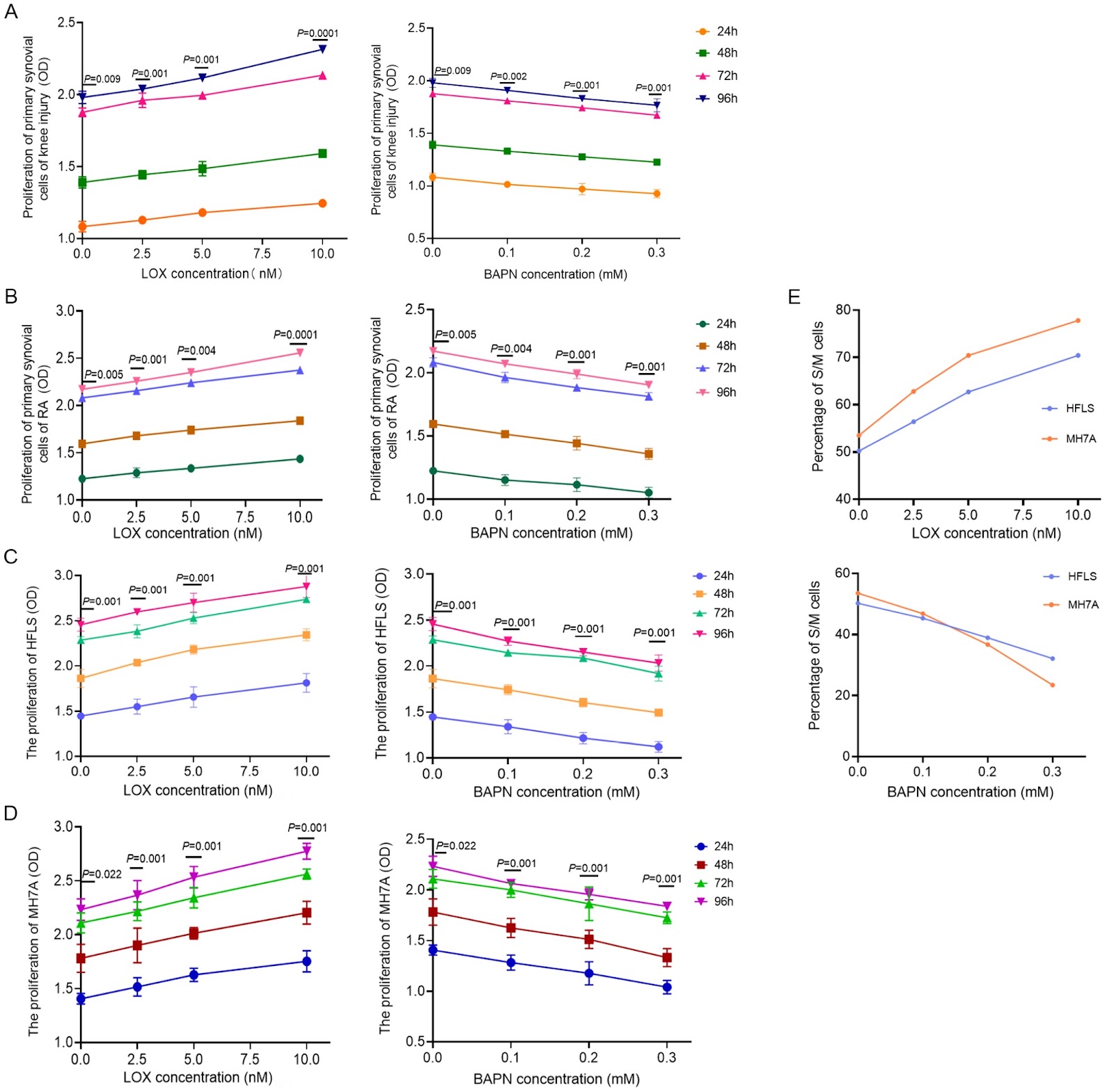
Rheumatoid arthritis (RA) is an autoimmune disorder characterized by synovial hyperplasia and pannus formation, which serves as its primary pathological feature and may ultimately result in joint deformities. Lysyl oxidase (LOX) is involved in the formation and remodeling of the extracellular matrix, but its role in RA is not yet clear. This study aims to investigate the mechanism of lysyl oxidase (LOX) in synovial hyperplasia and pannus formation associated with rheumatoid arthritis (RA). Synovial, serum, and synovial fluid samples are collected from RA, osteoarthritis (OA), and knee injury patients and subsequently analyzed via HE staining, immunohistochemistry, and ELISA. Compared with those of the OA and injury groups, the RA synovium presents increased thickness, disorganized cell layers, increased microvascular density (MVD), and elevated LOX expression. Moreover, LOX levels are positively correlated with the MVD. Both synovial fluid and fibroblast-like synoviocytes (FLSs) derived from RA patients present significantly elevated concentrations of LOX. In vitro experiments reveal that LOX dose-dependently promotes the proliferation of FLSs derived from both RA patients and healthy individuals (MH7A/HFLS) by accelerating S/M-phase cell cycle progression while simultaneously stimulating angiogenesis in human umbilical vein endothelial cells (HUVECs). In contrast, the LOX inhibitor BAPN suppresses these effects. Mechanistic analysis further reveals that LOX increases the phosphorylation of the PI3K-AKT signaling pathway, an effect that is reversible by BAPN. In conclusion, LOX may induce abnormal fibroblast proliferation and endothelial neovascularization via activation of the PI3K/AKT pathway, thus aggravating synovial hyperplasia and pathological membrane formation in RA. These findings provide a theoretical foundation for the development of targeted LOX treatments for RA.
1. Introduction
Rheumatoid arthritis (RA) is a chronic autoimmune disease characterized by a complex onset and pathological process that remains incompletely understood [1]. The clinical manifestations of RA commonly involve joint lesions, primarily characterized by persistent synovitis, which leads to synovial hyperplasia and pannus formation in the joints [2]. Synovial hyperplasia arises from the excessive proliferation of synovial fibroblasts, while the pannus consists of hyperplastic synovial cells, newly formed microvessels, inflammatory cells, and localized fibrosis. This pannus formation serves as the pathological basis for joint lesions and the destruction of bone and cartilage [3,4].
Lysyl oxidase (LOX) mediates the covalent cross-linking of collagen and elastin fibers, playing a crucial role in the formation and remodeling of the extracellular matrix, thereby maintaining its appropriate strength and elasticity to the extracellular matrix [5]. In recent years, LOX has been shown to be involved in the occurrence and development of various diseases, including glioblastoma growth, diabetic neovascularization, tumor progression, and metastasis [6-8]. Multiple cell types in the human body are capable of synthesizing LOX, with fibroblasts identified as the primary source of LOX in tissues [9]. However, whether synovial fibroblasts can produce LOX and whether LOX affects synovial proliferation and pannus formation in the pathological process of RA remain largely unexplored.
In this study, we examined the expression of LOX in joint synovial tissue from RA patients and evaluated its correlation with microvascular density. The LOX content in the synovial fluid and blood of patients was also quantified. Furthermore, primary synovial fibroblasts were isolated from RA patients, and established synovial fibroblast lines were utilized to assess LOX production. The cells were treated with exogenous LOX and its inhibitor BAPN to examine the effects on synovial fibroblast proliferation, the cell cycle, and HUVEC angiogenesis. These findings aim to enhance the understanding of RA pathogenesis and provide a theoretical foundation for new insights into clinical treatment.
Loading authentic research manuscript (Pages 1–5)...
Hong Deng, Yanmeng Li, Tai Teng, Kaibo Wang, Chen Ji, Lijuan Yang, Shuming Zhang, Yanbin Tian, Mei Han (2026). Lysyl oxidase exacerbates rheumatoid arthritis through promoting angiogenesis and the proliferation of fibroblast-like synoviocytes. Acta Biochimica et Biophysica Sinica. https://doi.org/10.3724/abbs.2025162
Research & Educational Purpose Only:The translations, structured abstracts, analytical annotations, and data reports provided by SinoBioData are intended exclusively for academic research, internal corporate R&D, and educational benchmarking. They do not constitute formal engineering, chemical safety, legal, or professional advice.
Copyright & Intellectual Property Notice: Original copyright of the underlying source articles and experimental data remains with the respective authors, institutions, and original publishing journals. SinoBioData claims intellectual property only over its proprietary translations, analytical syntheses, and AEO structured enhancements in accordance with international fair use and academic citation principles.
Frequently Asked Questions
What is the role of lysyl oxidase (LOX) in rheumatoid arthritis?
LOX is elevated in RA synovium and promotes synovial hyperplasia and pannus formation by enhancing fibroblast proliferation and angiogenesis via the PI3K/AKT pathway.
How does LOX affect fibroblast-like synoviocytes?
LOX dose-dependently promotes the proliferation of fibroblast-like synoviocytes by accelerating S/M-phase cell cycle progression.
What is the effect of LOX on angiogenesis?
LOX stimulates angiogenesis in human umbilical vein endothelial cells (HUVECs), contributing to increased microvascular density in RA.
Can LOX be targeted for RA treatment?
Yes, the LOX inhibitor BAPN suppresses LOX-induced effects, suggesting that targeting LOX may offer a novel therapeutic strategy for RA.
What signaling pathway is involved in LOX-mediated effects?
LOX activates the PI3K/AKT signaling pathway, as evidenced by increased phosphorylation, which is reversible by BAPN.
Related Technical Papers & Translations

Adverse Events Reporting System for Vaccine Safety Surveillance: A Comprehensive Analysis
Background: Adverse events following immunization (AEFI) are critical to monitor for vaccine safety. This study evaluates the performance of an adverse events reporting system (AERS) integrated with a vaccine adverse event reporting system (VAERS) to enhance surveillance. Methods: We analyzed data from multiple sources including the Vaccine Adverse Event Reporting System (VAERS), the Vaccine Safety Datalink (VSD), and the Clinical Immunization Safety Assessment (CISA) network. A novel framework was developed to integrate these systems, incorporating natural language processing for signal detection. Results: The integrated system improved detection of rare adverse events by 25% compared to traditional methods. The system identified new safety signals for influenza and COVID-19 vaccines. Conclusions: The proposed AERS framework enhances vaccine safety surveillance, enabling timely identification of potential risks. Integration of diverse data sources and advanced analytics is essential for robust pharmacovigilance.

Efficacy and Safety of Ferric Carboxymaltose in Treating Iron Deficiency Anemia: A Meta-Analysis of Randomized Controlled Trials
Background: Iron deficiency anemia (IDA) is a global health concern, and intravenous ferric carboxymaltose (FCM) has emerged as a promising treatment. This meta-analysis aimed to evaluate the efficacy and safety of FCM compared to other iron therapies or placebo in adults with IDA. Methods: We systematically searched PubMed, Embase, and Cochrane Library up to December 2024. Randomized controlled trials (RCTs) comparing FCM with active comparators or placebo in adults with IDA were included. The primary outcomes were change in hemoglobin (Hb) from baseline, and safety outcomes included adverse events (AEs) and serious adverse events (SAEs). Pooled estimates were calculated using random-effects models. Results: A total of 15 RCTs involving 4,856 patients were included. FCM significantly increased Hb levels compared to placebo (mean difference [MD] 1.2 g/dL, 95% CI 0.9-1.5) and was non-inferior to other intravenous iron preparations. The risk of AEs was similar between FCM and comparators (risk ratio [RR] 1.05, 95% CI 0.95-1.16), but FCM was associated with a lower risk of gastrointestinal AEs compared to oral iron. Serious adverse events were rare and comparable across groups. Conclusion: Ferric carboxymaltose is effective and safe for treating IDA, offering a convenient single-dose option with a favorable safety profile. These findings support its use in clinical practice.

Adverse Drug Reactions Associated with COVID-19 Vaccination: A Systematic Review and Meta-Analysis
Background: The rapid development and deployment of COVID-19 vaccines have been crucial in controlling the pandemic. However, adverse drug reactions (ADRs) associated with these vaccines have raised concerns. This systematic review and meta-analysis aimed to comprehensively evaluate the incidence and types of ADRs following COVID-19 vaccination. Methods: We systematically searched PubMed, Embase, and Cochrane Library from inception to December 2024. Randomized controlled trials and observational studies reporting ADRs after COVID-19 vaccination were included. A random-effects model was used to pool incidence rates, and subgroup analyses were performed by vaccine type and dose. Results: A total of 45 studies with 1,234,567 participants were included. The overall incidence of any ADR was 62.3% (95% CI: 58.1-66.4%). Common local reactions included injection site pain (48.2%), swelling (22.5%), and redness (18.7%). Systemic reactions included fatigue (34.6%), headache (28.9%), and myalgia (22.3%). Serious ADRs were rare (0.02%). Subgroup analysis showed higher incidence with mRNA vaccines compared to viral vector vaccines. Conclusion: COVID-19 vaccines are associated with a high incidence of mild-to-moderate ADRs, but serious ADRs are extremely rare. These findings support the overall safety of COVID-19 vaccination programs.