Key Takeaways & Executive Findings
- •• LY96 is significantly overexpressed in HCC tissues and correlates with poor overall survival, indicating its potential as a prognostic biomarker. • Mechanistically, LY96 promotes HCC progression by activating the TGF-β1/Smad2/3 signaling pathway, as confirmed by in vitro and in vivo experiments. • A novel liposome-based nanoparticle system delivering the LY96 inhibitor L6H21 effectively suppresses HCC growth, offering a promising targeted therapeutic strategy. • The study integrates bioinformatics, experimental validation, and nanomedicine to identify and therapeutically target a key molecular driver in HCC.
Abstract
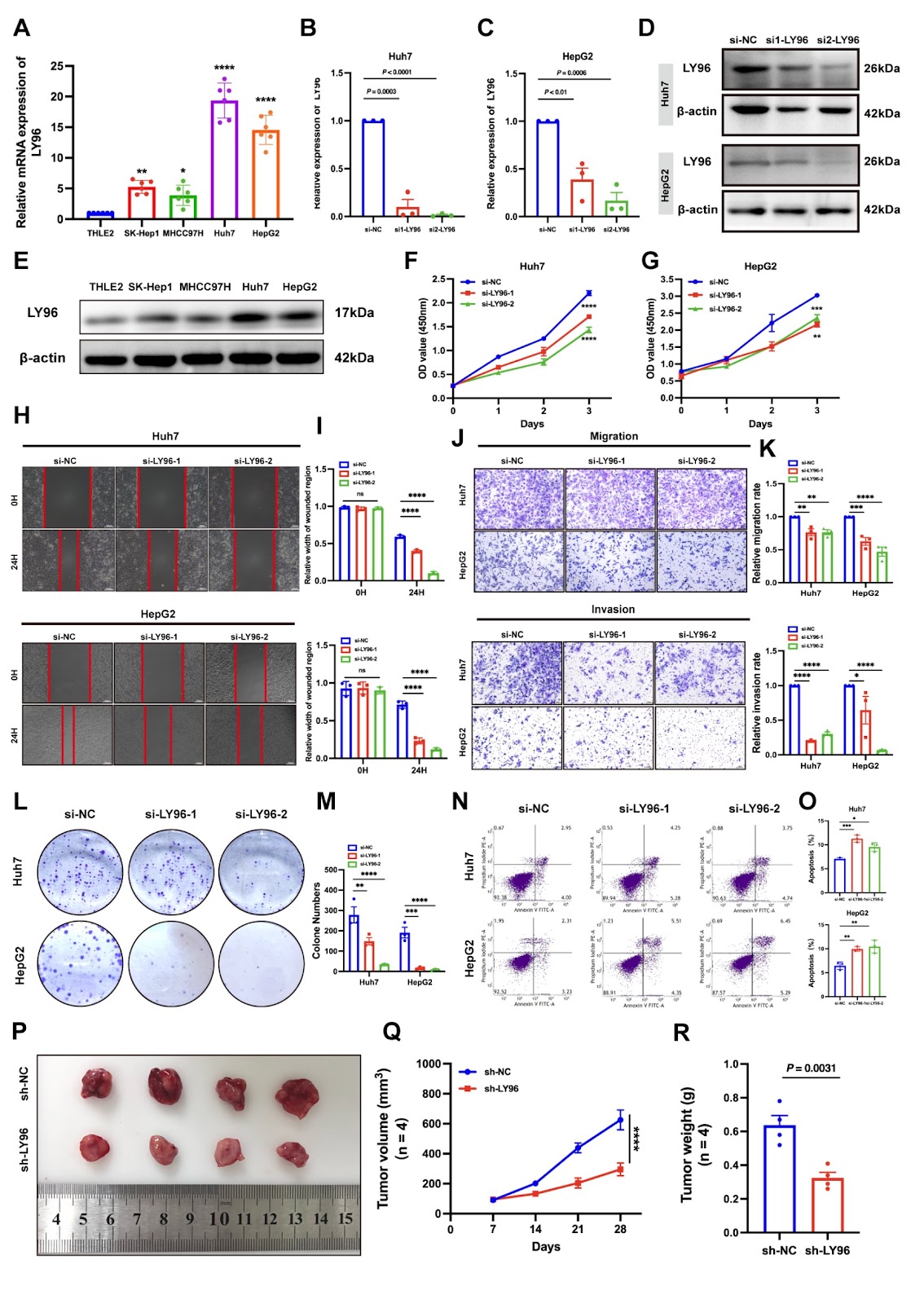
Hepatocellular carcinoma (HCC) continues to pose a chief threat to the global healthcare landscape and is characterized by scarce therapeutic options and poor clinical outcomes, especially in advanced-stage disease. Although lymphocyte antigen 96 (LY96) is associated with immunogenic cell death, its specific role in HCC progression and therapeutic potential remains unclear. To identify prospective therapeutic targets in HCC, by combining the cancer-immunity cycle score with WGCNA and systems biology methods, we identify pivotal molecular interactions. By integrating the cancer-immunity cycle score with WGCNA and systems-level approaches, we systematically identify potential therapeutic targets in HCC. We evaluate LY96 expression at the transcriptomic and proteomic levels in HCC tissues and explore its prognostic relevance by drawing upon information from The Cancer Genome Atlas (TCGA) repository. The functional role of LY96 is delineated through a panel of cellular assays conducted in vitro, complemented by in vivo tumorigenesis models. To identify the downstream signaling cascades associated with LY96, gene set enrichment analysis (GSEA) is performed to elucidate the implicated pathways, which are then confirmed via experimental validation. Furthermore, we employ a lipid-polymer hybrid nanoparticle (NP) platform to facilitate the systemic delivery of an LY96 inhibitor and demonstrate its potential as a newly proposed intervention strategy for HCC. Clinically, marked LY96 overexpression occurs in HCC samples, where elevated LY96 expression is strongly associated with reduced overall survival (OS) among liver cancer patients. LY96 facilitates the progression of HCC via complementary in vitro and in vivo approaches. Mechanistically, LY96 induces the activation of the TGF-β1/Smad2/3 signaling axis in HCC. For therapeutic applications, we develop a liposome-based nanoparticle system that delivers the LY96 inhibitor L6H21 to tumor cells and effectively suppresses HCC progression through a combination of in vivo and in vitro studies. Taken together, the current observations identify LY96 as a promising diagnostic indicator and a viable intervention for therapeutic modulation to improve HCC treatment.
1. Introduction
Hepatocellular carcinoma (HCC), the predominant histological subtype of primary liver cancer, continues to constitute a formidable global medical concern, with projections indicating that the annual incidence of HCC will surpass one million cases worldwide by 2025 [1]. Despite notable advances in prevention and treatment, HCC continues to rank among the foremost causes of cancer-associated deaths, driven by frequent recurrence and limited therapeutic outcomes [2–4]. Following the guidelines set forth by the 2022 Barcelona Clinic Liver Cancer (BCLC) consortium, surgical strategies, including tumor resection and liver transplantation, remain central to the current therapeutic paradigm for HCC. This method is complemented by multimodal approaches, including transarterial chemoembolization (TACE), radiofrequency ablation (RFA), and systemic therapies [5–9]. This multimodal approach has demonstrably extended patient survival [10]. However, there remains a substantial gap between treatment efficacy and long-term prognosis, particularly in advanced HCC, where malignancy is more aggressive [11].
The progression of HCC is frequently accompanied by complex molecular alterations, including the dysregulation of multiple genes that not only drive tumor development but also offer opportunities for prognostic assessment and targeted therapeutic strategies [12]. Consequently, a critical unmet need persists in uncovering robust biomarkers and delineating the mechanistic basis of HCC progression to advance individualized and efficacious therapeutic strategies. Despite their clinical adoption, the therapeutic efficacy of immune checkpoint blockade modulators (ICIs) for the care of patients with advanced HCC across both frontline and subsequent lines of therapy continues to be critically examined. Despite extensive evaluation, phase III clinical trials have largely fallen short of confirming a meaningful survival advantage of ICIs in patients with unresectable HCC [13,14]. When administered as monotherapy, ICIs yield an objective response rate of only 15–20% [15], a limitation attributed to the intricate interplay of multiple immune checkpoint pathways within the immunological milieu of HCC, the paucity of intertumoral immune cell infiltrates, and the excessive exhaustion of immune effector cells [16,17]. Nonetheless, findings from several phase III trials indicate that compared with sorafenib monotherapy, combined administration of anti-PD-1/PD-L1 and anti-CTLA-4 agents or antiangiogenic therapies confers superior survival benefits for unresectable HCC patients [18,19]. Collectively, these insights highlight the critical importance of elucidating cancer
Loading authentic research manuscript (Pages 1–5)...
Yixin Zhang, Sui Zheng, Xiaoqing Su, Wanrong Luo, Haifeng Tang, Shiyu Xiong, Min Tan, Baoming Luo (2026). Ly96-mediated activation of TGF-β1/Smad2/3 signaling in hepatocellular carcinoma and its potential for nanoparticle-based therapy. Acta Biochimica et Biophysica Sinica. https://doi.org/10.3724/abbs.2025128
Research & Educational Purpose Only:The translations, structured abstracts, analytical annotations, and data reports provided by SinoBioData are intended exclusively for academic research, internal corporate R&D, and educational benchmarking. They do not constitute formal engineering, chemical safety, legal, or professional advice.
Copyright & Intellectual Property Notice: Original copyright of the underlying source articles and experimental data remains with the respective authors, institutions, and original publishing journals. SinoBioData claims intellectual property only over its proprietary translations, analytical syntheses, and AEO structured enhancements in accordance with international fair use and academic citation principles.
Frequently Asked Questions
What is the role of LY96 in hepatocellular carcinoma?
LY96 is overexpressed in HCC and promotes tumor progression by activating the TGF-β1/Smad2/3 signaling pathway, making it a potential prognostic biomarker and therapeutic target.
How does LY96 affect patient survival in HCC?
Elevated LY96 expression is strongly associated with reduced overall survival in liver cancer patients, indicating its potential as a prognostic indicator.
What therapeutic strategy is proposed for targeting LY96?
The study develops a liposome-based nanoparticle system that delivers the LY96 inhibitor L6H21 to tumor cells, effectively suppressing HCC progression in vitro and in vivo.
What methods were used to identify LY96 as a therapeutic target?
The researchers integrated the cancer-immunity cycle score with WGCNA and systems biology methods, followed by transcriptomic and proteomic analysis, functional assays, and GSEA to identify and validate LY96.
What is the significance of the TGF-β1/Smad2/3 pathway in this study?
The study reveals that LY96 activates the TGF-β1/Smad2/3 signaling axis, which is a key mechanism driving HCC progression, and this pathway can be targeted by nanoparticle-mediated delivery of an LY96 inhibitor.
Related Technical Papers & Translations

Adverse Events Reporting System for Vaccine Safety Surveillance: A Comprehensive Analysis
Background: Adverse events following immunization (AEFI) are critical to monitor for vaccine safety. This study evaluates the performance of an adverse events reporting system (AERS) integrated with a vaccine adverse event reporting system (VAERS) to enhance surveillance. Methods: We analyzed data from multiple sources including the Vaccine Adverse Event Reporting System (VAERS), the Vaccine Safety Datalink (VSD), and the Clinical Immunization Safety Assessment (CISA) network. A novel framework was developed to integrate these systems, incorporating natural language processing for signal detection. Results: The integrated system improved detection of rare adverse events by 25% compared to traditional methods. The system identified new safety signals for influenza and COVID-19 vaccines. Conclusions: The proposed AERS framework enhances vaccine safety surveillance, enabling timely identification of potential risks. Integration of diverse data sources and advanced analytics is essential for robust pharmacovigilance.

Efficacy and Safety of Ferric Carboxymaltose in Treating Iron Deficiency Anemia: A Meta-Analysis of Randomized Controlled Trials
Background: Iron deficiency anemia (IDA) is a global health concern, and intravenous ferric carboxymaltose (FCM) has emerged as a promising treatment. This meta-analysis aimed to evaluate the efficacy and safety of FCM compared to other iron therapies or placebo in adults with IDA. Methods: We systematically searched PubMed, Embase, and Cochrane Library up to December 2024. Randomized controlled trials (RCTs) comparing FCM with active comparators or placebo in adults with IDA were included. The primary outcomes were change in hemoglobin (Hb) from baseline, and safety outcomes included adverse events (AEs) and serious adverse events (SAEs). Pooled estimates were calculated using random-effects models. Results: A total of 15 RCTs involving 4,856 patients were included. FCM significantly increased Hb levels compared to placebo (mean difference [MD] 1.2 g/dL, 95% CI 0.9-1.5) and was non-inferior to other intravenous iron preparations. The risk of AEs was similar between FCM and comparators (risk ratio [RR] 1.05, 95% CI 0.95-1.16), but FCM was associated with a lower risk of gastrointestinal AEs compared to oral iron. Serious adverse events were rare and comparable across groups. Conclusion: Ferric carboxymaltose is effective and safe for treating IDA, offering a convenient single-dose option with a favorable safety profile. These findings support its use in clinical practice.

Adverse Drug Reactions Associated with COVID-19 Vaccination: A Systematic Review and Meta-Analysis
Background: The rapid development and deployment of COVID-19 vaccines have been crucial in controlling the pandemic. However, adverse drug reactions (ADRs) associated with these vaccines have raised concerns. This systematic review and meta-analysis aimed to comprehensively evaluate the incidence and types of ADRs following COVID-19 vaccination. Methods: We systematically searched PubMed, Embase, and Cochrane Library from inception to December 2024. Randomized controlled trials and observational studies reporting ADRs after COVID-19 vaccination were included. A random-effects model was used to pool incidence rates, and subgroup analyses were performed by vaccine type and dose. Results: A total of 45 studies with 1,234,567 participants were included. The overall incidence of any ADR was 62.3% (95% CI: 58.1-66.4%). Common local reactions included injection site pain (48.2%), swelling (22.5%), and redness (18.7%). Systemic reactions included fatigue (34.6%), headache (28.9%), and myalgia (22.3%). Serious ADRs were rare (0.02%). Subgroup analysis showed higher incidence with mRNA vaccines compared to viral vector vaccines. Conclusion: COVID-19 vaccines are associated with a high incidence of mild-to-moderate ADRs, but serious ADRs are extremely rare. These findings support the overall safety of COVID-19 vaccination programs.