Key Takeaways & Executive Findings
- •• LPS promotes inflammation and suppresses cuproptosis in THP-1 macrophages by upregulating HKDC1 via TLR4 and the transcription factor YY1. • HKDC1 knockdown inhibits glycolysis and induces cuproptosis, revealing a novel link between glucose metabolism and copper-dependent cell death. • HKDC1 interacts with HSCB and FDX1 to increase intracellular copper levels, driving cuproptosis. • In vivo, HKDC1 knockdown alleviates acute sepsis by activating cuproptosis, suggesting a potential therapeutic strategy for inflammatory diseases.
Abstract
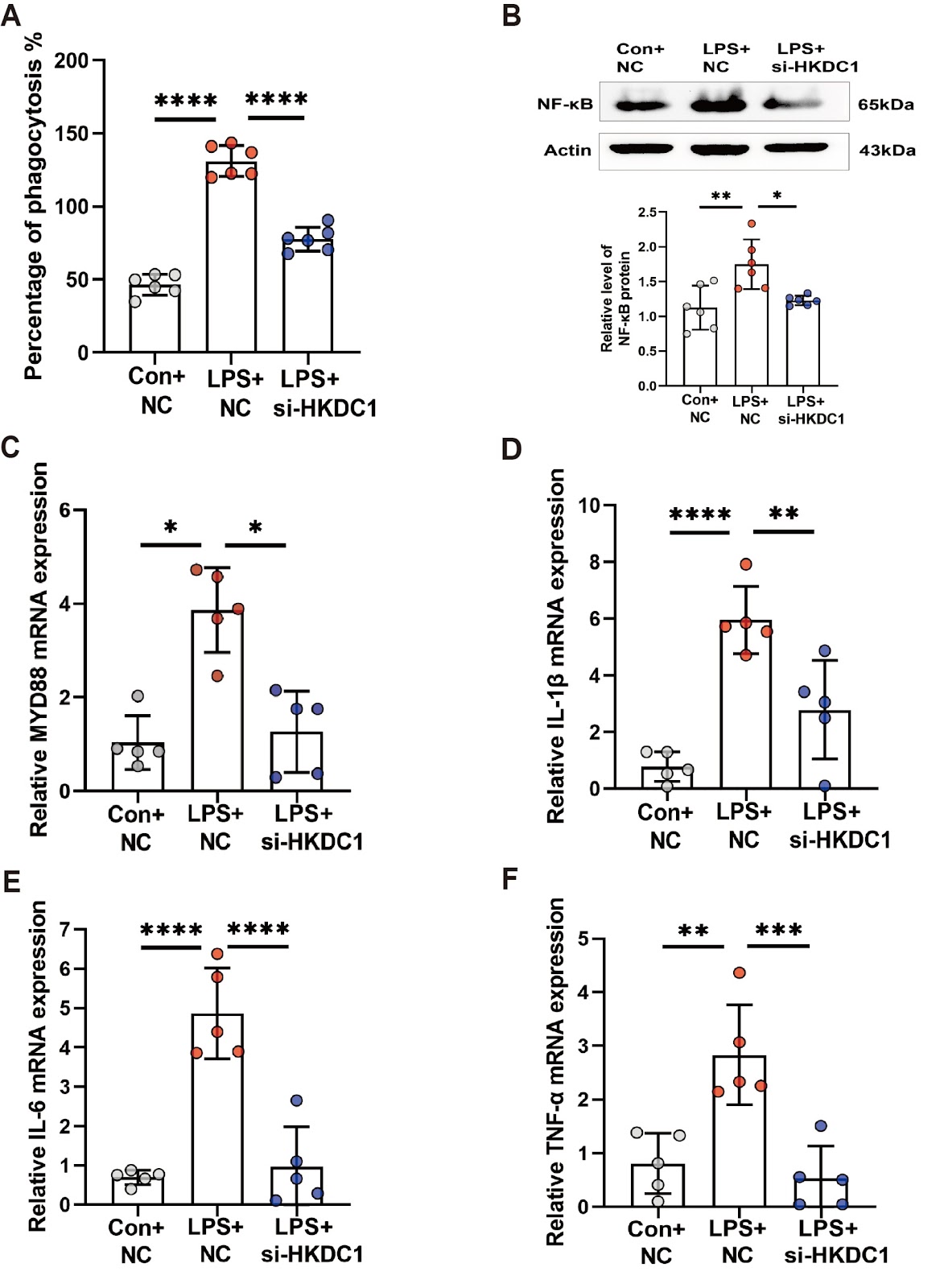
Cuproptosis is a recently identified form of copper-driven cell death characterized by the aggregation of acylated proteins and proteotoxic stress in the mitochondrial tricarboxylic acid cycle, which plays a role in inflammation. Recent studies suggest that hexokinase structural domain protein 1 (HKDC1), a fifth hexokinase, is involved in regulating mitochondrial function. However, the role of HKDC1 in cuproptosis and LPS-induced macrophage inflammation remains unclear. Here, we assess macrophage plasticity using CCK8 viability assays and phagocytosis activity experiments in an in vitro inflammatory model of THP-1 cells. We measure the levels of inflammatory factors and cuproptosis-related proteins using western blot analysis and RT-qPCR. Additionally, we examine the expression and localization of the HKDC1 protein using ChIP-qPCR and immunofluorescence staining. We find that LPS promotes the expressions of inflammatory factors and decreases cuproptosis levels in THP-1-derived macrophages while also activating glycolysis and inducing the expression of HKDC1 via the Toll-like receptor 4 (TLR4) receptor. We further demonstrate that HKDC1 knockdown inhibits glycolysis and induces cuproptosis. Mechanistically, we provide the first evidence that LPS promotes the binding of Yin Yang 1 (YY1) to the HKDC1 promoter, thereby regulating HKDC1 transcription. HKDC1 interacts with heat shock cognate B (HSCB) and ferredoxin 1 (FDX1), leading to increased intracellular copper levels and subsequent cuproptosis. HKDC1 knockdown in vivo alleviates acute sepsis by activating copper-dependent cell death pathways. Collectively, our findings suggest that LPS mitigates cuproptosis and promotes inflammation via HKDC1, suggesting a new cuproptosis-dependent anti-inflammatory strategy.
1. Introduction
Inflammation is a vital component of a series of reactions, such as cell dysfunction and immune abnormalities triggered by various factors, including ischemia and infection [1]. The role of inflammation in promoting the occurrence and progression of diseases, such as pulmonary vascular inflammation caused by hypoxia, chronic obstructive pulmonary disease (COPD), and acute respiratory distress syndrome (ARDS), has been demonstrated [2–4]. Long-term inflammation of the liver and rectum increases the risk of hepatocellular carcinoma and colorectal cancer, respectively [5]. Additionally, inflammation is a key pathogenic factor of cardiovascular and cerebrovascular diseases [6]. Macrophages play a central role in the development of chronic inflammation and excessive scarring by driving and resolving inflammation and restoring tissue homeostasis [7]. The THP-1 cell line, which was treated with phorbol myristate acetate (PMA; 100 ng/mL) and stimulated with lipopolysaccharide (LPS), is widely used to polarize M1 macrophages and serves as a typical inflammatory model in research on aging, pulmonary hypertension, and cancer [8–10]. In this study, THP-1-derived macrophages stimulated with LPS were used to further explore the diversity of macrophages and their contributions to inflammatory responses.
Glycolysis, the fundamental process of glucose metabolism, is catalyzed by hexokinase and pyruvate kinase, which decompose glucose into pyruvate and produce ATP for the body [11]. Hexokinase domain containing 1 (HKDC1) is a novel hexokinase that is widely expressed in various tissues in humans and mice [12,13]. Previous studies have demonstrated that aberrantly expressed HKDC1 plays an essential role in the progression of malignant tumors, such as lymphoma and liver, breast, and colorectal cancers [13–16]. Moreover, Cui et al. [17] reported that HKDC1 is critical for maintaining mitochondrial homeostasis by regulating the PINK1/Parkin-dependent pathway and is important for maintaining mitochondria-lysosome contact. However, the effects of HKDC1 on inflammation in macrophages and the underlying mechanisms remain unclear.
Cuproptosis is a recently discovered type of copper-dependent cell death [17,18]. Copper dyshomeostasis leads to Cu2+ overload. Ferredoxin 1 (FDX1), a reducing protein, converts Cu2+ to the more toxic Cu+ [18]. Cu+ subsequently causes abnormal lipoylation and aggregation of lipoyl synthase (LIAS), a lipoylation-related enzyme and a key component of pyruvate dehydrogenase. This process also results in the loss of iron-sulfur (Fe-S) clusters.
Loading authentic research manuscript (Pages 1–5)...
Langlin Ou, Zitong Meng, Jian Mei, Hao Yuan, Xiangrui Zhu, Xiaoying Wang, Ao Shen, Zhaosi Wang, Lixin Zhang, Song Wang, Yingli Chen, Xiangming Pang, Yuxiang Liu, Yadong Xu, Cui Ma (2026). LPS mediates cuproptosis and inflammation in THP-1 macrophages through HKDC1. Acta Biochimica et Biophysica Sinica. https://doi.org/10.3724/abbs.2025089
Research & Educational Purpose Only:The translations, structured abstracts, analytical annotations, and data reports provided by SinoBioData are intended exclusively for academic research, internal corporate R&D, and educational benchmarking. They do not constitute formal engineering, chemical safety, legal, or professional advice.
Copyright & Intellectual Property Notice: Original copyright of the underlying source articles and experimental data remains with the respective authors, institutions, and original publishing journals. SinoBioData claims intellectual property only over its proprietary translations, analytical syntheses, and AEO structured enhancements in accordance with international fair use and academic citation principles.
Frequently Asked Questions
What is the role of HKDC1 in LPS-induced macrophage inflammation?
The study demonstrates that LPS upregulates HKDC1 expression via TLR4 and the transcription factor YY1, which promotes glycolysis and suppresses cuproptosis, thereby enhancing inflammatory responses in THP-1 macrophages.
How does HKDC1 affect cuproptosis?
HKDC1 knockdown inhibits glycolysis and induces cuproptosis. Mechanistically, HKDC1 interacts with HSCB and FDX1, leading to increased intracellular copper levels and subsequent cuproptosis.
What is the significance of this study for sepsis treatment?
In vivo, HKDC1 knockdown alleviates acute sepsis by activating copper-dependent cell death pathways, suggesting a potential therapeutic strategy for inflammatory diseases like sepsis.
What experimental models were used in this study?
The study used an in vitro inflammatory model of THP-1 cells treated with PMA and LPS, along with in vivo sepsis models, to assess macrophage plasticity, inflammatory factors, and cuproptosis-related proteins.
What is the novel finding regarding the regulation of HKDC1 transcription?
The study provides the first evidence that LPS promotes the binding of the transcription factor YY1 to the HKDC1 promoter, thereby regulating HKDC1 transcription.
Related Technical Papers & Translations

Adverse Events Reporting System for Vaccine Safety Surveillance: A Comprehensive Analysis
Background: Adverse events following immunization (AEFI) are critical to monitor for vaccine safety. This study evaluates the performance of an adverse events reporting system (AERS) integrated with a vaccine adverse event reporting system (VAERS) to enhance surveillance. Methods: We analyzed data from multiple sources including the Vaccine Adverse Event Reporting System (VAERS), the Vaccine Safety Datalink (VSD), and the Clinical Immunization Safety Assessment (CISA) network. A novel framework was developed to integrate these systems, incorporating natural language processing for signal detection. Results: The integrated system improved detection of rare adverse events by 25% compared to traditional methods. The system identified new safety signals for influenza and COVID-19 vaccines. Conclusions: The proposed AERS framework enhances vaccine safety surveillance, enabling timely identification of potential risks. Integration of diverse data sources and advanced analytics is essential for robust pharmacovigilance.

Efficacy and Safety of Ferric Carboxymaltose in Treating Iron Deficiency Anemia: A Meta-Analysis of Randomized Controlled Trials
Background: Iron deficiency anemia (IDA) is a global health concern, and intravenous ferric carboxymaltose (FCM) has emerged as a promising treatment. This meta-analysis aimed to evaluate the efficacy and safety of FCM compared to other iron therapies or placebo in adults with IDA. Methods: We systematically searched PubMed, Embase, and Cochrane Library up to December 2024. Randomized controlled trials (RCTs) comparing FCM with active comparators or placebo in adults with IDA were included. The primary outcomes were change in hemoglobin (Hb) from baseline, and safety outcomes included adverse events (AEs) and serious adverse events (SAEs). Pooled estimates were calculated using random-effects models. Results: A total of 15 RCTs involving 4,856 patients were included. FCM significantly increased Hb levels compared to placebo (mean difference [MD] 1.2 g/dL, 95% CI 0.9-1.5) and was non-inferior to other intravenous iron preparations. The risk of AEs was similar between FCM and comparators (risk ratio [RR] 1.05, 95% CI 0.95-1.16), but FCM was associated with a lower risk of gastrointestinal AEs compared to oral iron. Serious adverse events were rare and comparable across groups. Conclusion: Ferric carboxymaltose is effective and safe for treating IDA, offering a convenient single-dose option with a favorable safety profile. These findings support its use in clinical practice.

Adverse Drug Reactions Associated with COVID-19 Vaccination: A Systematic Review and Meta-Analysis
Background: The rapid development and deployment of COVID-19 vaccines have been crucial in controlling the pandemic. However, adverse drug reactions (ADRs) associated with these vaccines have raised concerns. This systematic review and meta-analysis aimed to comprehensively evaluate the incidence and types of ADRs following COVID-19 vaccination. Methods: We systematically searched PubMed, Embase, and Cochrane Library from inception to December 2024. Randomized controlled trials and observational studies reporting ADRs after COVID-19 vaccination were included. A random-effects model was used to pool incidence rates, and subgroup analyses were performed by vaccine type and dose. Results: A total of 45 studies with 1,234,567 participants were included. The overall incidence of any ADR was 62.3% (95% CI: 58.1-66.4%). Common local reactions included injection site pain (48.2%), swelling (22.5%), and redness (18.7%). Systemic reactions included fatigue (34.6%), headache (28.9%), and myalgia (22.3%). Serious ADRs were rare (0.02%). Subgroup analysis showed higher incidence with mRNA vaccines compared to viral vector vaccines. Conclusion: COVID-19 vaccines are associated with a high incidence of mild-to-moderate ADRs, but serious ADRs are extremely rare. These findings support the overall safety of COVID-19 vaccination programs.