Key Takeaways & Executive Findings
- •• LINC02432 is identified as a ferroptosis-associated lncRNA consistently downregulated in papillary thyroid cancer (PTC) across multiple machine learning analyses. • Overexpression of LINC02432 inhibits PTC cell proliferation and migration while promoting ferroptosis via inactivation of the NRF2 pathway. • Knockdown of LINC02432 reverses these effects, confirming its tumor-suppressive role in PTC. • These findings suggest LINC02432 as a potential therapeutic target and biomarker for PTC, offering new insights into ferroptosis-based cancer therapy.
Abstract
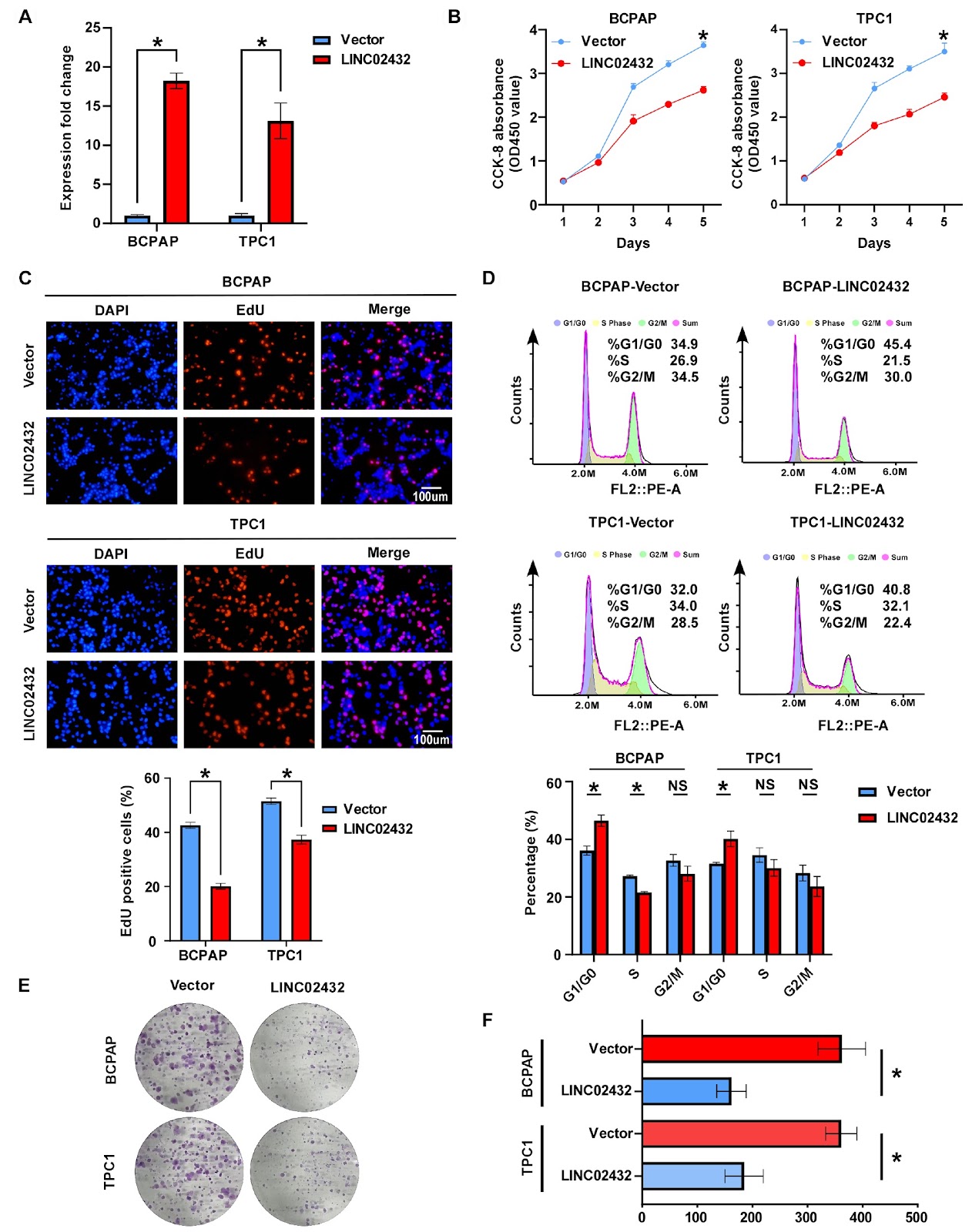
Long noncoding RNAs (lncRNAs) are essential in regulating the development and progression of different types of cancer. However, our insights into their impact and mechanisms in papillary thyroid carcinoma (PTC) are still insufficient. In this study, we investigate the effects of the ferroptosis-associated long noncoding RNA LINC02432 on PTC, which recognizes ferroptosis as a critical mechanism in cancer biology and lncRNAs as significant factors in various malignancies. To identify lncRNAs associated with ferroptosis in PTC, we conduct bioinformatics analyses and perform functional assays to evaluate the biological impact of LINC02432 on PTC cells, as well as its relationship with ferroptosis. Mechanistic studies employ methods such as western blot analysis, flow cytometry, and real-time PCR. Our analysis of transcriptome data from TCGA reveals that LINC02432 is the only lncRNA consistently identified by all 10 machine learning methods used, and its expression is significantly downregulated in PTC. Overexpression of LINC02432 in PTC cells inhibits cell proliferation and migration while promoting ferroptosis through inactivation of the NRF2 pathway. LINC02432 knockdown in PTC cells yields the opposite result. These findings highlight the potential of LINC02432 as a tumor suppressor in PTC progression, offering new insights into the mechanisms underlying the development and progression of this malignancy.
1. Introduction
Thyroid cancer (TC) is one of the most prevalent endocrine malignancies globally, with an estimated 586,000 new cases reported in the latest Global Cancer Observatory survey from 2020 [1]. TC can be categorized into several subtypes, namely, papillary thyroid cancer (PTC), follicular thyroid cancer, anaplastic thyroid cancer, and medullary thyroid cancer, with PTC being the dominant subtype, accounting for approximately 80% of cases [2]. While the majority of PTC patients have a favorable prognosis, a subset may experience disease progression, including invasive growth and distant metastasis, leading to poor clinical outcomes [3,4]. Therefore, elucidating the molecular mechanisms underlying PTC progression is crucial for understanding the etiology of this disease.
Ferroptosis, a recently characterized form of programmed cell death, is characterized by the accumulation of iron-dependent lipid peroxides, resulting in phospholipid peroxidation and subsequent cellular damage [5]. Emerging evidence indicates a significant relationship between ferroptosis and TC, with effective induction of ferroptosis shown to markedly inhibit the proliferation of TC cells and impede tumor progression [6]. Additionally, research has demonstrated that hepatic leukemia factor promotes ferroptosis resistance in triple-negative breast cancer cells through gamma-glutamyltransferase 1, ultimately facilitating malignant tumor progression [7]. Thus, targeting ferroptosis represents a promising avenue for the development of innovative therapeutic strategies for TC.
Long noncoding RNAs (lncRNAs), which are noncoding RNAs longer than 200 nucleotides, are generated from extensive transcriptional processes [8]. These lncRNAs can interact with diverse cellular biomolecules, including RNA, DNA, and proteins, thereby influencing a range of cellular functions. Dysregulation of lncRNA expression has been implicated in the pathogenesis of various human diseases, including numerous cancer types, highlighting the essential roles of lncRNAs in both cellular health and disease [9]. LncRNAs have been shown to participate in numerous physiological and pathological processes, including inflammation, the immune response, carcinogenesis, and development [10,11]. Aberrant lncRNA expression has been documented in multiple cancers, including PTC [12]. Currently, lncRNAs are recognized for their ability to regulate oncogenes and critical signaling pathways, acting either upstream to initiate these pathways or downstream to modulate their effects [13]. The regulation of tumor suppressors and oncogenes involves various mechanisms, such as the ability of lncRNAs to function as RNA decoys, modulate alternative splicing, and serve as scaffolds for protein complexes.
Loading authentic research manuscript (Pages 1–5)...
Yilin Zhang, Chuimian Zeng, Junxin Chen, Weijian Ke, Yi Zhao, Niandong Yi, Xueying Chen, Jinmei Deng, Xianying Zhu, Yanbing Li, Hongyu Guan (2026). Long noncoding RNA LINC02432 inhibits papillary thyroid cancer via promoting ferroptosis. Acta Biochimica et Biophysica Sinica. https://doi.org/10.3724/abbs.2025172
Research & Educational Purpose Only:The translations, structured abstracts, analytical annotations, and data reports provided by SinoBioData are intended exclusively for academic research, internal corporate R&D, and educational benchmarking. They do not constitute formal engineering, chemical safety, legal, or professional advice.
Copyright & Intellectual Property Notice: Original copyright of the underlying source articles and experimental data remains with the respective authors, institutions, and original publishing journals. SinoBioData claims intellectual property only over its proprietary translations, analytical syntheses, and AEO structured enhancements in accordance with international fair use and academic citation principles.
Frequently Asked Questions
What is the role of LINC02432 in papillary thyroid cancer?
LINC02432 acts as a tumor suppressor in papillary thyroid cancer (PTC) by inhibiting cell proliferation and migration and promoting ferroptosis through inactivation of the NRF2 pathway.
How was LINC02432 identified as a ferroptosis-related lncRNA?
LINC02432 was identified through bioinformatics analysis of TCGA transcriptome data using 10 machine learning methods, and it was the only lncRNA consistently identified by all methods, with significantly downregulated expression in PTC.
What is the clinical significance of this study?
The study highlights LINC02432 as a potential therapeutic target and biomarker for PTC, providing new insights into ferroptosis-based treatment strategies for this malignancy.
What methods were used to study LINC02432 function?
Functional assays, western blot analysis, flow cytometry, and real-time PCR were employed to evaluate the biological impact of LINC02432 on PTC cells and its relationship with ferroptosis.
How does LINC02432 affect the NRF2 pathway?
LINC02432 overexpression inactivates the NRF2 pathway, leading to increased ferroptosis, while knockdown of LINC02432 activates NRF2 and reduces ferroptosis.
Related Technical Papers & Translations

Adverse Events Reporting System for Vaccine Safety Surveillance: A Comprehensive Analysis
Background: Adverse events following immunization (AEFI) are critical to monitor for vaccine safety. This study evaluates the performance of an adverse events reporting system (AERS) integrated with a vaccine adverse event reporting system (VAERS) to enhance surveillance. Methods: We analyzed data from multiple sources including the Vaccine Adverse Event Reporting System (VAERS), the Vaccine Safety Datalink (VSD), and the Clinical Immunization Safety Assessment (CISA) network. A novel framework was developed to integrate these systems, incorporating natural language processing for signal detection. Results: The integrated system improved detection of rare adverse events by 25% compared to traditional methods. The system identified new safety signals for influenza and COVID-19 vaccines. Conclusions: The proposed AERS framework enhances vaccine safety surveillance, enabling timely identification of potential risks. Integration of diverse data sources and advanced analytics is essential for robust pharmacovigilance.

Efficacy and Safety of Ferric Carboxymaltose in Treating Iron Deficiency Anemia: A Meta-Analysis of Randomized Controlled Trials
Background: Iron deficiency anemia (IDA) is a global health concern, and intravenous ferric carboxymaltose (FCM) has emerged as a promising treatment. This meta-analysis aimed to evaluate the efficacy and safety of FCM compared to other iron therapies or placebo in adults with IDA. Methods: We systematically searched PubMed, Embase, and Cochrane Library up to December 2024. Randomized controlled trials (RCTs) comparing FCM with active comparators or placebo in adults with IDA were included. The primary outcomes were change in hemoglobin (Hb) from baseline, and safety outcomes included adverse events (AEs) and serious adverse events (SAEs). Pooled estimates were calculated using random-effects models. Results: A total of 15 RCTs involving 4,856 patients were included. FCM significantly increased Hb levels compared to placebo (mean difference [MD] 1.2 g/dL, 95% CI 0.9-1.5) and was non-inferior to other intravenous iron preparations. The risk of AEs was similar between FCM and comparators (risk ratio [RR] 1.05, 95% CI 0.95-1.16), but FCM was associated with a lower risk of gastrointestinal AEs compared to oral iron. Serious adverse events were rare and comparable across groups. Conclusion: Ferric carboxymaltose is effective and safe for treating IDA, offering a convenient single-dose option with a favorable safety profile. These findings support its use in clinical practice.

Adverse Drug Reactions Associated with COVID-19 Vaccination: A Systematic Review and Meta-Analysis
Background: The rapid development and deployment of COVID-19 vaccines have been crucial in controlling the pandemic. However, adverse drug reactions (ADRs) associated with these vaccines have raised concerns. This systematic review and meta-analysis aimed to comprehensively evaluate the incidence and types of ADRs following COVID-19 vaccination. Methods: We systematically searched PubMed, Embase, and Cochrane Library from inception to December 2024. Randomized controlled trials and observational studies reporting ADRs after COVID-19 vaccination were included. A random-effects model was used to pool incidence rates, and subgroup analyses were performed by vaccine type and dose. Results: A total of 45 studies with 1,234,567 participants were included. The overall incidence of any ADR was 62.3% (95% CI: 58.1-66.4%). Common local reactions included injection site pain (48.2%), swelling (22.5%), and redness (18.7%). Systemic reactions included fatigue (34.6%), headache (28.9%), and myalgia (22.3%). Serious ADRs were rare (0.02%). Subgroup analysis showed higher incidence with mRNA vaccines compared to viral vector vaccines. Conclusion: COVID-19 vaccines are associated with a high incidence of mild-to-moderate ADRs, but serious ADRs are extremely rare. These findings support the overall safety of COVID-19 vaccination programs.