Key Takeaways & Executive Findings
- •• Levosimendan attenuates sepsis-induced cardiomyopathy by improving cardiac function and survival in a mouse model. • LEVO restores mitochondrial function, including ATP production, membrane potential, and NADH levels, while reducing ROS and calcium overload. • The cardioprotective effects of LEVO are mediated through Nrf2, as inhibition or knockout of Nrf2 abolishes its benefits. • These findings highlight Nrf2 as a potential therapeutic target for sepsis-induced cardiomyopathy.
Abstract
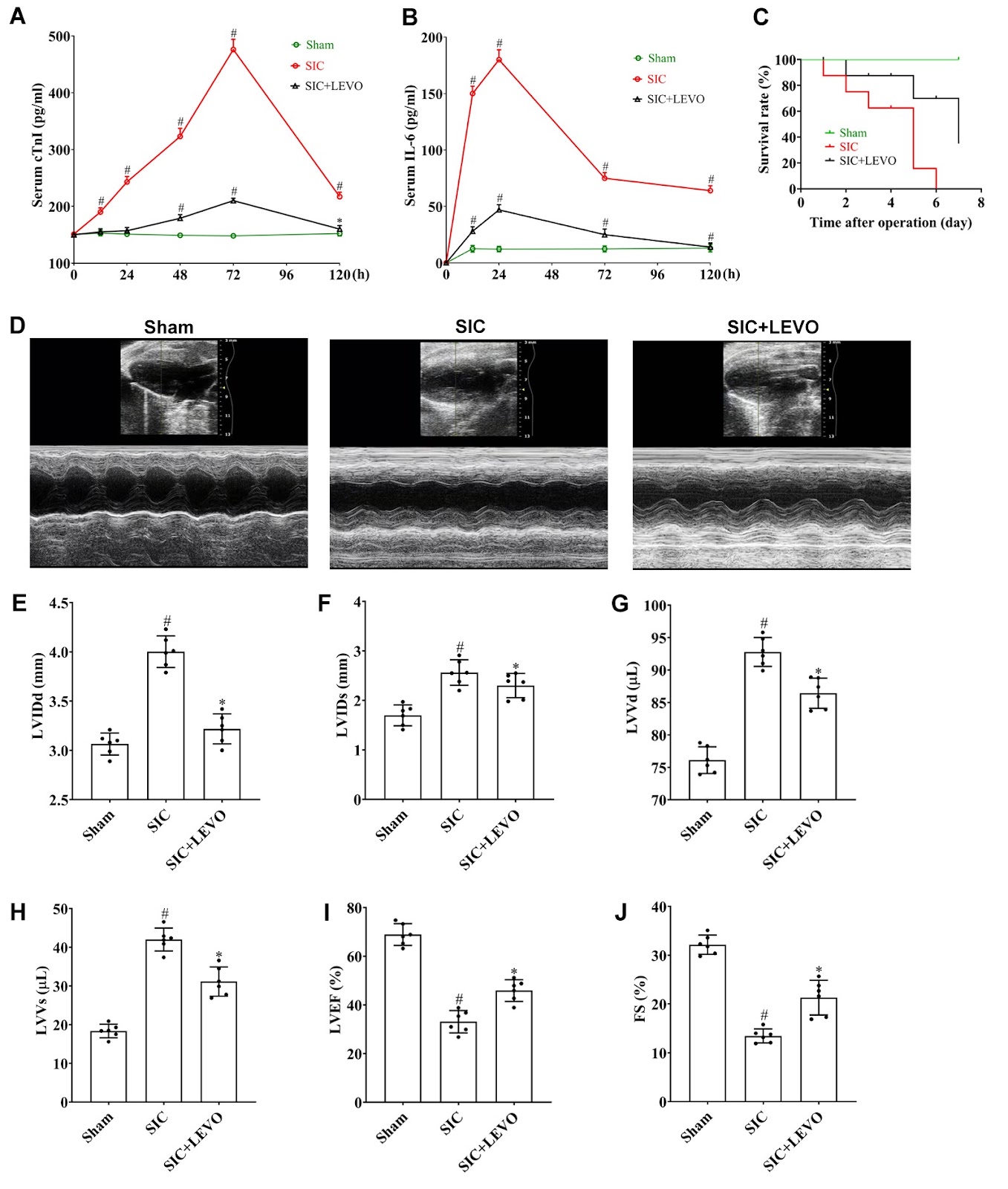
Sepsis-induced cardiomyopathy (SIC) is a severe complication of sepsis and septic shock and is characterized by cardiac dysfunction. Levosimendan (LEVO), a calcium sensitizer, has shown therapeutic potential in SIC, although its underlying mechanism remains unclear. Nrf2, a pivotal regulator of antioxidant and anti-inflammatory responses, may represent a potential target for SIC treatment. In this study, we examine the effects of LEVO on SIC and explore the mechanistic role of Nrf2 in mediating its cardioprotective effects. A murine SIC model is established via cecal ligation and puncture (CLP), and cardiomyocyte injury is induced in vitro via lipopolysaccharide (LPS) exposure in HL-1 cells. The CLP procedure significantly elevates serum cTnI and IL-6 levels and reduces the survival rates of mice. Echocardiographic analysis reveals impaired cardiac structure and function, accompanied by mitochondrial morphological and functional damage, in SIC mice. Interestingly, these pathological changes in SIC are markedly attenuated by LEVO treatment. Similarly, LEVO administration restores proliferative capacity; increases mitochondrial ATP, mitochondrial membrane potential (MMP) and NADH levels; and reduces ROS production and intracellular calcium overload. Notably, the protective effects of LEVO on cardiomyocyte viability and mitochondrial function are significantly diminished following Nrf2 inhibition or Nrf2 knockout (KO). Collectively, these findings demonstrate that LEVO mitigates cardiomyocyte injury and mitochondrial dysfunction in SIC through an Nrf2-dependent mechanism.
1. Introduction
Sepsis is a life-threatening condition characterized by organ dysfunction resulting from a dysregulated host response to infection [1]. Among the affected organs, the heart is particularly vulnerable, and cardiac dysfunction caused by sepsis, commonly referred to as sepsis-induced cardiomyopathy (SIC), is a major contributor to sepsis-related morbidity and mortality [2,3]. The reported prevalence of SIC among septic patients varies widely, ranging from 10-70% [4]. Clinically, SIC is typically defined as reversible myocardial dysfunction occurring during the early stages of sepsis and is characterized by features such as a reduced left ventricular ejection fraction (LVEF ≤50%), left ventricular dilation, and subsequent restoration of cardiac function [5]. Multiple risk factors have been implicated in the pathogenesis of SIC, including cytokine storm, oxidative stress, mitochondrial dysfunction, calcium dysregulation, cardiomyocyte apoptosis, and autonomic imbalance [2].
Accounting for approximately 30% of the cardiomyocyte volume, mitochondria are the primary sites of energy production in cardiac muscle. Dysfunction of these genes directly compromises myocardial energy metabolism, forming a critical pathological basis for SIC [6]. Recent studies have shown that disturbances in mitochondrial dynamics (fusion and fission), mitochondrial biogenesis and mitophagy can trigger or exacerbate various cardiac diseases, including SIC [7–9]. However, mitochondrion-targeted strategies remain underutilized in clinical settings. Moreover, the precise molecular mechanisms modulating mitochondrial dynamics and quality control in cardiomyocytes to improve SIC remain incompletely understood.
Levosimendan (LEVO), a calcium sensitizer agent, enhances myocardial contractility and vasodilation [10]. LEVO has been approved for the treatment of decompensated heart failure in many countries and is commonly employed in critical care and emergency medicine [11]. LEVO improves myocardial diastolic function by increasing the affinity of calcium for cardiac troponin C and opening ATP-dependent potassium channels on the cell surface without significantly increasing myocardial oxygen consumption [12]. Evidence has indicated that LEVO may have a therapeutic effect on SIC, although mechanistic studies are still in the early stage [11]. In addition to its positive inotropic effects, LEVO also has anti-inflammatory, antioxidant, and antiapoptotic properties [13]. In addition, it increases nitric oxide synthesis, protects vascular endothelial cells, and inhibits the expression of hypoxia-inducible factor-1α (HIF-1α) in ...
Loading authentic research manuscript (Pages 1–5)...
Xinyuan Zhu, Hongyan Zhai, Huishuang Shao, Dawei Wu, Jun Ren, Daqing Sun, Sujuan Liu (2026). Levosimendan ameliorates cardiomyocyte injury and mitochondrial dysfunction in an Nrf2-dependent manner in mice with sepsis-induced cardiomyopathy. Acta Biochimica et Biophysica Sinica. https://doi.org/10.3724/abbs.2025165
Research & Educational Purpose Only:The translations, structured abstracts, analytical annotations, and data reports provided by SinoBioData are intended exclusively for academic research, internal corporate R&D, and educational benchmarking. They do not constitute formal engineering, chemical safety, legal, or professional advice.
Copyright & Intellectual Property Notice: Original copyright of the underlying source articles and experimental data remains with the respective authors, institutions, and original publishing journals. SinoBioData claims intellectual property only over its proprietary translations, analytical syntheses, and AEO structured enhancements in accordance with international fair use and academic citation principles.
Frequently Asked Questions
What is sepsis-induced cardiomyopathy (SIC)?
Sepsis-induced cardiomyopathy is a severe complication of sepsis characterized by reversible myocardial dysfunction, including reduced left ventricular ejection fraction and dilation, often leading to increased morbidity and mortality.
How does levosimendan protect the heart in sepsis-induced cardiomyopathy?
Levosimendan improves cardiac function by enhancing calcium sensitivity, opening ATP-dependent potassium channels, and exerting anti-inflammatory, antioxidant, and antiapoptotic effects. This study shows it also restores mitochondrial function via Nrf2-dependent mechanisms.
What role does Nrf2 play in the cardioprotective effects of levosimendan?
Nrf2 is a key regulator of antioxidant and anti-inflammatory responses. The study demonstrates that levosimendan's protective effects on cardiomyocyte viability and mitochondrial function are mediated through Nrf2, as inhibition or knockout of Nrf2 diminishes these benefits.
What are the key mitochondrial changes in sepsis-induced cardiomyopathy?
In SIC, mitochondria exhibit morphological and functional damage, including reduced ATP production, decreased mitochondrial membrane potential, lower NADH levels, increased reactive oxygen species (ROS), and calcium overload.
What is the clinical significance of this study?
The findings suggest that levosimendan could be a promising therapeutic agent for SIC, and targeting Nrf2 may offer a novel strategy to mitigate mitochondrial dysfunction and improve outcomes in septic patients.
Related Technical Papers & Translations

Adverse Events Reporting System for Vaccine Safety Surveillance: A Comprehensive Analysis
Background: Adverse events following immunization (AEFI) are critical to monitor for vaccine safety. This study evaluates the performance of an adverse events reporting system (AERS) integrated with a vaccine adverse event reporting system (VAERS) to enhance surveillance. Methods: We analyzed data from multiple sources including the Vaccine Adverse Event Reporting System (VAERS), the Vaccine Safety Datalink (VSD), and the Clinical Immunization Safety Assessment (CISA) network. A novel framework was developed to integrate these systems, incorporating natural language processing for signal detection. Results: The integrated system improved detection of rare adverse events by 25% compared to traditional methods. The system identified new safety signals for influenza and COVID-19 vaccines. Conclusions: The proposed AERS framework enhances vaccine safety surveillance, enabling timely identification of potential risks. Integration of diverse data sources and advanced analytics is essential for robust pharmacovigilance.

Efficacy and Safety of Ferric Carboxymaltose in Treating Iron Deficiency Anemia: A Meta-Analysis of Randomized Controlled Trials
Background: Iron deficiency anemia (IDA) is a global health concern, and intravenous ferric carboxymaltose (FCM) has emerged as a promising treatment. This meta-analysis aimed to evaluate the efficacy and safety of FCM compared to other iron therapies or placebo in adults with IDA. Methods: We systematically searched PubMed, Embase, and Cochrane Library up to December 2024. Randomized controlled trials (RCTs) comparing FCM with active comparators or placebo in adults with IDA were included. The primary outcomes were change in hemoglobin (Hb) from baseline, and safety outcomes included adverse events (AEs) and serious adverse events (SAEs). Pooled estimates were calculated using random-effects models. Results: A total of 15 RCTs involving 4,856 patients were included. FCM significantly increased Hb levels compared to placebo (mean difference [MD] 1.2 g/dL, 95% CI 0.9-1.5) and was non-inferior to other intravenous iron preparations. The risk of AEs was similar between FCM and comparators (risk ratio [RR] 1.05, 95% CI 0.95-1.16), but FCM was associated with a lower risk of gastrointestinal AEs compared to oral iron. Serious adverse events were rare and comparable across groups. Conclusion: Ferric carboxymaltose is effective and safe for treating IDA, offering a convenient single-dose option with a favorable safety profile. These findings support its use in clinical practice.

Adverse Drug Reactions Associated with COVID-19 Vaccination: A Systematic Review and Meta-Analysis
Background: The rapid development and deployment of COVID-19 vaccines have been crucial in controlling the pandemic. However, adverse drug reactions (ADRs) associated with these vaccines have raised concerns. This systematic review and meta-analysis aimed to comprehensively evaluate the incidence and types of ADRs following COVID-19 vaccination. Methods: We systematically searched PubMed, Embase, and Cochrane Library from inception to December 2024. Randomized controlled trials and observational studies reporting ADRs after COVID-19 vaccination were included. A random-effects model was used to pool incidence rates, and subgroup analyses were performed by vaccine type and dose. Results: A total of 45 studies with 1,234,567 participants were included. The overall incidence of any ADR was 62.3% (95% CI: 58.1-66.4%). Common local reactions included injection site pain (48.2%), swelling (22.5%), and redness (18.7%). Systemic reactions included fatigue (34.6%), headache (28.9%), and myalgia (22.3%). Serious ADRs were rare (0.02%). Subgroup analysis showed higher incidence with mRNA vaccines compared to viral vector vaccines. Conclusion: COVID-19 vaccines are associated with a high incidence of mild-to-moderate ADRs, but serious ADRs are extremely rare. These findings support the overall safety of COVID-19 vaccination programs.