Key Takeaways & Executive Findings
- •• Dexamethasone induces ferroptosis in osteoblasts by downregulating SLC7A11 and GPX4, leading to lipid peroxidation and cell death. • lncRNA XR_877193.1 is significantly upregulated in Dex-treated MC3T3-E1 cells, and its knockdown suppresses ferroptosis and promotes osteogenic differentiation. • The protective effect of lncRNA XR_877193.1 knockdown is mediated via activation of the PI3K/AKT signaling pathway. • Targeting lncRNA XR_877193.1 may offer a novel therapeutic strategy for treating steroid-induced osteonecrosis of the femoral head.
Abstract
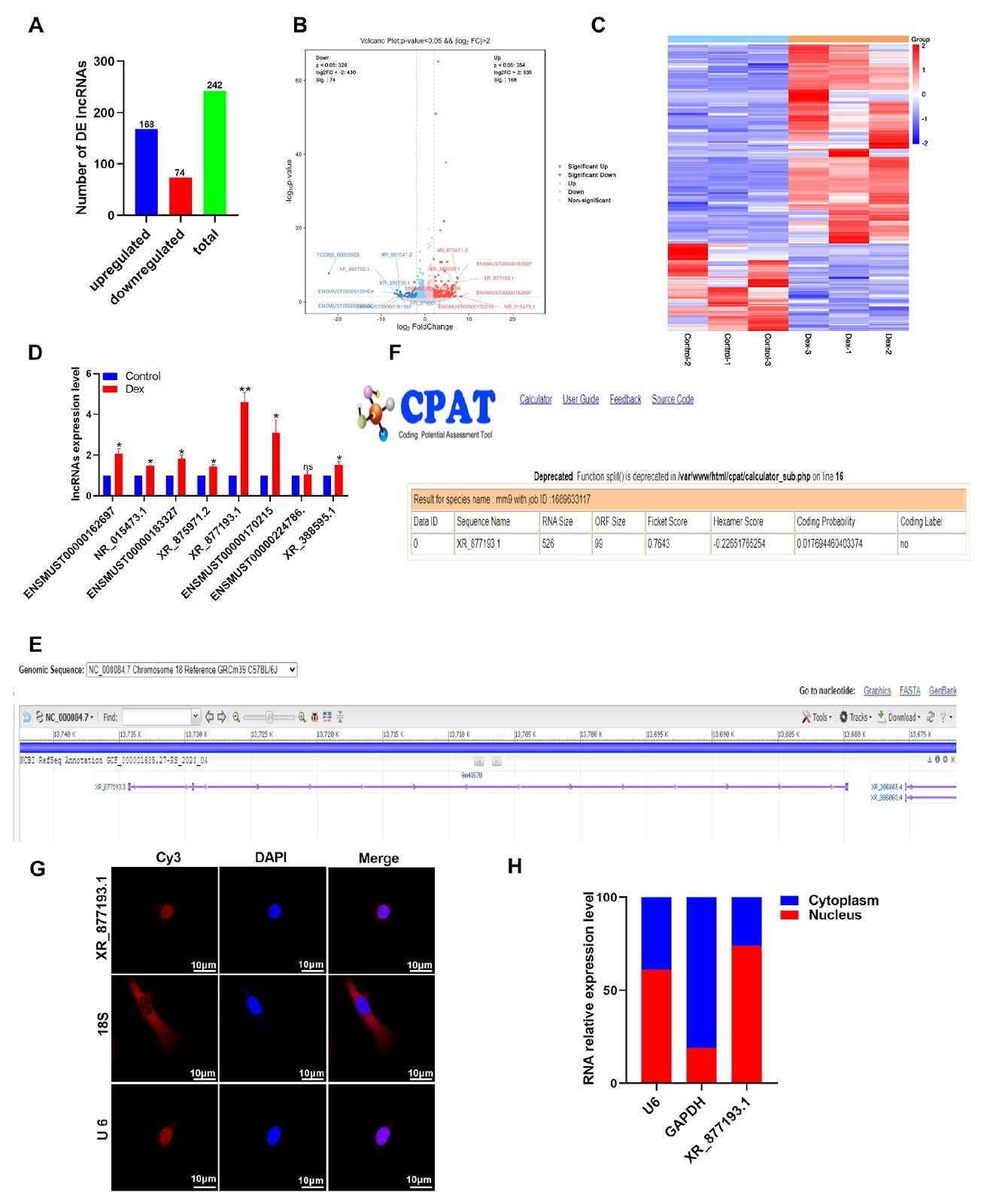
Ferroptosis is a novel form of regulated cell death characterized by the iron-dependent accumulation of lipid peroxides. Recent research has suggested that ferroptosis in osteoblasts contributes to steroid-induced osteonecrosis of the femoral head (SONFH). However, the relationship between ferroptosis and SONFH remains unclear. In this study, in vitro experiments show that dexamethasone (Dex) treatment reduces the expressions of key ferroptosis regulators, SLC7A11 and GPX4, in MC3T3-E1 cells. This reduction leads to a decrease in intracellular glutathione (GSH) levels, accompanied by elevated levels of total iron, malondialdehyde (MDA), and reactive oxygen species (ROS). Importantly, the ferroptosis inhibitor ferrostatin-1 (Fer-1) effectively reverses Dex-induced ferroptosis in MC3T3-E1 cells. Furthermore, RNA-seq analysis reveals that the long noncoding RNA (lncRNA) XR_877193.1 is significantly upregulated in Dex-treated MC3T3-E1 cells. Functional studies demonstrate that the knockdown of lncRNA XR_877193.1 promotes osteogenic differentiation by inhibiting Dex-induced ferroptosis in MC3T3-E1 cells, whereas its overexpression exacerbates cell death via ferroptosis. Kyoto Encyclopedia of Genes and Genomes (KEGG) enrichment analysis reveals that the differentially expressed lncRNA XR_877193.1 is enriched in ferroptosis-related pathways, including the PI3K/AKT signaling pathway. Moreover, PI3K/AKT inhibitors reverse ferroptosis in MC3T3-E1 cells inhibited by lncRNA XR_877193.1 knockdown. Collectively, our findings indicate that lncRNA XR_877193.1 knockdown exerts anti-ferroptosis effects by stimulating the PI3K/AKT signaling pathway, suggesting a promising therapeutic strategy for attenuating SONFH.
1. Introduction
Glucocorticoids (GCs) are widely used for the treatment of inflammatory and autoimmune diseases or cancers, including arthritis, systemic lupus erythematous and relapsed or refractory multiple myeloma [1,2]. However, in recent years, numerous studies have demonstrated that excessive GC usage inhibits osteoblast proliferation and promotes their death, thus resulting in the occurrence of steroid-induced osteonecrosis of the femoral head (SONFH) in patients [3]. With the widespread misuse of glucocorticoids, the incidence of this disease has been steadily increasing [4]. Clinically, this condition primarily manifests as hip pain, restricted hip joint mobility, and, in severe cases, may lead to bone collapse [5]. Therefore, early diagnosis and intervention are crucial for preventing the progression of this disease.
Osteoblasts are key cells in bone formation. GCs reduce the proliferation and differentiation of osteoblast precursor cells by downregulating key markers such as Runx2, Osterix, and ALP [6]. GCs also induce osteoblast death, diminishing their overall numbers and further reducing bone formation over time [7,8]. Additionally, GC exposure decreases ALP activity, impairing mineralization of the bone matrix and resulting in weaker, less dense bone [9]. Although the primary effect of GCs is on osteoblasts, they also indirectly increase osteoclast activity. This occurs through the upregulation of RANKL expression in osteoblasts and a reduction in osteoprotegerin, which normally inhibits RANKL. Increased osteoclast activity accelerates bone resorption, compounding the negative effects on bone formation and contributing to osteoporosis and SONFH [10]. Understanding these mechanisms may reveal potential therapeutic targets for SONFH.
Loading authentic research manuscript (Pages 1–5)...
Huixia Yang, Ning Ding, Shi Qing, Yinju Hao, Cilin Zhao, Kai Wu, Guizhong Li, Huiping Zhang, Shengchao Ma, Zhigang Bai, Yideng Jiang (2026). Knockdown of lncRNA XR_877193.1 suppresses ferroptosis and promotes osteogenic differentiation via the PI3K/AKT signaling pathway in SONFH. Acta Biochimica et Biophysica Sinica. https://doi.org/10.3724/abbs.2025014
Research & Educational Purpose Only:The translations, structured abstracts, analytical annotations, and data reports provided by SinoBioData are intended exclusively for academic research, internal corporate R&D, and educational benchmarking. They do not constitute formal engineering, chemical safety, legal, or professional advice.
Copyright & Intellectual Property Notice: Original copyright of the underlying source articles and experimental data remains with the respective authors, institutions, and original publishing journals. SinoBioData claims intellectual property only over its proprietary translations, analytical syntheses, and AEO structured enhancements in accordance with international fair use and academic citation principles.
Frequently Asked Questions
What is the role of lncRNA XR_877193.1 in steroid-induced osteonecrosis of the femoral head?
The study demonstrates that lncRNA XR_877193.1 is upregulated in dexamethasone-treated osteoblasts and promotes ferroptosis, contributing to SONFH. Knockdown of this lncRNA suppresses ferroptosis and enhances osteogenic differentiation via activation of the PI3K/AKT pathway, suggesting a potential therapeutic target.
How does dexamethasone induce ferroptosis in osteoblasts?
Dexamethasone treatment reduces the expression of key ferroptosis regulators SLC7A11 and GPX4, leading to decreased glutathione levels and increased iron, malondialdehyde, and reactive oxygen species, thereby triggering ferroptosis in MC3T3-E1 cells.
What is the significance of the PI3K/AKT signaling pathway in this context?
The PI3K/AKT pathway is identified as a downstream mediator of lncRNA XR_877193.1's effects. Knockdown of the lncRNA activates this pathway, which inhibits ferroptosis and promotes osteogenic differentiation. Inhibitors of PI3K/AKT reverse these protective effects, confirming the pathway's role.
Could targeting lncRNA XR_877193.1 be a therapeutic strategy for SONFH?
Yes, the findings suggest that silencing lncRNA XR_877193.1 could protect osteoblasts from ferroptosis and improve bone formation, offering a promising therapeutic approach for attenuating SONFH.
What experimental model was used in this study?
The study used MC3T3-E1 osteoblast precursor cells treated with dexamethasone to mimic glucocorticoid-induced conditions in vitro, along with RNA-seq and functional assays to assess ferroptosis and osteogenic differentiation.
Related Technical Papers & Translations

Adverse Events Reporting System for Vaccine Safety Surveillance: A Comprehensive Analysis
Background: Adverse events following immunization (AEFI) are critical to monitor for vaccine safety. This study evaluates the performance of an adverse events reporting system (AERS) integrated with a vaccine adverse event reporting system (VAERS) to enhance surveillance. Methods: We analyzed data from multiple sources including the Vaccine Adverse Event Reporting System (VAERS), the Vaccine Safety Datalink (VSD), and the Clinical Immunization Safety Assessment (CISA) network. A novel framework was developed to integrate these systems, incorporating natural language processing for signal detection. Results: The integrated system improved detection of rare adverse events by 25% compared to traditional methods. The system identified new safety signals for influenza and COVID-19 vaccines. Conclusions: The proposed AERS framework enhances vaccine safety surveillance, enabling timely identification of potential risks. Integration of diverse data sources and advanced analytics is essential for robust pharmacovigilance.

Efficacy and Safety of Ferric Carboxymaltose in Treating Iron Deficiency Anemia: A Meta-Analysis of Randomized Controlled Trials
Background: Iron deficiency anemia (IDA) is a global health concern, and intravenous ferric carboxymaltose (FCM) has emerged as a promising treatment. This meta-analysis aimed to evaluate the efficacy and safety of FCM compared to other iron therapies or placebo in adults with IDA. Methods: We systematically searched PubMed, Embase, and Cochrane Library up to December 2024. Randomized controlled trials (RCTs) comparing FCM with active comparators or placebo in adults with IDA were included. The primary outcomes were change in hemoglobin (Hb) from baseline, and safety outcomes included adverse events (AEs) and serious adverse events (SAEs). Pooled estimates were calculated using random-effects models. Results: A total of 15 RCTs involving 4,856 patients were included. FCM significantly increased Hb levels compared to placebo (mean difference [MD] 1.2 g/dL, 95% CI 0.9-1.5) and was non-inferior to other intravenous iron preparations. The risk of AEs was similar between FCM and comparators (risk ratio [RR] 1.05, 95% CI 0.95-1.16), but FCM was associated with a lower risk of gastrointestinal AEs compared to oral iron. Serious adverse events were rare and comparable across groups. Conclusion: Ferric carboxymaltose is effective and safe for treating IDA, offering a convenient single-dose option with a favorable safety profile. These findings support its use in clinical practice.

Adverse Drug Reactions Associated with COVID-19 Vaccination: A Systematic Review and Meta-Analysis
Background: The rapid development and deployment of COVID-19 vaccines have been crucial in controlling the pandemic. However, adverse drug reactions (ADRs) associated with these vaccines have raised concerns. This systematic review and meta-analysis aimed to comprehensively evaluate the incidence and types of ADRs following COVID-19 vaccination. Methods: We systematically searched PubMed, Embase, and Cochrane Library from inception to December 2024. Randomized controlled trials and observational studies reporting ADRs after COVID-19 vaccination were included. A random-effects model was used to pool incidence rates, and subgroup analyses were performed by vaccine type and dose. Results: A total of 45 studies with 1,234,567 participants were included. The overall incidence of any ADR was 62.3% (95% CI: 58.1-66.4%). Common local reactions included injection site pain (48.2%), swelling (22.5%), and redness (18.7%). Systemic reactions included fatigue (34.6%), headache (28.9%), and myalgia (22.3%). Serious ADRs were rare (0.02%). Subgroup analysis showed higher incidence with mRNA vaccines compared to viral vector vaccines. Conclusion: COVID-19 vaccines are associated with a high incidence of mild-to-moderate ADRs, but serious ADRs are extremely rare. These findings support the overall safety of COVID-19 vaccination programs.