Key Takeaways & Executive Findings
- •• Genetically encoded fluorescent sensors enable real-time, subcellular monitoring of ion fluxes and metabolic changes during NECSO. • NC1-induced TRPM4 activation leads to rapid potassium loss and sodium overload, triggering a distinct necrotic pathway. • The study reveals NADH accumulation and ATP depletion in mitochondria and cytosol, alongside reduced mitochondrial oxidative stress. • This methodological framework offers a powerful tool for studying metabolic and redox dynamics in various physiological and toxicological contexts.
Abstract
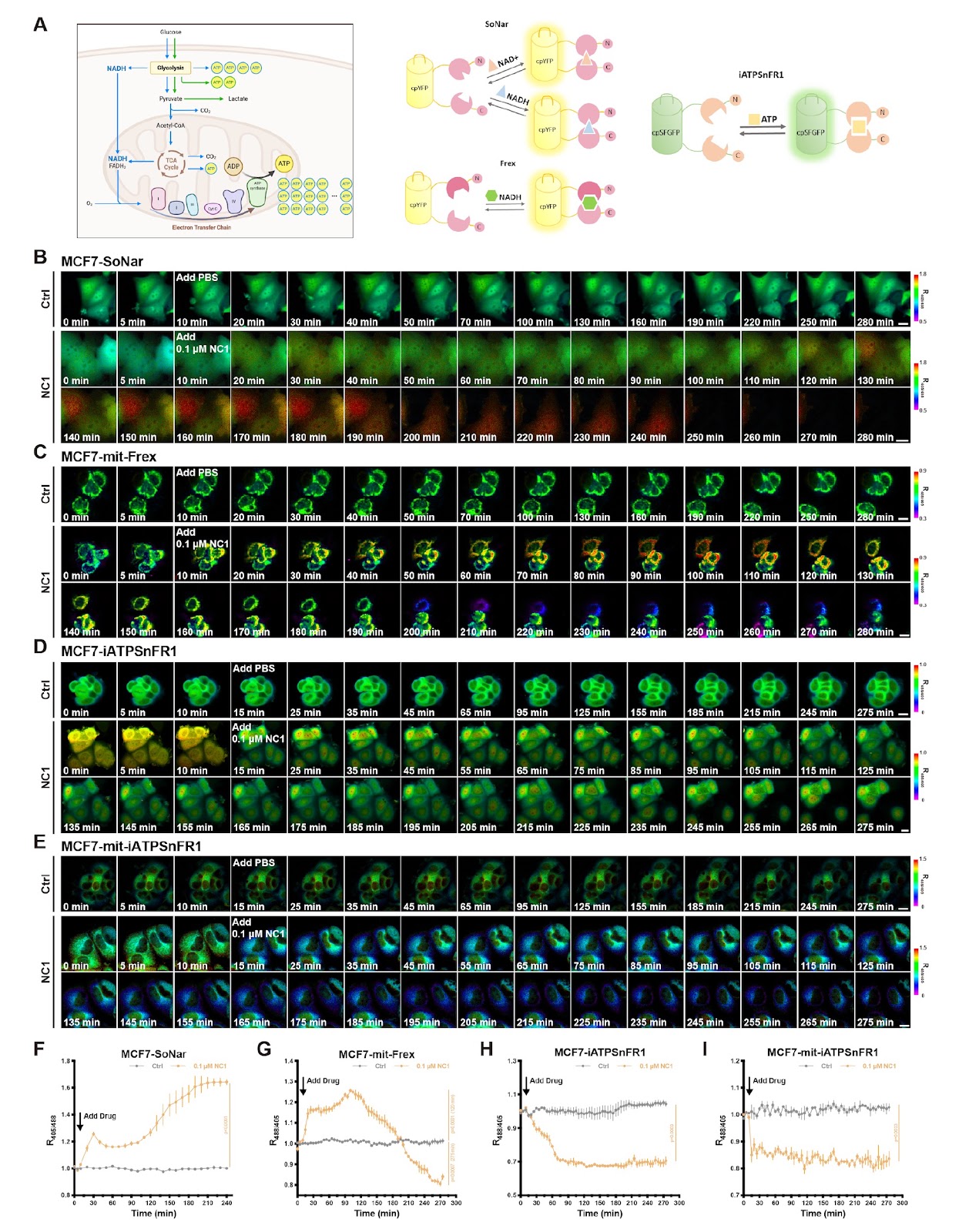
Necrosis by sodium overload (NECSO) is a distinct cell death modality induced by the chemical regulator necrocide 1 (NC1), which targets the transient receptor potential melastatin 4 (TRPM4) channel to drive excessive sodium influx and potassium efflux. This unique necrosis is characterized by the exchange of monovalent ions, a restrained ATP supply, redox disorder and a final membrane rupture as main features. Real-time monitoring of metabolic and redox causality during the whole process in living cells has been technically challenging. To bridge this gap, we integrate an advanced toolset of genetically encoded fluorescent sensors to monitor monovalent ions, energy metabolites, and redox equivalents with high spatiotemporal resolution. By directing these sensors to specific subcellular compartments, we successfully capture the real-time choreography of potassium loss specifically induced by NC1 via TRPM4. Furthermore, we establish a precise detection paradigm for evaluating energy currency by integrating sensors for NADH and ATP that are capable of subcellular imaging. We observe general and rapid NADH accumulation along with an ATP shortage in the mitochondria and cytosol. A concomitant reduction in mitochondrial oxidative stress is observed. This study not only elucidates the metabolic progression of a peculiar type of necrosis but also establishes a robust methodological framework for applying genetically encoded sensors to broader physiological and toxicological research.
1. Introduction
Sodium (Na+) is the most abundant extracellular cation, and its steep transmembrane gradient is essential for cellular volume regulation, nutrient transport, and electrical excitability [1–4]. While sodium influx is a hallmark of tissue injury in conditions such as stroke and myocardial infarction [5,6], whether it serves as a primary executioner of regulated cell death (RCD) remains unclear compared with well-characterized pathways such as apoptosis [7], ferroptosis [8,9], or necroptosis [10]. This gap was recently bridged by the discovery of necrocide 1 (NC1), which targets the TRPM4 channel, a Ca2+-activated nonselective cation channel [11–14]. Recent cryo-EM studies have mapped the vanilloid binding pocket (VBP) of TRPM4, where NC1 acts as a molecular wedge to lock the channel in a persistent open state [15–18]. This leads to massive sodium overload and a novel necrotic pathway termed necrosis by sodium overload (NECSO) [15,19,20]. The execution of NECSO involves not only osmotic swelling via aquaporin-4 (AQP4) [21] but also catastrophic metabolic collapse, as excessive amounts of sodium enter mitochondria via the NCLX exchanger [22], disrupting the TCA cycle and ATP production [23,25].
Deciphering the spatiotemporal orchestration of NECSO requires robust tools to monitor these rapid ionic and metabolic shifts [26]. However, a significant technological challenge persists: while chemical dyes such as CoroNa Green can detect sodium overload, a reliable genetically encoded sodium indicator is still lacking. This lack of organelle-specific sodium sensors limits our ability to track mitochondrial sodium dynamics with high precision [26,27]. Sodium and potassium are closely associated and, in most cases, are transported via mutual displacement. In contrast to sodium sensing, potassium sensing has entered a sophisticated era of genetic engineering. By utilizing bacterial K+-binding protein (Kbp), researchers have developed FRET-based ratiometric indicators such as GEPIIs and KIRIN1, as well as single-FP sensors such as GINKO1 [28,29]. Furthermore, the BRIPO system has introduced bioluminescence imaging for potassium, enabling high-contrast monitoring in vivo [30].
Loading authentic research manuscript (Pages 1–5)...
Yike Song, Yale Xia, Yin Fu, Jing Yao, Lian Zeng, Yuxi Duan, Ni Su, Xie Li, Xiawei Cheng, Yuzheng Zhao, Yi Yang, Yejun Zou (2026). Integrating genetically encoded fluorescent sensors to elucidate the spatiotemporal choreography of necrosis by sodium overload. Acta Biochimica et Biophysica Sinica. https://doi.org/10.3724/abbs.2026102
Research & Educational Purpose Only:The translations, structured abstracts, analytical annotations, and data reports provided by SinoBioData are intended exclusively for academic research, internal corporate R&D, and educational benchmarking. They do not constitute formal engineering, chemical safety, legal, or professional advice.
Copyright & Intellectual Property Notice: Original copyright of the underlying source articles and experimental data remains with the respective authors, institutions, and original publishing journals. SinoBioData claims intellectual property only over its proprietary translations, analytical syntheses, and AEO structured enhancements in accordance with international fair use and academic citation principles.
Frequently Asked Questions
What is necrosis by sodium overload (NECSO)?
NECSO is a distinct cell death modality induced by the chemical regulator necrocide 1 (NC1), which targets the TRPM4 channel to drive excessive sodium influx and potassium efflux, leading to metabolic collapse and membrane rupture.
How do genetically encoded fluorescent sensors help in studying NECSO?
These sensors allow real-time, subcellular monitoring of ions (e.g., potassium), energy metabolites (ATP, NADH), and redox state, enabling researchers to track the spatiotemporal progression of NECSO with high precision.
What are the key findings of this study?
The study reveals that NC1 induces rapid potassium loss via TRPM4, leading to NADH accumulation and ATP depletion in mitochondria and cytosol, along with reduced mitochondrial oxidative stress, providing a detailed metabolic timeline of NECSO.
What is the significance of this research?
This work establishes a robust methodological framework using genetically encoded sensors to study metabolic and redox dynamics in cell death, with potential applications in broader physiological and toxicological research.
What are the limitations of current sodium sensors?
A reliable genetically encoded sodium indicator is still lacking, limiting organelle-specific tracking of sodium dynamics, which is a challenge addressed partially by using potassium sensors and other metabolic indicators.
Related Technical Papers & Translations

Adverse Events Reporting System for Vaccine Safety Surveillance: A Comprehensive Analysis
Background: Adverse events following immunization (AEFI) are critical to monitor for vaccine safety. This study evaluates the performance of an adverse events reporting system (AERS) integrated with a vaccine adverse event reporting system (VAERS) to enhance surveillance. Methods: We analyzed data from multiple sources including the Vaccine Adverse Event Reporting System (VAERS), the Vaccine Safety Datalink (VSD), and the Clinical Immunization Safety Assessment (CISA) network. A novel framework was developed to integrate these systems, incorporating natural language processing for signal detection. Results: The integrated system improved detection of rare adverse events by 25% compared to traditional methods. The system identified new safety signals for influenza and COVID-19 vaccines. Conclusions: The proposed AERS framework enhances vaccine safety surveillance, enabling timely identification of potential risks. Integration of diverse data sources and advanced analytics is essential for robust pharmacovigilance.

Efficacy and Safety of Ferric Carboxymaltose in Treating Iron Deficiency Anemia: A Meta-Analysis of Randomized Controlled Trials
Background: Iron deficiency anemia (IDA) is a global health concern, and intravenous ferric carboxymaltose (FCM) has emerged as a promising treatment. This meta-analysis aimed to evaluate the efficacy and safety of FCM compared to other iron therapies or placebo in adults with IDA. Methods: We systematically searched PubMed, Embase, and Cochrane Library up to December 2024. Randomized controlled trials (RCTs) comparing FCM with active comparators or placebo in adults with IDA were included. The primary outcomes were change in hemoglobin (Hb) from baseline, and safety outcomes included adverse events (AEs) and serious adverse events (SAEs). Pooled estimates were calculated using random-effects models. Results: A total of 15 RCTs involving 4,856 patients were included. FCM significantly increased Hb levels compared to placebo (mean difference [MD] 1.2 g/dL, 95% CI 0.9-1.5) and was non-inferior to other intravenous iron preparations. The risk of AEs was similar between FCM and comparators (risk ratio [RR] 1.05, 95% CI 0.95-1.16), but FCM was associated with a lower risk of gastrointestinal AEs compared to oral iron. Serious adverse events were rare and comparable across groups. Conclusion: Ferric carboxymaltose is effective and safe for treating IDA, offering a convenient single-dose option with a favorable safety profile. These findings support its use in clinical practice.

Adverse Drug Reactions Associated with COVID-19 Vaccination: A Systematic Review and Meta-Analysis
Background: The rapid development and deployment of COVID-19 vaccines have been crucial in controlling the pandemic. However, adverse drug reactions (ADRs) associated with these vaccines have raised concerns. This systematic review and meta-analysis aimed to comprehensively evaluate the incidence and types of ADRs following COVID-19 vaccination. Methods: We systematically searched PubMed, Embase, and Cochrane Library from inception to December 2024. Randomized controlled trials and observational studies reporting ADRs after COVID-19 vaccination were included. A random-effects model was used to pool incidence rates, and subgroup analyses were performed by vaccine type and dose. Results: A total of 45 studies with 1,234,567 participants were included. The overall incidence of any ADR was 62.3% (95% CI: 58.1-66.4%). Common local reactions included injection site pain (48.2%), swelling (22.5%), and redness (18.7%). Systemic reactions included fatigue (34.6%), headache (28.9%), and myalgia (22.3%). Serious ADRs were rare (0.02%). Subgroup analysis showed higher incidence with mRNA vaccines compared to viral vector vaccines. Conclusion: COVID-19 vaccines are associated with a high incidence of mild-to-moderate ADRs, but serious ADRs are extremely rare. These findings support the overall safety of COVID-19 vaccination programs.