Key Takeaways & Executive Findings
- •• Integrated scRNA-seq and scATAC-seq profiling of ~125,000 latently infected CD4+ T cells reveals transcriptomic and epigenomic changes upon latency reversal. • Machine learning models achieve 75-79% accuracy in predicting viral reactivation from single-cell multiomic data. • FOXP1 and GATA3 are identified and validated as novel regulators of HIV transcription. • The study demonstrates the power of multimodal single-cell analysis to uncover host factors controlling HIV latency.
Abstract
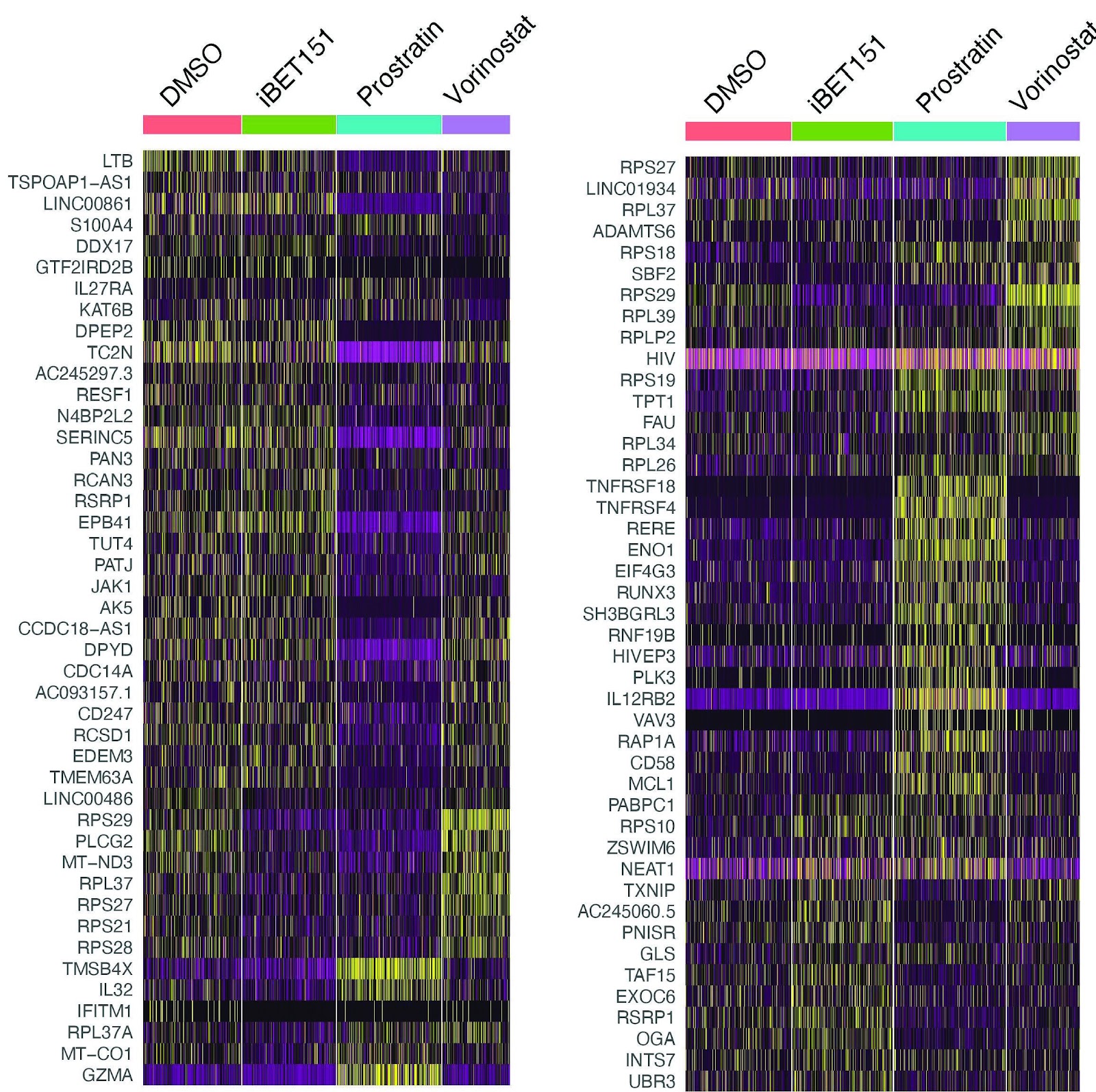
Despite the success of antiretroviral therapy, human immunodeficiency virus (HIV) cannot be cured because of a reservoir of latently infected cells that evades therapy. To understand the mechanisms of HIV latency, we employed an integrated single-cell RNA sequencing (scRNA-seq) and single-cell assay for transposase-accessible chromatin with sequencing (scATAC-seq) approach to simultaneously profile the transcriptomic and epigenomic characteristics of ~125,000 latently infected primary CD4+ T cells after reactivation using three different latency reversing agents. Differentially expressed genes and differentially accessible motifs were used to examine transcriptional pathways and transcription factor (TF) activities across the cell population. We identified cellular transcripts and TFs whose expression/activity was correlated with viral reactivation and demonstrated that a machine learning model trained on these data was 75%–79% accurate at predicting viral reactivation. Finally, we validated the role of two candidate HIV-regulating factors, FOXP1 and GATA3, in viral transcription. These data demonstrate the power of integrated multimodal single-cell analysis to uncover novel relationships between host cell factors and HIV latency.
1. Introduction
The formation of a latently infected reservoir in CD4+ T cells is a key barrier to an human immunodeficiency virus (HIV) cure [1,2]. The reservoir is highly stable and long lived, and is not eliminated by current antiretroviral therapy [3]. Additionally, clonal expansion in vivo counteracts gradual erosion of infected cells [4–8]. A key mechanism in the formation of this reservoir is the phenomenon of viral latency, in which HIV transcription is reversibly silenced post integration, allowing it to evade the host immune defenses. Sporadic reactivation of these cells generates “blips” of viremia during therapy [9] and seeds rapid rebound upon interruption of therapy [10,11]. Current cure strategies for HIV involve transiently inducing viral gene expression in latent proviruses using latency reversing agents (LRAs), followed by immune clearance of the reactivated cells. However, this approach has thus far only achieved limited success [12–16]. Reactivation of latently infected cells with existing LRAs is inefficient, with typically ~10% of replication-competent proviruses being reactivated in patient-derived cells, even with “potent” LRAs [17]. For the LRA/clearance approach to be successful, broad reactivation of the reservoir will be required. This inefficiency of latency reversal with LRAs is likely due to a combination of stochastic processes that regulate viral gene expression, the existence of multiple layers of repression to HIV gene expression, and the heterogeneity in both the cellular environment and proviral integration sites in infected cells. Fully defining the nature of these repressive mechanisms is urgently needed to allow the development of broader acting LRAs or approaches with a combination of different LRAs.
Prior work indicates that silencing of HIV in CD4+ T cells involves the combined effects of low levels of positive transcription factors (TFs), such as nuclear factor kappa B (NF-κB) and activating protein-1 (AP-1) [18–20], active repression by cellular factors (e.g., NELF and DSIF) [21,22], sequestration of the elongation complex P-TEFb (cyclinT1/CDK9) [23], and histone modifications that create a repressive heterochromatin environment around the virus promoter [23–27]. Nevertheless, the regulation of HIV gene expression remains incompletely understood, and additional mechanisms likely exist that will need to be fully characterized.
Loading authentic research manuscript (Pages 1–5)...
Manickam Ashokkumar, Wenwen Mei, Jackson J. Peterson, Yuriko Harigaya, David M. Murdoch, David M. Margolis, Caleb Kornfein, Alex Oesterling, Zhicheng Guo, Cynthia D. Rudin, Yuchao Jiang, Edward P. Browne (2026). Integrated Single-cell Multiomic Analysis of HIV Latency Reversal Reveals Novel Regulators of Viral Reactivation. Genomics, Proteomics & Bioinformatics. https://doi.org/10.1093/gpb/art_1118
Research & Educational Purpose Only:The translations, structured abstracts, analytical annotations, and data reports provided by SinoBioData are intended exclusively for academic research, internal corporate R&D, and educational benchmarking. They do not constitute formal engineering, chemical safety, legal, or professional advice.
Copyright & Intellectual Property Notice: Original copyright of the underlying source articles and experimental data remains with the respective authors, institutions, and original publishing journals. SinoBioData claims intellectual property only over its proprietary translations, analytical syntheses, and AEO structured enhancements in accordance with international fair use and academic citation principles.
Frequently Asked Questions
What is the main objective of this study?
The study aims to understand the mechanisms of HIV latency by using integrated single-cell RNA-seq and ATAC-seq to profile latently infected CD4+ T cells after reactivation, and to identify novel host factors that regulate viral reactivation.
How many cells were analyzed in this study?
Approximately 125,000 latently infected primary CD4+ T cells were analyzed.
What machine learning approach was used and what accuracy was achieved?
A machine learning model was trained on the single-cell multiomic data to predict viral reactivation, achieving 75-79% accuracy.
Which novel regulators of HIV reactivation were validated?
FOXP1 and GATA3 were identified and validated as novel regulators of HIV transcription.
What is the significance of this study for HIV cure research?
The study provides insights into the host factors and regulatory mechanisms controlling HIV latency, which could inform the development of more effective latency reversing agents and cure strategies.
Related Technical Papers & Translations

Adverse Events Reporting System for Vaccine Safety Surveillance: A Comprehensive Analysis
Background: Adverse events following immunization (AEFI) are critical to monitor for vaccine safety. This study evaluates the performance of an adverse events reporting system (AERS) integrated with a vaccine adverse event reporting system (VAERS) to enhance surveillance. Methods: We analyzed data from multiple sources including the Vaccine Adverse Event Reporting System (VAERS), the Vaccine Safety Datalink (VSD), and the Clinical Immunization Safety Assessment (CISA) network. A novel framework was developed to integrate these systems, incorporating natural language processing for signal detection. Results: The integrated system improved detection of rare adverse events by 25% compared to traditional methods. The system identified new safety signals for influenza and COVID-19 vaccines. Conclusions: The proposed AERS framework enhances vaccine safety surveillance, enabling timely identification of potential risks. Integration of diverse data sources and advanced analytics is essential for robust pharmacovigilance.

Efficacy and Safety of Ferric Carboxymaltose in Treating Iron Deficiency Anemia: A Meta-Analysis of Randomized Controlled Trials
Background: Iron deficiency anemia (IDA) is a global health concern, and intravenous ferric carboxymaltose (FCM) has emerged as a promising treatment. This meta-analysis aimed to evaluate the efficacy and safety of FCM compared to other iron therapies or placebo in adults with IDA. Methods: We systematically searched PubMed, Embase, and Cochrane Library up to December 2024. Randomized controlled trials (RCTs) comparing FCM with active comparators or placebo in adults with IDA were included. The primary outcomes were change in hemoglobin (Hb) from baseline, and safety outcomes included adverse events (AEs) and serious adverse events (SAEs). Pooled estimates were calculated using random-effects models. Results: A total of 15 RCTs involving 4,856 patients were included. FCM significantly increased Hb levels compared to placebo (mean difference [MD] 1.2 g/dL, 95% CI 0.9-1.5) and was non-inferior to other intravenous iron preparations. The risk of AEs was similar between FCM and comparators (risk ratio [RR] 1.05, 95% CI 0.95-1.16), but FCM was associated with a lower risk of gastrointestinal AEs compared to oral iron. Serious adverse events were rare and comparable across groups. Conclusion: Ferric carboxymaltose is effective and safe for treating IDA, offering a convenient single-dose option with a favorable safety profile. These findings support its use in clinical practice.

Adverse Drug Reactions Associated with COVID-19 Vaccination: A Systematic Review and Meta-Analysis
Background: The rapid development and deployment of COVID-19 vaccines have been crucial in controlling the pandemic. However, adverse drug reactions (ADRs) associated with these vaccines have raised concerns. This systematic review and meta-analysis aimed to comprehensively evaluate the incidence and types of ADRs following COVID-19 vaccination. Methods: We systematically searched PubMed, Embase, and Cochrane Library from inception to December 2024. Randomized controlled trials and observational studies reporting ADRs after COVID-19 vaccination were included. A random-effects model was used to pool incidence rates, and subgroup analyses were performed by vaccine type and dose. Results: A total of 45 studies with 1,234,567 participants were included. The overall incidence of any ADR was 62.3% (95% CI: 58.1-66.4%). Common local reactions included injection site pain (48.2%), swelling (22.5%), and redness (18.7%). Systemic reactions included fatigue (34.6%), headache (28.9%), and myalgia (22.3%). Serious ADRs were rare (0.02%). Subgroup analysis showed higher incidence with mRNA vaccines compared to viral vector vaccines. Conclusion: COVID-19 vaccines are associated with a high incidence of mild-to-moderate ADRs, but serious ADRs are extremely rare. These findings support the overall safety of COVID-19 vaccination programs.