Key Takeaways & Executive Findings
- •• RNA-seq identified 218 differentially expressed genes in preeclamptic placentas, with significant enrichment in autophagy-related pathways (PI3K-Akt, AMPK, mTOR). • Autophagy is increased in preeclamptic placentas and hypoxic trophoblasts, suggesting a role in PE pathogenesis. • 3-methyladenine (3-MA), an autophagy inhibitor, alleviates PE-like symptoms in a rat model of reduced uterine perfusion pressure (RUPP). • Inhibiting autophagy may represent a promising therapeutic strategy for preeclampsia.
Abstract
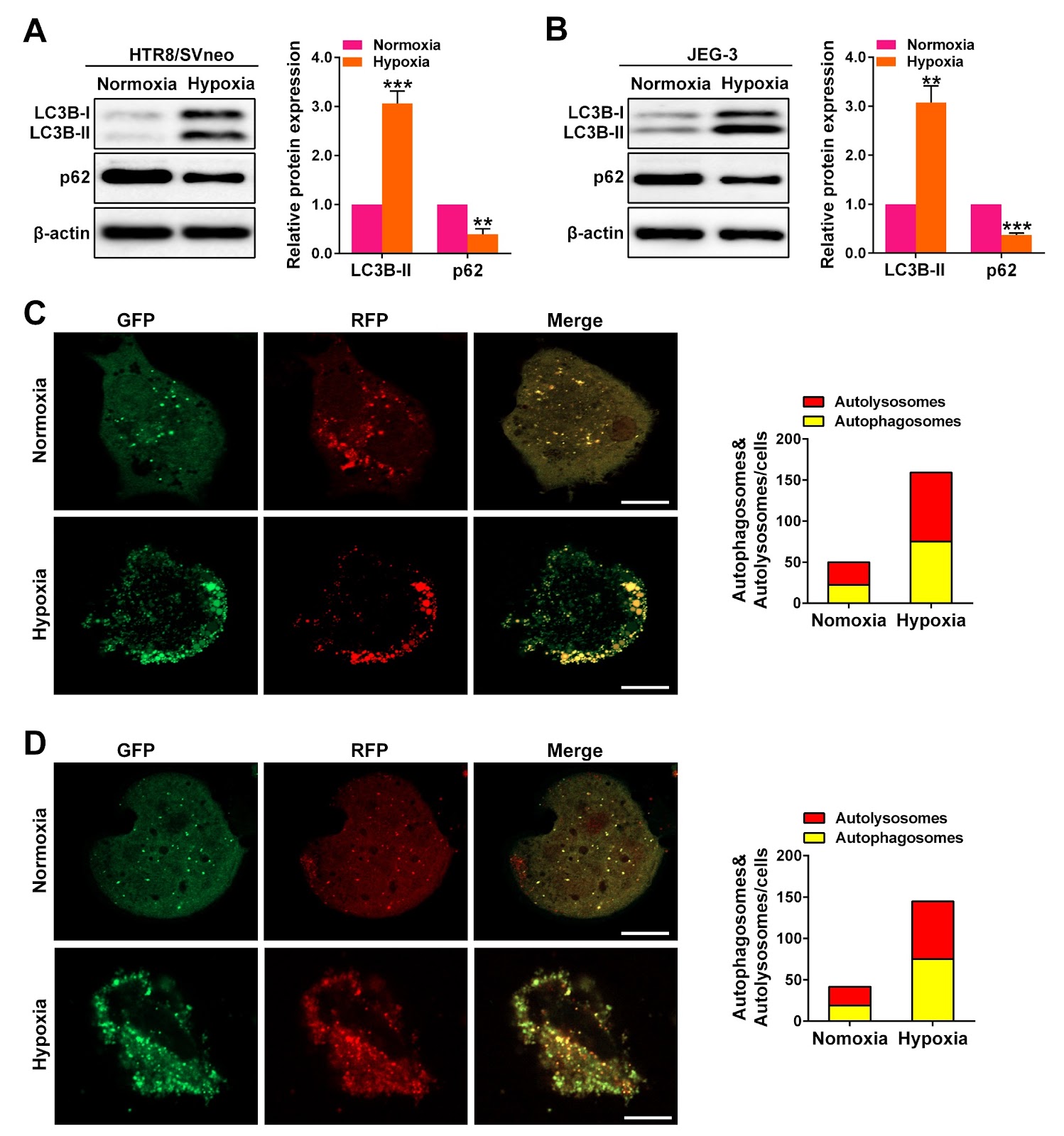
Autophagy is a cellular mechanism for self-renewal that involves the breakdown of cytoplasmic proteins or organelles within lysosomes. Although preeclampsia (PE) exhibits several characteristics that could imply disrupted autophagy, there is limited evidence supporting the notion that impaired placental autophagy directly causes PE, as indicated by differential expression profiling of whole placental tissue. In this study, we aim to explore the significance of autophagy in maintaining pregnancy and its association with PE. First, the RNA-seq results show that 218 genes are differentially expressed in placentas from preeclamptic pregnancies. Notably, KEGG pathway analysis reveals significant enrichment of genes related to autophagy-related signaling pathways, including the PI3K-Akt signaling pathway, the AMPK signaling pathway, and the mTOR signaling pathway. Additionally, our findings indicate an increase in autophagy in placentas from pregnancies complicated by preeclampsia as well as in trophoblasts subjected to hypoxic conditions. Next, we examine the impact of 3-methyladenine (3-MA), a targeted inhibitor of autophagy, on the progression of PE. The administration of 3-MA profoundly alleviates the severity of PE-like symptoms in rats subjected to reduced uterine perfusion pressure (RUPP). The findings from our study suggest that inhibiting autophagy may serve as a promising approach for adjuvant chemotherapy for PE.
1. Introduction
Preeclampsia (PE) is a pregnancy disorder characterized by hypertension that occurs in approximately 5% of pregnancies and ranks among the primary causes of maternal and perinatal mortality worldwide [1]. This condition is marked by the development of high blood pressure after 20 weeks of pregnancy, along with the presence of proteinuria and/or acute kidney injury in the mother. Additionally, it may be accompanied by liver dysfunction, neurological complications, thrombocytopenia or hemolysis, as well as fetal growth restriction [2,3]. Despite extensive research efforts and advancements in clinical management, the underlying mechanisms of PE remain elusive, and no effective treatment options other than delivery are currently available [4].
Autophagy is a highly conserved cellular process observed in organisms ranging from yeast to mammals, and it serves to preserve cellular homeostasis in response to stress [5]. Initially, autophagy was shown to function as a means of generating energy during periods of starvation [6]. Indeed, a wealth of evidence suggests that autophagy has a multitude of functions, including stress protection, energy regulation, immune modulation, cellular differentiation, proliferation, and programmed cell death [7‒9]. Recent studies have demonstrated an increase in autophagy in placentas affected by complications such as PE or foetal growth restriction [10]. Furthermore, there is a positive correlation between the severity of these conditions and increased formation of autophagosomes, suggesting that abnormal autophagic activity is one of the underlying mechanisms responsible for compromised trophoblast invasion [11]. 3-Methyladenine (3-MA) is a recognized phosphatidylinositol 3-kinase (PI3K) inhibitor and an autophagy modulator [12]. 3-MA can reportedly induce cell death in cancer cells through both autophagy-dependent and autophagy-independent pathways [13]. Nonetheless, comprehensive research investigating the potential of 3-MA as an inhibitor of PE progression is scarce.
Loading authentic research manuscript (Pages 1–5)...
Fei Ma, Ning Ding, Lin Xie, Xiangyu Zhao, Shengchao Ma, Guizhong Li, Yinju Hao, Jiantuan Xiong, Kai Wu, Yideng Jiang, Huiping Zhang (2026). Inhibition of autophagy via 3-methyladenine alleviates the progression of preeclampsia. Acta Biochimica et Biophysica Sinica. https://doi.org/10.3724/abbs.2024096
Research & Educational Purpose Only:The translations, structured abstracts, analytical annotations, and data reports provided by SinoBioData are intended exclusively for academic research, internal corporate R&D, and educational benchmarking. They do not constitute formal engineering, chemical safety, legal, or professional advice.
Copyright & Intellectual Property Notice: Original copyright of the underlying source articles and experimental data remains with the respective authors, institutions, and original publishing journals. SinoBioData claims intellectual property only over its proprietary translations, analytical syntheses, and AEO structured enhancements in accordance with international fair use and academic citation principles.
Frequently Asked Questions
What is the role of autophagy in preeclampsia?
The study found that autophagy is increased in placentas from preeclamptic pregnancies and in trophoblasts under hypoxic conditions, suggesting that dysregulated autophagy contributes to the pathogenesis of preeclampsia.
How does 3-methyladenine (3-MA) affect preeclampsia?
3-MA, an autophagy inhibitor, significantly alleviated the severity of preeclampsia-like symptoms in a rat model of reduced uterine perfusion pressure (RUPP), indicating its potential as a therapeutic agent.
What signaling pathways are involved in autophagy in preeclampsia?
KEGG pathway analysis revealed enrichment of autophagy-related signaling pathways, including PI3K-Akt, AMPK, and mTOR signaling pathways, in preeclamptic placentas.
What is the clinical significance of this study?
The findings suggest that inhibiting autophagy may be a promising approach for adjuvant therapy for preeclampsia, potentially offering a new treatment strategy beyond delivery.
How was the study conducted?
The researchers performed RNA-seq on placental tissues from preeclamptic and normal pregnancies, assessed autophagy levels, and tested the effect of 3-MA in a rat model of preeclampsia.
Related Technical Papers & Translations

Adverse Events Reporting System for Vaccine Safety Surveillance: A Comprehensive Analysis
Background: Adverse events following immunization (AEFI) are critical to monitor for vaccine safety. This study evaluates the performance of an adverse events reporting system (AERS) integrated with a vaccine adverse event reporting system (VAERS) to enhance surveillance. Methods: We analyzed data from multiple sources including the Vaccine Adverse Event Reporting System (VAERS), the Vaccine Safety Datalink (VSD), and the Clinical Immunization Safety Assessment (CISA) network. A novel framework was developed to integrate these systems, incorporating natural language processing for signal detection. Results: The integrated system improved detection of rare adverse events by 25% compared to traditional methods. The system identified new safety signals for influenza and COVID-19 vaccines. Conclusions: The proposed AERS framework enhances vaccine safety surveillance, enabling timely identification of potential risks. Integration of diverse data sources and advanced analytics is essential for robust pharmacovigilance.

Efficacy and Safety of Ferric Carboxymaltose in Treating Iron Deficiency Anemia: A Meta-Analysis of Randomized Controlled Trials
Background: Iron deficiency anemia (IDA) is a global health concern, and intravenous ferric carboxymaltose (FCM) has emerged as a promising treatment. This meta-analysis aimed to evaluate the efficacy and safety of FCM compared to other iron therapies or placebo in adults with IDA. Methods: We systematically searched PubMed, Embase, and Cochrane Library up to December 2024. Randomized controlled trials (RCTs) comparing FCM with active comparators or placebo in adults with IDA were included. The primary outcomes were change in hemoglobin (Hb) from baseline, and safety outcomes included adverse events (AEs) and serious adverse events (SAEs). Pooled estimates were calculated using random-effects models. Results: A total of 15 RCTs involving 4,856 patients were included. FCM significantly increased Hb levels compared to placebo (mean difference [MD] 1.2 g/dL, 95% CI 0.9-1.5) and was non-inferior to other intravenous iron preparations. The risk of AEs was similar between FCM and comparators (risk ratio [RR] 1.05, 95% CI 0.95-1.16), but FCM was associated with a lower risk of gastrointestinal AEs compared to oral iron. Serious adverse events were rare and comparable across groups. Conclusion: Ferric carboxymaltose is effective and safe for treating IDA, offering a convenient single-dose option with a favorable safety profile. These findings support its use in clinical practice.

Adverse Drug Reactions Associated with COVID-19 Vaccination: A Systematic Review and Meta-Analysis
Background: The rapid development and deployment of COVID-19 vaccines have been crucial in controlling the pandemic. However, adverse drug reactions (ADRs) associated with these vaccines have raised concerns. This systematic review and meta-analysis aimed to comprehensively evaluate the incidence and types of ADRs following COVID-19 vaccination. Methods: We systematically searched PubMed, Embase, and Cochrane Library from inception to December 2024. Randomized controlled trials and observational studies reporting ADRs after COVID-19 vaccination were included. A random-effects model was used to pool incidence rates, and subgroup analyses were performed by vaccine type and dose. Results: A total of 45 studies with 1,234,567 participants were included. The overall incidence of any ADR was 62.3% (95% CI: 58.1-66.4%). Common local reactions included injection site pain (48.2%), swelling (22.5%), and redness (18.7%). Systemic reactions included fatigue (34.6%), headache (28.9%), and myalgia (22.3%). Serious ADRs were rare (0.02%). Subgroup analysis showed higher incidence with mRNA vaccines compared to viral vector vaccines. Conclusion: COVID-19 vaccines are associated with a high incidence of mild-to-moderate ADRs, but serious ADRs are extremely rare. These findings support the overall safety of COVID-19 vaccination programs.