Key Takeaways & Executive Findings
- •• Established a comprehensive PBL mouse model that recapitulates both acute inflammatory and chronic fibrotic stages, providing a valuable tool for mechanistic studies and therapeutic evaluation. • Demonstrated that UC-MSCs, particularly at a high dose (1.6 × 10^6 cells), effectively treat non-fibrotic PBL by improving pulmonary function and reducing inflammation and fibrosis. • Identified distinct immunopathological phases in PBL progression: non-fibrotic (days 0–36), mild fibrosis (days 37–77), and severe fibrosis (day 78 onward), enabling stage-specific intervention. • UC-MSC therapy holds promise as a novel therapeutic strategy to delay fibrosis in PBL and other inflammation-induced lung fibrotic diseases, potentially preventing irreversible lung damage.
Abstract
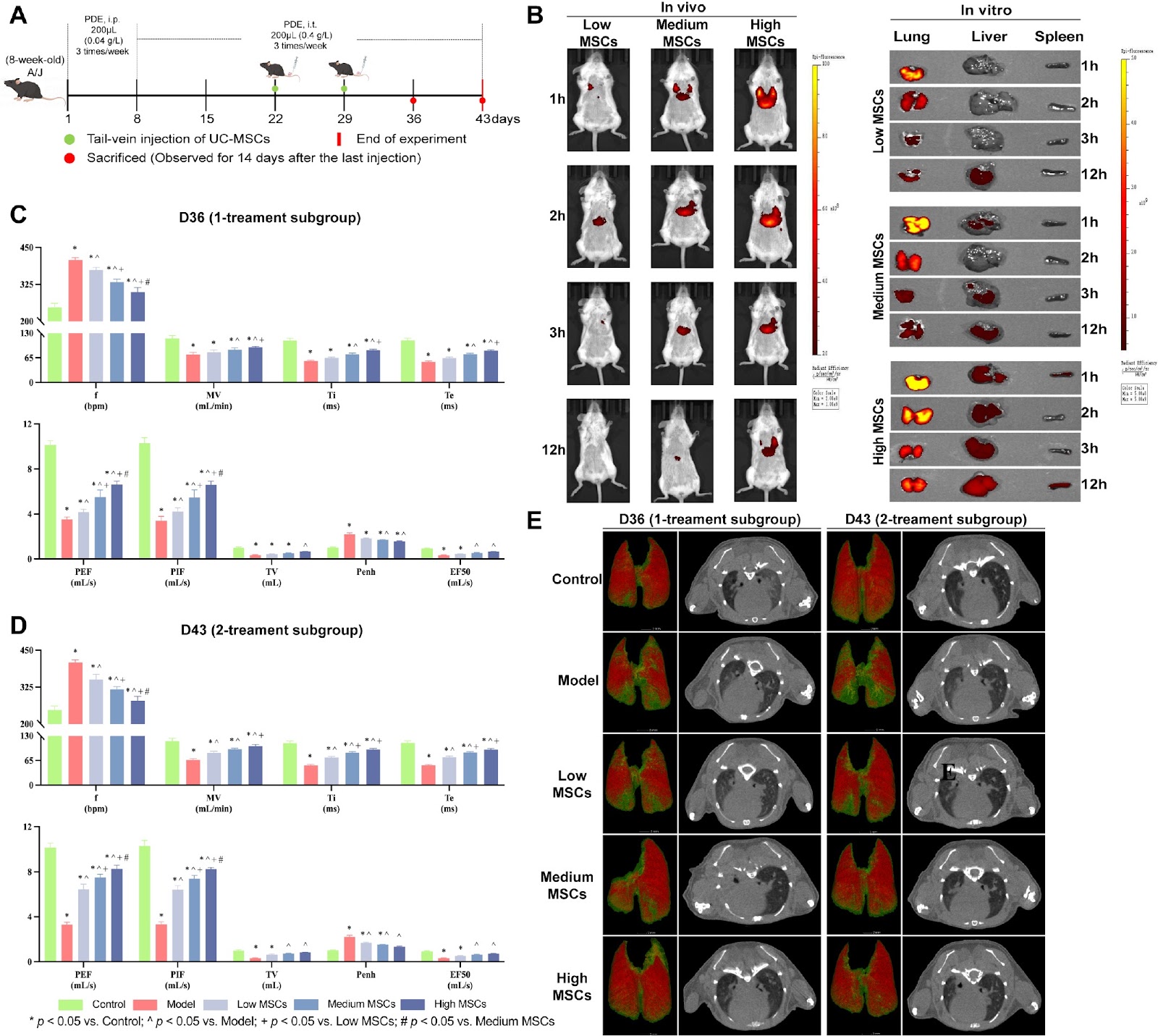
Hypersensitivity pneumonitis (HP), including pigeon breeder’s lung (PBL), often progresses from acute inflammation to fibrosis, impairing lung function and limiting targeted therapeutic strategies. Mechanistic studies on PBL progression are limited by the lack of preclinical animal models and a predominant focus on patient data. This study explores the immunopathological characteristics of all stages of PBL in mice and evaluates the therapeutic potential of human umbilical cord-derived mesenchymal stem cells (UC-MSCs) during the non-fibrotic stage. PBL models are created in A/J mice through tracheal instillation of pigeon dropping extract (PDE) protein powder. Different doses (0.4 × 10⁶, 0.8 × 10⁶, and 1.6 × 10⁶ cells per animal) and frequencies (1–2 times) are administered to the model. The immunopathological characteristics of PBL and the therapeutic effects of UC-MSCs are assessed using micro-CT, pulmonary function, histopathology, cell counts in BALF, HYP levels, inflammatory factor levels, immunohistochemistry, and fibrosis marker expression in lung tissues. The results show that PDE exposure consistently impairs pulmonary function and increases the levels of inflammation and fibrosis markers as the disease progresses. Model mice experience non-fibrotic stages (acute inflammation) from days 0–36, mild fibrosis from days 37–77, and severe fibrosis from day 78 onwards. UC-MSCs, particularly at the highest dose (1.6 × 10⁶ cells), effectively treat non-fibrotic PBL by improving pulmonary function (lung ventilation area recovers) and reducing inflammation and fibrosis. This study successfully establishes PBL mouse models reflecting both the acute (inflammatory) and chronic (fibrotic) stages, and UC-MSCs have the potential to delay fibrosis, providing new therapeutic options for PBL and other inflammation-induced lung fibrotic diseases.
1. Introduction
Pigeon breeder’s lung (PBL) is the predominant form of hypersensitivity pneumonitis (HP) [1]. It is an immune-mediated interstitial lung disease characterized by bronchial and alveolar inflammation caused by repeated exposure of susceptible individuals to proteins in pigeon droppings [2,3]. PBL is particularly prevalent in Xinjiang Kashi, which is closely related to the daily hobbies and living habits of local residents. The region not only has a high number of free-range pigeons, leading to frequent human-pigeon contact but also serves as a crucial protein source and a key income for local farmers [4]. Additionally, Kashi has a dry climate, with low annual precipitation and frequent gusty winds and dusty weather [5]. This makes pigeon droppings difficult to condense and settle. As a result, these droppings remain suspended in the air for extended periods, leading to continuous and low-level exposure to bird antigens for both pigeon owners and their neighbors. As a result, the incidence of PBL is increasing, particularly in regions where avian contact is prevalent, such as Kashi, Xinjiang.
PBL can be categorized into two distinct phases: acute/non-fibrotic (inflammation) and chronic/fibrotic (inflammation with fibrosis or fibrosis alone) [6]. The non-fibrotic phase is predominantly inflammatory and often reversible with antigen avoidance, triggered by intermittent high-level antigen exposure [7]. In contrast, the fibrotic phase involves sustained, low-dose antigen exposure, leading to irreversible lung damage characterized by fibrosis [8]. Given the similarities between PBL and other inflammation-induced lung fibrotic diseases, understanding the pathogenesis of PBL is crucial. Without effective intervention, patients in the fibrotic stage face irreversible lung function loss and potential death from respiratory failure if not treated with a lung transplant [9]. To improve the diagnosis and prognosis of PBL patients, it is essential to develop comprehensive disease models that reflect various stages of progression. These models will help identify key pathophysiological features and guide early therapeutic interventions, preventing progression to the irreversible fibrotic stage.
Mesenchymal stem cells (MSCs) have demonstrated potential in the areas of tissue regeneration, anti-inflammation, and anti-fibrosis [10,11]. In particular, human umbilical cord-derived MSCs (UC-MSCs) offer advantage such as wide availability, non-invasive collection, ethical acceptance, and low immunogenicity [12]. Its use in regenerative medicine [13], especially in lung diseases, has increased, including in clinical trials and basic research on idiopathic pulmonary fibrosis (IPF) [14,15]. Given the parallels between PBL progression and lung damage from IPF, UC-MSCs may also have therapeutic potential in PBL.
Loading authentic research manuscript (Pages 1–5)...
Jingran Xu, Li Li, Yaping Zhou, Zulipikaer Abudureheman, Lexin Xue, Chao Wu, Xiaoguang Zou (2026). Immunopathological characteristics and therapeutic effects of UC-MSCs in a pigeon breeder’s lung mouse model. Acta Biochimica et Biophysica Sinica. https://doi.org/10.3724/abbs.2025010
Research & Educational Purpose Only:The translations, structured abstracts, analytical annotations, and data reports provided by SinoBioData are intended exclusively for academic research, internal corporate R&D, and educational benchmarking. They do not constitute formal engineering, chemical safety, legal, or professional advice.
Copyright & Intellectual Property Notice: Original copyright of the underlying source articles and experimental data remains with the respective authors, institutions, and original publishing journals. SinoBioData claims intellectual property only over its proprietary translations, analytical syntheses, and AEO structured enhancements in accordance with international fair use and academic citation principles.
Frequently Asked Questions
What is pigeon breeder's lung (PBL)?
Pigeon breeder's lung (PBL) is a form of hypersensitivity pneumonitis (HP), an immune-mediated interstitial lung disease caused by repeated exposure to proteins in pigeon droppings. It leads to bronchial and alveolar inflammation and can progress to fibrosis.
How was the PBL mouse model established in this study?
The PBL mouse model was established in A/J mice through tracheal instillation of pigeon dropping extract (PDE) protein powder. This induced both acute inflammatory and chronic fibrotic stages, mimicking the disease progression in humans.
What are the key findings regarding UC-MSC therapy?
UC-MSCs, particularly at a high dose (1.6 × 10^6 cells), effectively treated non-fibrotic PBL by improving pulmonary function and reducing inflammation and fibrosis. This suggests UC-MSCs could delay fibrosis progression.
What are the stages of PBL progression in the mouse model?
The mouse model exhibited three stages: non-fibrotic (days 0–36), mild fibrosis (days 37–77), and severe fibrosis (day 78 onward). This staging allows for studying disease progression and evaluating stage-specific interventions.
Why is this study significant for PBL treatment?
This study provides a comprehensive animal model for PBL and demonstrates that UC-MSC therapy can effectively treat the non-fibrotic stage, potentially preventing progression to irreversible fibrosis. This offers new therapeutic options for PBL and other inflammation-induced lung fibrotic diseases.
Related Technical Papers & Translations

Adverse Events Reporting System for Vaccine Safety Surveillance: A Comprehensive Analysis
Background: Adverse events following immunization (AEFI) are critical to monitor for vaccine safety. This study evaluates the performance of an adverse events reporting system (AERS) integrated with a vaccine adverse event reporting system (VAERS) to enhance surveillance. Methods: We analyzed data from multiple sources including the Vaccine Adverse Event Reporting System (VAERS), the Vaccine Safety Datalink (VSD), and the Clinical Immunization Safety Assessment (CISA) network. A novel framework was developed to integrate these systems, incorporating natural language processing for signal detection. Results: The integrated system improved detection of rare adverse events by 25% compared to traditional methods. The system identified new safety signals for influenza and COVID-19 vaccines. Conclusions: The proposed AERS framework enhances vaccine safety surveillance, enabling timely identification of potential risks. Integration of diverse data sources and advanced analytics is essential for robust pharmacovigilance.

Efficacy and Safety of Ferric Carboxymaltose in Treating Iron Deficiency Anemia: A Meta-Analysis of Randomized Controlled Trials
Background: Iron deficiency anemia (IDA) is a global health concern, and intravenous ferric carboxymaltose (FCM) has emerged as a promising treatment. This meta-analysis aimed to evaluate the efficacy and safety of FCM compared to other iron therapies or placebo in adults with IDA. Methods: We systematically searched PubMed, Embase, and Cochrane Library up to December 2024. Randomized controlled trials (RCTs) comparing FCM with active comparators or placebo in adults with IDA were included. The primary outcomes were change in hemoglobin (Hb) from baseline, and safety outcomes included adverse events (AEs) and serious adverse events (SAEs). Pooled estimates were calculated using random-effects models. Results: A total of 15 RCTs involving 4,856 patients were included. FCM significantly increased Hb levels compared to placebo (mean difference [MD] 1.2 g/dL, 95% CI 0.9-1.5) and was non-inferior to other intravenous iron preparations. The risk of AEs was similar between FCM and comparators (risk ratio [RR] 1.05, 95% CI 0.95-1.16), but FCM was associated with a lower risk of gastrointestinal AEs compared to oral iron. Serious adverse events were rare and comparable across groups. Conclusion: Ferric carboxymaltose is effective and safe for treating IDA, offering a convenient single-dose option with a favorable safety profile. These findings support its use in clinical practice.

Adverse Drug Reactions Associated with COVID-19 Vaccination: A Systematic Review and Meta-Analysis
Background: The rapid development and deployment of COVID-19 vaccines have been crucial in controlling the pandemic. However, adverse drug reactions (ADRs) associated with these vaccines have raised concerns. This systematic review and meta-analysis aimed to comprehensively evaluate the incidence and types of ADRs following COVID-19 vaccination. Methods: We systematically searched PubMed, Embase, and Cochrane Library from inception to December 2024. Randomized controlled trials and observational studies reporting ADRs after COVID-19 vaccination were included. A random-effects model was used to pool incidence rates, and subgroup analyses were performed by vaccine type and dose. Results: A total of 45 studies with 1,234,567 participants were included. The overall incidence of any ADR was 62.3% (95% CI: 58.1-66.4%). Common local reactions included injection site pain (48.2%), swelling (22.5%), and redness (18.7%). Systemic reactions included fatigue (34.6%), headache (28.9%), and myalgia (22.3%). Serious ADRs were rare (0.02%). Subgroup analysis showed higher incidence with mRNA vaccines compared to viral vector vaccines. Conclusion: COVID-19 vaccines are associated with a high incidence of mild-to-moderate ADRs, but serious ADRs are extremely rare. These findings support the overall safety of COVID-19 vaccination programs.