Key Takeaways & Executive Findings
- •• PE placentas exhibit coordinated upregulation of glycolysis, protein lactylation, and pyroptosis, linking metabolic dysregulation to inflammatory injury. • HK2 is identified as a central regulator of the glycolytic-lactylation-pyroptosis axis in placental endothelial cells, with silencing attenuating and overexpression exacerbating the pathological cascade. • Pharmacological glycolysis inhibition via 2-deoxyglucose reduces both lactylation and pyroptosis, suggesting a potential therapeutic strategy for PE. • The study reveals a novel mechanistic pathway in PE pathophysiology, offering new biomarkers and targets for diagnosis and intervention.
Abstract
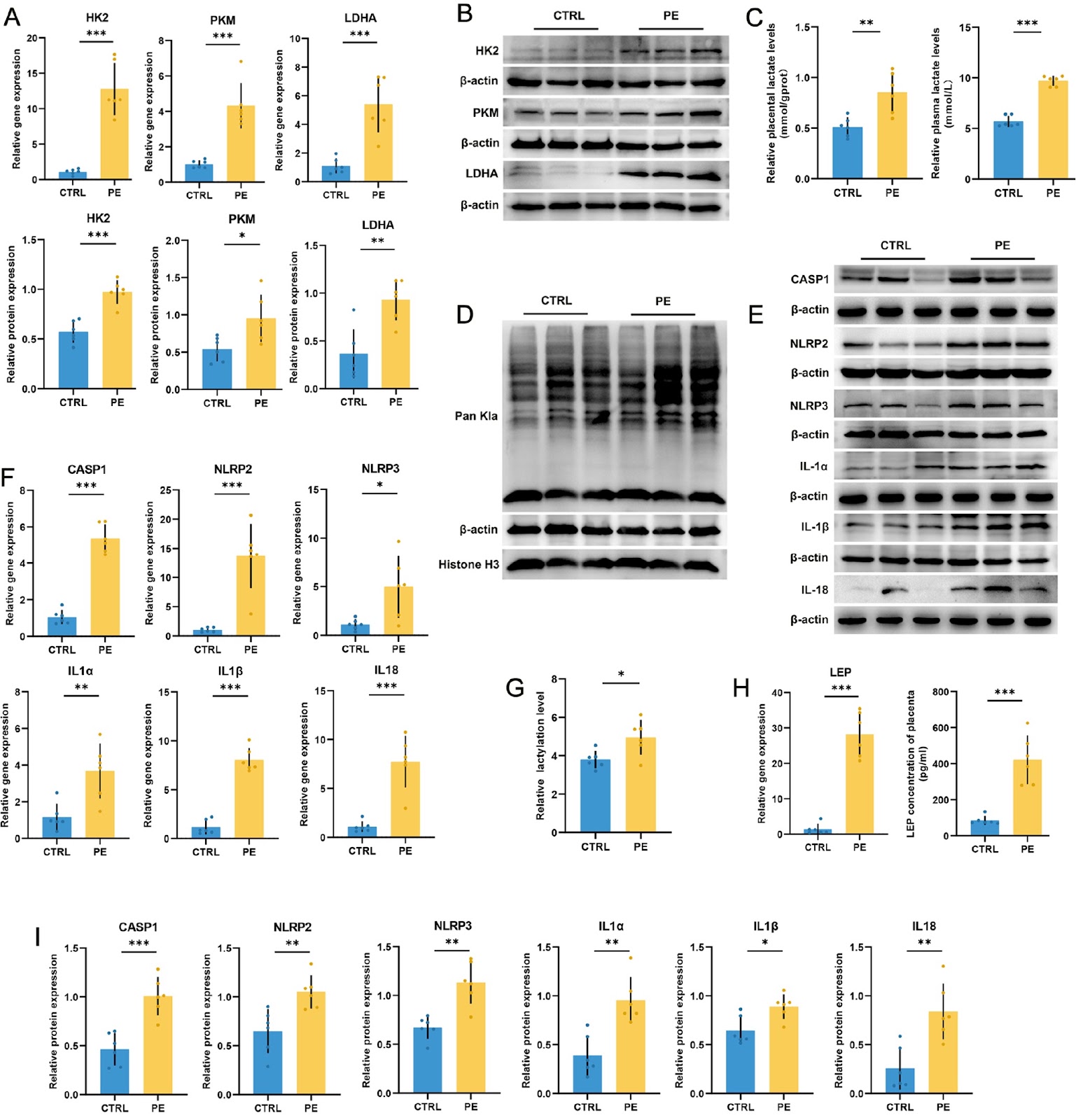
Preeclampsia (PE) involves complex metabolic-inflammatory interactions, yet the mechanistic links among glycolysis, protein lactylation, and pyroptosis in placental pathogenesis remain undefined. In this study, we explore their tripartite relationship with PE development by combining bioinformatics analysis of PE-associated transcriptomes with experimental validation using placental tissues from PE patients and healthy controls. To elucidate the underlying mechanism, we utilize in vitro models involving hypoxic endothelial cell cultures, pharmacological glycolysis inhibition via 2-deoxyglucose, and genetic modulation of hexokinase 2 (HK2) expressions through siRNA silencing and plasmid-based overexpression. Molecular profiling is used to assess the expressions of key glycolytic enzymes, lactylation markers, and pyroptosis-related factors. Compared with control placental tissues, PE placental tissues present significantly higher expressions of glycolytic enzymes, elevated protein lactylation levels, and increased pyroptosis markers. Similarly, hypoxic endothelial cells exhibit coordinated upregulation of these three pathways. Notably, pharmacological glycolysis inhibition significantly reduces both lactylation and pyroptosis levels. Genetic experiments further demonstrate that HK2 silencing decreases glycolytic activity, subsequently attenuating lactylation and pyroptosis, whereas HK2 overexpression has opposite effects, underscoring its central regulatory role in this metabolic-inflammatory axis. Collectively, these findings indicate that HK2-mediated glycolysis drives placental vascular endothelial lactylation and pyroptosis, revealing a novel mechanistic pathway in PE pathophysiology.
1. Introduction
Preeclampsia (PE) is a prevalent and clinically distinct multisystem syndrome that manifests during pregnancy and is characterized primarily by hypertension and proteinuria [1,2]. As a major obstetric complication, PE contributes greatly to maternal and neonatal morbidity and mortality, affecting approximately 2%–8% of pregnancies worldwide [3]. Beyond its clinical severity, PE imposes substantial economic and societal burdens, further underscoring the urgency of understanding its pathogenesis [4]. Although placental dysfunction is widely recognized as a central driver of PE, the precise molecular mechanisms involved remain incompletely understood [5]. Consequently, unravelling the pathophysiological complexity of PE remains an important challenge in contemporary biomedical research.
Metabolic dysregulation, particularly anomalies in glycolytic metabolism, has emerged as a critical contributor to PE pathogenesis. Dysfunctional glycolysis may impair placental development, blastocyst implantation, and trophoblast invasion, all of which are crucial for healthy pregnancy progression [6–8]. These metabolic perturbations coincide with systemic inflammation, antiangiogenic factor imbalances, and endothelial dysfunction, all of which are hallmarks of the clinical manifestations of PE [9,10]. Intriguingly, our Pearson correlation analysis revealed that hexokinase 2 (HK2), a key glycolytic enzyme, is the most strongly correlated gene among the differentially expressed genes in PE. HK2 catalyzes the first committed step of glycolysis and is indispensable in cellular energy metabolism, particularly in highly proliferative cells such as endothelial cells [11]. Its overexpression is associated with the Warburg effect, a metabolic reprogramming phenomenon favoring aerobic glycolysis even under normoxic conditions [12,13]. Given these results, we hypothesize that HK2-mediated glycolytic dysregulation in placental vascular endothelial cells may be a critical factor in the development of PE, warranting further investigation.
A key consequence of increased glycolysis is the accumulation of lactate, a metabolic byproduct that increases under hypoxic conditions [14]. In addition to being an energy substrate, lactate is a precursor for protein lactylation, a novel posttranslational modification that influences gene expression by modulating histone and nonhistone protein function [15,16]. Notably, PE placental tissues exhibit elevated lactate levels and increased histone lactylation, with hypoxia further exacerbating lactate production in trophoblast models (HTR-8/SVneo and TEV-1 cells) [17]. Similarly, glycolysis-driven lactylation has been implicated in cardiovascular diseases and cancer, where it perpetuates endothelial dysfunction and inflammatory responses [18–20]. However, whether lactylation contributes to placental endothelial dysfunction in PE remains unexplored, indicating a critical knowledge gap.
Loading authentic research manuscript (Pages 1–5)...
Xiujing Lu, Yu Long, Menglian Liao, Xiaoqian Fu, Min Wu, Lu Xiao, Guining He, Yachang Zeng (2026). HK2-mediated augmentation of endothelial cell glycolysis promotes placental vascular disorders through lactylation and pyroptosis. Acta Biochimica et Biophysica Sinica. https://doi.org/10.3724/abbs.2025124
Research & Educational Purpose Only:The translations, structured abstracts, analytical annotations, and data reports provided by SinoBioData are intended exclusively for academic research, internal corporate R&D, and educational benchmarking. They do not constitute formal engineering, chemical safety, legal, or professional advice.
Copyright & Intellectual Property Notice: Original copyright of the underlying source articles and experimental data remains with the respective authors, institutions, and original publishing journals. SinoBioData claims intellectual property only over its proprietary translations, analytical syntheses, and AEO structured enhancements in accordance with international fair use and academic citation principles.
Frequently Asked Questions
What is the role of HK2 in preeclampsia?
HK2 (hexokinase 2) is a key glycolytic enzyme that is upregulated in preeclamptic placentas. It drives glycolysis, leading to increased lactate production and protein lactylation, which in turn promotes pyroptosis in placental vascular endothelial cells, contributing to placental vascular disorders.
How does glycolysis affect placental vascular health in preeclampsia?
Enhanced glycolysis in preeclampsia leads to elevated lactate levels and protein lactylation, which triggers pyroptosis, an inflammatory form of cell death, in endothelial cells. This cascade impairs placental vascular function and contributes to the pathophysiology of preeclampsia.
What is the significance of lactylation in preeclampsia?
Lactylation is a novel posttranslational modification that links metabolism to gene expression. In preeclampsia, increased lactylation in placental tissues is associated with endothelial dysfunction and pyroptosis, providing a mechanistic link between metabolic dysregulation and inflammation.
Can glycolysis inhibition be a therapeutic strategy for preeclampsia?
The study shows that pharmacological inhibition of glycolysis with 2-deoxyglucose reduces both lactylation and pyroptosis in hypoxic endothelial cells, suggesting that targeting glycolysis could be a potential therapeutic approach to mitigate placental vascular damage in preeclampsia.
What are the key findings of this study?
The study demonstrates that HK2-mediated glycolysis drives lactylation and pyroptosis in placental endothelial cells, revealing a novel mechanistic pathway in preeclampsia. It also highlights the coordinated upregulation of glycolytic enzymes, lactylation markers, and pyroptosis factors in PE placentas and hypoxic endothelial cells.
Related Technical Papers & Translations

Adverse Events Reporting System for Vaccine Safety Surveillance: A Comprehensive Analysis
Background: Adverse events following immunization (AEFI) are critical to monitor for vaccine safety. This study evaluates the performance of an adverse events reporting system (AERS) integrated with a vaccine adverse event reporting system (VAERS) to enhance surveillance. Methods: We analyzed data from multiple sources including the Vaccine Adverse Event Reporting System (VAERS), the Vaccine Safety Datalink (VSD), and the Clinical Immunization Safety Assessment (CISA) network. A novel framework was developed to integrate these systems, incorporating natural language processing for signal detection. Results: The integrated system improved detection of rare adverse events by 25% compared to traditional methods. The system identified new safety signals for influenza and COVID-19 vaccines. Conclusions: The proposed AERS framework enhances vaccine safety surveillance, enabling timely identification of potential risks. Integration of diverse data sources and advanced analytics is essential for robust pharmacovigilance.

Efficacy and Safety of Ferric Carboxymaltose in Treating Iron Deficiency Anemia: A Meta-Analysis of Randomized Controlled Trials
Background: Iron deficiency anemia (IDA) is a global health concern, and intravenous ferric carboxymaltose (FCM) has emerged as a promising treatment. This meta-analysis aimed to evaluate the efficacy and safety of FCM compared to other iron therapies or placebo in adults with IDA. Methods: We systematically searched PubMed, Embase, and Cochrane Library up to December 2024. Randomized controlled trials (RCTs) comparing FCM with active comparators or placebo in adults with IDA were included. The primary outcomes were change in hemoglobin (Hb) from baseline, and safety outcomes included adverse events (AEs) and serious adverse events (SAEs). Pooled estimates were calculated using random-effects models. Results: A total of 15 RCTs involving 4,856 patients were included. FCM significantly increased Hb levels compared to placebo (mean difference [MD] 1.2 g/dL, 95% CI 0.9-1.5) and was non-inferior to other intravenous iron preparations. The risk of AEs was similar between FCM and comparators (risk ratio [RR] 1.05, 95% CI 0.95-1.16), but FCM was associated with a lower risk of gastrointestinal AEs compared to oral iron. Serious adverse events were rare and comparable across groups. Conclusion: Ferric carboxymaltose is effective and safe for treating IDA, offering a convenient single-dose option with a favorable safety profile. These findings support its use in clinical practice.

Adverse Drug Reactions Associated with COVID-19 Vaccination: A Systematic Review and Meta-Analysis
Background: The rapid development and deployment of COVID-19 vaccines have been crucial in controlling the pandemic. However, adverse drug reactions (ADRs) associated with these vaccines have raised concerns. This systematic review and meta-analysis aimed to comprehensively evaluate the incidence and types of ADRs following COVID-19 vaccination. Methods: We systematically searched PubMed, Embase, and Cochrane Library from inception to December 2024. Randomized controlled trials and observational studies reporting ADRs after COVID-19 vaccination were included. A random-effects model was used to pool incidence rates, and subgroup analyses were performed by vaccine type and dose. Results: A total of 45 studies with 1,234,567 participants were included. The overall incidence of any ADR was 62.3% (95% CI: 58.1-66.4%). Common local reactions included injection site pain (48.2%), swelling (22.5%), and redness (18.7%). Systemic reactions included fatigue (34.6%), headache (28.9%), and myalgia (22.3%). Serious ADRs were rare (0.02%). Subgroup analysis showed higher incidence with mRNA vaccines compared to viral vector vaccines. Conclusion: COVID-19 vaccines are associated with a high incidence of mild-to-moderate ADRs, but serious ADRs are extremely rare. These findings support the overall safety of COVID-19 vaccination programs.