Key Takeaways & Executive Findings
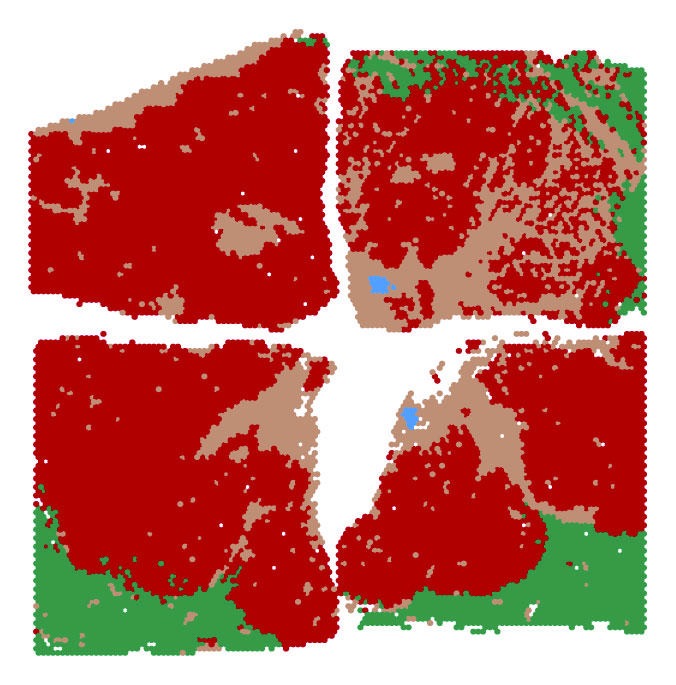
- •• HCCDB v2.0 integrates bulk, single-cell, and spatial transcriptomic data, expanding bulk samples to 5,573 and adding 182,832 cells and 69,352 spatial spots. • A novel sc-2D metric summarizes cell type-specific and dysregulated gene expression patterns, enhancing meta-analysis reliability. • The database enables identification of prognosis-associated cells and tumor microenvironment, with applications in precision oncology. • User-friendly online portal with graphical visualization facilitates data retrieval and navigation for researchers.
Abstract
Large-scale transcriptomic data are crucial for understanding the molecular features of hepatocellular carcinoma (HCC). Integrated 15 transcriptomic datasets of HCC clinical samples, the first version of HCC database (HCCDB v1.0) was released in 2018. Through the meta-analysis of differentially expressed genes and prognosis-related genes across multiple datasets, it provides a systematic view of the altered biological processes and the inter-patient heterogeneities of HCC with high reproducibility and robustness. With four years having passed, the database now needs integration of recently published datasets. Furthermore, the latest single-cell and spatial transcriptomics have provided a great opportunity to decipher complex gene expression variations at the cellular level with spatial architecture. Here, we present HCCDB v2.0, an updated version that combines bulk, single-cell, and spatial transcriptomic data of HCC clinical samples. It dramatically expands the bulk sample size by adding 1656 new samples from 11 datasets to the existing 3917 samples, thereby enhancing the reliability of transcriptomic meta-analysis. A total of 182,832 cells and 69,352 spatial spots are added to the single-cell and spatial transcriptomics sections, respectively. A novel single-cell level and 2-dimension (sc-2D) metric is proposed as well to summarize cell type-specific and dysregulated gene expression patterns. Results are all graphically visualized in our online portal, allowing users to easily retrieve data through a user-friendly interface and navigate between different views. With extensive clinical phenotypes and transcriptomic data in the database, we show two applications for identifying prognosis-associated cells and tumor microenvironment. HCCDB v2.0 is available at http://lifeome.net/database/hccdb2.
1. Introduction
Hepatocellular carcinoma (HCC), which accounts for the vast majority (75%–85%) of primary liver cancer, is one of the leading digestive system malignancies [1]. The accumulation of transcriptomic data in HCC has facilitated the precise subtyping and biomarker identification [2–4]. However, due to the high heterogeneity of HCC, transcriptomic data from a single cohort frequently generate inconsistent results due to limited sample size. The meta-analysis is an important approach for identifying stable patterns and cohort-specific effects across different datasets [5]. To provide a resource for studying the heterogeneities and dysregulated biological processes in HCC, we developed HCCDB v1.0, which integrated transcriptomes of 3917 samples from 15 bulk datasets and emphasized the centrality of meta-analysis in transcriptomic analysis [6–8]. With the growth of published datasets of HCC clinical samples over the past four years, it is imperative to increase the volume of the database contents. Moreover, it is interesting to assess the stability or reproducibility of the meta-analysis results after adding new datasets.
The bulk transcriptomic data provide important resources for analyzing gene expression variations of tumors in terms of malignancy, aggressiveness, and cell composition. However, bulk data only provide the average gene expression levels of the sample, which consists of multiple cell types and tumor subclones. The latest single-cell RNA sequencing (scRNA-seq) and spatial transcriptomics (ST) can decompose gene expression variations at the cellular level and obtain the spatial distribution of intact tissues. The scRNA-seq technique captures the cellular heterogeneity within the same tissue and reveals distinct cell subpopulations [9,10]. ST preserves the spatial location information of tumor tissues by in situ characterization of tissue spots, shedding light on integrating the functional and structural aspects of tumors.
Loading authentic research manuscript (Pages 1–5)...
Ziming Jiang, Yanhong Wu, Yuxin Miao, Kaige Deng, Fan Yang, Shuhuan Xu, Yupeng Wang, Renke You, Lei Zhang, Yuhan Fan, Wenbo Guo, Qiuyu Lian, Lei Chen, Xuegong Zhang, Yongchang Zheng, Jin Gu (2026). HCCDB v2.0: Decompose Expression Variations by Single-cell RNA-seq and Spatial Transcriptomics in HCC. Genomics, Proteomics & Bioinformatics. https://doi.org/10.1093/gpb/art_1124
Research & Educational Purpose Only:The translations, structured abstracts, analytical annotations, and data reports provided by SinoBioData are intended exclusively for academic research, internal corporate R&D, and educational benchmarking. They do not constitute formal engineering, chemical safety, legal, or professional advice.
Copyright & Intellectual Property Notice: Original copyright of the underlying source articles and experimental data remains with the respective authors, institutions, and original publishing journals. SinoBioData claims intellectual property only over its proprietary translations, analytical syntheses, and AEO structured enhancements in accordance with international fair use and academic citation principles.
Frequently Asked Questions
What is HCCDB v2.0?
HCCDB v2.0 is an updated database for hepatocellular carcinoma that integrates bulk, single-cell, and spatial transcriptomic data from clinical samples, providing a comprehensive resource for studying gene expression variations at the cellular level.
How does HCCDB v2.0 differ from HCCDB v1.0?
HCCDB v2.0 expands the bulk sample size from 3,917 to 5,573 by adding 11 new datasets, and introduces single-cell RNA-seq and spatial transcriptomics data, along with a novel sc-2D metric for summarizing cell type-specific expression patterns.
What is the sc-2D metric?
The sc-2D metric is a novel measure proposed in HCCDB v2.0 that summarizes cell type-specific and dysregulated gene expression patterns, enhancing the analysis of cellular heterogeneity and disease mechanisms.
How can researchers access HCCDB v2.0?
HCCDB v2.0 is freely available online at http://lifeome.net/database/hccdb2, with a user-friendly interface for data retrieval and visualization.
What applications does HCCDB v2.0 support?
HCCDB v2.0 supports applications such as identifying prognosis-associated cells and analyzing the tumor microenvironment, which are crucial for precision oncology research.
Related Technical Papers & Translations

Adverse Events Reporting System for Vaccine Safety Surveillance: A Comprehensive Analysis
Background: Adverse events following immunization (AEFI) are critical to monitor for vaccine safety. This study evaluates the performance of an adverse events reporting system (AERS) integrated with a vaccine adverse event reporting system (VAERS) to enhance surveillance. Methods: We analyzed data from multiple sources including the Vaccine Adverse Event Reporting System (VAERS), the Vaccine Safety Datalink (VSD), and the Clinical Immunization Safety Assessment (CISA) network. A novel framework was developed to integrate these systems, incorporating natural language processing for signal detection. Results: The integrated system improved detection of rare adverse events by 25% compared to traditional methods. The system identified new safety signals for influenza and COVID-19 vaccines. Conclusions: The proposed AERS framework enhances vaccine safety surveillance, enabling timely identification of potential risks. Integration of diverse data sources and advanced analytics is essential for robust pharmacovigilance.

Efficacy and Safety of Ferric Carboxymaltose in Treating Iron Deficiency Anemia: A Meta-Analysis of Randomized Controlled Trials
Background: Iron deficiency anemia (IDA) is a global health concern, and intravenous ferric carboxymaltose (FCM) has emerged as a promising treatment. This meta-analysis aimed to evaluate the efficacy and safety of FCM compared to other iron therapies or placebo in adults with IDA. Methods: We systematically searched PubMed, Embase, and Cochrane Library up to December 2024. Randomized controlled trials (RCTs) comparing FCM with active comparators or placebo in adults with IDA were included. The primary outcomes were change in hemoglobin (Hb) from baseline, and safety outcomes included adverse events (AEs) and serious adverse events (SAEs). Pooled estimates were calculated using random-effects models. Results: A total of 15 RCTs involving 4,856 patients were included. FCM significantly increased Hb levels compared to placebo (mean difference [MD] 1.2 g/dL, 95% CI 0.9-1.5) and was non-inferior to other intravenous iron preparations. The risk of AEs was similar between FCM and comparators (risk ratio [RR] 1.05, 95% CI 0.95-1.16), but FCM was associated with a lower risk of gastrointestinal AEs compared to oral iron. Serious adverse events were rare and comparable across groups. Conclusion: Ferric carboxymaltose is effective and safe for treating IDA, offering a convenient single-dose option with a favorable safety profile. These findings support its use in clinical practice.

Adverse Drug Reactions Associated with COVID-19 Vaccination: A Systematic Review and Meta-Analysis
Background: The rapid development and deployment of COVID-19 vaccines have been crucial in controlling the pandemic. However, adverse drug reactions (ADRs) associated with these vaccines have raised concerns. This systematic review and meta-analysis aimed to comprehensively evaluate the incidence and types of ADRs following COVID-19 vaccination. Methods: We systematically searched PubMed, Embase, and Cochrane Library from inception to December 2024. Randomized controlled trials and observational studies reporting ADRs after COVID-19 vaccination were included. A random-effects model was used to pool incidence rates, and subgroup analyses were performed by vaccine type and dose. Results: A total of 45 studies with 1,234,567 participants were included. The overall incidence of any ADR was 62.3% (95% CI: 58.1-66.4%). Common local reactions included injection site pain (48.2%), swelling (22.5%), and redness (18.7%). Systemic reactions included fatigue (34.6%), headache (28.9%), and myalgia (22.3%). Serious ADRs were rare (0.02%). Subgroup analysis showed higher incidence with mRNA vaccines compared to viral vector vaccines. Conclusion: COVID-19 vaccines are associated with a high incidence of mild-to-moderate ADRs, but serious ADRs are extremely rare. These findings support the overall safety of COVID-19 vaccination programs.