Key Takeaways & Executive Findings
- •• Gut microbiota-derived exosome-like nanoparticles mediate gut-brain communication in POCD after CRC surgery. • These nanoparticles induce autophagy-dependent ferroptosis in hippocampal neurons, linking microbial dysbiosis to cognitive decline. • Key ferroptosis markers (ATG5, COX2, GPX4, FTH1) are altered, offering potential biomarkers for POCD. • Findings suggest novel therapeutic targets for CRC-associated POCD via modulation of gut microbiota or exosome signaling.
Abstract
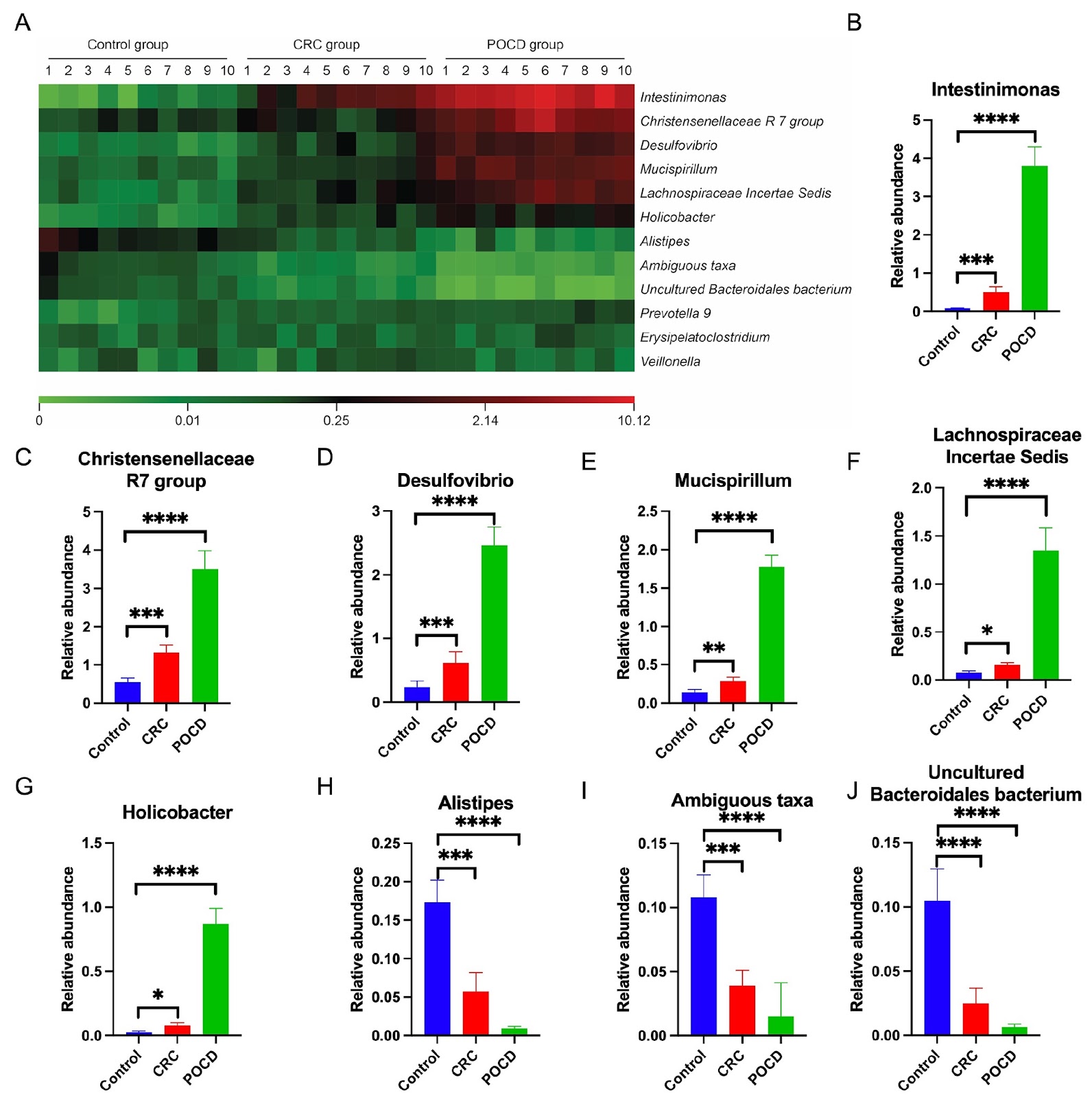
Postoperative cognitive dysfunction (POCD) is a serious complication in patients undergoing colorectal cancer (CRC) surgery. It is characterized by significant impairments in memory, information processing and attention, and may also result in mood and personality changes, thereby increasing the risk of postoperative mortality. Currently, there are no effective interventions available, highlighting the need for further investigation into its pathogenesis. While the current literature has identified an association between gut microbiota dysregulation and cognitive deficits, the precise mechanisms involved remain insufficiently understood. This study hypothesizes that exosome-like (Exos-like) nanoparticles derived from the gut microbiota contribute to POCD by modulating autophagy-dependent ferroptosis in hippocampal neurons. In a rat model of CRC, significant alterations in the gut microbiota composition, including reduced microbial diversity and changes in the abundance of key taxa, are observed. Exosomes derived from these microbiota enhance neuronal uptake and trigger markers of ferroptosis, as evidenced by increased expressions of ATG5 and COX2, along with decreased levels of GPX4 and FTH1. These findings establish a mechanistic link between microbial dysbiosis, ferroptosis, and cognitive decline in POCD, providing new insights into potential therapeutic targets for CRC-associated POCD.
1. Introduction
Colorectal cancer (CRC) ranks as the third most prevalent cancer and the second leading cause of cancer-related mortality worldwide [1]. With the aging population and changes in lifestyle, the incidence and mortality rates of CRC in China continue to rise. CRC has become a significant malignant tumor affecting public health in China, imposing substantial medical and economic burdens [2]. According to the latest data released by the National Cancer Center of China, CRC is the fourth most prevalent malignant tumor, ranks third in incidence, and is the fifth leading cause of mortality among major malignancies in China [3]. A significant proportion of CRC patients are diagnosed at intermediate or advanced stages. However, with advancements in adjuvant chemoradiotherapy and immunotherapy, more CRC patients are receiving access to surgical treatments [4].
With advancements in anesthesia technology, the mortality rate and incidence of serious adverse events associated with anesthesia are progressively declining. However, numerous patients continue to experience varying degrees of complications [5]. Postoperative cognitive dysfunction (POCD) is a significant complication following surgical treatment for CRC. It not only results in substantial impairments in memory, information processing ability and attention, but also may lead to alterations in mood and personality [6]. The one-year mortality rate for patients experiencing POCD within three months following surgery is significantly higher than that for those without POCD, with the difference exceeding 2 folds [7]. The development of POCD is attributed to a multitude of predisposing factors, including patient-specific characteristics and aspects related to surgical anesthesia. The current understanding suggests that the pathogenesis of POCD primarily involves central neuroinflammation, oxidative stress, cholinergic system disorders, and amyloid deposition [8,9]. These pathological processes can result in increased neuronal apoptosis and reduced neuronal regeneration. While previous studies have explored neuroinflammation and oxidative stress in POCD patients, the role of exosome-mediated gut-brain communication remains underexplored. These factors may contribute to increased neuronal apoptosis, diminished regeneration, reduced synaptic plasticity, and other alterations in neurological function [6]; however, the specific pathological mechanisms remain inadequately understood. Existing interventions for POCD target neuroinflammation or oxidative stress. Identifying upstream regulators, such as exosomes, may offer more precise therapeutic targets.
Loading authentic research manuscript (Pages 1–5)...
Ying Gao, Biao Xi, Yang Zhang, Mei Mei, Ming Zhai, Yunzhi Ling, Weiwei Chu (2026). Gut-brain axis and exosome-mediated communication in postoperative cognitive dysfunction associated with colorectal cancer. Acta Biochimica et Biophysica Sinica. https://doi.org/10.3724/abbs.2025151
Research & Educational Purpose Only:The translations, structured abstracts, analytical annotations, and data reports provided by SinoBioData are intended exclusively for academic research, internal corporate R&D, and educational benchmarking. They do not constitute formal engineering, chemical safety, legal, or professional advice.
Copyright & Intellectual Property Notice: Original copyright of the underlying source articles and experimental data remains with the respective authors, institutions, and original publishing journals. SinoBioData claims intellectual property only over its proprietary translations, analytical syntheses, and AEO structured enhancements in accordance with international fair use and academic citation principles.
Frequently Asked Questions
What is the main finding of this study?
The study reveals that gut microbiota-derived exosome-like nanoparticles contribute to postoperative cognitive dysfunction (POCD) in colorectal cancer (CRC) by inducing autophagy-dependent ferroptosis in hippocampal neurons, establishing a mechanistic link between microbial dysbiosis and cognitive decline.
How does the gut microbiota affect the brain in POCD?
The gut microbiota releases exosome-like nanoparticles that can cross the gut-brain axis, are taken up by hippocampal neurons, and trigger ferroptosis, a form of regulated cell death, leading to cognitive dysfunction.
What are the potential therapeutic targets for POCD?
The study suggests that targeting gut microbiota-derived exosomes or modulating autophagy-dependent ferroptosis pathways (e.g., ATG5, COX2, GPX4, FTH1) could offer new therapeutic strategies for CRC-associated POCD.
What is the significance of this research?
This research provides novel insights into the gut-brain axis in POCD, highlighting exosome-mediated communication as a potential upstream regulator, which may lead to more precise interventions than current treatments targeting neuroinflammation or oxidative stress.
What model was used in this study?
The study used a rat model of colorectal cancer with postoperative cognitive dysfunction, from which exosome-like nanoparticles were extracted from the intestinal microbiota and characterized.
Related Technical Papers & Translations

Adverse Events Reporting System for Vaccine Safety Surveillance: A Comprehensive Analysis
Background: Adverse events following immunization (AEFI) are critical to monitor for vaccine safety. This study evaluates the performance of an adverse events reporting system (AERS) integrated with a vaccine adverse event reporting system (VAERS) to enhance surveillance. Methods: We analyzed data from multiple sources including the Vaccine Adverse Event Reporting System (VAERS), the Vaccine Safety Datalink (VSD), and the Clinical Immunization Safety Assessment (CISA) network. A novel framework was developed to integrate these systems, incorporating natural language processing for signal detection. Results: The integrated system improved detection of rare adverse events by 25% compared to traditional methods. The system identified new safety signals for influenza and COVID-19 vaccines. Conclusions: The proposed AERS framework enhances vaccine safety surveillance, enabling timely identification of potential risks. Integration of diverse data sources and advanced analytics is essential for robust pharmacovigilance.

Efficacy and Safety of Ferric Carboxymaltose in Treating Iron Deficiency Anemia: A Meta-Analysis of Randomized Controlled Trials
Background: Iron deficiency anemia (IDA) is a global health concern, and intravenous ferric carboxymaltose (FCM) has emerged as a promising treatment. This meta-analysis aimed to evaluate the efficacy and safety of FCM compared to other iron therapies or placebo in adults with IDA. Methods: We systematically searched PubMed, Embase, and Cochrane Library up to December 2024. Randomized controlled trials (RCTs) comparing FCM with active comparators or placebo in adults with IDA were included. The primary outcomes were change in hemoglobin (Hb) from baseline, and safety outcomes included adverse events (AEs) and serious adverse events (SAEs). Pooled estimates were calculated using random-effects models. Results: A total of 15 RCTs involving 4,856 patients were included. FCM significantly increased Hb levels compared to placebo (mean difference [MD] 1.2 g/dL, 95% CI 0.9-1.5) and was non-inferior to other intravenous iron preparations. The risk of AEs was similar between FCM and comparators (risk ratio [RR] 1.05, 95% CI 0.95-1.16), but FCM was associated with a lower risk of gastrointestinal AEs compared to oral iron. Serious adverse events were rare and comparable across groups. Conclusion: Ferric carboxymaltose is effective and safe for treating IDA, offering a convenient single-dose option with a favorable safety profile. These findings support its use in clinical practice.

Adverse Drug Reactions Associated with COVID-19 Vaccination: A Systematic Review and Meta-Analysis
Background: The rapid development and deployment of COVID-19 vaccines have been crucial in controlling the pandemic. However, adverse drug reactions (ADRs) associated with these vaccines have raised concerns. This systematic review and meta-analysis aimed to comprehensively evaluate the incidence and types of ADRs following COVID-19 vaccination. Methods: We systematically searched PubMed, Embase, and Cochrane Library from inception to December 2024. Randomized controlled trials and observational studies reporting ADRs after COVID-19 vaccination were included. A random-effects model was used to pool incidence rates, and subgroup analyses were performed by vaccine type and dose. Results: A total of 45 studies with 1,234,567 participants were included. The overall incidence of any ADR was 62.3% (95% CI: 58.1-66.4%). Common local reactions included injection site pain (48.2%), swelling (22.5%), and redness (18.7%). Systemic reactions included fatigue (34.6%), headache (28.9%), and myalgia (22.3%). Serious ADRs were rare (0.02%). Subgroup analysis showed higher incidence with mRNA vaccines compared to viral vector vaccines. Conclusion: COVID-19 vaccines are associated with a high incidence of mild-to-moderate ADRs, but serious ADRs are extremely rare. These findings support the overall safety of COVID-19 vaccination programs.