Key Takeaways & Executive Findings
- •• Elevated glycolysis activity is associated with poor survival in lethal prostate cancer. • A six-gene glycolysis-based prognostic score (GLY score) effectively stratifies patient risk. • Enzalutamide-resistant prostate cancer cells exhibit heightened glycolysis, and 2-DG inhibition restores drug sensitivity. • CLN6 knockdown reduces glycolytic activity and cell proliferation, highlighting its potential as a therapeutic target.
Abstract
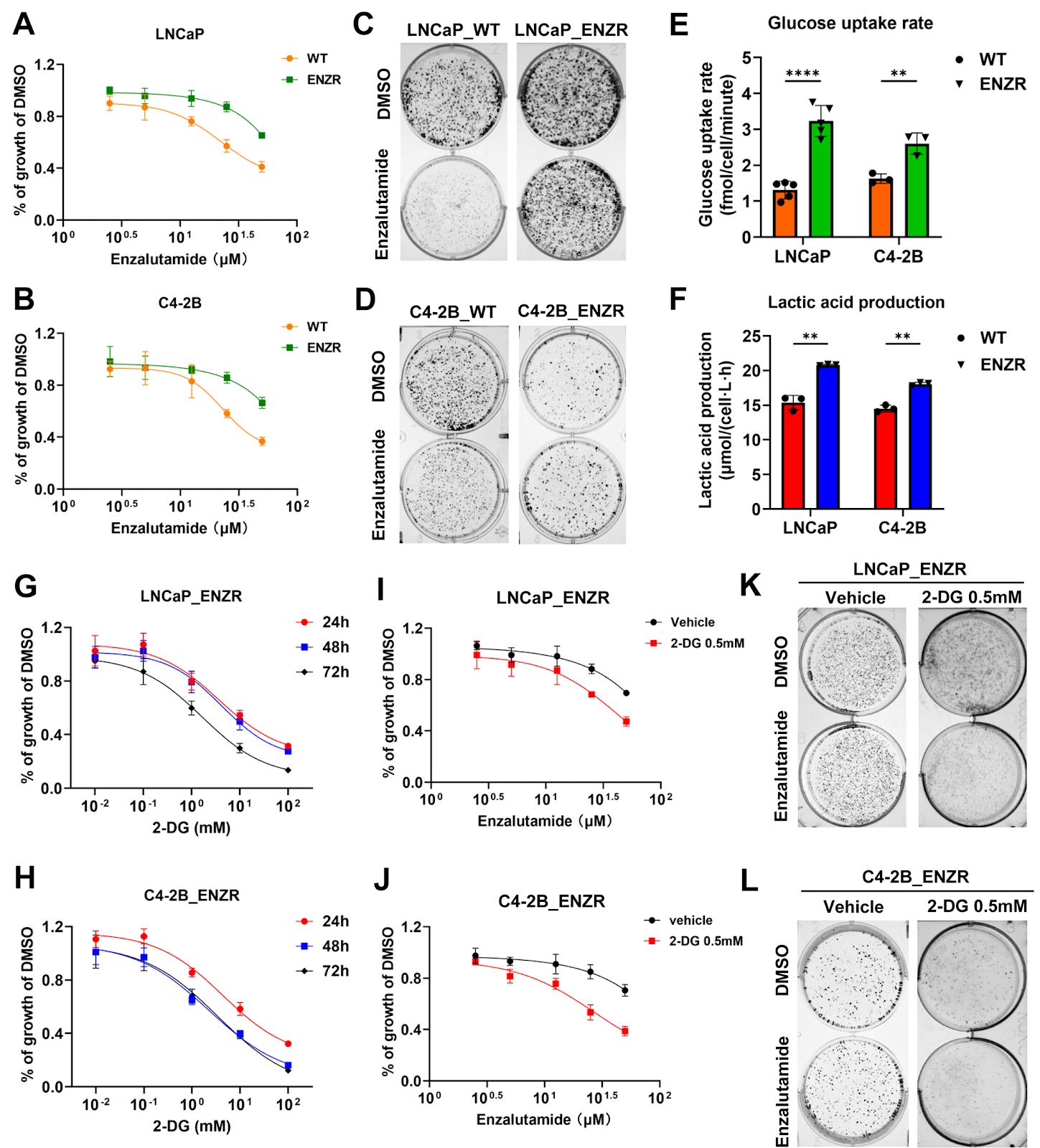
Lethal prostate cancer is marked by tumor heterogeneity and resistance to androgen receptor signaling inhibitors (ARSIs). In this study, we identify glycolysis as a driver of disease progression and therapy resistance. Using single-sample gene set enrichment analysis (ssGSEA) on the SU2C cohort, we demonstrate that elevated glycolysis activity is associated with poor progression-free and overall survival. The glycolysis-based prognostic score (GLY score) is derived from the HALLMARK_GLYCOLYSIS gene set, which includes CLN6, SDHC, B4GALT2, RPE, NANP, and KIF20A, via LASSO-Cox regression. The GLY score effectively stratifies risk in the SU2C and WDCT cohorts, with higher scores predicting worse outcomes and increased SYNE1 mutation frequency. Pan-cancer analysis across TCGA datasets confirms its prognostic value. In vitro, enzalutamide-resistant prostate cancer cell lines exhibit heightened glycolysis, and 2-DG inhibition reverses this effect, restoring drug sensitivity. CLN6 knockdown reduces glycolytic activity and cell proliferation. The GLY score offers robust prognostic value, and CLN6 represents a promising therapeutic target for precision medicine in lethal prostate cancer.
1. Introduction
Prostate cancer ranks as the second most prevalent malignancy among men globally, contributing to over 10% of cancer-related mortality and standing as the fifth leading cause of cancer deaths worldwide [1]. In its localized stage, prostate cancer typically exhibits indolent growth, with patients often achieving favorable outcomes through surgical resection or radiotherapy. Over the recent decades, advancements in diagnostic techniques and therapeutic strategies have significantly enhanced the management of lethal prostate cancer, particularly through androgen deprivation therapy (ADT) and AR signaling inhibitors (ARSIs), including abiraterone, enzalutamide, apalutamide, and darolutamide, which have conferred substantial survival benefits [2,3].
Nevertheless, to further optimize patient prognosis, a deeper understanding of the complex interplay between molecular drivers and dysregulatory mechanisms that propel lethal prostate cancer progression is essential. The marked heterogeneity of lethal prostate cancer, coupled with the diverse clinical presentations observed across patients, poses challenges to such investigations. However, by focusing on prevalent genetic mutations and regulatory pathways, research findings are more likely to translate effectively into clinical practice, offering broader applicability and impact [4]. Metabolic reprogramming is a hallmark of tumor heterogeneity and therapy resistance, with glycolysis playing a pivotal role [5,6].
Loading authentic research manuscript (Pages 1–5)...
CAI Zhouda, LU Jianming, MO Shanshan, LIU Jipu, ZHONG Chuanfan, WU Yongding, ZOU Fen, YE Jianheng, HAN Zhaodong, LIANG Yuxiang, ZHANG Le, LIU Fengping, ZHONG Weide (2026). Glycolysis Reprogramming Predicts Poor Prognosis and Drives Therapy Resistance via CLN6 in Lethal Prostate Cancer. Acta Biochimica et Biophysica Sinica. https://doi.org/10.3724/abbs.2025257
Research & Educational Purpose Only:The translations, structured abstracts, analytical annotations, and data reports provided by SinoBioData are intended exclusively for academic research, internal corporate R&D, and educational benchmarking. They do not constitute formal engineering, chemical safety, legal, or professional advice.
Copyright & Intellectual Property Notice: Original copyright of the underlying source articles and experimental data remains with the respective authors, institutions, and original publishing journals. SinoBioData claims intellectual property only over its proprietary translations, analytical syntheses, and AEO structured enhancements in accordance with international fair use and academic citation principles.
Frequently Asked Questions
What is the GLY score in prostate cancer?
The GLY score is a prognostic signature derived from six glycolysis-related genes (CLN6, SDHC, B4GALT2, RPE, NANP, KIF20A) using LASSO-Cox regression. It stratifies patients into high- and low-risk groups, with higher scores predicting worse outcomes and increased mutation frequency.
How does glycolysis contribute to therapy resistance in prostate cancer?
Glycolysis is upregulated in enzalutamide-resistant prostate cancer cells, and inhibiting glycolysis with 2-DG restores drug sensitivity, indicating that metabolic reprogramming drives resistance to AR signaling inhibitors.
What is the role of CLN6 in prostate cancer?
CLN6 is identified as a novel hub gene in the glycolytic pathway of lethal prostate cancer. Knockdown of CLN6 reduces glycolytic activity and cell proliferation, suggesting it as a potential therapeutic target.
How was the GLY score validated?
The GLY score was validated in the SU2C and WDCT cohorts, and its prognostic value was confirmed across multiple TCGA pan-cancer datasets.
Related Technical Papers & Translations

Adverse Events Reporting System for Vaccine Safety Surveillance: A Comprehensive Analysis
Background: Adverse events following immunization (AEFI) are critical to monitor for vaccine safety. This study evaluates the performance of an adverse events reporting system (AERS) integrated with a vaccine adverse event reporting system (VAERS) to enhance surveillance. Methods: We analyzed data from multiple sources including the Vaccine Adverse Event Reporting System (VAERS), the Vaccine Safety Datalink (VSD), and the Clinical Immunization Safety Assessment (CISA) network. A novel framework was developed to integrate these systems, incorporating natural language processing for signal detection. Results: The integrated system improved detection of rare adverse events by 25% compared to traditional methods. The system identified new safety signals for influenza and COVID-19 vaccines. Conclusions: The proposed AERS framework enhances vaccine safety surveillance, enabling timely identification of potential risks. Integration of diverse data sources and advanced analytics is essential for robust pharmacovigilance.

Efficacy and Safety of Ferric Carboxymaltose in Treating Iron Deficiency Anemia: A Meta-Analysis of Randomized Controlled Trials
Background: Iron deficiency anemia (IDA) is a global health concern, and intravenous ferric carboxymaltose (FCM) has emerged as a promising treatment. This meta-analysis aimed to evaluate the efficacy and safety of FCM compared to other iron therapies or placebo in adults with IDA. Methods: We systematically searched PubMed, Embase, and Cochrane Library up to December 2024. Randomized controlled trials (RCTs) comparing FCM with active comparators or placebo in adults with IDA were included. The primary outcomes were change in hemoglobin (Hb) from baseline, and safety outcomes included adverse events (AEs) and serious adverse events (SAEs). Pooled estimates were calculated using random-effects models. Results: A total of 15 RCTs involving 4,856 patients were included. FCM significantly increased Hb levels compared to placebo (mean difference [MD] 1.2 g/dL, 95% CI 0.9-1.5) and was non-inferior to other intravenous iron preparations. The risk of AEs was similar between FCM and comparators (risk ratio [RR] 1.05, 95% CI 0.95-1.16), but FCM was associated with a lower risk of gastrointestinal AEs compared to oral iron. Serious adverse events were rare and comparable across groups. Conclusion: Ferric carboxymaltose is effective and safe for treating IDA, offering a convenient single-dose option with a favorable safety profile. These findings support its use in clinical practice.

Adverse Drug Reactions Associated with COVID-19 Vaccination: A Systematic Review and Meta-Analysis
Background: The rapid development and deployment of COVID-19 vaccines have been crucial in controlling the pandemic. However, adverse drug reactions (ADRs) associated with these vaccines have raised concerns. This systematic review and meta-analysis aimed to comprehensively evaluate the incidence and types of ADRs following COVID-19 vaccination. Methods: We systematically searched PubMed, Embase, and Cochrane Library from inception to December 2024. Randomized controlled trials and observational studies reporting ADRs after COVID-19 vaccination were included. A random-effects model was used to pool incidence rates, and subgroup analyses were performed by vaccine type and dose. Results: A total of 45 studies with 1,234,567 participants were included. The overall incidence of any ADR was 62.3% (95% CI: 58.1-66.4%). Common local reactions included injection site pain (48.2%), swelling (22.5%), and redness (18.7%). Systemic reactions included fatigue (34.6%), headache (28.9%), and myalgia (22.3%). Serious ADRs were rare (0.02%). Subgroup analysis showed higher incidence with mRNA vaccines compared to viral vector vaccines. Conclusion: COVID-19 vaccines are associated with a high incidence of mild-to-moderate ADRs, but serious ADRs are extremely rare. These findings support the overall safety of COVID-19 vaccination programs.