Key Takeaways & Executive Findings
- •• G6PC3 is predominantly expressed in pachytene spermatocytes and localized to the sex body (XY body), suggesting a role in male germ cell development. • CRISPR-Cas9-mediated G6pc3 knockout in mice leads to complete meiotic arrest at the pachytene stage and sterility. • G6pc3 deficiency disrupts XY body formation and impairs meiotic sex chromosome inactivation (MSCI), highlighting its essential role in meiotic progression. • These findings identify G6PC3 as a novel regulator of spermatogenesis, providing insights into mechanisms of male infertility.
Abstract
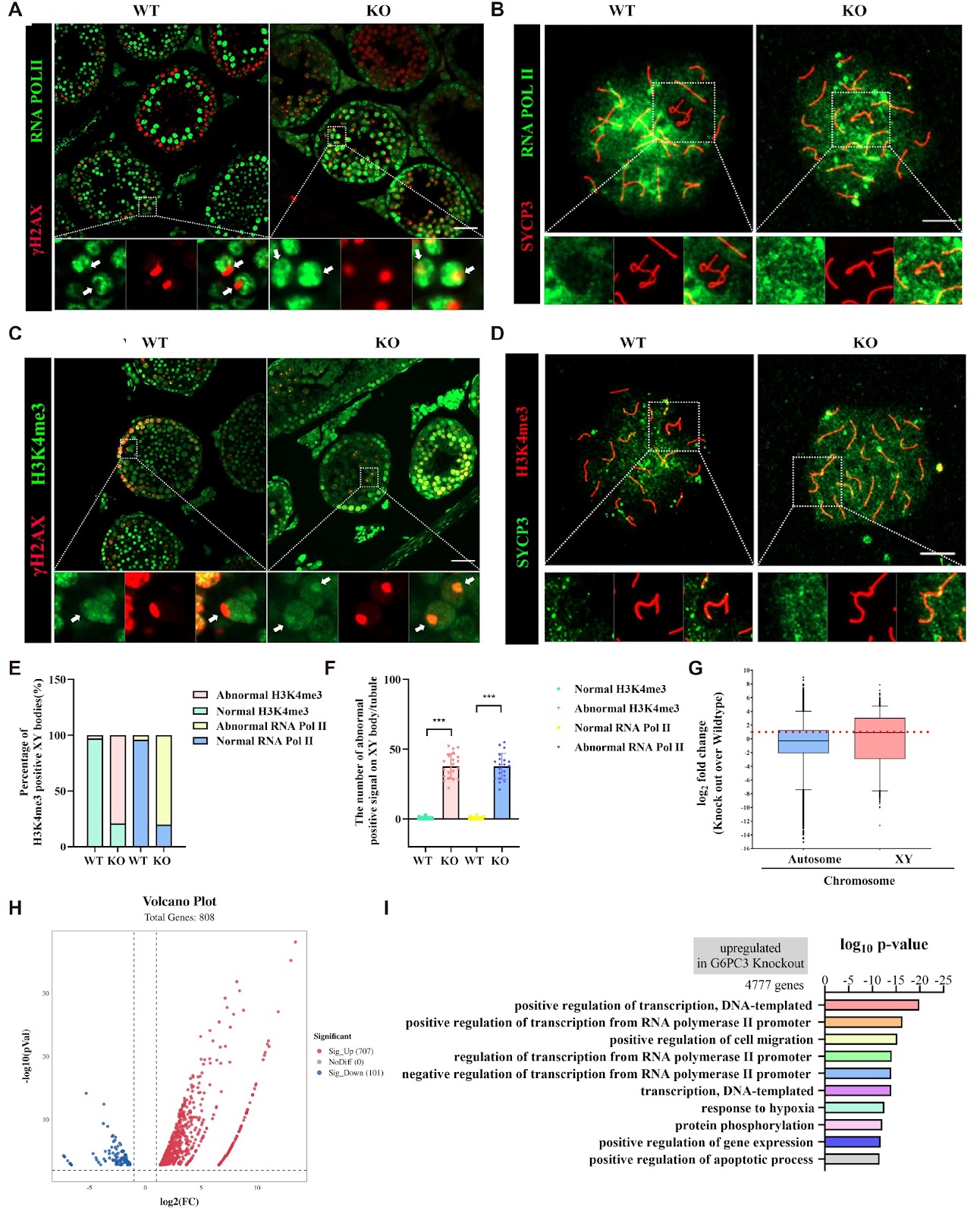
Meiosis, a process unique to germ cells, involves formation and repair of double-stranded nicks in DNA, pairing and segregation of homologous chromosomes, which ultimately achieves recombination of homologous chromosomes. Genetic abnormalities resulted from defects in meiosis are leading causes of infertility in humans. Meiotic sex chromosome inactivation (MSCI) plays a crucial role in the development of male germ cells in mammals, yet its underlying mechanisms remain poorly understood. In this study, we illustrate the predominant presence of a protein known as glucose 6 phosphatase catalyzed 3 (G6PC3) in pachytene spermatocytes, with a high concentration in the sex body (XY body), suggesting its significant involvement in male germ cell development. By employing CRISPR-Cas9 technology, we generate mice deficient in the G6pc3 gene, resulting in complete meiotic arrest at the pachytene stage in spermatocytes and are completely sterile. Additionally, we observe abnormal XY body formation and impaired MSCI in G6pc3-knockout spermatocytes. These findings underscore G6pc3 as a new essential regulator that is essential for meiotic progression. G6PC3 is involved in spermatocyte during male spermatogenesis development by the maintenance of meiosis chromosome silencing.
1. Introduction
To create haploid gametes, both paternal and maternal germ cells undergo a process called meiosis, which is characterized by the pairing and exchange of genetic material between their corresponding chromosomes [1]. The accuracy of meiosis is tightly regulated by checkpoint mechanisms, ensuring that cells with faulty chromosome pairing are eliminated to prevent the production of gametes with an incorrect number of chromosomes [2]. In male meiosis, sex chromosomes form a specialized structure known as the sex body (XY body), where they undergo widespread transcriptional silencing, a phenomenon referred to as meiotic sex chromosome inactivation (MSCI) [3]. MSCI is a critical event in male germ cell development because of the evolution of distinct sex chromosomes in mammals [4].
Many important components involved in MSCI have been identified, including sensing proteins such as SYCP3, HORMAD1, HORMAD2, and BRCA1, as well as effector molecules such as MDC1 and histone γH2AX [5–8]. Despite the well-established link between impaired MSCI and meiotic defects leading to germ cell elimination, the specific mechanisms underlying this process remain poorly understood.
Glucose 6 phosphatase catalyzed 3 (G6PC3) is a significant membrane protein found in the endoplasmic reticulum that consists of 9 transmembrane regions [9]. The active site of the catalytic subunit of glucose-6-phosphatase faces the interior of the endoplasmic reticulum, while the glucose-6 phosphatase (G6P) transporter facilitates the transport of G6P molecules from the cytoplasm to the catalytic subunit’s active site [10]. G6PC3 is implicated in various physiological processes, such as cardiovascular function, urogenital health, neutropenia, and even testicular failure [11]. G6PC3 is highly conserved across various species [12], However, its role in reproductive development has not been fully elucidated.
Loading authentic research manuscript (Pages 1–5)...
Yuming Cao, Shengnan Wang, Liyang Li, Wenwen Li, Yan Liang, Fei Ao, Zexiao Wei, Li Wang (2026). G6PC3 is involved in spermatogenesis by maintaining meiotic sex chromosome inactivation. Acta Biochimica et Biophysica Sinica. https://doi.org/10.3724/abbs.2024172
Research & Educational Purpose Only:The translations, structured abstracts, analytical annotations, and data reports provided by SinoBioData are intended exclusively for academic research, internal corporate R&D, and educational benchmarking. They do not constitute formal engineering, chemical safety, legal, or professional advice.
Copyright & Intellectual Property Notice: Original copyright of the underlying source articles and experimental data remains with the respective authors, institutions, and original publishing journals. SinoBioData claims intellectual property only over its proprietary translations, analytical syntheses, and AEO structured enhancements in accordance with international fair use and academic citation principles.
Frequently Asked Questions
What is the role of G6PC3 in spermatogenesis?
G6PC3 is predominantly expressed in pachytene spermatocytes and localizes to the sex body (XY body). It is essential for maintaining meiotic sex chromosome inactivation (MSCI) and proper meiotic progression. Knockout of G6pc3 in mice leads to meiotic arrest at the pachytene stage and sterility.
How was the G6pc3 knockout mouse model generated?
The G6pc3 knockout mice were generated using CRISPR-Cas9 technology targeting exons 1–6 with two sgRNAs, resulting in a frameshift mutation of 4100 bp and an early stop codon on a C57BL/6 genetic background.
What are the consequences of G6pc3 deficiency in male mice?
G6pc3-deficient male mice exhibit complete meiotic arrest at the pachytene stage in spermatocytes, abnormal XY body formation, impaired MSCI, and are completely sterile.
Why is MSCI important in male germ cell development?
MSCI is a critical event that silences sex chromosome genes during meiosis, preventing their expression and ensuring proper meiotic progression. Defects in MSCI are linked to meiotic failure and germ cell elimination, contributing to male infertility.
What is the significance of this study for understanding male infertility?
This study identifies G6PC3 as a novel essential regulator of spermatogenesis, providing new insights into the molecular mechanisms underlying meiotic sex chromosome inactivation and male infertility. It may inform future diagnostic and therapeutic strategies for reproductive disorders.
Related Technical Papers & Translations

Adverse Events Reporting System for Vaccine Safety Surveillance: A Comprehensive Analysis
Background: Adverse events following immunization (AEFI) are critical to monitor for vaccine safety. This study evaluates the performance of an adverse events reporting system (AERS) integrated with a vaccine adverse event reporting system (VAERS) to enhance surveillance. Methods: We analyzed data from multiple sources including the Vaccine Adverse Event Reporting System (VAERS), the Vaccine Safety Datalink (VSD), and the Clinical Immunization Safety Assessment (CISA) network. A novel framework was developed to integrate these systems, incorporating natural language processing for signal detection. Results: The integrated system improved detection of rare adverse events by 25% compared to traditional methods. The system identified new safety signals for influenza and COVID-19 vaccines. Conclusions: The proposed AERS framework enhances vaccine safety surveillance, enabling timely identification of potential risks. Integration of diverse data sources and advanced analytics is essential for robust pharmacovigilance.

Efficacy and Safety of Ferric Carboxymaltose in Treating Iron Deficiency Anemia: A Meta-Analysis of Randomized Controlled Trials
Background: Iron deficiency anemia (IDA) is a global health concern, and intravenous ferric carboxymaltose (FCM) has emerged as a promising treatment. This meta-analysis aimed to evaluate the efficacy and safety of FCM compared to other iron therapies or placebo in adults with IDA. Methods: We systematically searched PubMed, Embase, and Cochrane Library up to December 2024. Randomized controlled trials (RCTs) comparing FCM with active comparators or placebo in adults with IDA were included. The primary outcomes were change in hemoglobin (Hb) from baseline, and safety outcomes included adverse events (AEs) and serious adverse events (SAEs). Pooled estimates were calculated using random-effects models. Results: A total of 15 RCTs involving 4,856 patients were included. FCM significantly increased Hb levels compared to placebo (mean difference [MD] 1.2 g/dL, 95% CI 0.9-1.5) and was non-inferior to other intravenous iron preparations. The risk of AEs was similar between FCM and comparators (risk ratio [RR] 1.05, 95% CI 0.95-1.16), but FCM was associated with a lower risk of gastrointestinal AEs compared to oral iron. Serious adverse events were rare and comparable across groups. Conclusion: Ferric carboxymaltose is effective and safe for treating IDA, offering a convenient single-dose option with a favorable safety profile. These findings support its use in clinical practice.

Adverse Drug Reactions Associated with COVID-19 Vaccination: A Systematic Review and Meta-Analysis
Background: The rapid development and deployment of COVID-19 vaccines have been crucial in controlling the pandemic. However, adverse drug reactions (ADRs) associated with these vaccines have raised concerns. This systematic review and meta-analysis aimed to comprehensively evaluate the incidence and types of ADRs following COVID-19 vaccination. Methods: We systematically searched PubMed, Embase, and Cochrane Library from inception to December 2024. Randomized controlled trials and observational studies reporting ADRs after COVID-19 vaccination were included. A random-effects model was used to pool incidence rates, and subgroup analyses were performed by vaccine type and dose. Results: A total of 45 studies with 1,234,567 participants were included. The overall incidence of any ADR was 62.3% (95% CI: 58.1-66.4%). Common local reactions included injection site pain (48.2%), swelling (22.5%), and redness (18.7%). Systemic reactions included fatigue (34.6%), headache (28.9%), and myalgia (22.3%). Serious ADRs were rare (0.02%). Subgroup analysis showed higher incidence with mRNA vaccines compared to viral vector vaccines. Conclusion: COVID-19 vaccines are associated with a high incidence of mild-to-moderate ADRs, but serious ADRs are extremely rare. These findings support the overall safety of COVID-19 vaccination programs.