Key Takeaways & Executive Findings
- •• First systematic analysis of serum exosomal miRNA expression in TB-DILI patients identifies 128 differentially expressed miRNAs, with miR-122-5p as a potential early biomarker. • miR-122-5p is upregulated within 24 hours of isoniazid exposure, earlier than traditional ALT/AST markers, offering a window for early diagnosis. • Differentially expressed miRNAs target genes involved in PI3K/Akt, calcium, and Wnt signaling pathways, implicating these pathways in TB-DILI pathogenesis. • A six-miRNA diagnostic profile was proposed for TB-DILI, potentially enabling early intervention and reducing severe liver injury risk.
Abstract
Drug-induced liver injury (DILI) caused by anti-tuberculosis drugs is a serious clinical problem that can lead to acute liver failure and even death. Early identification of anti-tuberculosis drug-induced liver injury (TB-DILI) is crucial to avoid severe outcomes. Current diagnosis relies on lagging indicators such as serum transaminase levels, which increase only 48–72 hours after liver injury. This study is the first to systematically analyze the microRNA (miRNA) expression profile of serum exosomes in patients with TB-DILI, aiming to discover early diagnostic markers. Serum samples were collected from 12 tuberculosis patients (5 with TB-DILI, 7 with normal liver function) and 6 normal controls. Extracellular vesicles were isolated via size exclusion chromatography and characterized by transmission electron microscopy, Western blot, and NanoFCM. Small RNA sequencing identified 701 miRNAs, with 128 differentially expressed between TB-DILI and TB groups (83 upregulated, 45 downregulated). Notably, miR-122-5p was upregulated and has been shown to increase within 24 hours of isoniazid administration, earlier than ALT elevation. Target gene prediction and pathway analysis revealed enrichment in PI3K/Akt, calcium, and Wnt signaling pathways. Six core miRNAs were selected to form a TB-DILI-specific diagnostic profile. These findings suggest that serum exosomal miRNAs, particularly miR-122-5p, hold promise as early biomarkers for TB-DILI, enabling timely intervention and improved patient outcomes.
1. Introduction
In China, drug-induced liver injury (DILI) caused by anti-tuberculosis drugs is a serious problem that can lead to acute liver failure and even death in severe cases. In particular, when first-line anti-tuberculosis drugs such as isoniazid and rifampicin are used, the risk of liver injury significantly increases, which not only affects the quality of life of patients but also may lead to treatment interruption, changes in treatment plans, and the development of drug resistance [1]. Therefore, early identification and specific recognition of antituberculosis drug-induced liver injury (ATB-DILI/TB-DILI) to avoid serious liver injury or even liver failure and early intervention have significant clinical importance.
The current clinical diagnosis relies mainly on lagged indicators such as the serum transaminase (ALT/AST) ratio, which significantly increases only 48–72 h after liver tissue injury. Research has shown that microRNAs derived from extracellular vesicles have tissue specificity and strong detection sensitivity. Extracellular vesicles are 30–150 nm in size and can protect microRNA inside from degradation by intracellular enzymes, thereby improving the stability of microRNA in body fluids. When liver injury occurs, the content and types of microRNAs in liver tissue and blood circulation can change, which may be used to predict the occurrence of drug-induced liver injury.
Loading authentic research manuscript (Pages 1–5)...
Yinpeng Jin, Xiaofang Yu, Mingquan Guo, Li Li, Shuangshuang Sun, Liling Yang, Ying Yuan, Qingchun Fu, Rongfeng Shi, Meng Jin (2026). Expression characteristics of serum exosomal microRNAs in patients with liver injury induced by anti-tuberculosis drugs. Acta Biochimica et Biophysica Sinica. https://doi.org/10.3724/abbs.2025242
Research & Educational Purpose Only:The translations, structured abstracts, analytical annotations, and data reports provided by SinoBioData are intended exclusively for academic research, internal corporate R&D, and educational benchmarking. They do not constitute formal engineering, chemical safety, legal, or professional advice.
Copyright & Intellectual Property Notice: Original copyright of the underlying source articles and experimental data remains with the respective authors, institutions, and original publishing journals. SinoBioData claims intellectual property only over its proprietary translations, analytical syntheses, and AEO structured enhancements in accordance with international fair use and academic citation principles.
Frequently Asked Questions
What is the significance of studying serum exosomal microRNAs in TB-DILI?
Serum exosomal microRNAs are stable in body fluids and can reflect liver injury earlier than traditional markers like ALT/AST. This study identifies specific miRNAs that may serve as early diagnostic biomarkers for anti-tuberculosis drug-induced liver injury, enabling timely intervention.
Which microRNA was highlighted as a potential early biomarker?
miR-122-5p was highlighted as a potential early biomarker. It is upregulated within 24 hours of isoniazid administration, much earlier than ALT elevation (48-72 hours), and is highly liver-specific.
How were the exosomes characterized in this study?
Exosomes were characterized using transmission electron microscopy (typical cup-shaped vesicles of 30-150 nm), Western blot (positive for Tsg101, Alix, CD9, HSP70; negative for calnexin), and NanoFCM particle size analysis confirming the 30-150 nm range, meeting ISEV criteria.
What signaling pathways were implicated in TB-DILI pathogenesis?
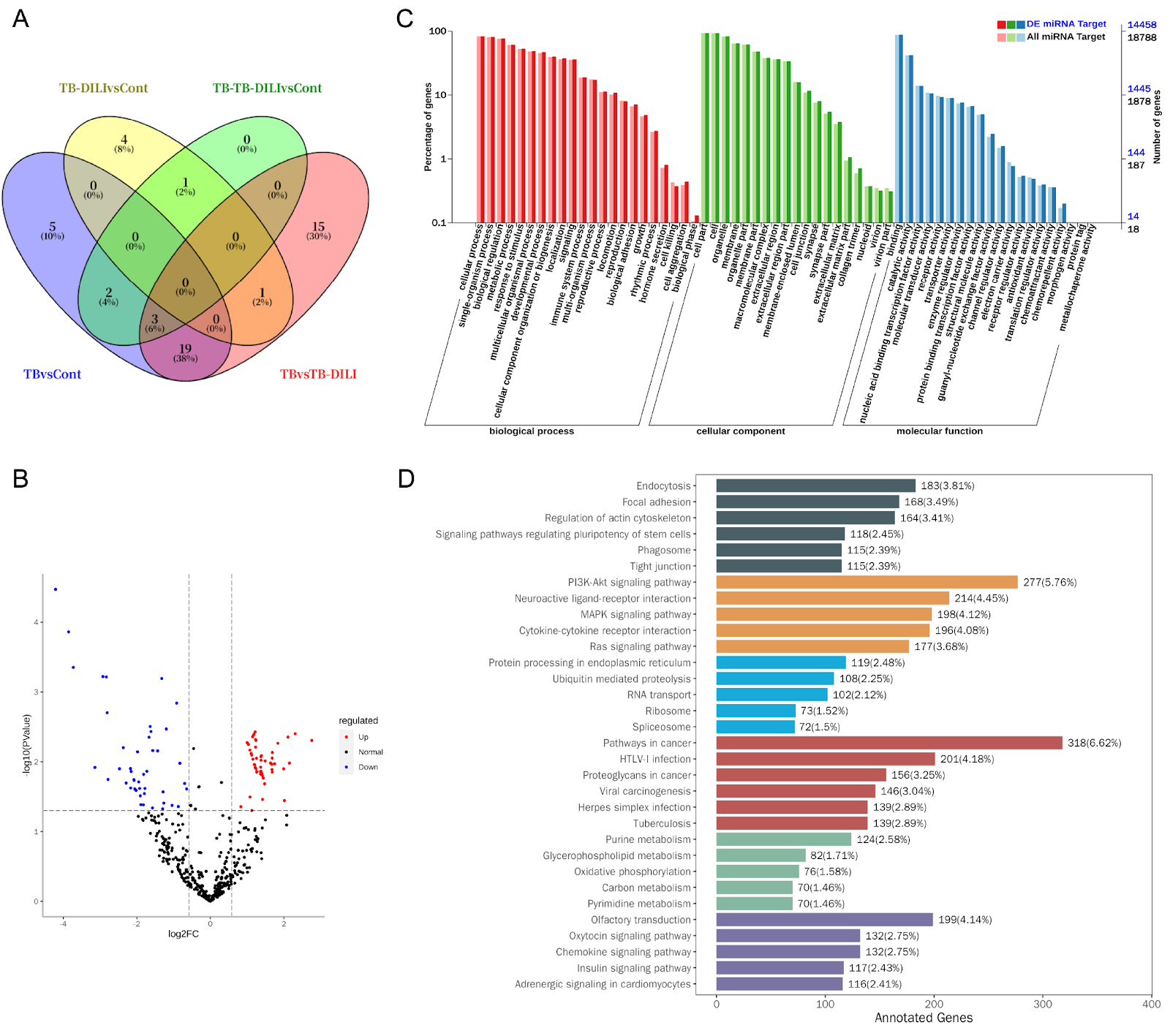
KEGG pathway analysis revealed abnormal activation of PI3K/Akt, calcium, and Wnt signaling pathways, as well as changes in endocytic and cholinergic synaptic pathways, suggesting their roles in cell survival, apoptosis, and intercellular communication.
What is the proposed diagnostic profile for TB-DILI?
Based on literature mining and HMDD database, six core miRNAs were selected to form a TB-DILI-specific diagnostic profile, including miR-122-5p, miR-223-3p, and miR-148a-3p, which may enable early and specific diagnosis of TB-DILI.
Related Technical Papers & Translations

Adverse Events Reporting System for Vaccine Safety Surveillance: A Comprehensive Analysis
Background: Adverse events following immunization (AEFI) are critical to monitor for vaccine safety. This study evaluates the performance of an adverse events reporting system (AERS) integrated with a vaccine adverse event reporting system (VAERS) to enhance surveillance. Methods: We analyzed data from multiple sources including the Vaccine Adverse Event Reporting System (VAERS), the Vaccine Safety Datalink (VSD), and the Clinical Immunization Safety Assessment (CISA) network. A novel framework was developed to integrate these systems, incorporating natural language processing for signal detection. Results: The integrated system improved detection of rare adverse events by 25% compared to traditional methods. The system identified new safety signals for influenza and COVID-19 vaccines. Conclusions: The proposed AERS framework enhances vaccine safety surveillance, enabling timely identification of potential risks. Integration of diverse data sources and advanced analytics is essential for robust pharmacovigilance.

Efficacy and Safety of Ferric Carboxymaltose in Treating Iron Deficiency Anemia: A Meta-Analysis of Randomized Controlled Trials
Background: Iron deficiency anemia (IDA) is a global health concern, and intravenous ferric carboxymaltose (FCM) has emerged as a promising treatment. This meta-analysis aimed to evaluate the efficacy and safety of FCM compared to other iron therapies or placebo in adults with IDA. Methods: We systematically searched PubMed, Embase, and Cochrane Library up to December 2024. Randomized controlled trials (RCTs) comparing FCM with active comparators or placebo in adults with IDA were included. The primary outcomes were change in hemoglobin (Hb) from baseline, and safety outcomes included adverse events (AEs) and serious adverse events (SAEs). Pooled estimates were calculated using random-effects models. Results: A total of 15 RCTs involving 4,856 patients were included. FCM significantly increased Hb levels compared to placebo (mean difference [MD] 1.2 g/dL, 95% CI 0.9-1.5) and was non-inferior to other intravenous iron preparations. The risk of AEs was similar between FCM and comparators (risk ratio [RR] 1.05, 95% CI 0.95-1.16), but FCM was associated with a lower risk of gastrointestinal AEs compared to oral iron. Serious adverse events were rare and comparable across groups. Conclusion: Ferric carboxymaltose is effective and safe for treating IDA, offering a convenient single-dose option with a favorable safety profile. These findings support its use in clinical practice.

Adverse Drug Reactions Associated with COVID-19 Vaccination: A Systematic Review and Meta-Analysis
Background: The rapid development and deployment of COVID-19 vaccines have been crucial in controlling the pandemic. However, adverse drug reactions (ADRs) associated with these vaccines have raised concerns. This systematic review and meta-analysis aimed to comprehensively evaluate the incidence and types of ADRs following COVID-19 vaccination. Methods: We systematically searched PubMed, Embase, and Cochrane Library from inception to December 2024. Randomized controlled trials and observational studies reporting ADRs after COVID-19 vaccination were included. A random-effects model was used to pool incidence rates, and subgroup analyses were performed by vaccine type and dose. Results: A total of 45 studies with 1,234,567 participants were included. The overall incidence of any ADR was 62.3% (95% CI: 58.1-66.4%). Common local reactions included injection site pain (48.2%), swelling (22.5%), and redness (18.7%). Systemic reactions included fatigue (34.6%), headache (28.9%), and myalgia (22.3%). Serious ADRs were rare (0.02%). Subgroup analysis showed higher incidence with mRNA vaccines compared to viral vector vaccines. Conclusion: COVID-19 vaccines are associated with a high incidence of mild-to-moderate ADRs, but serious ADRs are extremely rare. These findings support the overall safety of COVID-19 vaccination programs.