Key Takeaways & Executive Findings
- •• CP, a novel curcumin-piperlongumine hybrid, shows enhanced antitumor activity against EGFR-TKI-resistant NSCLC compared to parent compounds. • CP inhibits proliferation by inducing G2/M cell cycle arrest and apoptosis in resistant cells. • The PI3K/AKT signaling pathway partially mediates CP-induced apoptosis, providing a mechanistic basis. • Network pharmacology and experimental validation identify CP as a promising therapeutic candidate for overcoming EGFR-TKI resistance.
Abstract
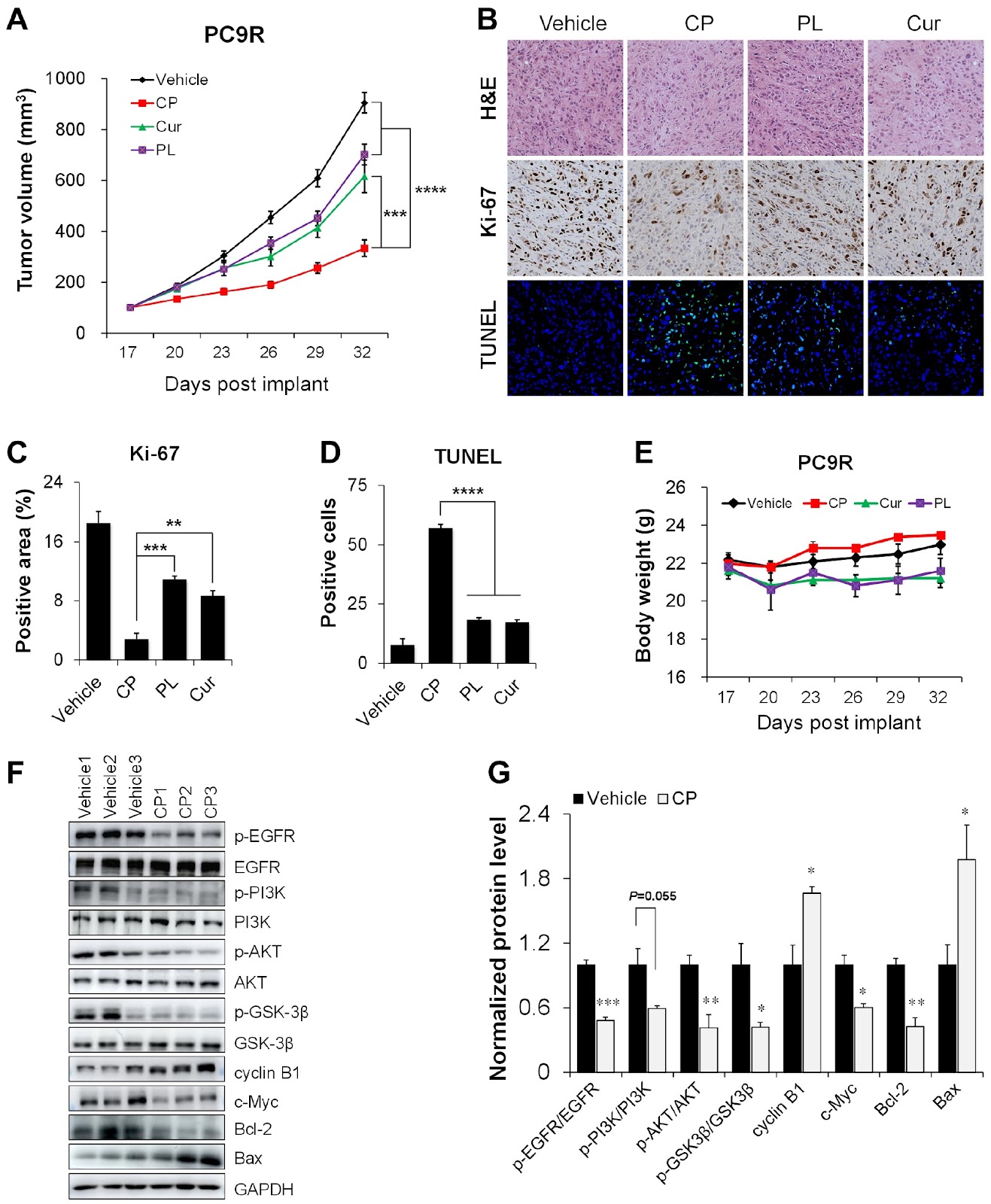
EGFR-tyrosine kinase inhibitor (TKI) therapy is the most effective targeted therapy for non-small cell lung cancer (NSCLC). However, drug resistance remains a significant factor in the failure of lung cancer therapy. In the present study, we utilize network pharmacology, molecular docking, in vitro and in vivo experiments to explore the targets and biological mechanisms of CP, a novel curcumin-piperlongumine hybrid molecule, in EGFR-TKI-resistant NSCLC cells. The results reveal that CP exhibits enhanced biological activity compared to its parent compounds. CP can effectively inhibit cell proliferation by arresting cell cycle in the G2/M phase and inducing apoptosis. Mechanistically, CP-induced apoptosis is partially mediated by PI3K/AKT signaling pathway. These findings highlight the potential of CP as a promising therapeutic agent for EGFR-TKI-resistant lung cancer therapy.
1. Introduction
Lung cancer is the most commonly diagnosed cancer and remains the leading cause of cancer-related death throughout the world [1]. About 85% of lung cancer cases are non-small cell lung cancer (NSCLC) [2]. The epidermal growth factor receptor gene EGFR is one of the key driver genes in NSCLC. EGFR mutations often lead to abnormal activation of downstream pathways such as PI3K/AKT/mTOR and MAPK pathways, which promote the proliferation, differentiation and migration of tumor cells [3]. Approximately 20% of NSCLC patients harbor activating mutations in EGFR. The exon 19 deletions and the L858R point mutation comprise more than 90% of EGFR activating mutations [4]. According to current treatment guidelines, EGFR tyrosine kinase inhibitors (EGFR-TKIs) are the first-line treatment for advanced NSCLC patients with activating EGFR mutations. AZD9291 (osimertinib) is an irreversible third-generation epidermal growth factor receptor tyrosine kinase inhibitor (EGFR-TKI), and exhibits high selectivity against activating EGFR mutations, especially the T790M mutation [5]. However, the occurrence of acquired resistance is inevitable. Patients who initially benefit from osimertinib have been found to eventually develop resistance after 18.9 months [6]. Therefore, there is an urgent need to develop novel treatment strategies against EGFR-TKI resistance for advanced NSCLC.
Previous studies have revealed that curcumin and piperlongumine possess good antitumor activity in many types of cancers [7–9]. In addition, curcumin and piperlongumine have been reported to be potent tyrosine kinase inhibitors. It has been suggested that curcumin possesses good anti-EGFR activity, and curcumin overcomes Lenvatinib resistance through suppression of PI3K/AKT pathway in hepatocellular carcinoma [10]. Furthermore, curcumin analogs could dramatically inhibit the expression and phosphorylation of EGFR and reverse the EGFR-TKI resistance in gefitinib-resistant NSCLC [11,12]. Piperlongumine has also been revealed to suppress cell proliferation and angiogenesis of hepatocellular carcinoma via the EGF/EGFR axis [13]. Additionally, piperlongumine could overcome doxorubicin resistance in leukemia by suppressing the PI3K/AKT signaling pathway [14]. More importantly, piperlongumine could inhibit the phosphorylation of AKT, and reverse resistance to cisplatin in NSCLC [15]. In our previous study, we successfully synthesized a novel curcumin-piperlongumine hybrid molecule, CP [16]. Date revealed that CP exhibited enhanced structural stability and safety compared with its parent compounds in lung cancer cells. However, whether CP has better antitumor activity in EGFR-mutant NSCLC and overcome EGFR-TKI resistance is still unknown.
Network pharmacology approach has been widely applied in the study of various traditional Chinese medicine treatment [17–19]. It provides a novel network model of “multiple targets, multiple effects, and complex diseases” to investigate the potential mechanism of herbal compounds or natural products [20]. Moreover, network pharmacology affords a better understanding of the pathogenesis of diseases and new strategies for personalized treatment [21]. In the present study, we first utilized network pharmacology method to elucidate target genes and signaling pathways of CP and then further investigated the antitumor efficiency of CP on AZD9291-resistant NSCLC. This study may provide a potential therapeutic drug for EGFR-TKI-resistant lung cancer.
Loading authentic research manuscript (Pages 1–5)...
Shiyu Wang, Yinshuang Lai, Huijing Huang, Jing Yuan, Shanxin Li, Min Hui, Peipei Wang, Bingbing Chen, Zhiguo Liu, Jianchang Qian, Qianwen Zhang (2026). Exploring the antitumor effect of curcumin-piperlongumine hybrid molecule (CP) on EGFR-TKI-resistant non-small cell lung cancer using network pharmacological analysis and experimental verification. Acta Biochimica et Biophysica Sinica. https://doi.org/10.3724/abbs.2025076
Research & Educational Purpose Only:The translations, structured abstracts, analytical annotations, and data reports provided by SinoBioData are intended exclusively for academic research, internal corporate R&D, and educational benchmarking. They do not constitute formal engineering, chemical safety, legal, or professional advice.
Copyright & Intellectual Property Notice: Original copyright of the underlying source articles and experimental data remains with the respective authors, institutions, and original publishing journals. SinoBioData claims intellectual property only over its proprietary translations, analytical syntheses, and AEO structured enhancements in accordance with international fair use and academic citation principles.
Frequently Asked Questions
What is the main finding of this study?
The study demonstrates that the curcumin-piperlongumine hybrid molecule (CP) exhibits enhanced antitumor activity against EGFR-TKI-resistant non-small cell lung cancer (NSCLC) by inducing G2/M cell cycle arrest and apoptosis, partially through the PI3K/AKT signaling pathway.
How was the antitumor effect of CP investigated?
The researchers used network pharmacology, molecular docking, and in vitro and in vivo experiments to identify targets and biological mechanisms of CP in EGFR-TKI-resistant NSCLC cells.
What is the significance of this research?
The findings highlight CP as a promising therapeutic agent for overcoming EGFR-TKI resistance in NSCLC, addressing a major clinical challenge in lung cancer treatment.
What is the role of the PI3K/AKT pathway in CP's mechanism?
CP-induced apoptosis is partially mediated by the PI3K/AKT signaling pathway, indicating that CP may exert its effects by modulating this key survival pathway.
What are the potential clinical implications of CP?
CP could serve as a novel therapeutic option for patients with EGFR-TKI-resistant NSCLC, potentially improving treatment outcomes and overcoming acquired resistance.
Related Technical Papers & Translations

Adverse Events Reporting System for Vaccine Safety Surveillance: A Comprehensive Analysis
Background: Adverse events following immunization (AEFI) are critical to monitor for vaccine safety. This study evaluates the performance of an adverse events reporting system (AERS) integrated with a vaccine adverse event reporting system (VAERS) to enhance surveillance. Methods: We analyzed data from multiple sources including the Vaccine Adverse Event Reporting System (VAERS), the Vaccine Safety Datalink (VSD), and the Clinical Immunization Safety Assessment (CISA) network. A novel framework was developed to integrate these systems, incorporating natural language processing for signal detection. Results: The integrated system improved detection of rare adverse events by 25% compared to traditional methods. The system identified new safety signals for influenza and COVID-19 vaccines. Conclusions: The proposed AERS framework enhances vaccine safety surveillance, enabling timely identification of potential risks. Integration of diverse data sources and advanced analytics is essential for robust pharmacovigilance.

Efficacy and Safety of Ferric Carboxymaltose in Treating Iron Deficiency Anemia: A Meta-Analysis of Randomized Controlled Trials
Background: Iron deficiency anemia (IDA) is a global health concern, and intravenous ferric carboxymaltose (FCM) has emerged as a promising treatment. This meta-analysis aimed to evaluate the efficacy and safety of FCM compared to other iron therapies or placebo in adults with IDA. Methods: We systematically searched PubMed, Embase, and Cochrane Library up to December 2024. Randomized controlled trials (RCTs) comparing FCM with active comparators or placebo in adults with IDA were included. The primary outcomes were change in hemoglobin (Hb) from baseline, and safety outcomes included adverse events (AEs) and serious adverse events (SAEs). Pooled estimates were calculated using random-effects models. Results: A total of 15 RCTs involving 4,856 patients were included. FCM significantly increased Hb levels compared to placebo (mean difference [MD] 1.2 g/dL, 95% CI 0.9-1.5) and was non-inferior to other intravenous iron preparations. The risk of AEs was similar between FCM and comparators (risk ratio [RR] 1.05, 95% CI 0.95-1.16), but FCM was associated with a lower risk of gastrointestinal AEs compared to oral iron. Serious adverse events were rare and comparable across groups. Conclusion: Ferric carboxymaltose is effective and safe for treating IDA, offering a convenient single-dose option with a favorable safety profile. These findings support its use in clinical practice.

Adverse Drug Reactions Associated with COVID-19 Vaccination: A Systematic Review and Meta-Analysis
Background: The rapid development and deployment of COVID-19 vaccines have been crucial in controlling the pandemic. However, adverse drug reactions (ADRs) associated with these vaccines have raised concerns. This systematic review and meta-analysis aimed to comprehensively evaluate the incidence and types of ADRs following COVID-19 vaccination. Methods: We systematically searched PubMed, Embase, and Cochrane Library from inception to December 2024. Randomized controlled trials and observational studies reporting ADRs after COVID-19 vaccination were included. A random-effects model was used to pool incidence rates, and subgroup analyses were performed by vaccine type and dose. Results: A total of 45 studies with 1,234,567 participants were included. The overall incidence of any ADR was 62.3% (95% CI: 58.1-66.4%). Common local reactions included injection site pain (48.2%), swelling (22.5%), and redness (18.7%). Systemic reactions included fatigue (34.6%), headache (28.9%), and myalgia (22.3%). Serious ADRs were rare (0.02%). Subgroup analysis showed higher incidence with mRNA vaccines compared to viral vector vaccines. Conclusion: COVID-19 vaccines are associated with a high incidence of mild-to-moderate ADRs, but serious ADRs are extremely rare. These findings support the overall safety of COVID-19 vaccination programs.