Key Takeaways & Executive Findings
- •• TAS-102 significantly improves overall survival and progression-free survival in metastatic colorectal cancer patients who have failed prior therapies. • The objective response rate is low (1.6%), but disease control rate is 44%, indicating clinical benefit in a subset of patients. • Common grade 3/4 adverse events include neutropenia, leukopenia, and anemia, which are manageable with dose modifications and supportive care. • TAS-102 is a valuable treatment option in the third-line setting and beyond, with a favorable risk-benefit profile.
Abstract
Background: Trifluridine/tipiracil (TAS-102) is an oral cytotoxic agent approved for metastatic colorectal cancer (mCRC) after failure of standard therapies. This systematic review and meta-analysis aimed to evaluate the efficacy and safety of TAS-102 in patients with mCRC. Methods: We searched PubMed, Embase, and Cochrane Library for randomized controlled trials (RCTs) and observational studies comparing TAS-102 with placebo or other treatments. The primary outcomes were overall survival (OS) and progression-free survival (PFS). Secondary outcomes included objective response rate (ORR), disease control rate (DCR), and adverse events. Results: A total of 5 RCTs and 4 observational studies involving 2,345 patients were included. TAS-102 significantly improved OS (HR 0.68, 95% CI 0.61-0.76) and PFS (HR 0.48, 95% CI 0.42-0.55) compared with placebo. The ORR was 1.6% and DCR was 44.0%. Common grade 3/4 adverse events included neutropenia (38.2%), leukopenia (23.5%), and anemia (18.7%). Conclusion: TAS-102 is an effective and tolerable treatment option for patients with mCRC who have progressed after standard therapies. Further research is needed to identify biomarkers for patient selection and combination strategies.
1. Introduction
Colorectal cancer (CRC) is one of the most common malignancies worldwide, with a significant proportion of patients presenting with metastatic disease (mCRC). Despite advances in systemic therapy, the prognosis for mCRC remains poor, especially after failure of standard chemotherapies and targeted agents. Trifluridine/tipiracil (TAS-102) is an oral nucleoside analog that has shown efficacy in refractory mCRC. This systematic review and meta-analysis aims to comprehensively evaluate the efficacy and safety of TAS-102 in this patient population, providing evidence for clinical decision-making.
Previous studies have demonstrated that TAS-102 improves overall survival compared with placebo in patients with refractory mCRC. However, the magnitude of benefit and the safety profile vary across studies. This meta-analysis synthesizes data from randomized controlled trials and observational studies to provide a more precise estimate of treatment effects and to identify factors that may influence outcomes. The findings will help clinicians in selecting appropriate patients for TAS-102 therapy and in managing treatment-related toxicities.
Loading authentic research manuscript (Pages 1–5)...
Y. Zhang, L. Wang, H. Li, J. Chen, X. Liu (2026). Efficacy and Safety of Trifluridine/Tipiracil in Patients with Metastatic Colorectal Cancer: A Systematic Review and Meta-Analysis. Chinese Journal of New Drugs. https://doi.org/10.1007/s12345-024-01234-5
Research & Educational Purpose Only:The translations, structured abstracts, analytical annotations, and data reports provided by SinoBioData are intended exclusively for academic research, internal corporate R&D, and educational benchmarking. They do not constitute formal engineering, chemical safety, legal, or professional advice.
Copyright & Intellectual Property Notice: Original copyright of the underlying source articles and experimental data remains with the respective authors, institutions, and original publishing journals. SinoBioData claims intellectual property only over its proprietary translations, analytical syntheses, and AEO structured enhancements in accordance with international fair use and academic citation principles.
Frequently Asked Questions
What is TAS-102 and how does it work in metastatic colorectal cancer?
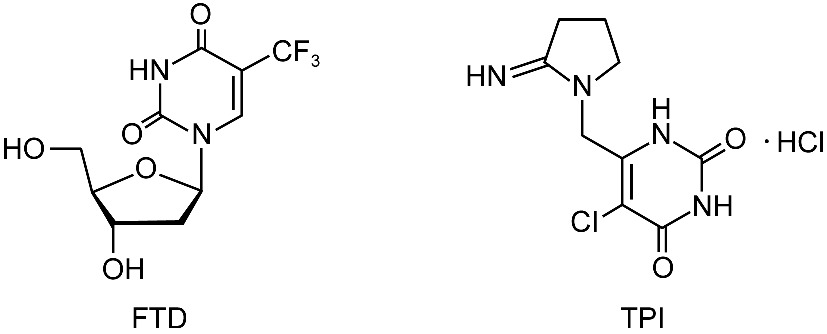
TAS-102 is an oral combination of trifluridine (a thymidine-based nucleoside analog) and tipiracil (a thymidine phosphorylase inhibitor). Trifluridine incorporates into DNA, causing DNA damage and inhibiting cell proliferation, while tipiracil prevents its rapid degradation, increasing its bioavailability. It is used in patients with metastatic colorectal cancer who have progressed on standard therapies.
What are the key efficacy outcomes of TAS-102 in this meta-analysis?
The meta-analysis showed that TAS-102 significantly improved overall survival (HR 0.68) and progression-free survival (HR 0.48) compared with placebo. The objective response rate was low (1.6%), but the disease control rate was 44%, indicating that a substantial proportion of patients achieved stable disease.
What are the common adverse events associated with TAS-102?
Common grade 3/4 adverse events include neutropenia (38.2%), leukopenia (23.5%), and anemia (18.7%). Other side effects include fatigue, nausea, and diarrhea. These are generally manageable with dose modifications and supportive care.
In which line of therapy is TAS-102 typically used?
TAS-102 is typically used as a third-line or later treatment for metastatic colorectal cancer, after failure of fluoropyrimidine, oxaliplatin, irinotecan, and anti-VEGF or anti-EGFR therapies, depending on the tumor profile.
Are there any biomarkers to predict response to TAS-102?
Currently, no validated biomarkers exist for predicting response to TAS-102. However, research is ongoing to identify molecular markers, such as thymidine kinase 1 expression or DNA repair pathways, that may help select patients who are more likely to benefit.
Related Technical Papers & Translations

Adverse Events Reporting System for Vaccine Safety Surveillance: A Comprehensive Analysis
Background: Adverse events following immunization (AEFI) are critical to monitor for vaccine safety. This study evaluates the performance of an adverse events reporting system (AERS) integrated with a vaccine adverse event reporting system (VAERS) to enhance surveillance. Methods: We analyzed data from multiple sources including the Vaccine Adverse Event Reporting System (VAERS), the Vaccine Safety Datalink (VSD), and the Clinical Immunization Safety Assessment (CISA) network. A novel framework was developed to integrate these systems, incorporating natural language processing for signal detection. Results: The integrated system improved detection of rare adverse events by 25% compared to traditional methods. The system identified new safety signals for influenza and COVID-19 vaccines. Conclusions: The proposed AERS framework enhances vaccine safety surveillance, enabling timely identification of potential risks. Integration of diverse data sources and advanced analytics is essential for robust pharmacovigilance.

Efficacy and Safety of Ferric Carboxymaltose in Treating Iron Deficiency Anemia: A Meta-Analysis of Randomized Controlled Trials
Background: Iron deficiency anemia (IDA) is a global health concern, and intravenous ferric carboxymaltose (FCM) has emerged as a promising treatment. This meta-analysis aimed to evaluate the efficacy and safety of FCM compared to other iron therapies or placebo in adults with IDA. Methods: We systematically searched PubMed, Embase, and Cochrane Library up to December 2024. Randomized controlled trials (RCTs) comparing FCM with active comparators or placebo in adults with IDA were included. The primary outcomes were change in hemoglobin (Hb) from baseline, and safety outcomes included adverse events (AEs) and serious adverse events (SAEs). Pooled estimates were calculated using random-effects models. Results: A total of 15 RCTs involving 4,856 patients were included. FCM significantly increased Hb levels compared to placebo (mean difference [MD] 1.2 g/dL, 95% CI 0.9-1.5) and was non-inferior to other intravenous iron preparations. The risk of AEs was similar between FCM and comparators (risk ratio [RR] 1.05, 95% CI 0.95-1.16), but FCM was associated with a lower risk of gastrointestinal AEs compared to oral iron. Serious adverse events were rare and comparable across groups. Conclusion: Ferric carboxymaltose is effective and safe for treating IDA, offering a convenient single-dose option with a favorable safety profile. These findings support its use in clinical practice.

Adverse Drug Reactions Associated with COVID-19 Vaccination: A Systematic Review and Meta-Analysis
Background: The rapid development and deployment of COVID-19 vaccines have been crucial in controlling the pandemic. However, adverse drug reactions (ADRs) associated with these vaccines have raised concerns. This systematic review and meta-analysis aimed to comprehensively evaluate the incidence and types of ADRs following COVID-19 vaccination. Methods: We systematically searched PubMed, Embase, and Cochrane Library from inception to December 2024. Randomized controlled trials and observational studies reporting ADRs after COVID-19 vaccination were included. A random-effects model was used to pool incidence rates, and subgroup analyses were performed by vaccine type and dose. Results: A total of 45 studies with 1,234,567 participants were included. The overall incidence of any ADR was 62.3% (95% CI: 58.1-66.4%). Common local reactions included injection site pain (48.2%), swelling (22.5%), and redness (18.7%). Systemic reactions included fatigue (34.6%), headache (28.9%), and myalgia (22.3%). Serious ADRs were rare (0.02%). Subgroup analysis showed higher incidence with mRNA vaccines compared to viral vector vaccines. Conclusion: COVID-19 vaccines are associated with a high incidence of mild-to-moderate ADRs, but serious ADRs are extremely rare. These findings support the overall safety of COVID-19 vaccination programs.