Key Takeaways & Executive Findings
- •• A novel functional DNA G-quadruplex in SLC45A1 is identified, and its disruption by the c.449G>A variant leads to transcriptional enhancement and gain-of-function, contributing to intellectual developmental disorder with neuropsychiatric features. • The study provides the first mechanistic link between DNA G4 structural alterations and SLC45A1 pathogenicity, highlighting the role of non-canonical DNA structures in neurodevelopmental disorders. • The c.449G>A variant upregulates SLC45A1 mRNA and protein expression, suggesting a potential therapeutic target for modulating SLC45A1 levels in related conditions. • The findings underscore the importance of DNA G4s in gene regulation and brain development, opening new avenues for investigating other genetic disorders associated with G4 disruptions.
Abstract
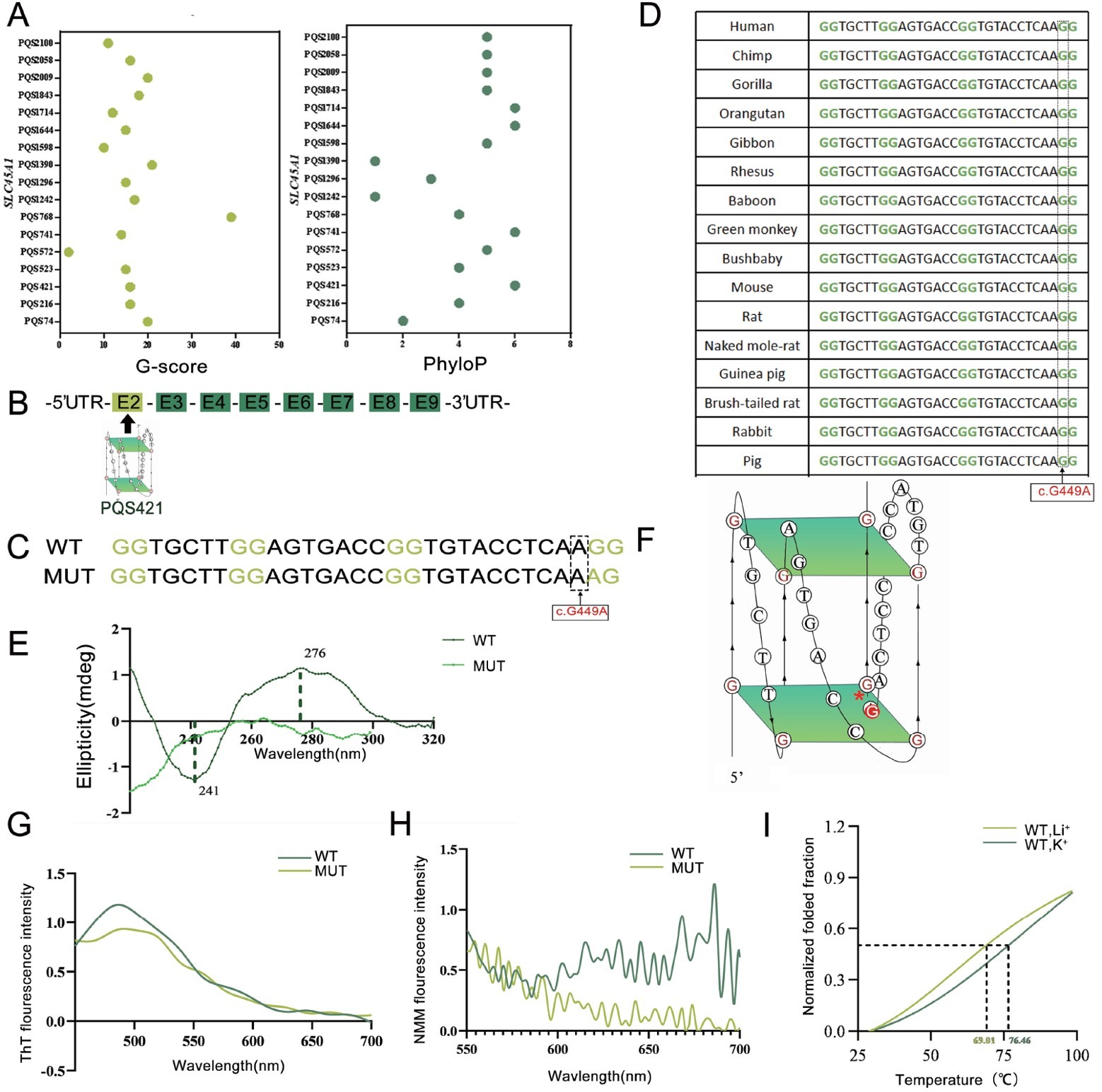
SLC45A1 encodes a glucose transporter protein highly expressed in the brain. Mutations in SLC45A1 may lead to neurological diseases and developmental disorders, but its exact role is poorly understood. DNA G-quadruplexes (DNA G4s) are stable structures formed by four guanine bases and play a role in gene regulation and genomic stability. Changes in DNA G4s may affect brain development and function. The mechanism linking alterations in DNA G-quadruplex structures to SLC45A1 pathogenicity remains unknown. In this study, we identify a functional DNA G-quadruplex and its key binding site on SLC45A1 (NM_001080397.3: exon 2: c.449 G>A: p.R150K). This variant results in the upregulation of mRNA and protein expression, which may lead to intellectual developmental disorder with neuropsychiatric features. Mechanistically, the mutation is found to disrupt DNA G-quadruplex structures on SLC45A1, leading to transcriptional enhancement and a gain-of-function mutation, which further causes increased expression and function of the SLC45A1 protein. The identification of the functional DNA G-quadruplex and its effects on DNA G4s may provide new insights into the genetic basis of SLC45A1 pathogenicity and highlight the importance of DNA G4s of SLC45A1 in regulating gene expression and brain development.
1. Introduction
SLC45A1 is located on chromosome 1q42.3 and encodes a membrane protein that is predominantly expressed in melanocytes. SLC45A1 encodes a glucose transporter protein highly expressed in the brain, which plays an important role in the uptake and utilization of glucose by the brain [1]. Mutations in SLC45A1 may therefore lead to neurological diseases and developmental disorders [2,3]. Intellectual developmental disorder with neuropsychiatric features (IDDNPF) is a term used to describe a group of conditions that involve intellectual disability and neuropsychiatric symptoms, such as behavioral problems, mood disorders, and psychosis [4‒6]. An intellectual developmental disorder with neuropsychiatric features is a moderate intellectual disability disorder caused by autosomal recessive inheritance. Patients with this disorder typically exhibit mild seizures and neuropsychiatric abnormalities, including anxiety, obsessive-compulsive behavior, and autistic features. Mild facial dysmorphic features may also be present [5,7]. These symptoms can be challenging to manage and have a significant impact on the individual’s quality of life, as well as the lives of their family members and caregivers. IDDNPF can be caused by a variety of factors, including genetic mutations, environmental factors, and brain abnormalities. Although the exact causes of IDDNPF are still being studied, there is growing evidence to suggest that genetic factors play a significant role in the development of this condition [5,6]. One candidate gene that may be involved in the development of IDDNPF is SLC45A1 [5,6]. The precise mechanisms underlying the role of SLC45A1 in these processes remain poorly understood. Therefore, further investigation of SLC45A1 is necessary to better understand the exact mechanism by which mutations in the SLC45A1 gene may contribute to the development of IDDNPF.
DNA G-quadruplexes (DNA G4s) are regions of DNA that are formed when four guanine bases come together to form a stable structure [8‒10]. These structures are found in the telomeres of chromosomes, as well as in other regions of the genome, and they play important roles in regulating gene expression and maintaining genomic stability [11‒13]. It is thought that changes in the stability or formation of these structures may disrupt the regulation of gene expression, leading to changes in brain development and function [14‒16]. Further research into the genetics and epigenetics of IDDNPF may help to identify new targets for treatment and intervention, and ultimately improve outcomes for individuals with this condition. However, the exact mechanism by which alterations in DNA G4 structures affect target gene expression, which contributes to the development of IDDNPF, has not been reported. This study identified the potential DNA G4s of SLC45A1. By evaluating the G-quadruplex formation score and conducting gene conservation analysis, we identified the crucial site responsible for this process, c.449G>A. Bioinformatics analysis predicted the pathogenicity of this variant, and its enhanced effect on the expression of SLC45A1 was examined in HEK293T cells.
Loading authentic research manuscript (Pages 1–5)...
Yuxi Chen, Jiang Long, Sixian Wu, Yazhen Wei, Fei Yan, Qing Li, Jierui Yan, Nannan Zhang, Wenming Xu (2026). Disruption of a DNA G-quadruplex causes a gain-of-function SCL45A1 variant relevant to developmental disorders. Acta Biochimica et Biophysica Sinica. https://doi.org/10.3724/abbs.2024053
Research & Educational Purpose Only:The translations, structured abstracts, analytical annotations, and data reports provided by SinoBioData are intended exclusively for academic research, internal corporate R&D, and educational benchmarking. They do not constitute formal engineering, chemical safety, legal, or professional advice.
Copyright & Intellectual Property Notice: Original copyright of the underlying source articles and experimental data remains with the respective authors, institutions, and original publishing journals. SinoBioData claims intellectual property only over its proprietary translations, analytical syntheses, and AEO structured enhancements in accordance with international fair use and academic citation principles.
Frequently Asked Questions
What is the main finding of this study?
The study identifies a functional DNA G-quadruplex in the SLC45A1 gene and shows that a specific mutation (c.449G>A) disrupts this structure, leading to increased SLC45A1 expression and a gain-of-function effect, which is associated with intellectual developmental disorder with neuropsychiatric features.
How does the c.449G>A mutation affect SLC45A1 expression?
The mutation disrupts the DNA G-quadruplex structure, which normally represses transcription, resulting in transcriptional enhancement and upregulation of SLC45A1 mRNA and protein levels.
What is the significance of DNA G-quadruplexes in this context?
DNA G-quadruplexes are stable secondary structures that play a role in gene regulation. This study highlights their importance in controlling SLC45A1 expression and suggests that disruptions in these structures can contribute to neurodevelopmental disorders.
What are the potential clinical implications of this research?
Understanding the mechanism by which SLC45A1 mutations cause disease may lead to targeted therapies that modulate SLC45A1 expression or function, potentially improving outcomes for patients with intellectual developmental disorder with neuropsychiatric features.
How was the study conducted?
The researchers used bioinformatics analysis to predict DNA G4 formation and variant pathogenicity, and experimentally validated the effect of the c.449G>A mutation on SLC45A1 expression in HEK293T cells.
Related Technical Papers & Translations

Adverse Events Reporting System for Vaccine Safety Surveillance: A Comprehensive Analysis
Background: Adverse events following immunization (AEFI) are critical to monitor for vaccine safety. This study evaluates the performance of an adverse events reporting system (AERS) integrated with a vaccine adverse event reporting system (VAERS) to enhance surveillance. Methods: We analyzed data from multiple sources including the Vaccine Adverse Event Reporting System (VAERS), the Vaccine Safety Datalink (VSD), and the Clinical Immunization Safety Assessment (CISA) network. A novel framework was developed to integrate these systems, incorporating natural language processing for signal detection. Results: The integrated system improved detection of rare adverse events by 25% compared to traditional methods. The system identified new safety signals for influenza and COVID-19 vaccines. Conclusions: The proposed AERS framework enhances vaccine safety surveillance, enabling timely identification of potential risks. Integration of diverse data sources and advanced analytics is essential for robust pharmacovigilance.

Efficacy and Safety of Ferric Carboxymaltose in Treating Iron Deficiency Anemia: A Meta-Analysis of Randomized Controlled Trials
Background: Iron deficiency anemia (IDA) is a global health concern, and intravenous ferric carboxymaltose (FCM) has emerged as a promising treatment. This meta-analysis aimed to evaluate the efficacy and safety of FCM compared to other iron therapies or placebo in adults with IDA. Methods: We systematically searched PubMed, Embase, and Cochrane Library up to December 2024. Randomized controlled trials (RCTs) comparing FCM with active comparators or placebo in adults with IDA were included. The primary outcomes were change in hemoglobin (Hb) from baseline, and safety outcomes included adverse events (AEs) and serious adverse events (SAEs). Pooled estimates were calculated using random-effects models. Results: A total of 15 RCTs involving 4,856 patients were included. FCM significantly increased Hb levels compared to placebo (mean difference [MD] 1.2 g/dL, 95% CI 0.9-1.5) and was non-inferior to other intravenous iron preparations. The risk of AEs was similar between FCM and comparators (risk ratio [RR] 1.05, 95% CI 0.95-1.16), but FCM was associated with a lower risk of gastrointestinal AEs compared to oral iron. Serious adverse events were rare and comparable across groups. Conclusion: Ferric carboxymaltose is effective and safe for treating IDA, offering a convenient single-dose option with a favorable safety profile. These findings support its use in clinical practice.

Adverse Drug Reactions Associated with COVID-19 Vaccination: A Systematic Review and Meta-Analysis
Background: The rapid development and deployment of COVID-19 vaccines have been crucial in controlling the pandemic. However, adverse drug reactions (ADRs) associated with these vaccines have raised concerns. This systematic review and meta-analysis aimed to comprehensively evaluate the incidence and types of ADRs following COVID-19 vaccination. Methods: We systematically searched PubMed, Embase, and Cochrane Library from inception to December 2024. Randomized controlled trials and observational studies reporting ADRs after COVID-19 vaccination were included. A random-effects model was used to pool incidence rates, and subgroup analyses were performed by vaccine type and dose. Results: A total of 45 studies with 1,234,567 participants were included. The overall incidence of any ADR was 62.3% (95% CI: 58.1-66.4%). Common local reactions included injection site pain (48.2%), swelling (22.5%), and redness (18.7%). Systemic reactions included fatigue (34.6%), headache (28.9%), and myalgia (22.3%). Serious ADRs were rare (0.02%). Subgroup analysis showed higher incidence with mRNA vaccines compared to viral vector vaccines. Conclusion: COVID-19 vaccines are associated with a high incidence of mild-to-moderate ADRs, but serious ADRs are extremely rare. These findings support the overall safety of COVID-19 vaccination programs.