Key Takeaways & Executive Findings
- •• Epimedokoreanin B (EKB) demonstrates potent anti-multiple myeloma activity with IC50 values of 5.28 μM and 6.81 μM against U266 and RPMI-8226 cell lines, respectively. • EKB specifically stabilizes G-quadruplex structures in oncogenes (c-Myc, c-KIT, Bcl-2, k-RAS), leading to downregulation of their expression in myeloma cells. • Computational analyses (molecular docking, MD simulations, MM/GBSA) reveal that EKB binds G4s via π-π stacking and hydrogen bonding, providing a mechanistic basis for its stabilizing effect. • This study positions EKB as a promising lead compound for targeting G-quadruplexes in multiple myeloma therapy, offering a novel strategy to overcome drug resistance.
Abstract
Multiple myeloma (MM) is a hematological malignancy for which novel therapeutic strategies are urgently needed. Epimedokoreanin B (EKB), an isoprenylated flavonoid compound derived from the medicinal plant Epimedium koreanum, has demonstrated promising antitumor activity. However, its effects on MM have not been previously investigated. This study explores the anti-MM activity and the molecular interaction mechanisms between EKB and G-quadruplexes (G4) through a combination of biological activity assessments and computer-aided methodologies. EKB exhibits potent cytotoxicity against the MM cell lines U266 and RPMI-8226, with IC50 values of 5.28 μM and 6.81 μM, respectively. It induces apoptosis in a concentration-dependent manner and specifically stabilizes the G4 structures of oncogenes such as c-Myc, c-KIT, Bcl-2, and k-RAS, as confirmed by BG4 immunofluorescence staining and fluorescence resonance energy transfer (FRET) assays. Additionally, EKB significantly suppresses the mRNA and protein expression levels of these genes in myeloma cells. Computational studies, including molecular docking, molecular dynamics (MD) simulations, and MM/GBSA calculations, confirm the strong binding affinity and stabilizing effects of EKB on G4s, revealing a mechanism involving π-π stacking and hydrogen bonding. This discovery underscores the unique ability of EKB to increase the stability of G4 structures, which are critical for regulating gene expression and inhibiting cancer cell proliferation. This research highlights the therapeutic potential of EKB in targeting these specific molecular structures, thereby offering a more effective approach to managing MM.
1. Introduction
Multiple myeloma (MM) is a hematologic malignancy characterized by the abnormal proliferation of plasma cells within the bone marrow and excessive production of monoclonal immunoglobulin or light chains (M protein). It is the second most common hematologic malignancy [1]. MM predominantly affects elderly individuals, with a higher incidence in males than in females. As the population ages, the incidence of MM is expected to increase annually [2]. Despite significant advancements in treatment modalities, including proteasome inhibitors, immunomodulatory drugs, and monoclonal antibodies, MM remains incurable, with drug resistance posing a major challenge. Furthermore, relapsed/refractory multiple myeloma (RRMM) has emerged as a critical focus, necessitating the development of novel therapeutic agents and strategies [3,4].
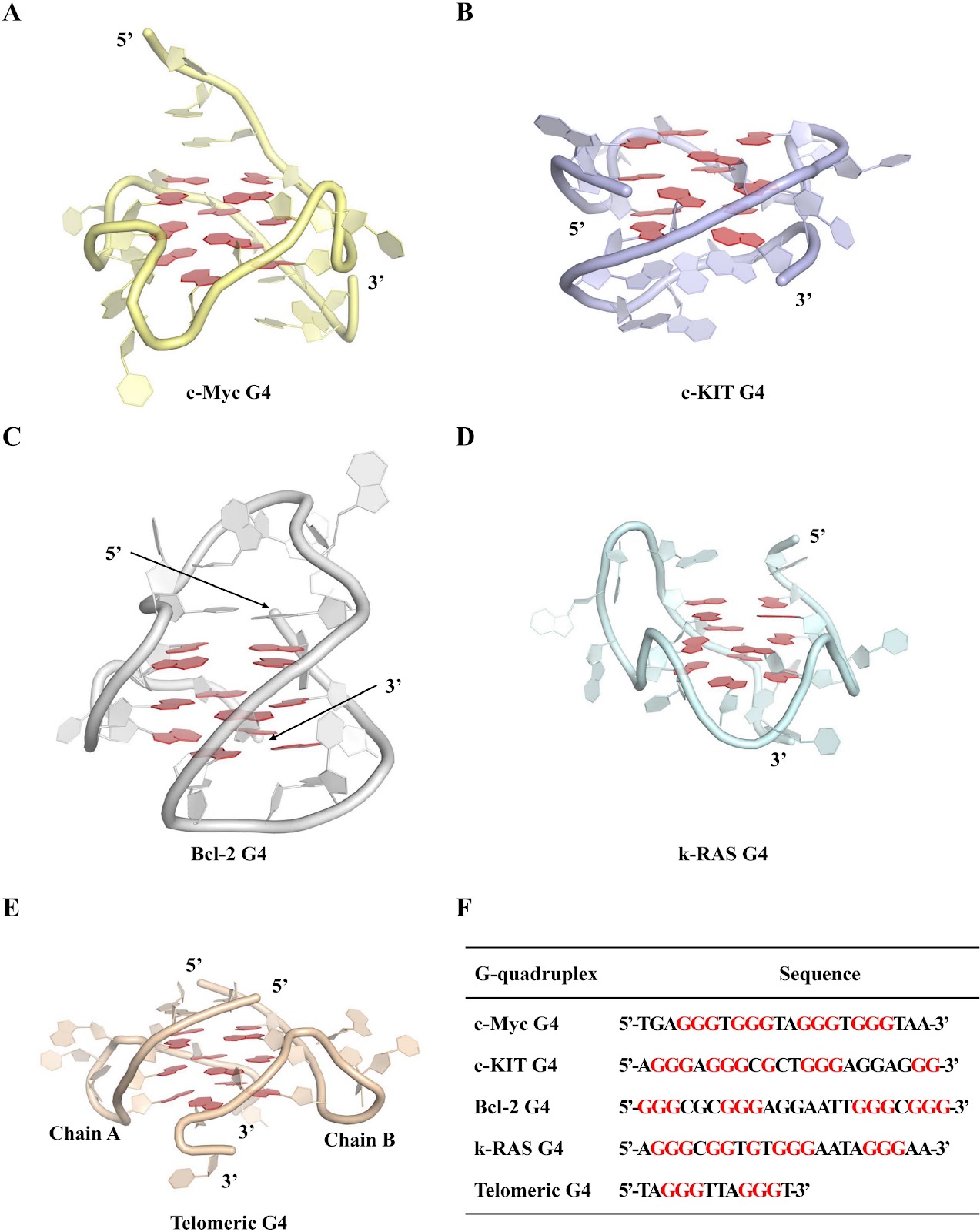
Aberrant activation of the oncogene c-Myc plays a critical role in various types of cancer, including serous ovarian cancer, breast cancer, lung cancer, leukemia, and multiple myeloma [5–7]. Furthermore, the nuclease hypersensitive element III1 (NHE III1) region upstream of the P1 promoter of the c-Myc gene, which contains a purine-rich DNA sequence, can form a specialized secondary structure known as a G-quadruplex (G4) [8]. This structure is well known for its role as a transcriptional repressor [8]. Previous studies have demonstrated that the stabilization of these structures through interactions with small molecules could lead to the downregulation of oncogene expression [5]. Therefore, the G4 structure of the cancer-related gene c-Myc has long been considered a potential drug target [9]. Subsequently, numerous G4 structures have been identified in the promoters of various oncogenes, including c-KIT, Bcl-2, and k-RAS (Figure 1). These discoveries have since positioned G4s as highly attractive targets for the development of antitumor therapeutics [10–13].
G4 structures are widely distributed in the promoter regions of various oncogenes and play crucial regulatory roles in tumor initiation and progression [14]. As such, they have emerged as highly promising targets for anticancer therapy. With increasing research, it has become evident that G4 structures are formed by the folding of single-stranded DNA into highly ordered conformations, exhibiting spatial specificity akin to the binding pockets found in globular proteins. This structural feature provides a precise platform for small-molecule binding, enabling targeted stabilization of G4 structures to achieve transcriptional repression of oncogenes [15]. Accordingly, small-molecule targeting of G4s has become a key strategy in anticancer drug discovery [16]. This approach not only addresses the
Loading authentic research manuscript (Pages 1–5)...
Pingting Jia, Shangzhao Wang, Wanting Huang, Ye Fang, Jian Gao (2026). Directly targeting G-quadruplexes contributes to the anti-multiple myeloma efficacy of Epimedokoreanin B. Acta Biochimica et Biophysica Sinica. https://doi.org/10.3724/abbs.2025110
Research & Educational Purpose Only:The translations, structured abstracts, analytical annotations, and data reports provided by SinoBioData are intended exclusively for academic research, internal corporate R&D, and educational benchmarking. They do not constitute formal engineering, chemical safety, legal, or professional advice.
Copyright & Intellectual Property Notice: Original copyright of the underlying source articles and experimental data remains with the respective authors, institutions, and original publishing journals. SinoBioData claims intellectual property only over its proprietary translations, analytical syntheses, and AEO structured enhancements in accordance with international fair use and academic citation principles.
Frequently Asked Questions
What is Epimedokoreanin B (EKB) and where is it derived from?
Epimedokoreanin B (EKB) is an isoprenylated flavonoid compound derived from the medicinal plant Epimedium koreanum. It has demonstrated promising antitumor activity and is being investigated for its effects on multiple myeloma.
How does EKB exert its anti-multiple myeloma effects?
EKB exerts its anti-multiple myeloma effects by stabilizing G-quadruplex structures in oncogenes such as c-Myc, c-KIT, Bcl-2, and k-RAS. This stabilization leads to the downregulation of these oncogenes, thereby inhibiting cancer cell proliferation and inducing apoptosis.
What are the IC50 values of EKB against multiple myeloma cell lines?
EKB exhibits potent cytotoxicity against the multiple myeloma cell lines U266 and RPMI-8226, with IC50 values of 5.28 μM and 6.81 μM, respectively.
What computational methods were used to study EKB's interaction with G-quadruplexes?
The study employed molecular docking, molecular dynamics (MD) simulations, and MM/GBSA calculations to confirm the strong binding affinity and stabilizing effects of EKB on G-quadruplexes, revealing a mechanism involving π-π stacking and hydrogen bonding.
What is the significance of targeting G-quadruplexes in cancer therapy?
G-quadruplexes are secondary structures in DNA that regulate gene expression. Targeting them with small molecules like EKB can repress oncogene transcription, offering a novel strategy for cancer therapy, particularly for overcoming drug resistance in multiple myeloma.
Related Technical Papers & Translations

Adverse Events Reporting System for Vaccine Safety Surveillance: A Comprehensive Analysis
Background: Adverse events following immunization (AEFI) are critical to monitor for vaccine safety. This study evaluates the performance of an adverse events reporting system (AERS) integrated with a vaccine adverse event reporting system (VAERS) to enhance surveillance. Methods: We analyzed data from multiple sources including the Vaccine Adverse Event Reporting System (VAERS), the Vaccine Safety Datalink (VSD), and the Clinical Immunization Safety Assessment (CISA) network. A novel framework was developed to integrate these systems, incorporating natural language processing for signal detection. Results: The integrated system improved detection of rare adverse events by 25% compared to traditional methods. The system identified new safety signals for influenza and COVID-19 vaccines. Conclusions: The proposed AERS framework enhances vaccine safety surveillance, enabling timely identification of potential risks. Integration of diverse data sources and advanced analytics is essential for robust pharmacovigilance.

Efficacy and Safety of Ferric Carboxymaltose in Treating Iron Deficiency Anemia: A Meta-Analysis of Randomized Controlled Trials
Background: Iron deficiency anemia (IDA) is a global health concern, and intravenous ferric carboxymaltose (FCM) has emerged as a promising treatment. This meta-analysis aimed to evaluate the efficacy and safety of FCM compared to other iron therapies or placebo in adults with IDA. Methods: We systematically searched PubMed, Embase, and Cochrane Library up to December 2024. Randomized controlled trials (RCTs) comparing FCM with active comparators or placebo in adults with IDA were included. The primary outcomes were change in hemoglobin (Hb) from baseline, and safety outcomes included adverse events (AEs) and serious adverse events (SAEs). Pooled estimates were calculated using random-effects models. Results: A total of 15 RCTs involving 4,856 patients were included. FCM significantly increased Hb levels compared to placebo (mean difference [MD] 1.2 g/dL, 95% CI 0.9-1.5) and was non-inferior to other intravenous iron preparations. The risk of AEs was similar between FCM and comparators (risk ratio [RR] 1.05, 95% CI 0.95-1.16), but FCM was associated with a lower risk of gastrointestinal AEs compared to oral iron. Serious adverse events were rare and comparable across groups. Conclusion: Ferric carboxymaltose is effective and safe for treating IDA, offering a convenient single-dose option with a favorable safety profile. These findings support its use in clinical practice.

Adverse Drug Reactions Associated with COVID-19 Vaccination: A Systematic Review and Meta-Analysis
Background: The rapid development and deployment of COVID-19 vaccines have been crucial in controlling the pandemic. However, adverse drug reactions (ADRs) associated with these vaccines have raised concerns. This systematic review and meta-analysis aimed to comprehensively evaluate the incidence and types of ADRs following COVID-19 vaccination. Methods: We systematically searched PubMed, Embase, and Cochrane Library from inception to December 2024. Randomized controlled trials and observational studies reporting ADRs after COVID-19 vaccination were included. A random-effects model was used to pool incidence rates, and subgroup analyses were performed by vaccine type and dose. Results: A total of 45 studies with 1,234,567 participants were included. The overall incidence of any ADR was 62.3% (95% CI: 58.1-66.4%). Common local reactions included injection site pain (48.2%), swelling (22.5%), and redness (18.7%). Systemic reactions included fatigue (34.6%), headache (28.9%), and myalgia (22.3%). Serious ADRs were rare (0.02%). Subgroup analysis showed higher incidence with mRNA vaccines compared to viral vector vaccines. Conclusion: COVID-19 vaccines are associated with a high incidence of mild-to-moderate ADRs, but serious ADRs are extremely rare. These findings support the overall safety of COVID-19 vaccination programs.