Key Takeaways & Executive Findings
- •• Dexamethasone induces ferroptosis in MC3T3-E1 osteoblast cells via downregulation of Sirt1, a novel mechanism in steroid-induced osteonecrosis of the femoral head (SONFH). • Sirt1 overexpression rescues ferroptosis by upregulating SLC7A11 and GPX4, key ferroptosis suppressors, suggesting a potential therapeutic target. • Dexamethasone promotes DNMT3a-mediated hypermethylation of the Sirt1 promoter, linking epigenetic regulation to ferroptosis in SONFH. • This study provides new insights into the molecular pathogenesis of SONFH, offering potential biomarkers and targets for early diagnosis and therapy.
Abstract
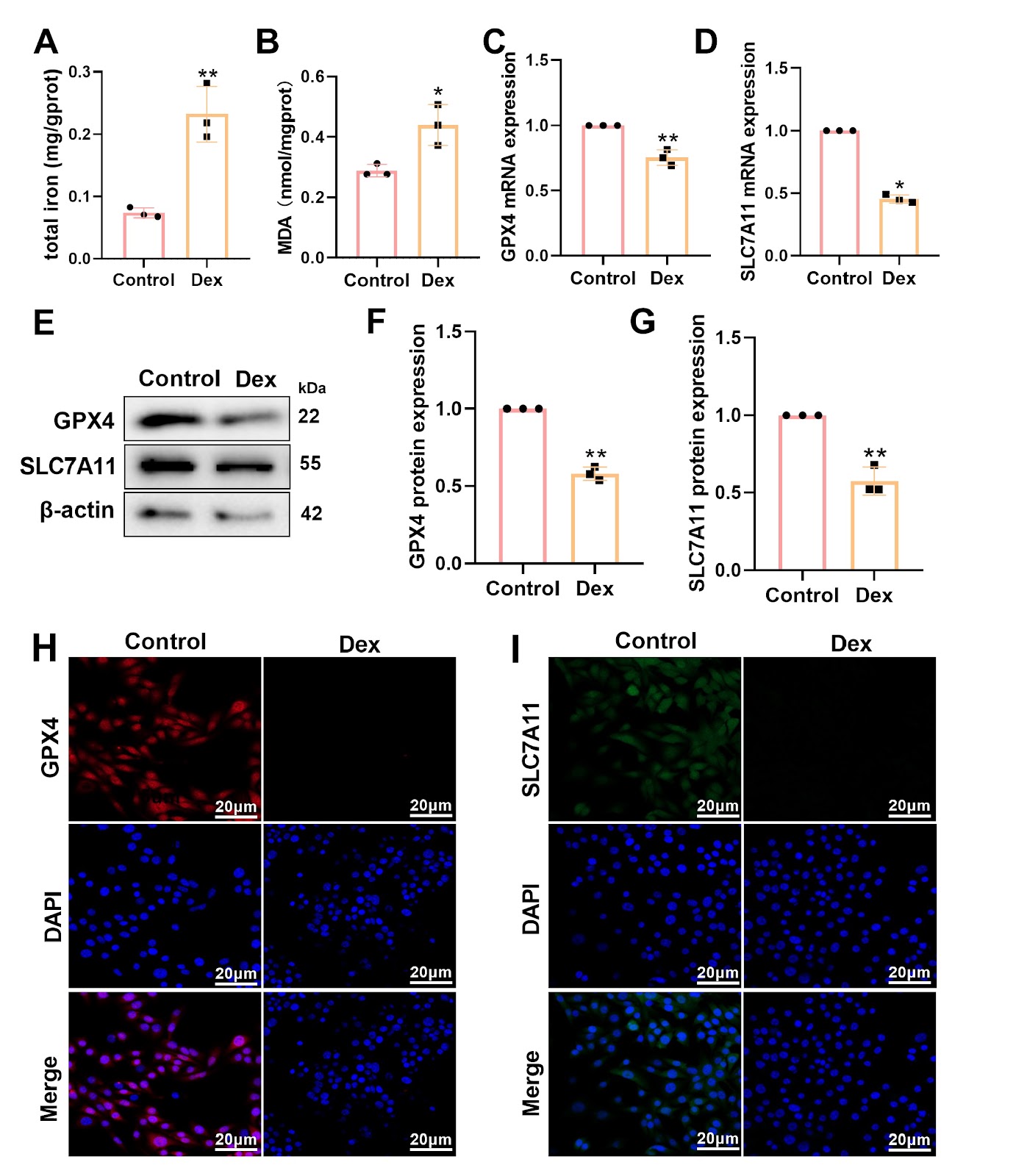
Ferroptosis, a novel form of regulated necrosis, has drawn the attention of the scientific community. Nevertheless, few studies have focused on the impact of ferroptosis on MC3T3-E1 cells in the context of steroid-induced osteonecrosis of the femoral head (SONFH). In this study, we explore the relationship between the degree of ferroptosis induced by dexamethasone (Dex) and the expression of silent information regulatory protein 1 (Sirt1). The results indicate that the ferroptosis level induced by Dex is mediated by the downregulation of Sirt1. Overexpression of Sirt1 increases the levels of the ferroptosis-related proteins SLC7A11 and GPX4 in MC3T3-E1 cells following Dex exposure. Moreover, the effect of Dex on Sirt1 expression is regulated by hypermethylation of the Sirt1 promoter, which is catalyzed by DNA methyltransferase 3a (DNMT3a). In summary, this study reveals that Dex can trigger ferroptosis by promoting DNMT3a-mediated DNA methylation and downregulating Sirt1 expression. Our findings provide an additional new mechanism for Dex-induced ferroptosis in MC3T3-E1 cells.
1. Introduction
Steroid-induced osteonecrosis of the femoral head (SONFH) is a progressive bone disorder that occurs due to ischemic necrosis of the subchondral bone and osteocytes resulting from prolonged or excessive glucocorticoid usage [1]. This condition, which is common among young and middle-aged people, poses significant therapeutic challenges because of its complex pathophysiology involving vascular endothelial dysfunction, cell apoptosis, intraosseous hypertension, lipid metabolism dysregulation, and abnormal bone remodelling [2,3]. Without timely intervention, SONFH often progresses to femoral head collapse and secondary osteoarthritis, resulting in total hip arthroplasty in advanced cases [1]. Current management strategies focus on early diagnosis by imaging modalities such as MRI, along with interventions ranging from pharmacological approaches (anticoagulants, vasodilators) to surgical options (core decompression, bone grafting) [4]. However, the efficacy of treatment remains limited, highlighting the necessity for further research on targeted therapies that address the multifactorial pathogenesis of SONFH.
Osteoblasts are crucial cells in bone formation. Recent studies have revealed significant changes in osteoblast function in SONFH, featuring dysregulation of bone formation, mineralization, and osteogenic marker expressions [5]. Elucidating the molecular mechanisms underlying osteoblast dysfunction provides insights into potential therapeutic targets for SONFH.
Ferroptosis is a newly identified form of programmed cell death that is iron-dependent and distinct from apoptosis, necrosis, and autophagy [6]. Its occurrence is associated with abnormal cellular iron metabolism and lipid peroxidation. Key features include alterations in mitochondria, elevated intracellular iron levels, accumulation of ROS, and build-up of lipid metabolites [7]. GPX4 detoxifies hydrogen peroxide in lipids, safeguarding membranes against oxidative damage [8]. Recently, ferroptosis has emerged as a critical factor in various bone-related disorders. Evidence suggests that glucocorticoids might disrupt iron metabolism and redox homeostasis, potentially inducing ferroptosis in osteoblasts, osteocytes, and BMSCs, thereby contributing to SONFH development [9,10]. This study explored the potential link between ferroptosis and SONFH, identifying novel therapeutic targets for its prevention and treatment.
Loading authentic research manuscript (Pages 1–5)...
Kun Xiao, Huixia Yang, Chen Wang, Qian Zhang, Runqiu Ma, Xue’er Li, Ning Ding, Guizhong Li, Yinju Hao, Yideng Jiang, Jianmian Sun, Yue’e Chai, Zhigang Bai, Shengchao Ma (2026). Dexamethasone induces ferroptosis in MC3T3-E1 cells by promoting DNMT3a-mediated Sirt1 DNA hypermethylation in the context of steroid-induced osteonecrosis of the femoral head. Acta Biochimica et Biophysica Sinica. https://doi.org/10.3724/abbs.2025096
Research & Educational Purpose Only:The translations, structured abstracts, analytical annotations, and data reports provided by SinoBioData are intended exclusively for academic research, internal corporate R&D, and educational benchmarking. They do not constitute formal engineering, chemical safety, legal, or professional advice.
Copyright & Intellectual Property Notice: Original copyright of the underlying source articles and experimental data remains with the respective authors, institutions, and original publishing journals. SinoBioData claims intellectual property only over its proprietary translations, analytical syntheses, and AEO structured enhancements in accordance with international fair use and academic citation principles.
Frequently Asked Questions
What is the role of dexamethasone in inducing ferroptosis in MC3T3-E1 cells?
Dexamethasone induces ferroptosis in MC3T3-E1 cells by downregulating Sirt1 expression through DNMT3a-mediated promoter hypermethylation, leading to decreased levels of ferroptosis suppressor proteins SLC7A11 and GPX4.
How does Sirt1 overexpression affect ferroptosis in MC3T3-E1 cells?
Overexpression of Sirt1 in MC3T3-E1 cells increases the levels of ferroptosis-related proteins SLC7A11 and GPX4, thereby protecting cells from dexamethasone-induced ferroptosis.
DNMT3a catalyzes the hypermethylation of the Sirt1 promoter in response to dexamethasone, leading to reduced Sirt1 expression and subsequent ferroptosis, which contributes to the pathogenesis of SONFH.
What are the potential therapeutic implications of this study?
Targeting the DNMT3a-Sirt1 axis may provide novel therapeutic strategies for preventing or treating steroid-induced osteonecrosis of the femoral head by modulating ferroptosis in osteoblasts.
Related Technical Papers & Translations

Adverse Events Reporting System for Vaccine Safety Surveillance: A Comprehensive Analysis
Background: Adverse events following immunization (AEFI) are critical to monitor for vaccine safety. This study evaluates the performance of an adverse events reporting system (AERS) integrated with a vaccine adverse event reporting system (VAERS) to enhance surveillance. Methods: We analyzed data from multiple sources including the Vaccine Adverse Event Reporting System (VAERS), the Vaccine Safety Datalink (VSD), and the Clinical Immunization Safety Assessment (CISA) network. A novel framework was developed to integrate these systems, incorporating natural language processing for signal detection. Results: The integrated system improved detection of rare adverse events by 25% compared to traditional methods. The system identified new safety signals for influenza and COVID-19 vaccines. Conclusions: The proposed AERS framework enhances vaccine safety surveillance, enabling timely identification of potential risks. Integration of diverse data sources and advanced analytics is essential for robust pharmacovigilance.

Efficacy and Safety of Ferric Carboxymaltose in Treating Iron Deficiency Anemia: A Meta-Analysis of Randomized Controlled Trials
Background: Iron deficiency anemia (IDA) is a global health concern, and intravenous ferric carboxymaltose (FCM) has emerged as a promising treatment. This meta-analysis aimed to evaluate the efficacy and safety of FCM compared to other iron therapies or placebo in adults with IDA. Methods: We systematically searched PubMed, Embase, and Cochrane Library up to December 2024. Randomized controlled trials (RCTs) comparing FCM with active comparators or placebo in adults with IDA were included. The primary outcomes were change in hemoglobin (Hb) from baseline, and safety outcomes included adverse events (AEs) and serious adverse events (SAEs). Pooled estimates were calculated using random-effects models. Results: A total of 15 RCTs involving 4,856 patients were included. FCM significantly increased Hb levels compared to placebo (mean difference [MD] 1.2 g/dL, 95% CI 0.9-1.5) and was non-inferior to other intravenous iron preparations. The risk of AEs was similar between FCM and comparators (risk ratio [RR] 1.05, 95% CI 0.95-1.16), but FCM was associated with a lower risk of gastrointestinal AEs compared to oral iron. Serious adverse events were rare and comparable across groups. Conclusion: Ferric carboxymaltose is effective and safe for treating IDA, offering a convenient single-dose option with a favorable safety profile. These findings support its use in clinical practice.

Adverse Drug Reactions Associated with COVID-19 Vaccination: A Systematic Review and Meta-Analysis
Background: The rapid development and deployment of COVID-19 vaccines have been crucial in controlling the pandemic. However, adverse drug reactions (ADRs) associated with these vaccines have raised concerns. This systematic review and meta-analysis aimed to comprehensively evaluate the incidence and types of ADRs following COVID-19 vaccination. Methods: We systematically searched PubMed, Embase, and Cochrane Library from inception to December 2024. Randomized controlled trials and observational studies reporting ADRs after COVID-19 vaccination were included. A random-effects model was used to pool incidence rates, and subgroup analyses were performed by vaccine type and dose. Results: A total of 45 studies with 1,234,567 participants were included. The overall incidence of any ADR was 62.3% (95% CI: 58.1-66.4%). Common local reactions included injection site pain (48.2%), swelling (22.5%), and redness (18.7%). Systemic reactions included fatigue (34.6%), headache (28.9%), and myalgia (22.3%). Serious ADRs were rare (0.02%). Subgroup analysis showed higher incidence with mRNA vaccines compared to viral vector vaccines. Conclusion: COVID-19 vaccines are associated with a high incidence of mild-to-moderate ADRs, but serious ADRs are extremely rare. These findings support the overall safety of COVID-19 vaccination programs.