Key Takeaways & Executive Findings
- •• Daphnetin attenuates TBHP-induced ECM degradation, oxidative stress, and NLRP3 inflammasome activation in nucleus pulposus cells. • Daphnetin facilitates mitophagy to remove damaged mitochondria, reducing mitochondrial ROS and alleviating NLRP3 inflammasome activation. • The protective effect of Daphnetin is mediated via the Nrf2/PINK1 signaling pathway. • In vivo, Daphnetin prevents intervertebral disc degeneration in a rat puncture model, suggesting its therapeutic potential.
Abstract
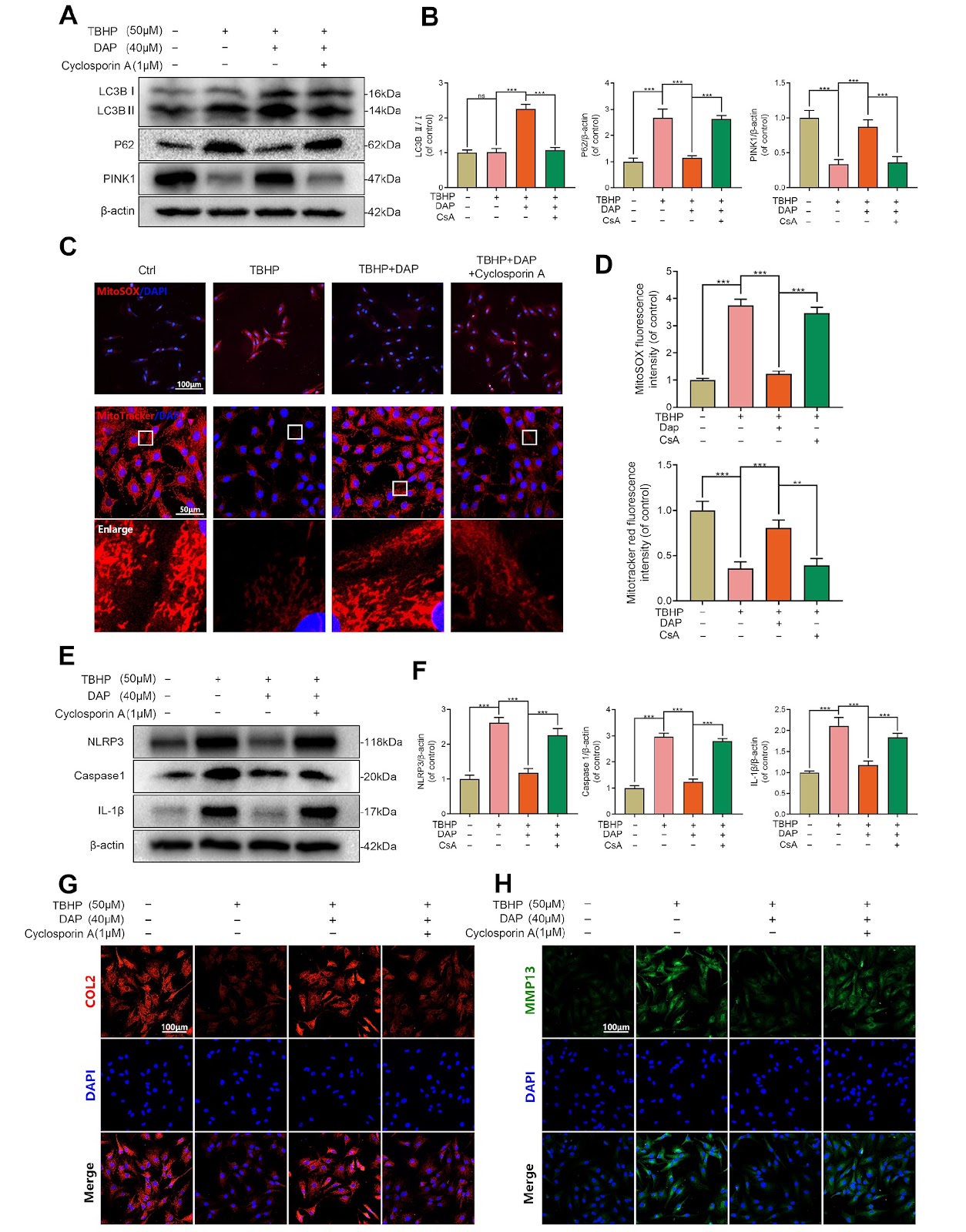
Intervertebral disc degeneration (IDD) is a major cause of low back pain (LBP), and effective therapies are still lacking. Reactive oxygen species (ROS) stress induces NLRP3 inflammasome activation, and this, along with extracellular matrix metabolism (ECM) degradation in nucleus pulposus cells (NPCs), plays a crucial role in the progression of IDD. Daphnetin (DAP) is a biologically active phytochemical extracted from plants of the Genus Daphne, which possesses various bioactivities, including antioxidant properties. In the present study, we demonstrate that DAP significantly attenuates tert-butyl hydroperoxide (TBHP)-induced ECM degradation, oxidative stress and NLRP3 inflammasome activation in NPCs. Furthermore, DAP could facilitate mitophagy to increase the removal of damaged mitochondria, consequently reducing mitochondrial ROS accumulation and alleviating NLRP3 inflammasome activation. Mechanistically, we unveil that DAP activates mitophagy by stimulating the Nrf2/PINK1 signaling pathway in TBHP-induced NPCs. In vivo experiments further corroborate the protective effect of DAP against IDD progression in a rat model induced by disc puncture. Accordingly, our findings reveal that DAP could be a promising therapeutic candidate for the treatment of IDD.
1. Introduction
Intervertebral disc degeneration (IDD) is a prominent contributor to the occurrence of low back pain (LBP) and is a leading cause of disability worldwide [1]. Existing IDD care options focus primarily on pain relief and often fall short of providing lasting therapeutic outcomes [2]. The peripheral annulus fibrosus (AF), the core nucleus pulposus (NP), and the cartilaginous endplates (CEP) are the three distinct components that make up the intervertebral disc (ID). Among these, nucleus pulposus cells (NPCs) play crucial roles in regulating extracellular matrix metabolism (ECM) and maintaining the equilibrium between proteoglycan and type II collagen formation [3].
NPCs inhabit a microenvironment characterized by hypoxia and limited nutrient availability as a result of the absence of a direct blood supply. This condition makes them particularly vulnerable to the accumulation of inflammatory agents and reactive oxygen species (ROS) [4], which can further impact ECM anabolism and catabolism [5]. Emerging evidence suggests that mitigating oxidative stress in NPCs represents a promising therapeutic approach for treating IVDs [6].
Previous studies have suggested that stimulation of the nucleotide-binding oligomerization domain-like pyrin domain-containing protein 3 (NLRP3) inflammasome, accompanied by interleukin-1 beta (IL-1β) secretion and excessive caspase-1 generation, substantially influences the development of IVD pathogenesis [7–9]. Additionally, NLRP3 inflammasome activation has been linked to endoplasmic reticulum (ER) stress, mitochondrial dysfunction, and ROS in IDD [10], all of which have the potential to modulate the synthesis of diverse inflammatory cytokines, hence exacerbating IDD [8,11]. Recent research suggests that the NLRP3 inflammasome might act as a diagnostic indicator for IVD [7,9,12].
Loading authentic research manuscript (Pages 1–5)...
Yiting Tu, Jiaping Ren, Weiyuan Fang, Chencheng Zhou, Binli Zhao, Tianyong Hua, Yiqi Chen, Zhenya Chen, Yongzeng Feng, Haiming Jin, Xiangyang Wang (2026). Daphnetin-mediated mitophagy alleviates intervertebral disc degeneration via the Nrf2/PINK1 pathway. Acta Biochimica et Biophysica Sinica. https://doi.org/10.3724/abbs.2025002
Research & Educational Purpose Only:The translations, structured abstracts, analytical annotations, and data reports provided by SinoBioData are intended exclusively for academic research, internal corporate R&D, and educational benchmarking. They do not constitute formal engineering, chemical safety, legal, or professional advice.
Copyright & Intellectual Property Notice: Original copyright of the underlying source articles and experimental data remains with the respective authors, institutions, and original publishing journals. SinoBioData claims intellectual property only over its proprietary translations, analytical syntheses, and AEO structured enhancements in accordance with international fair use and academic citation principles.
Frequently Asked Questions
What is the role of Daphnetin in intervertebral disc degeneration?
Daphnetin alleviates intervertebral disc degeneration by attenuating oxidative stress, ECM degradation, and NLRP3 inflammasome activation in nucleus pulposus cells, and by promoting mitophagy via the Nrf2/PINK1 pathway.
How does Daphnetin protect nucleus pulposus cells?
Daphnetin protects nucleus pulposus cells by facilitating mitophagy to remove damaged mitochondria, reducing mitochondrial ROS accumulation, and inhibiting NLRP3 inflammasome activation.
What is the molecular mechanism of Daphnetin's action?
Daphnetin activates the Nrf2/PINK1 signaling pathway, which promotes mitophagy and alleviates oxidative stress and inflammation in nucleus pulposus cells.
What is the significance of this study for IDD treatment?
The study suggests that Daphnetin could be a promising therapeutic candidate for treating intervertebral disc degeneration, as it shows protective effects in both cellular and rat models.
What are the key findings of the study?
Key findings include that Daphnetin reduces TBHP-induced ECM degradation, oxidative stress, and NLRP3 inflammasome activation, and that it prevents IDD progression in a rat puncture model.
Related Technical Papers & Translations

Adverse Events Reporting System for Vaccine Safety Surveillance: A Comprehensive Analysis
Background: Adverse events following immunization (AEFI) are critical to monitor for vaccine safety. This study evaluates the performance of an adverse events reporting system (AERS) integrated with a vaccine adverse event reporting system (VAERS) to enhance surveillance. Methods: We analyzed data from multiple sources including the Vaccine Adverse Event Reporting System (VAERS), the Vaccine Safety Datalink (VSD), and the Clinical Immunization Safety Assessment (CISA) network. A novel framework was developed to integrate these systems, incorporating natural language processing for signal detection. Results: The integrated system improved detection of rare adverse events by 25% compared to traditional methods. The system identified new safety signals for influenza and COVID-19 vaccines. Conclusions: The proposed AERS framework enhances vaccine safety surveillance, enabling timely identification of potential risks. Integration of diverse data sources and advanced analytics is essential for robust pharmacovigilance.

Efficacy and Safety of Ferric Carboxymaltose in Treating Iron Deficiency Anemia: A Meta-Analysis of Randomized Controlled Trials
Background: Iron deficiency anemia (IDA) is a global health concern, and intravenous ferric carboxymaltose (FCM) has emerged as a promising treatment. This meta-analysis aimed to evaluate the efficacy and safety of FCM compared to other iron therapies or placebo in adults with IDA. Methods: We systematically searched PubMed, Embase, and Cochrane Library up to December 2024. Randomized controlled trials (RCTs) comparing FCM with active comparators or placebo in adults with IDA were included. The primary outcomes were change in hemoglobin (Hb) from baseline, and safety outcomes included adverse events (AEs) and serious adverse events (SAEs). Pooled estimates were calculated using random-effects models. Results: A total of 15 RCTs involving 4,856 patients were included. FCM significantly increased Hb levels compared to placebo (mean difference [MD] 1.2 g/dL, 95% CI 0.9-1.5) and was non-inferior to other intravenous iron preparations. The risk of AEs was similar between FCM and comparators (risk ratio [RR] 1.05, 95% CI 0.95-1.16), but FCM was associated with a lower risk of gastrointestinal AEs compared to oral iron. Serious adverse events were rare and comparable across groups. Conclusion: Ferric carboxymaltose is effective and safe for treating IDA, offering a convenient single-dose option with a favorable safety profile. These findings support its use in clinical practice.

Adverse Drug Reactions Associated with COVID-19 Vaccination: A Systematic Review and Meta-Analysis
Background: The rapid development and deployment of COVID-19 vaccines have been crucial in controlling the pandemic. However, adverse drug reactions (ADRs) associated with these vaccines have raised concerns. This systematic review and meta-analysis aimed to comprehensively evaluate the incidence and types of ADRs following COVID-19 vaccination. Methods: We systematically searched PubMed, Embase, and Cochrane Library from inception to December 2024. Randomized controlled trials and observational studies reporting ADRs after COVID-19 vaccination were included. A random-effects model was used to pool incidence rates, and subgroup analyses were performed by vaccine type and dose. Results: A total of 45 studies with 1,234,567 participants were included. The overall incidence of any ADR was 62.3% (95% CI: 58.1-66.4%). Common local reactions included injection site pain (48.2%), swelling (22.5%), and redness (18.7%). Systemic reactions included fatigue (34.6%), headache (28.9%), and myalgia (22.3%). Serious ADRs were rare (0.02%). Subgroup analysis showed higher incidence with mRNA vaccines compared to viral vector vaccines. Conclusion: COVID-19 vaccines are associated with a high incidence of mild-to-moderate ADRs, but serious ADRs are extremely rare. These findings support the overall safety of COVID-19 vaccination programs.