Key Takeaways & Executive Findings
- •• Cx58 is upregulated in NSCLC and its expression correlates with metastatic potential. • MEF2B transcriptionally activates Cx58 expression, forming the MEF2B/Cx58 axis. • Knockdown of Cx58 or MEF2B reduces NSCLC cell migration and invasion via cytoskeleton rearrangement. • Targeting the MEF2B/Cx58 axis represents a potential therapeutic strategy for metastatic NSCLC.
Abstract
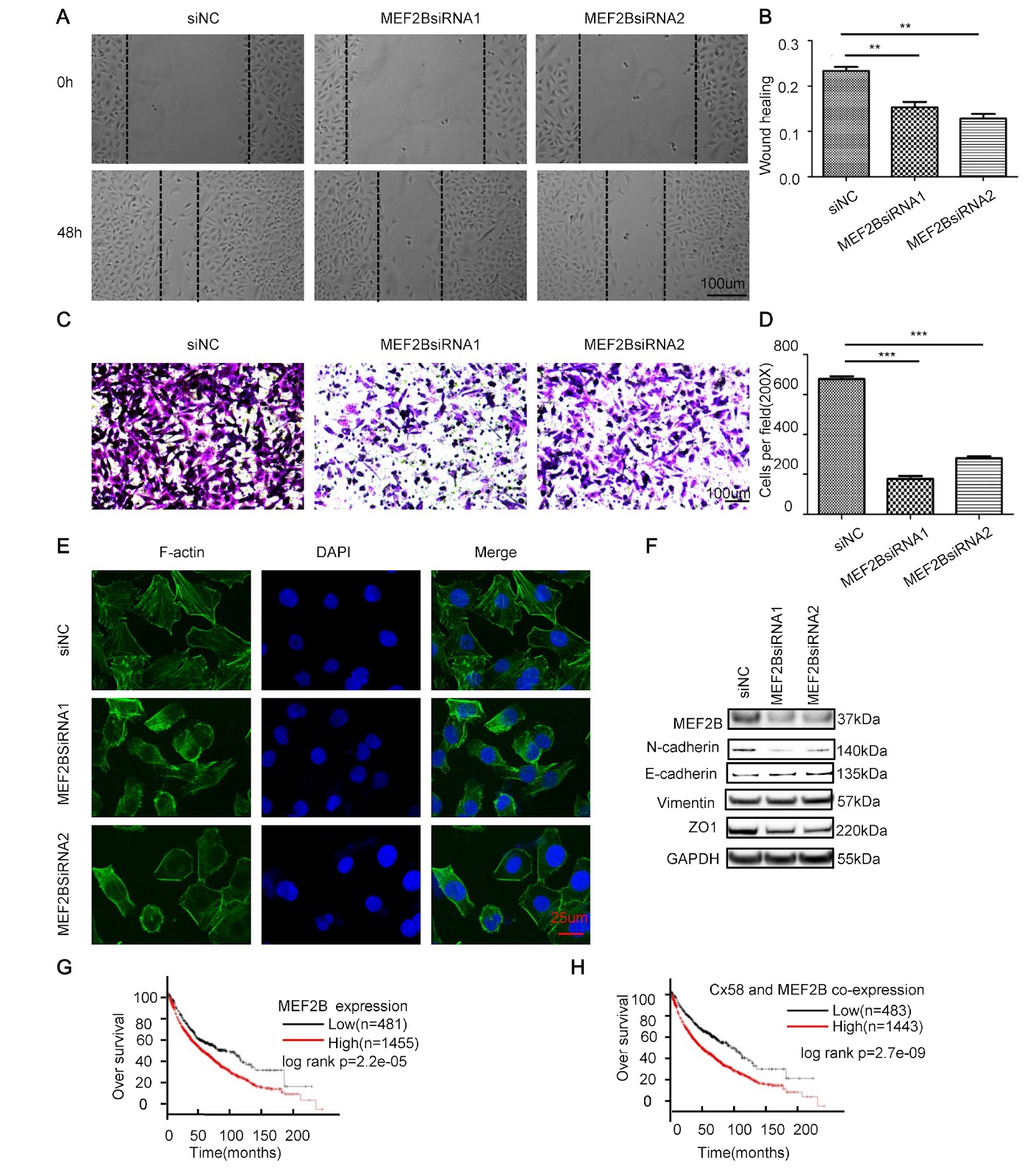
Connexins (Cxs), also known as gap junction proteins, are structurally related transmembrane proteins and have been implicated in carcinogenesis. Although some evidence suggests that these proteins are tumor suppressors due to their reduced expression in cancers, recent research indicates their complicated roles in tumor progression during different stages, including metastasis. Here, we show that Cx58, which is upregulated in non-small cell lung cancer (NSCLC), is modulated by myocyte-enhancer binding factor 2B (MEF2B). Either Cx58 or MEF2B knockdown attenuates the migration and invasion of NSCLC cells by inducing cytoskeleton rearrangement. Additionally, the prometastatic role of Cx58 in NSCLC is demonstrated in vivo. In conclusion, our findings suggest that Cx58 is transcriptionally activated by MEF2B and is involved in the metastasis of NSCLC by regulating cytoskeleton organization. Targeting the MEF2B/Cx58 axis may be exploited as a modality for improving NSCLC therapy.
1. Introduction
Lung cancer remains the number one cause of cancer-related death, causing 1.8 million deaths worldwide each year [1]. Approximately 85% of lung cancers are diagnosed as non-small cell lung cancer (NSCLC) [2]. Great advances have been achieved in lung cancer treatment during the past two decades, especially with the recent use of tyrosine kinase inhibitors and immunotherapy in selected patients [3]. Nevertheless, only a minority of patients have obtained unprecedented survival benefits from the abovementioned new therapies. At present, the overall survival rate for NSCLC patients is still not optimistic, particularly for patients with metastatic NSCLC [4]. Metastasis accounts for the majority of non-small cell lung cancer-related deaths, but its role in cancer biology is poorly understood [2,4,5]. Thus, novel biomarkers and therapeutic targets are still urgently needed.
Connexins (Cxs), the primary structure of gap junctions, mediate direct cellular communication under various physiological and pathological conditions [6]. Gap junctional intercellular communication (GJIC) is essential for coordinating cell growth, cell differentiation, and tissue homoeostasis [7]. Over the past 50 years, a tremendous amount of data has been generated supporting the hypothesis that a lack of GJIC or reduced expression of Cxs is the structural hallmark of cancer cells [8–12]. Moreover, accumulating evidence has shown that the roles of Cxs in tumors depend on both Cx isoform expression and the tumor type or subtype. The complexity of cancer biology in multiple stages, including metastasis, makes the issue more complicated [7,13–16]. In addition, more recent data suggest that Cxs could have GJIC-independent functions, playing oncogenic and prometastatic roles in cancer development and metastasis [17–19]. There are 21 members in the human Cx family [20]. Extensive research has explored the link between lung cancer and members of the Cx family, including Cx43, Cx31.1, Cx26, and Cx45 [7,13,11]. However, few studies have focused on connexin58 (Cx58). Human Cx58, also known as gap junction alpha-9 protein (GJA9) or gap junction alpha-10 (GJA10) protein, was first identified by genome sequencing in 2003, and this protein has no mouse ortholog in the mouse genome [21,22]. Human Protein Atlas RNA-seq analysis of normal tissues revealed biased expression in the testis, skin and 6 other tissues [23]. Data from The Cancer Genome Atlas (TCGA) revealed significant upregulation of Cx58 mRNA expression in lung adenocarcinoma (3.01-fold) and lung squamous cell carcinoma (1.82-fold), compared with healthy tissue [24]. To date, in addition to mRNA analysis in lung cancer, few studies have investigated the relationship between Cx58 and cancer. Here, we found that the Cx58 protein level was much higher in lung cancer tissues than in adjacent normal lung tissues and that the expression level was positively related to metastatic potential, indicating that Cx58 might be associated with NSCLC metastasis. Moreover, the reduction in Cx58 in NSCLC cells impaired their migration and invasion ability in vitro and suppressed their lung metastasis potential in vivo.
Loading authentic research manuscript (Pages 1–5)...
Fen Tan, Juan Chen, Lunquan Sun, Lu Zhang, Rui Zhou (2026). Cx58 is associated with the metastasis of non-small cell lung cancer via MEF2B/Cx58 axis. Acta Biochimica et Biophysica Sinica. https://doi.org/10.3724/abbs.2025049
Research & Educational Purpose Only:The translations, structured abstracts, analytical annotations, and data reports provided by SinoBioData are intended exclusively for academic research, internal corporate R&D, and educational benchmarking. They do not constitute formal engineering, chemical safety, legal, or professional advice.
Copyright & Intellectual Property Notice: Original copyright of the underlying source articles and experimental data remains with the respective authors, institutions, and original publishing journals. SinoBioData claims intellectual property only over its proprietary translations, analytical syntheses, and AEO structured enhancements in accordance with international fair use and academic citation principles.
Frequently Asked Questions
What is the role of Cx58 in non-small cell lung cancer (NSCLC)?
Cx58 is upregulated in NSCLC and promotes metastasis by regulating cytoskeleton organization. Knockdown of Cx58 reduces migration and invasion of NSCLC cells in vitro and suppresses lung metastasis in vivo.
How is Cx58 regulated in NSCLC?
Cx58 is transcriptionally activated by MEF2B, forming the MEF2B/Cx58 axis. MEF2B knockdown also attenuates NSCLC cell migration and invasion, similar to Cx58 knockdown.
What is the clinical significance of the MEF2B/Cx58 axis?
Targeting the MEF2B/Cx58 axis may provide a novel therapeutic strategy for improving NSCLC therapy, particularly for metastatic disease.
What methods were used to study Cx58 function?
The study used in vitro assays (migration and invasion) and in vivo metastasis models, along with knockdown experiments to assess the effects of Cx58 and MEF2B on NSCLC cell behavior.
Is Cx58 expression associated with patient prognosis?
The study found that Cx58 protein levels are higher in lung cancer tissues than adjacent normal tissues and positively correlate with metastatic potential, suggesting a potential prognostic value, though further studies are needed.
Related Technical Papers & Translations

Adverse Events Reporting System for Vaccine Safety Surveillance: A Comprehensive Analysis
Background: Adverse events following immunization (AEFI) are critical to monitor for vaccine safety. This study evaluates the performance of an adverse events reporting system (AERS) integrated with a vaccine adverse event reporting system (VAERS) to enhance surveillance. Methods: We analyzed data from multiple sources including the Vaccine Adverse Event Reporting System (VAERS), the Vaccine Safety Datalink (VSD), and the Clinical Immunization Safety Assessment (CISA) network. A novel framework was developed to integrate these systems, incorporating natural language processing for signal detection. Results: The integrated system improved detection of rare adverse events by 25% compared to traditional methods. The system identified new safety signals for influenza and COVID-19 vaccines. Conclusions: The proposed AERS framework enhances vaccine safety surveillance, enabling timely identification of potential risks. Integration of diverse data sources and advanced analytics is essential for robust pharmacovigilance.

Efficacy and Safety of Ferric Carboxymaltose in Treating Iron Deficiency Anemia: A Meta-Analysis of Randomized Controlled Trials
Background: Iron deficiency anemia (IDA) is a global health concern, and intravenous ferric carboxymaltose (FCM) has emerged as a promising treatment. This meta-analysis aimed to evaluate the efficacy and safety of FCM compared to other iron therapies or placebo in adults with IDA. Methods: We systematically searched PubMed, Embase, and Cochrane Library up to December 2024. Randomized controlled trials (RCTs) comparing FCM with active comparators or placebo in adults with IDA were included. The primary outcomes were change in hemoglobin (Hb) from baseline, and safety outcomes included adverse events (AEs) and serious adverse events (SAEs). Pooled estimates were calculated using random-effects models. Results: A total of 15 RCTs involving 4,856 patients were included. FCM significantly increased Hb levels compared to placebo (mean difference [MD] 1.2 g/dL, 95% CI 0.9-1.5) and was non-inferior to other intravenous iron preparations. The risk of AEs was similar between FCM and comparators (risk ratio [RR] 1.05, 95% CI 0.95-1.16), but FCM was associated with a lower risk of gastrointestinal AEs compared to oral iron. Serious adverse events were rare and comparable across groups. Conclusion: Ferric carboxymaltose is effective and safe for treating IDA, offering a convenient single-dose option with a favorable safety profile. These findings support its use in clinical practice.

Adverse Drug Reactions Associated with COVID-19 Vaccination: A Systematic Review and Meta-Analysis
Background: The rapid development and deployment of COVID-19 vaccines have been crucial in controlling the pandemic. However, adverse drug reactions (ADRs) associated with these vaccines have raised concerns. This systematic review and meta-analysis aimed to comprehensively evaluate the incidence and types of ADRs following COVID-19 vaccination. Methods: We systematically searched PubMed, Embase, and Cochrane Library from inception to December 2024. Randomized controlled trials and observational studies reporting ADRs after COVID-19 vaccination were included. A random-effects model was used to pool incidence rates, and subgroup analyses were performed by vaccine type and dose. Results: A total of 45 studies with 1,234,567 participants were included. The overall incidence of any ADR was 62.3% (95% CI: 58.1-66.4%). Common local reactions included injection site pain (48.2%), swelling (22.5%), and redness (18.7%). Systemic reactions included fatigue (34.6%), headache (28.9%), and myalgia (22.3%). Serious ADRs were rare (0.02%). Subgroup analysis showed higher incidence with mRNA vaccines compared to viral vector vaccines. Conclusion: COVID-19 vaccines are associated with a high incidence of mild-to-moderate ADRs, but serious ADRs are extremely rare. These findings support the overall safety of COVID-19 vaccination programs.