Key Takeaways & Executive Findings
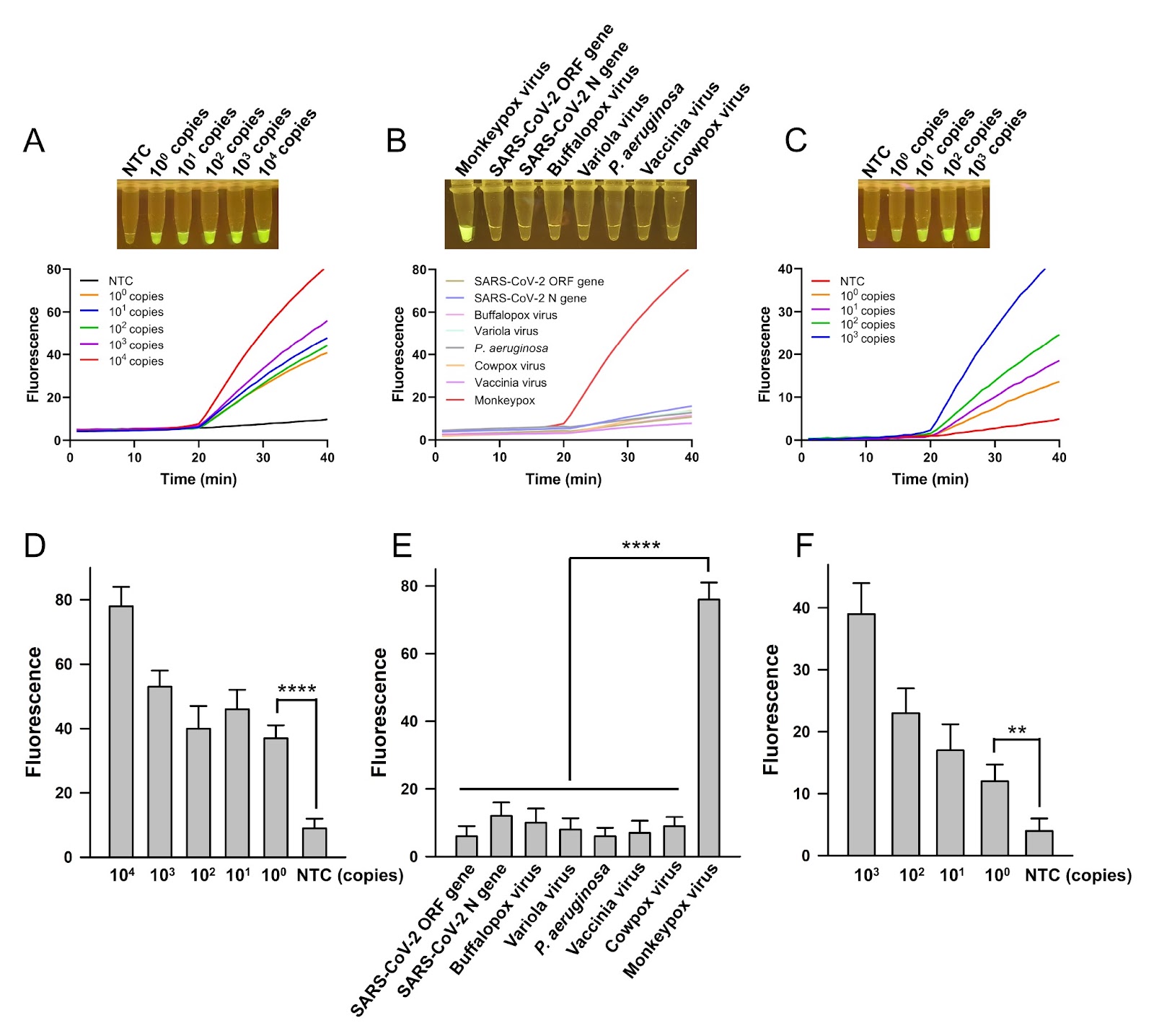
- •• CRATS integrates CRISPR-Cas12b and RPA in a one-pot reaction using a temperature switch (37°C for amplification, 60°C for cleavage), overcoming the challenge of interference between Cas activity and amplification. • The assay achieves high sensitivity with a detection limit of 100 copies of monkeypox virus DNA per reaction, and demonstrates good specificity. • The temperature-switch strategy provides a novel and convenient approach for one-pot CRISPR-based diagnostics, eliminating the need for separate steps and reducing cross-contamination risk. • CRATS offers a point-of-care testing (POCT) friendly tool for rapid and sensitive detection of monkeypox virus, addressing urgent public health needs.
Abstract
CRISPR-Cas nucleases have been extensively used in molecular detections, especially highly sensitive nucleic acid detections. In these detections, Cas nucleases are programmed by the guide RNA to respond to the detection targets and cleave the chemically labelled molecular beacons by the trans-cleavage activity to produce the detection signal. To improve sensitivity, nucleic acid amplification technologies are usually introduced to give a pre-amplification of the nucleic acid targets, increasing the detection sensitivity extraordinarily. Polymerase chain reaction (PCR) technology has been used for pre-amplification in laboratories, and isothermal amplification technologies are applied to meet point-of-care testing (POCT) needs because they avoid the use of sophisticated thermal cycling devices. The recombinase polymerase amplification (RPA) technology that amplifies nucleic acid targets isothermally at 37–42°C has been combined with CRISPR-Cas nucleases to establish advantageous nucleic acid detection assays, e.g., the SHERLOCK, which combines with Cas13a, and the DETECTR, which combines with Cas12a. It has been challenging to integrate Cas nucleases and RPA in a one-pot reaction system because the cleavage activity of Cas stimulated by even small amounts of the targets can interfere with amplification by digesting the primers or the newly amplified fragments. Thus, many assays based on Cas nucleases and RPA are in a two-step setting, with pre-amplification and Cas cleavage being isolated as two independent procedures. The two-step setting ensures that amplification and cleavage occur under favorable conditions but sacrifices operational convenience and introduces the risk of cross-contamination. In efforts to establish one-pot RPA-Cas assays, many strategies have been applied, including the use of photocontrolled guide RNA to activate the Cas nuclease at a preferred timepoint, the use of a suboptimal protospacer adjacent motif (PAM) to suppress Cas activity, the generation of dynamic aqueous multiphase with sucrose or glycerol to partially separate the two reactions, and extensive optimization of the RPA-CRISPR reaction system to achieve a subtle balance between the two reactions. In this study, a one-pot CRISPR-Cas12b and RPA combined assay with a temperature switch (CRATS) was established utilizing the reaction temperature difference between RPA and CRISPR-Cas12b cleavage. The Cas12b used in this study, AaCas12b, is a type V-B CRISPR‒Cas nuclease from Alicyclobacillus acidiphilus. It has a bi-lobed architecture consisting of an α-helical recognition lobe containing the REC domains and a nuclease lobe containing the WED, RuvC and Nuc domains. As a dual-RNA-guided DNA endonuclease, Cas12b can be guided by a chimeric single-guide (sg) RNA, and its trans-cleavage activity is specifically activated by the DNA target and results in nonspecific cleavage of single-stranded (ss) DNA molecules, which can be used to produce detection signals if the ssDNA is appropriately labelled as the molecular beacon. As the temperature for RPA is 37°C and the trans-cleavage of Cas12b is active at 60°C, CRATS uses temperature switching to adjust the major on-going reaction in the one-pot system and realizes sequential amplification of the target and cleavage reactions for signal detection. The detection target of this study, monkeypox virus, is an infectious pathogen that has caused the announcement of the Public Health Emergency of International Concern (PHEIC) by the World Health Organization (WHO) twice in recent years. In this one-pot CRATS assay, the reaction reagents of CRISPR-Cas12b and RPA are mixed in a single tube. After the addition of the sample containing the detection target, the reaction was carried out at 37°C for 20 min for amplification, followed by 60°C for 20 min for Cas12b cleavage. The fluorescently labelled molecular beacon is cleaved by Cas12b to release the FAM fluorophore from quenching, producing a fluorescence signal that is visualized under blue light. CRATS shows a high sensitivity of 100 copies of the target DNA per reaction and good specificity, providing a novel strategy of temperature switching to integrate CRISPR-Cas and RPA in a one-pot reaction system. Moreover, it provides a POCT-friendly tool for the detection of the important infectious pathogen monkeypox virus.
1. Introduction
CRISPR-Cas nucleases have been extensively used in molecular detections, especially highly sensitive nucleic acid detections. In these detections, Cas nucleases are programmed by the guide RNA to respond to the detection targets and cleave the chemically labelled molecular beacons by the trans-cleavage activity to produce the detection signal. To improve sensitivity, nucleic acid amplification technologies are usually introduced to give a pre-amplification of the nucleic acid targets, increasing the detection sensitivity extraordinarily. Polymerase chain reaction (PCR) technology has been used for pre-amplification in laboratories, and isothermal amplification technologies are applied to meet point-of-care testing (POCT) needs because they avoid the use of sophisticated thermal cycling devices. The recombinase polymerase amplification (RPA) technology that amplifies nucleic acid targets isothermally at 37–42°C has been combined with CRISPR-Cas nucleases to establish advantageous nucleic acid detection assays, e.g., the SHERLOCK, which combines with Cas13a, and the DETECTR, which combines with Cas12a.
It has been challenging to integrate Cas nucleases and RPA in a one-pot reaction system because the cleavage activity of Cas stimulated by even small amounts of the targets can interfere with amplification by digesting the primers or the newly amplified fragments. Thus, many assays based on Cas nucleases and RPA are in a two-step setting, with pre-amplification and Cas cleavage being isolated as two independent procedures. The two-step setting ensures that amplification and cleavage occur under favorable conditions but sacrifices operational convenience and introduces the risk of cross-contamination. In efforts to establish one-pot RPA-Cas assays, many strategies have been applied, including the use of photocontrolled guide RNA to activate the Cas nuclease at a preferred timepoint, the use of a suboptimal protospacer adjacent motif (PAM) to suppress Cas activity, the generation of dynamic aqueous multiphase with sucrose or glycerol to partially separate the two reactions, and extensive optimization of the RPA-CRISPR reaction system to achieve a subtle balance between the two reactions.
Loading authentic research manuscript (Pages 1–5)...
Guangxi Yu, Yue Wang, Yukang Chen, Jiangyuan Liu, Hongtao Kang, Xiaodong Luan, Song Gao, Pei Wang (2026). CRATS: a one-pot CRISPR-Cas12b and RPA combined assay with a temperature switch for highly sensitive detection of monkeypox virus. Acta Biochimica et Biophysica Sinica. https://doi.org/10.3724/abbs.2025016
Research & Educational Purpose Only:The translations, structured abstracts, analytical annotations, and data reports provided by SinoBioData are intended exclusively for academic research, internal corporate R&D, and educational benchmarking. They do not constitute formal engineering, chemical safety, legal, or professional advice.
Copyright & Intellectual Property Notice: Original copyright of the underlying source articles and experimental data remains with the respective authors, institutions, and original publishing journals. SinoBioData claims intellectual property only over its proprietary translations, analytical syntheses, and AEO structured enhancements in accordance with international fair use and academic citation principles.
Frequently Asked Questions
What is CRATS?
CRATS stands for CRISPR-Cas12b and RPA combined assay with a temperature switch. It is a one-pot detection method that integrates CRISPR-Cas12b cleavage and recombinase polymerase amplification (RPA) in a single tube, using temperature switching to sequentially perform amplification at 37°C and cleavage at 60°C.
How does the temperature switch work in CRATS?
The assay exploits the temperature difference between RPA (optimal at 37°C) and Cas12b trans-cleavage (active at 60°C). Initially, the reaction is incubated at 37°C for 20 minutes to allow RPA amplification of the target DNA. Then, the temperature is raised to 60°C for 20 minutes to activate Cas12b cleavage, which generates a fluorescent signal.
What is the sensitivity of CRATS for monkeypox virus detection?
CRATS demonstrates high sensitivity with a detection limit of 100 copies of monkeypox virus DNA per reaction.
Why is a one-pot assay advantageous over two-step methods?
A one-pot assay simplifies the workflow, reduces the risk of cross-contamination, and improves operational convenience compared to two-step methods that require separate amplification and cleavage steps.
What is the significance of CRATS for public health?
CRATS provides a point-of-care testing (POCT) friendly tool for rapid and sensitive detection of monkeypox virus, which is crucial for managing outbreaks and public health emergencies.
Related Technical Papers & Translations

Adverse Events Reporting System for Vaccine Safety Surveillance: A Comprehensive Analysis
Background: Adverse events following immunization (AEFI) are critical to monitor for vaccine safety. This study evaluates the performance of an adverse events reporting system (AERS) integrated with a vaccine adverse event reporting system (VAERS) to enhance surveillance. Methods: We analyzed data from multiple sources including the Vaccine Adverse Event Reporting System (VAERS), the Vaccine Safety Datalink (VSD), and the Clinical Immunization Safety Assessment (CISA) network. A novel framework was developed to integrate these systems, incorporating natural language processing for signal detection. Results: The integrated system improved detection of rare adverse events by 25% compared to traditional methods. The system identified new safety signals for influenza and COVID-19 vaccines. Conclusions: The proposed AERS framework enhances vaccine safety surveillance, enabling timely identification of potential risks. Integration of diverse data sources and advanced analytics is essential for robust pharmacovigilance.

Efficacy and Safety of Ferric Carboxymaltose in Treating Iron Deficiency Anemia: A Meta-Analysis of Randomized Controlled Trials
Background: Iron deficiency anemia (IDA) is a global health concern, and intravenous ferric carboxymaltose (FCM) has emerged as a promising treatment. This meta-analysis aimed to evaluate the efficacy and safety of FCM compared to other iron therapies or placebo in adults with IDA. Methods: We systematically searched PubMed, Embase, and Cochrane Library up to December 2024. Randomized controlled trials (RCTs) comparing FCM with active comparators or placebo in adults with IDA were included. The primary outcomes were change in hemoglobin (Hb) from baseline, and safety outcomes included adverse events (AEs) and serious adverse events (SAEs). Pooled estimates were calculated using random-effects models. Results: A total of 15 RCTs involving 4,856 patients were included. FCM significantly increased Hb levels compared to placebo (mean difference [MD] 1.2 g/dL, 95% CI 0.9-1.5) and was non-inferior to other intravenous iron preparations. The risk of AEs was similar between FCM and comparators (risk ratio [RR] 1.05, 95% CI 0.95-1.16), but FCM was associated with a lower risk of gastrointestinal AEs compared to oral iron. Serious adverse events were rare and comparable across groups. Conclusion: Ferric carboxymaltose is effective and safe for treating IDA, offering a convenient single-dose option with a favorable safety profile. These findings support its use in clinical practice.

Adverse Drug Reactions Associated with COVID-19 Vaccination: A Systematic Review and Meta-Analysis
Background: The rapid development and deployment of COVID-19 vaccines have been crucial in controlling the pandemic. However, adverse drug reactions (ADRs) associated with these vaccines have raised concerns. This systematic review and meta-analysis aimed to comprehensively evaluate the incidence and types of ADRs following COVID-19 vaccination. Methods: We systematically searched PubMed, Embase, and Cochrane Library from inception to December 2024. Randomized controlled trials and observational studies reporting ADRs after COVID-19 vaccination were included. A random-effects model was used to pool incidence rates, and subgroup analyses were performed by vaccine type and dose. Results: A total of 45 studies with 1,234,567 participants were included. The overall incidence of any ADR was 62.3% (95% CI: 58.1-66.4%). Common local reactions included injection site pain (48.2%), swelling (22.5%), and redness (18.7%). Systemic reactions included fatigue (34.6%), headache (28.9%), and myalgia (22.3%). Serious ADRs were rare (0.02%). Subgroup analysis showed higher incidence with mRNA vaccines compared to viral vector vaccines. Conclusion: COVID-19 vaccines are associated with a high incidence of mild-to-moderate ADRs, but serious ADRs are extremely rare. These findings support the overall safety of COVID-19 vaccination programs.