Key Takeaways & Executive Findings
- •• Co-profiling of translatome and transcriptome reveals dynamic gene expression regulation during Drosophila embryogenesis. • Identification of 2,267 differentially expressed genes between early embryos and S2R+ cells, with 2,147 upregulated in embryos. • Transcript isoform usage is widespread in both transcription and translation, with an average of 1.9 transcribed and 1.8 translated transcripts per gene. • High-quality RNA-seq libraries with >85% unique mapping and <6% rRNA contamination enable reliable analysis of translational regulation.
Abstract
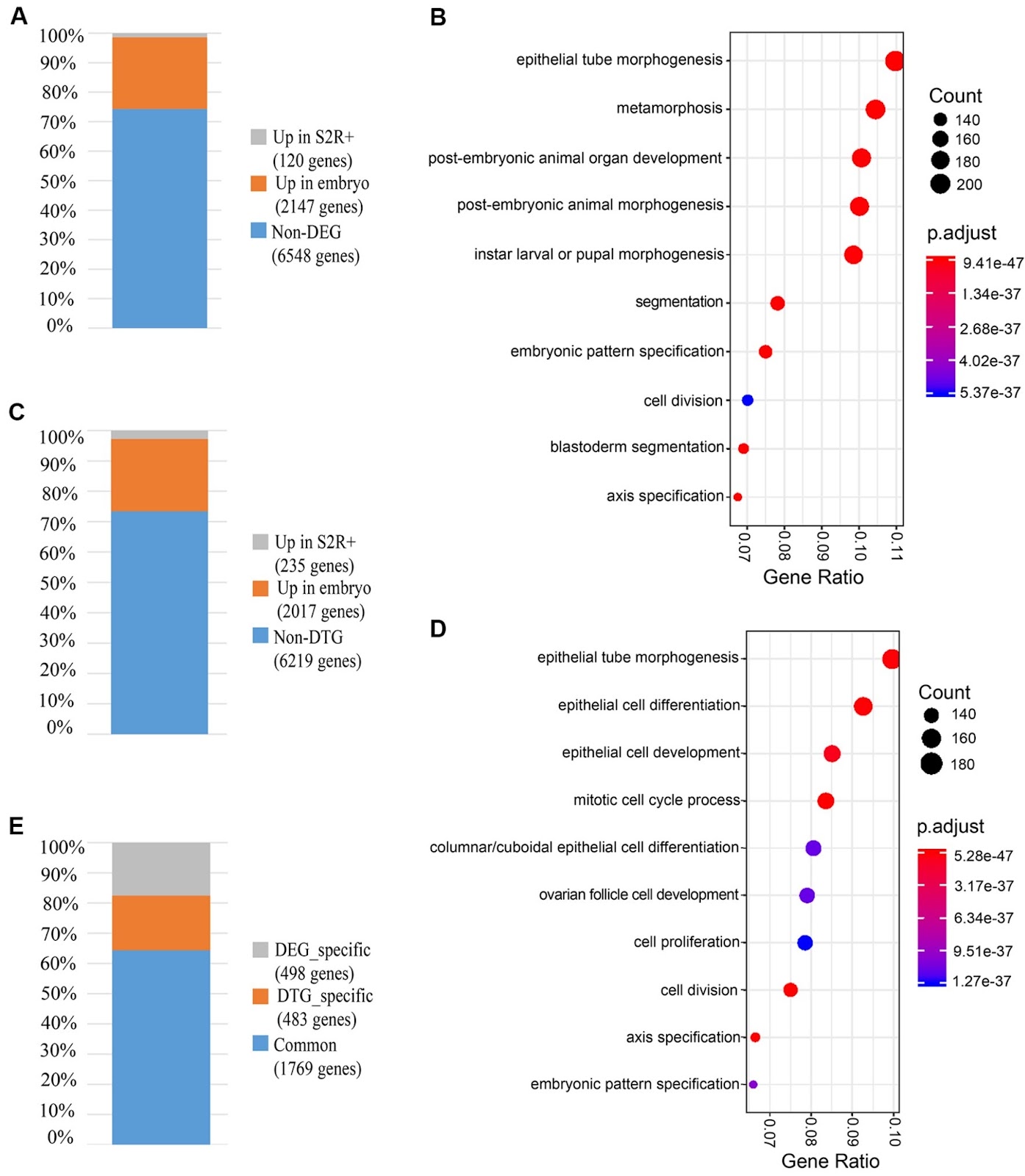
Eukaryotic gene expression is regulated at multiple levels, aiding in maintaining normal phenotypes and environmental adaptability. Transcriptional regulation complexity has been extensively studied using high-throughput sequencing, and previous studies have shown that different transcript isoforms can be produced through complex regulatory mechanisms via large-scale RNA sequencing. Additionally, translational regulation, which significantly influences gene expression, is controlled by complex mechanisms [1]. The untranslated regions (UTRs) of eukaryotic mRNA, encompassing the 5′ UTR, 3′ UTR and polyadenylation tail (polyA), are pivotal for translational regulation, with distinct cis-regulatory elements in the 5′ UTR and 3′ UTR of various transcript isoforms, leading to substantial variations in translational regulation across transcripts. To shed light on translational regulation, previous studies have performed isolation of ribosome-associated poly-adenylated RNAs (i.e., translatome) and deep sequencing for mRNA translation [2]. Polysome profiling is the most common method used to study translatome, which can enable the isolation of full-length translated mRNAs, thereby facilitating the identification of UTRs, assessment of selective translation, and comprehension of the regulatory mechanisms underlying gene expression [2]. Drosophila embryonic development progresses very rapidly and requires precise regulation of the transcription and translation of a large number of genes to ensure normal gene expression. Although Drosophila has been extensively studied as a model organism, the specific interplay between transcription and translation during embryonic development stages is not yet fully understood. To investigate the dynamic regulation of gene expression during Drosophila embryogenesis, we conducted transcriptome and translatome co-profiling on early (0‒4 h) embryos and S2R+ cells, a cell line derived from late embryonic stages of Drosophila melanogaster [3], to compare the differences in translational regulation at the gene and transcript isoform levels. S2R+ cell culture and early (0–4 h) embryo collection were performed (see Supplementary Methods) to compare transcriptome and translatome profiling, as shown in Supplementary Figure S1. Cytosolic RNA and ribosome-associated RNA were isolated from embryos [4] and S2R+ cells, which were used for constructing RNA-Seq libraries. Four libraries were generated for RNA-seq (see Supplementary Methods), consisting of two cytosolic RNA libraries and two ribosome-associated RNA libraries (Supplementary Figure S1A,B). The strand-specific RNA-seq libraries were prepared using the Illumina TruSeq Stranded mRNA Sample Preparation Kit (Illumina, San Diego, USA). The library was sequenced on the Illumina HiSeq X Ten System. We employed Trimmomatic [5] to remove low-quality reads, which resulted in approximately 89 million, 76 million, 72 million, and 56 million clean reads for the transcriptome and translatome of the early embryos and S2R+ cells, respectively. These reads were then mapped to the Drosophila genome (UCSC dm6) using HISAT2 [6]. The unique mapped reads ratio ranges from 94% to 85% and reads mapped to rRNA were less than 6% (Supplementary Table S1), indicating the high quality of the four RNA-seq libraries. Using StringTie [7], 33,470 transcripts were assembled for four mapping sequencing libraries, which revealed an average of 1.9 transcribed transcripts and 1.8 translated transcripts per gene (Supplementary Table S1), suggesting the usage of transcript isoforms widely existed in both transcription and translation of Drosophila embryos. To explore the divergence of the transcriptome during Drosophila development, we compared the transcriptome of the early embryos and S2R+ cells to identify genes with |log2(fold change)| ≥1, FPKM ≥1 in at least one condition, and adjusted P value ≤0.001. In total, we identified 2267 differentially expressed genes (DEGs) from 8815 genes. Among these DEGs, 2147 genes showed higher expression levels in the embryos, while 120 genes showed higher expression levels in S2R+ cells (Figure 1A and Supplementary Figure S2A). To investigate the underlying functional mechanism, we performed enrichment analysis to identify DEG-enriched pathways (Supplementary Table S2). Interestingly, the top 10 enriched pathways are related to morphogenesis an
1. Introduction
Eukaryotic gene expression is regulated at multiple levels, aiding in maintaining normal phenotypes and environmental adaptability. Transcriptional regulation complexity has been extensively studied using high-throughput sequencing, and previous studies have shown that different transcript isoforms can be produced through complex regulatory mechanisms via large-scale RNA sequencing. Additionally, translational regulation, which significantly influences gene expression, is controlled by complex mechanisms [1]. The untranslated regions (UTRs) of eukaryotic mRNA, encompassing the 5′ UTR, 3′ UTR and polyadenylation tail (polyA), are pivotal for translational regulation, with distinct cis-regulatory elements in the 5′ UTR and 3′ UTR of various transcript isoforms, leading to substantial variations in translational regulation across transcripts.
To shed light on translational regulation, previous studies have performed isolation of ribosome-associated poly-adenylated RNAs (i.e., translatome) and deep sequencing for mRNA translation [2]. Polysome profiling is the most common method used to study translatome, which can enable the isolation of full-length translated mRNAs, thereby facilitating the identification of UTRs, assessment of selective translation, and comprehension of the regulatory mechanisms underlying gene expression [2]. Drosophila embryonic development progresses very rapidly and requires precise regulation of the transcription and translation of a large number of genes to ensure normal gene expression. Although Drosophila has been extensively studied as a model organism, the specific interplay between transcription and translation during embryonic development stages is not yet fully understood.
Loading authentic research manuscript (Pages 1–5)...
Le Zhang, Qiufang Liu, Yulong Liu, Bishan Ye, Chuansheng Hu, Xinhui Li, Ling Bai, Ming Cheng, Mingzhu Zhao, Hongmei Li, Hua Li (2026). Co-profiling of translatome and transcriptome reveals the regulation of dynamic gene expression during Drosophila embryogenesis. Acta Biochimica et Biophysica Sinica. https://doi.org/10.3724/abbs.2024146
Research & Educational Purpose Only:The translations, structured abstracts, analytical annotations, and data reports provided by SinoBioData are intended exclusively for academic research, internal corporate R&D, and educational benchmarking. They do not constitute formal engineering, chemical safety, legal, or professional advice.
Copyright & Intellectual Property Notice: Original copyright of the underlying source articles and experimental data remains with the respective authors, institutions, and original publishing journals. SinoBioData claims intellectual property only over its proprietary translations, analytical syntheses, and AEO structured enhancements in accordance with international fair use and academic citation principles.
Frequently Asked Questions
What is the main objective of this study?
The study aims to investigate the dynamic regulation of gene expression during Drosophila embryogenesis by co-profiling the translatome and transcriptome of early embryos and S2R+ cells, comparing translational regulation at gene and transcript isoform levels.
What methods were used for translatome and transcriptome profiling?
Cytosolic RNA and ribosome-associated RNA were isolated from Drosophila embryos and S2R+ cells, and strand-specific RNA-seq libraries were prepared using the Illumina TruSeq Stranded mRNA Sample Preparation Kit, sequenced on Illumina HiSeq X Ten.
How many differentially expressed genes were identified?
A total of 2,267 differentially expressed genes (DEGs) were identified from 8,815 genes, with 2,147 genes showing higher expression in embryos and 120 genes higher in S2R+ cells.
What is the significance of transcript isoform usage in this study?
The study found an average of 1.9 transcribed transcripts and 1.8 translated transcripts per gene, indicating that transcript isoform usage is widespread in both transcription and translation, which may contribute to the complexity of gene expression regulation.
What are the quality metrics of the RNA-seq libraries?
The libraries had unique mapped read ratios ranging from 85% to 94% and rRNA contamination less than 6%, indicating high quality for downstream analysis.
Related Technical Papers & Translations

Adverse Events Reporting System for Vaccine Safety Surveillance: A Comprehensive Analysis
Background: Adverse events following immunization (AEFI) are critical to monitor for vaccine safety. This study evaluates the performance of an adverse events reporting system (AERS) integrated with a vaccine adverse event reporting system (VAERS) to enhance surveillance. Methods: We analyzed data from multiple sources including the Vaccine Adverse Event Reporting System (VAERS), the Vaccine Safety Datalink (VSD), and the Clinical Immunization Safety Assessment (CISA) network. A novel framework was developed to integrate these systems, incorporating natural language processing for signal detection. Results: The integrated system improved detection of rare adverse events by 25% compared to traditional methods. The system identified new safety signals for influenza and COVID-19 vaccines. Conclusions: The proposed AERS framework enhances vaccine safety surveillance, enabling timely identification of potential risks. Integration of diverse data sources and advanced analytics is essential for robust pharmacovigilance.

Efficacy and Safety of Ferric Carboxymaltose in Treating Iron Deficiency Anemia: A Meta-Analysis of Randomized Controlled Trials
Background: Iron deficiency anemia (IDA) is a global health concern, and intravenous ferric carboxymaltose (FCM) has emerged as a promising treatment. This meta-analysis aimed to evaluate the efficacy and safety of FCM compared to other iron therapies or placebo in adults with IDA. Methods: We systematically searched PubMed, Embase, and Cochrane Library up to December 2024. Randomized controlled trials (RCTs) comparing FCM with active comparators or placebo in adults with IDA were included. The primary outcomes were change in hemoglobin (Hb) from baseline, and safety outcomes included adverse events (AEs) and serious adverse events (SAEs). Pooled estimates were calculated using random-effects models. Results: A total of 15 RCTs involving 4,856 patients were included. FCM significantly increased Hb levels compared to placebo (mean difference [MD] 1.2 g/dL, 95% CI 0.9-1.5) and was non-inferior to other intravenous iron preparations. The risk of AEs was similar between FCM and comparators (risk ratio [RR] 1.05, 95% CI 0.95-1.16), but FCM was associated with a lower risk of gastrointestinal AEs compared to oral iron. Serious adverse events were rare and comparable across groups. Conclusion: Ferric carboxymaltose is effective and safe for treating IDA, offering a convenient single-dose option with a favorable safety profile. These findings support its use in clinical practice.

Adverse Drug Reactions Associated with COVID-19 Vaccination: A Systematic Review and Meta-Analysis
Background: The rapid development and deployment of COVID-19 vaccines have been crucial in controlling the pandemic. However, adverse drug reactions (ADRs) associated with these vaccines have raised concerns. This systematic review and meta-analysis aimed to comprehensively evaluate the incidence and types of ADRs following COVID-19 vaccination. Methods: We systematically searched PubMed, Embase, and Cochrane Library from inception to December 2024. Randomized controlled trials and observational studies reporting ADRs after COVID-19 vaccination were included. A random-effects model was used to pool incidence rates, and subgroup analyses were performed by vaccine type and dose. Results: A total of 45 studies with 1,234,567 participants were included. The overall incidence of any ADR was 62.3% (95% CI: 58.1-66.4%). Common local reactions included injection site pain (48.2%), swelling (22.5%), and redness (18.7%). Systemic reactions included fatigue (34.6%), headache (28.9%), and myalgia (22.3%). Serious ADRs were rare (0.02%). Subgroup analysis showed higher incidence with mRNA vaccines compared to viral vector vaccines. Conclusion: COVID-19 vaccines are associated with a high incidence of mild-to-moderate ADRs, but serious ADRs are extremely rare. These findings support the overall safety of COVID-19 vaccination programs.