Key Takeaways & Executive Findings
- •• cMALAT1 is highly expressed in ICC cells co-incubated with activated hepatic stellate cells and promotes ICC proliferation and metastasis in vitro and in vivo. • cMALAT1 acts as a sponge for miR-512-5p, and miR-512-5p mimics reverse cMALAT1-induced malignant phenotypes. • VCAM1 is a downstream target of the cMALAT1/miR-512-5p axis, and silencing VCAM1 suppresses ICC malignancy and impairs cMALAT1 function. • The cMALAT1/miR-512-5p/VCAM1 axis activates the PI3K/AKT signaling pathway, providing a potential therapeutic target for ICC.
Abstract
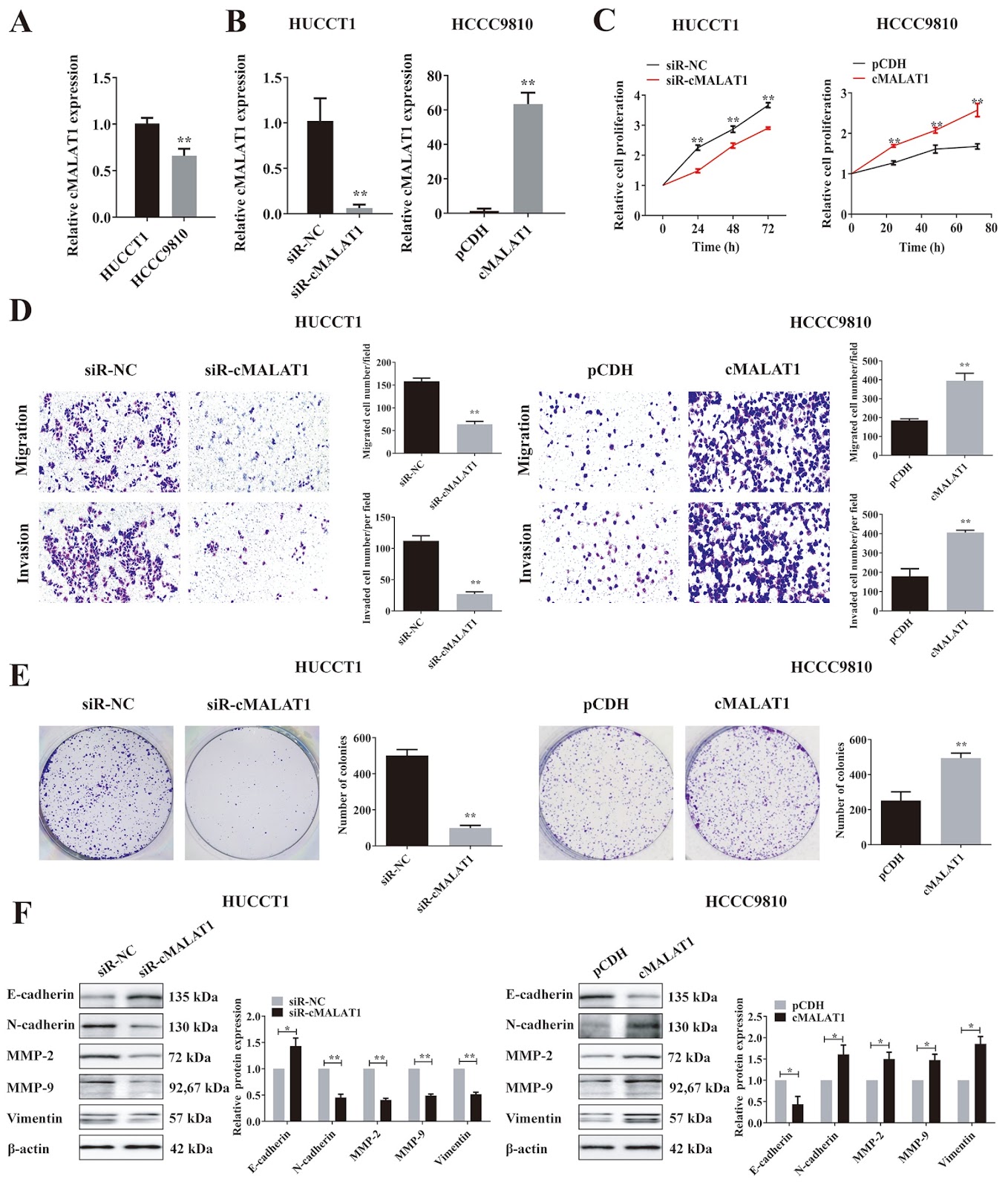
Circular RNAs play a pivotal role in the progression of various cancers. In our previous study, we observed high expression of the circRNA MALAT1 (cMALAT1) in intrahepatic cholangiocarcinoma (ICC) cells co-incubated with activated hepatic stellate cells. This study is designed to explore the roles of cMALAT1 and the underlying mechanisms in ICC. We find that cMALAT1 significantly facilitates the progression of ICC both in vitro and in vivo. The binding between cMALAT1 and miR-512-5p is subsequently confirmed through RNA pull-down experiments. As anticipated, the application of miR-512-5p mimics noticeably reverses the cMALAT1 overexpression-induced malignant phenotypes of ICC cells. Furthermore, VCAM1 is identified as a downstream gene of the cMALAT1/miR-512-5p axis. Importantly, silencing of VCAM1 not only effectively suppresses the malignant phenotypes of ICC cells but also significantly impairs the functions of cMALAT1. Our study reveals that cMALAT1 promotes the progression of ICC by competitively binding to VCAM1 mRNA with miR-512-5p, leading to the upregulation of VCAM1 expression and the activation of the PI3K/AKT signaling pathway.
1. Introduction
Intrahepatic cholangiocarcinoma (ICC), the second most diagnosed primary liver cancer after hepatocellular carcinoma (HCC), is considered a universally fatal malignancy, accounting for approximately 3% of all gastrointestinal malignancies [1,2]. The 5-year survival rate of ICC is only 10%–40% [3]. Owing to the hidden onset of this cancer, the efficacy of surgery (mainly in the early stages of ICC) is not very promising [4]. The primary reasons for treatment failure in ICC patients undergoing surgical intervention are local recurrence and distant metastasis, which are attributed to the different genetic background-induced individual differences. Therefore, exploring new biomarkers related to the treatment and prognosis of ICC is significantly beneficial for identifying new strategies for the treatment of ICC.
Circular RNAs, a class of non-coding RNAs, have been mistakenly recognized as the by-products of splicing for a long period of time [4,5]. They are abundantly expressed: circRNA expression is much higher than that of their linear host RNAs in fibroblasts [6]; diverse: circRNAs with varying exon-intron combinations are different [7]; stable: circRNAs always lack 5′-3′ polarity and a polyadenylated tail, which contributes to stability [8]; and conserved: circRNAs are reported to be more conserved than other RNA types [9]. These features indicate that there may be a variety of potential bio-functions and clinical settings [10]. In recent years, an increasing number of studies have indicated that circRNAs are closely involved in the regulation of multiple diseases, mainly through the transcriptional or post-transcriptional regulation of genes [11,12]. More importantly, circRNAs are differentially expressed in tumor tissues and are involved in various aspects of tumorigenesis and development [13], at least partially. CircRNAs can function as microRNA (miRNA) sponges, enabling them to bind target miRNAs and inhibit their activity via a mechanism named “miRNA sponging”. As reported, miRNAs are involved in the transcription of mRNAs and contribute to cell proliferation, mobility, death, and differentiation [14]. For example, ciRS-7 (also known as CDR1), the most prominent circRNA, can serve as a miR-7 sponge and bind to miR-7 to inhibit its activity, resulting in upregulated expression level of miR-7-targeted downstream transcripts [15]. In papillary thyroid carcinoma (PTC), CircFAT1 is highly expressed and can strongly decrease the expression of miR-873, thus promoting zinc finger E-box binding homeobox 1 (ZEB1) expression and eventually facilitating the malignant progression of PTC [16]. However, few studies have investigated the role of circRNAs in ICC.
It has been reported that there is apparent mesenchymal and fibrous tissue deposition in the malignant process of ICC [17], and activated hepatic stellate cells (aHSCs) are major contributors to mesenchymal and fiber formation in ICC [18]. Moreover, our previous work indicated that aHSCs regulate the RORα/Wnt/β-catenin axis via miR-1246 to promote cell proliferation, metastasis, and process of epithelial-mesenchymal transition (EMT) in hepatocellular carcinoma (HCC) [19]. More interestingly, our research demonstrated that circMALAT1 (cMALAT1) is highly expressed in ICC cells co-incubated with aHSCs and that highly expressed cMALAT1 promotes the proliferation and metastasis of ICC cells, indicating that cMALAT1 may play a role in the regulation of ICC progression.
Loading authentic research manuscript (Pages 1–5)...
Meixia Zhang, Mingyan He, Liangliang Bai, Fan Du, Yingping Xie, Bimin Li, Yuming Zhang (2026). CircMALAT1 promotes the proliferation and metastasis of intrahepatic cholangiocarcinoma via the miR-512-5p/VCAM1 axis. Acta Biochimica et Biophysica Sinica. https://doi.org/10.3724/abbs.2024185
Research & Educational Purpose Only:The translations, structured abstracts, analytical annotations, and data reports provided by SinoBioData are intended exclusively for academic research, internal corporate R&D, and educational benchmarking. They do not constitute formal engineering, chemical safety, legal, or professional advice.
Copyright & Intellectual Property Notice: Original copyright of the underlying source articles and experimental data remains with the respective authors, institutions, and original publishing journals. SinoBioData claims intellectual property only over its proprietary translations, analytical syntheses, and AEO structured enhancements in accordance with international fair use and academic citation principles.
Frequently Asked Questions
What is the role of circMALAT1 in intrahepatic cholangiocarcinoma (ICC)?
The study demonstrates that circMALAT1 (cMALAT1) is highly expressed in ICC cells and promotes proliferation and metastasis both in vitro and in vivo, acting as an oncogenic circular RNA.
How does circMALAT1 exert its function in ICC?
cMALAT1 acts as a sponge for miR-512-5p, leading to upregulation of VCAM1 expression and activation of the PI3K/AKT signaling pathway, which drives malignant phenotypes.
What is the clinical significance of this research?
The findings identify the cMALAT1/miR-512-5p/VCAM1 axis as a potential therapeutic target and provide new biomarkers for ICC prognosis and treatment.
What methods were used to validate the interactions?
RNA pull-down experiments confirmed the binding between cMALAT1 and miR-512-5p, and functional assays with miR-512-5p mimics and VCAM1 silencing were performed to assess effects on ICC cell phenotypes.
What is the role of VCAM1 in this pathway?
VCAM1 is a downstream target of the cMALAT1/miR-512-5p axis; silencing VCAM1 suppresses ICC malignancy and impairs cMALAT1 function, indicating its critical role in mediating the oncogenic effects.
Related Technical Papers & Translations

Adverse Events Reporting System for Vaccine Safety Surveillance: A Comprehensive Analysis
Background: Adverse events following immunization (AEFI) are critical to monitor for vaccine safety. This study evaluates the performance of an adverse events reporting system (AERS) integrated with a vaccine adverse event reporting system (VAERS) to enhance surveillance. Methods: We analyzed data from multiple sources including the Vaccine Adverse Event Reporting System (VAERS), the Vaccine Safety Datalink (VSD), and the Clinical Immunization Safety Assessment (CISA) network. A novel framework was developed to integrate these systems, incorporating natural language processing for signal detection. Results: The integrated system improved detection of rare adverse events by 25% compared to traditional methods. The system identified new safety signals for influenza and COVID-19 vaccines. Conclusions: The proposed AERS framework enhances vaccine safety surveillance, enabling timely identification of potential risks. Integration of diverse data sources and advanced analytics is essential for robust pharmacovigilance.

Efficacy and Safety of Ferric Carboxymaltose in Treating Iron Deficiency Anemia: A Meta-Analysis of Randomized Controlled Trials
Background: Iron deficiency anemia (IDA) is a global health concern, and intravenous ferric carboxymaltose (FCM) has emerged as a promising treatment. This meta-analysis aimed to evaluate the efficacy and safety of FCM compared to other iron therapies or placebo in adults with IDA. Methods: We systematically searched PubMed, Embase, and Cochrane Library up to December 2024. Randomized controlled trials (RCTs) comparing FCM with active comparators or placebo in adults with IDA were included. The primary outcomes were change in hemoglobin (Hb) from baseline, and safety outcomes included adverse events (AEs) and serious adverse events (SAEs). Pooled estimates were calculated using random-effects models. Results: A total of 15 RCTs involving 4,856 patients were included. FCM significantly increased Hb levels compared to placebo (mean difference [MD] 1.2 g/dL, 95% CI 0.9-1.5) and was non-inferior to other intravenous iron preparations. The risk of AEs was similar between FCM and comparators (risk ratio [RR] 1.05, 95% CI 0.95-1.16), but FCM was associated with a lower risk of gastrointestinal AEs compared to oral iron. Serious adverse events were rare and comparable across groups. Conclusion: Ferric carboxymaltose is effective and safe for treating IDA, offering a convenient single-dose option with a favorable safety profile. These findings support its use in clinical practice.

Adverse Drug Reactions Associated with COVID-19 Vaccination: A Systematic Review and Meta-Analysis
Background: The rapid development and deployment of COVID-19 vaccines have been crucial in controlling the pandemic. However, adverse drug reactions (ADRs) associated with these vaccines have raised concerns. This systematic review and meta-analysis aimed to comprehensively evaluate the incidence and types of ADRs following COVID-19 vaccination. Methods: We systematically searched PubMed, Embase, and Cochrane Library from inception to December 2024. Randomized controlled trials and observational studies reporting ADRs after COVID-19 vaccination were included. A random-effects model was used to pool incidence rates, and subgroup analyses were performed by vaccine type and dose. Results: A total of 45 studies with 1,234,567 participants were included. The overall incidence of any ADR was 62.3% (95% CI: 58.1-66.4%). Common local reactions included injection site pain (48.2%), swelling (22.5%), and redness (18.7%). Systemic reactions included fatigue (34.6%), headache (28.9%), and myalgia (22.3%). Serious ADRs were rare (0.02%). Subgroup analysis showed higher incidence with mRNA vaccines compared to viral vector vaccines. Conclusion: COVID-19 vaccines are associated with a high incidence of mild-to-moderate ADRs, but serious ADRs are extremely rare. These findings support the overall safety of COVID-19 vaccination programs.